Lionel Shriver

Lionel Shriver

Lionel Shriver is a columnist at The Spectator and author of We Need to Talk About Kevin, among other books.

Immigration’s theatre of the absurd

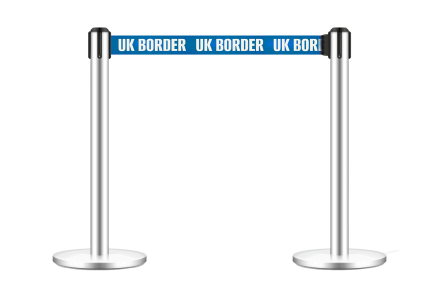
On the cusp of an almighty row over Trump’s planned mass deportations, let’s look to Europe for light relief. Last month, the pridefully left-wing management of the storied 19th-century Parisian theatre Gaité Lyrique, owned by the pridefully left-wing Paris council and traditionally the home of operettas, digital arts and musical performances, staged a free conference on ‘reinventing the refugee welcome in France’. The organisers literally invited their own downfall: 200 West African migrants who apparently felt very welcome indeed and refused to leave. Gaité Lyrique invited its own downfall: 200 West African migrants who refused to leave These passionate opera fans have since swelled to 350.

‘I’m a Democrat who will give him a chance’ – Lionel Shriver on Trump’s inauguration

23 min listen

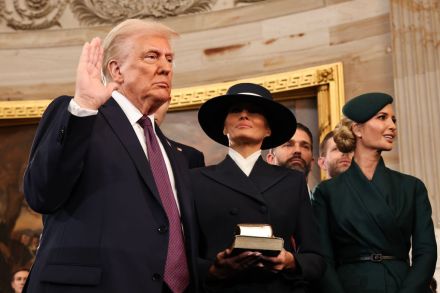
Donald Trump has been sworn in as the 47th President of the United States. All the former leaders of the free world were there to watch Trump take the oath - again - but how was this inauguration different to the last? And what signs were there of how Trump intends to govern? Guest hosting for Americano, The Spectator’s Kate Andrews speaks to Freddy Gray, who is on the ground in D.C., and Lionel Shriver about Trump’s speech lamenting the Biden administration, Biden’s last minute pardoning of his family, and why some Democrats could be willing to give Trump a chance this time round.  Produced by Patrick Gibbons and Natasha Feroze.

The case against a ‘climate emergency’

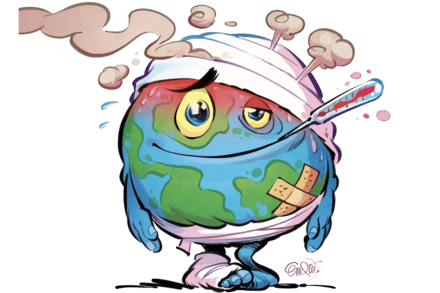
January is the ideal month for gaining a sense of perspective. I’m increasingly convinced that the ‘climate emergency’ is another social mania we’ll look back on with: ‘J-eez, what was that about?’ Why? The paradigm displays the classic anthropocentrism of our era. As organised religion declines, we replace God with humanity. Arrogating to our species the power to dial global temperature up or down is typically arrogant (see: pride, goeth, fall). Claiming that something is all your fault is as vain as claiming it’s to your credit. Regarding ‘the planet’ as a frightened fluff ball that requires our protection is the ultimate hubris. ‘The planet’ can squash us like bugs. Or with bugs, which sounds especially gross.

Christmas Special 2024 with Rod Liddle, Lionel Shriver, Matthew Parris and Mary Wakefield

71 min listen

Welcome to a special festive episode of The Edition podcast, where we will be taking you through the pages of The Spectator’s Christmas triple issue. Up first: our review of the year – and what a year it has been. At the start of 2024, the outcome of the US election looked very different, the UK had a different Prime Minister, and The Spectator had a different editor! Luckily, The Spectator’s regular columnists are on hand to declare what they got right – and wrong – throughout the year, and whether they’re optimistic for 2025. Rod Liddle, Matthew Parris, Mary Wakefield and Lionel Shriver take us through everything from Trump to trans (03:24).

Why didn’t I read the comments sooner?

I adhere to a pretty iron-clad rule: not only do I avoid the bumper cars of social media, but I don’t read the comments after my columns. Many other journalists avidly lap up reader responses to their work, and there’s certainly something to be said for confronting detractors, thus learning to anticipate counter-arguments and to guard against misinterpretation. But for me – I doubt this makes me unusual – one scornful put-down has a more lasting effect than ten gushing compliments. Forbidding myself from hitting that bottom tab is a matter of self-protection. While writing, I don’t want to lose my nerve, and too keen an awareness of your (potentially hostile) audience can be inhibiting, as if someone is reading over your shoulder.

The column you don’t want to read

Curiously unobserved about last month’s US election: how astonishing it was that the candidates’ policy positions during the pandemic played a role in neither the campaigns nor the results. It may feel as if Covid was a long time ago, but do the math. It wasn’t. In the US and UK, medical hysteria gravely blighted a good two-and-a-half years of our lives, only roundly concluding a couple of years ago – if then, for several passengers on my flight to London last week were still wearing those insipid paper masks, the sight of which inspired both my pitying contempt and shudder-inducing flashbacks. Yet the biggest public health debacle in world history has been subject to a wilful public amnesia, as if it never happened.

The true meaning of free speech

Right after Donald Trump’s landslide, I opined on YouTube that this turning point could sound the death knell for Woke World – an observation that decayed to hoary cliché within hours. I also supposed that Trump’s triumph might signal to the UK that all that diversity, equality and inclusion/systemic racism guff is totally yesterday – in the hopes that even if Brits don’t care about fairness, rationality and reason, they might at least be horrified by appearing passé.

The real test for the republic

It’s always intimidating to write for a readership more clued up than you are. I file this on the very Tuesday the international commentariat have relentlessly claimed is the most consequential election day in American history. Now, in my ignorance, I suspect this superlative reflects the blinkered vanity of the present, and I’ve braved expressing my trust on the record that the country will ultimately survive either dismaying outcome. Yet only you know if an anti-climactic calm still prevails down thousands of American Main Streets; if, rather, the cities are aflame, armed militias reign, supermarket shelves are bare, and the US army is trying to decide which side to back; or if something in-between has manifested, including the freakishly unexpected.

Lionel Shriver on the election that smashed identity politics

29 min listen

News that Kamala Harris has called Donald Trump to concede defeat means that the US election is all but over. Of the seven crucial swing states, Trump has so far won North Carolina, Georgia, Pennsylvania, Wisconsin, and Michigan. Republicans have taken the Senate back from the Democrats. How did things go so badly for Kamala Harris? Is this the end of identity politics? Lionel Shriver, author and columnist, joins The Spectator’s economics editor Kate Andrews to reflect on what happened, and how she's feeling now considering she disliked both Kamala Harris and Donald Trump as candidates.

America’s impossible election choice

31 min listen

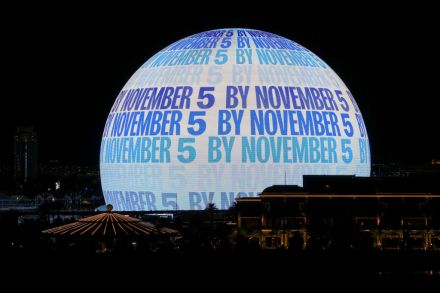
With just days to go until the American election, Kamala Harris and Donald Trump's respective campaigns continue to ramp up, with rallies and gimmicks, and even advertising on the Las Vegas Sphere. Despite this, Spectator contributor Lionel Shriver declares she is America's 'last undecided voter'. Why? Is it the candidates' characters that put her off voting for them, or the policies they represent? Lionel joins guest host, and fellow American, Kate Andrews to discuss further.  Produced by Megan McElroy and Patrick Gibbons.

America’s last undecided voter

This is the last column I’ll file before the American presidential election, and I’ve dreaded writing it for months. (The next one, filed on election day itself, may prove impossible. Perhaps that’s when I’ll choose to share my recipe for parsley as a side vegetable.) Meanwhile, I’ve watched fellow ‘double haters’ squirm in print. There are two models for wrestling with this dilemma, one exemplified by Andrew Sullivan. The conservative commentator ‘came out’ in a September Substack newsletter – no, not in that dated sense: everyone knows he’s gay – in support of Kamala Harris, only to lavish the overwhelming majority of that column on what a ghastly candidate she is.

My friend, Amy Wax, the pariah

Spectator TV viewers may recall that in last week’s Americano podcast, Freddy Gray interviewed the University of Pennsylvania law professor Amy Wax, whose wrist had just been smartly rapped by the administration for her unfashionable generalisations about race and sex. While Professor Wax spoke ably on her own behalf, Amy, as I know her, has been a friend of mine for several years. These scolding financial and reputational sanctions have been in the works for almost as long, so now seems an apt juncture at which to lay down my own marker. Unlike so many of her half-hearted defenders, I’ll put myself firmly in her corner without holding my nose.

Whatever happened to Lionel Shriver?

For many readers, my absence from these pages may have gone unnoticed. Those few who’ve detected my disappearance might have idly concocted theories: maybe Shriver crossed a line in her opposition to uncontrolled illegal immigration such that she finally got the sack. The explanation is more quotidian. Six years ago, I was diagnosed with the unwieldy sounding spondylolisthesis: a vertebra in my lower spine had moved out of alignment, squeezing the nerves to my right hip and leg. I’d been managing, but the situation was degenerative. By this summer, I could barely complete a 15-minute walk, and – the limit – I could not play tennis.

Will the real Kamala Harris please stand up?

About five minutes ago, the one Democrat more certain to lose to Donald Trump than Joe Biden was his widely ridiculed vice president. Party wonks despaired that their elderly candidate was handicapped by a veep whose prospective ascendence to the presidency terrified voters. Dems anguished about needing to sideline an unpopular ‘woman of colour’. Remember the many theories about how best to get shed of the woman – perhaps with the booby prize of a Supreme Court seat? Five minutes ago, Republicans gleefully celebrated that, by honouring the crude rubrics of identity politics, Democrats had burdened themselves with an incompetent diversity hire. I, too, briefly shrugged off Biden’s endorsement of his VP to replace him atop the 2024 ticket.

The cognitive dissonance of the Democrats

Believe it or not, I planned to write the gist of this column before Saturday night. However, a caveat. Unlike the newly christened Republican VP pick, J.D. Vance, I don’t directly blame hyperventilating Democratic rhetoric for last weekend’s attempt on Trump’s life. Responsibility rests with the would-be assassin. Nevertheless, the party’s off-the-charts argumentation has rankled me for the past year. From the get-go, Biden has framed his campaign as a defence of ‘our democracy’, echoing Britons’ sacred obligation to lock themselves in their cupboards to save ‘our NHS’. For Democrats, what’s at stake in this election is nothing less than the perpetuation of America’s form of government. Donald Trump’s threat is ‘existential’.

Biden is as big a narcissist as Trump

The dullest assertion you can make about Donald Trump is that he’s a narcissist who has no interest in the American people and only cares about himself. Competent pundits don’t waste wordage on such an over-obvious observation. Less obvious, though more so since last week’s dog’s dinner presidential debate – in the aftermath of which dubbing the encounter ‘elder abuse’ went from droll witticism to exhausted cliché in a few hours – is that Joe Biden’s narcissism rivals Trump’s and may even exceed it.

Tory voters want to punish their party – and themselves

For progressive onlookers abroad, the Labour landslide now projected next month will seem a cheerful counterweight to the EU parliamentary elections’ lurch rightwards and will represent a huge, refreshing popular shift in Britain to the left. Yet according to at least one recent poll, this perception would be statistically mistaken. Add the Conservative and Reform support together, and on the ground the British left and right are neck and neck. But never mind the numbers. The notion that an historically extraordinary Labour majority would betoken a renewed British enthusiasm for socialism is off the beam. Where is the emotion in this election? What few passions July’s contest stirs fester almost exclusively among fed-up former Tory voters. They’re furious.

Another election boost for Trump

Last Thursday evening a companionable London dinner party was just wrapping up when our hostess returned to the table brandishing the New York Times headline on her phone: in giant letters for such a tiny device, ‘TRUMP GUILTY ON ALL COUNTS’. Three American Democrats and one British Democrat-by-marriage, my fellow diners were exhilarated. One guest declared, ‘We got him’ – soon a triumphant refrain in my home state of New York. Democrats are so blinded by their own goodness that they fail to grasp how badly this strategy could backfire Technically a Democrat, sometimes as a sly rhetorical convenience, I was more muted, mumbling quietly once the cheers died down: ‘But I’m not sure about how this will play out politically.’ Fortunately, my reservations were ignored.

The deluge: Rishi Sunak’s election gamble

53 min listen

It’s a bumper edition of The Edition this week. After Rishi Sunak called a surprise – and perhaps misguided – snap election just a couple of hours after our press deadline, we had to frantically come up with a new digital cover. To take us through a breathless day in Westminster and the fallout of Rishi’s botched announcement, The Spectator’s political editor Katy Balls joins the podcast. (01:35) Next: Our print magazine leads on the electric car bust. Ross Clark runs through all the issues facing electric cars today – from China flooding the market with discounted EVs to Rishi Sunak dropping the unrealistic target of banning new petrol car sales by 2030. ‘Could the outlook suddenly improve for British EVs?’ asks Ross. ‘It’s hard to see how.

What will Europe look like in the future?

This year, several articles in mainstream papers have sounded the alarm that the global human fertility rate will soon cross below the point needed to keep the population constant. Anxiety that our species is about to die out seems a bit premature, given that we’re still predicted to add another three billion to the world population before levelling off. Furthermore, these reports always gloss over a key outlier because it undermines the case for our imminent extinction: Africa. In middle Africa, three-quarters of the population endures moderate to severe food insecurity A leading reason that continental Europe is shifting to the political right is popular concern about mass immigration.