Lionel Shriver

Lionel Shriver

Lionel Shriver is a columnist at The Spectator and author of We Need to Talk About Kevin, among other books.

The young oppress their future selves

Matt Ridley’s fine recent Times column was hardly the first to raise the alarm about the pseudo-Soviet intolerance of the left emerging from university campuses. Yet he began with arresting statistics: ‘38 per cent of Britons and 70 per cent of Germans think the government should be able to prevent speech that is offensive to minorities.’ Given that any populace can be subdivided into a veritably infinite number of minorities, with equally infinite sensitivities, the perceived bruising of which we only encourage, pretty soon none of us may be allowed to say an ever-loving thing. We won’t rehash the whole trigger warning/safe spaces nonsense.

Say nothing

To my embarrassment, ever since my novel We Need to Talk About Kevin was published in 2003, I’ve been a go-to girl regarding American mass murders. I’m embarrassed because my credentials are so poor — I’m only an expert on a school killer I made up — and because I’ve so little to say. That’s one of the standard reactions to these things, whose scale seems only to escalate: being struck dumb. That’s why Sky News and the BBC ring me up. They’re desperate, you see. They have nothing to say either. In the days I accepted many of these gigs, I made what I hoped was one serviceable point. As most of the shooters want attention, surely our mistake is to give it to them.

At this rate, we’ll have to rename New York

Growing up in Raleigh, North Carolina, I took the monuments around the state capitol for granted. The first Confederate soldier killed in the Civil War, Henry Lawson Wyatt, has leaned into the wind on those grounds for 100 years. Atop a pedestal inscribed, ‘To North Carolina women of the Confederacy’, a mother in billowing skirts reads to her young boy, his hand on his scabbard. Only in adulthood have I done a double take. I was raised in a slightly weird place. In an era of fungible Walmarts, regional distinction in the US is hard to come by, and I treasure Raleigh’s funk factor. Yet I didn’t grow up around folks who wished the South had won the Civil War and wanted to bring back slavery.

Why agonise over things that will never happen?

In attending to Labour’s Free Ice Cream For Everyone manifesto out of ghoulish voyeurism, I violated a personal rule of thumb. Jeremy Corbyn will not be prime minister. This manifesto will not become law. So why agonise over whether renationalising the railways is fully costed? My rule: avoid squandering time on what ‘might’ happen. Half the average newspaper falls into this category. Public speakers promote courses of action that they’re in no position to institute: all talk. The government ‘might’ adopt some policy, about which we never hear again.

Lionel Shriver: We need to not talk about cultural appropriation

On the heels of the Today programme’s invitation to discuss ‘cultural appropriation’ (again), the New York Times reported the disheartening fate of a Canadian magazine editor, Hal Niedzviecki. ‘Anyone, anywhere, should be encouraged to imagine other peoples, other cultures, other identities,’ he wrote, gamely proposing an Appropriation Prize for the ‘best book by an author who writes about people who aren’t even remotely like her or him.’ After the usual social media shitstorm, Niedzviecki had to resign. The Times correctly quoted me asserting that this cockamamie concept threatens ‘our right to write fiction at all’.

Diary – 18 May 2017

On the heels of the Today programme’s invitation to discuss ‘cultural appropriation’ (again), the New York Times reported the disheartening fate of a Canadian magazine editor, Hal Niedzviecki. ‘Anyone, anywhere, should be encouraged to imagine other peoples, other cultures, other identities,’ he wrote, gamely proposing an Appropriation Prize for the ‘best book by an author who writes about people who aren’t even remotely like her or him.’ After the usual social media shitstorm, Niedzviecki had to resign. The Times correctly quoted me asserting that this cockamamie concept threatens ‘our right to write fiction at all’.

Does Donald Trump have dementia?

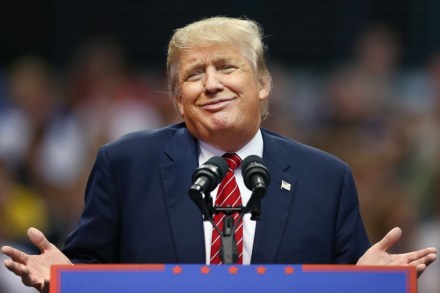
This is an extract from Lionel Shriver's diary, available in the new issue of the magazine, which is out tomorrow. Over dinner, my fellow Professional American Sarah Churchwell and I shared our dismay over what on earth to say about Trump in public. (Sarah Churchwell ever being at a loss for words will astonish her fans.) Days earlier, a punter had closed my festival event in Swindon with an ostensibly ‘simple’ question: ‘How do you explain Trump?’ Sarah posited a theory gaining mainstream currency.

A rash hothead in the White House is a problem to trouble us all

Novelists can’t merely tell cracking tales. We’re supposed to save the world. At the University of Kent, a student implored me to inscribe The Mandibles with instructions for ‘how to keep this from happening’ — for the feverish young man now vowed to devote his life to preventing my new novel’s debt-fuelled near-future financial collapse. And I thought I was just doing a book signing. I wrote, ‘To keep this from happening, pay your bills. To cash in on this happening, get as deeply into debt as possible.’ The next student proffered a tiny spiral notebook, in which I was to jot ‘three things that are really important’.

Diary – 8 December 2016

Novelists can’t merely tell cracking tales. We’re supposed to save the world. At the University of Kent, a student implored me to inscribe The Mandibles with instructions for ‘how to keep this from happening’ — for the feverish young man now vowed to devote his life to preventing my new novel’s debt-fuelled near-future financial collapse. And I thought I was just doing a book signing. I wrote, ‘To keep this from happening, pay your bills. To cash in on this happening, get as deeply into debt as possible.’ The next student proffered a tiny spiral notebook, in which I was to jot ‘three things that are really important’.

Diary – 9 June 2016

When an old friend X came to dinner in London, I sampled what it must have been like during the American Civil War, when families were split asunder from aligning on opposite sides of the Mason-Dixon. Lo, this warm-hearted, well-read, intelligent Midwesterner is backing Donald Trump. This was my husband’s introduction to X, whose electoral preference clearly queered the first impression. Our threesome didn’t talk long on the matter. The disconnect being so absolute, there was little to say. X is the only Trump supporter I wittingly know. But I was chilled by the difference between this and countless heated-but-civil suppers of yore, at which a dinner guest plumped rambunctiously for a candidate I opposed — Romney, McCain, even George W.