Lionel Shriver

Lionel Shriver

Lionel Shriver is a columnist at The Spectator and author of We Need to Talk About Kevin, among other books.

Whatever you write will get twisted

During a dozen years in Belfast I collected a number of political coffee mugs, hailing from both sides of the divide. Unionist designs including the heartbreakingly punctuated ‘Ulster Say’s No’ (not merely to the Anglo-Irish Agreement; no to everything) and the impressively witty ‘Reservoir Prods’: four toughs in shades identified as ‘Mr Orange’ and ‘Mr Boyne’, etc. The republican mugs exhibit no such sense of humour, which won’t surprise you. Martin McGuinness and Gerry Adams stare sternly from their porcelain. Worse, the mugs from the Sinn Fein bookshop are cheaply decorated with decals, which are less robust than the inked unionist ones, and tend to melt in the dishwasher.

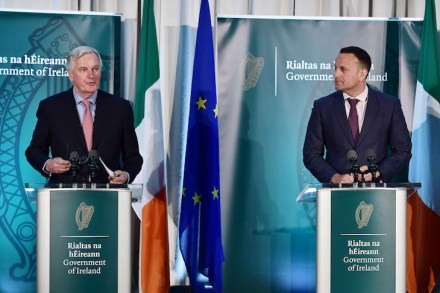
Why should we give in to EU blackmail over the EU border?

In deference to public exhaustion, I’ve largely avoided Brexit in this slot. But a columnist’s output ought rightly to echo what she shouts at the television news. Big picture, the UK may have made an utter Horlicks of its putative withdrawal from the European Union because Britain should never have come to the EU with a begging bowl in the first place. Walking out first and reverting coolly to WTO rules, the UK might have negotiated from a position of strength. You don’t slap a party in the face, only to implore that same party for special favours while his face is still smarting. Big surprise, the strategy has been unavailing. Hindsight aside, the biggest mistake the UK continues to make is to naively accept the EU’s opening construct.

The Home Office nearly deported my husband

What I remember about preparing to leave for my husband’s appointment with the Home Office in Croydon in 2007 is hysteria. A tizzy was not unprecedented; in our household, it’s always the man who’s in a dither, seeing to last-minute primping and chronically unable to get out the door on time. But on this occasion I, too, was rattled, snapping impatiently as I double-checked an enormous bag of documents. A fair bit was at stake. An American, I had acquired my own Indefinite Leave to Remain (ILR) — a grand designation for ‘residency’ that only the British would coin — during a looser era of the Writers and Artists Visa, long ago eliminated. So the hoop-jumping that the Home Office had come to require for gaining the same status was new to me.

Catastrophising is my idea of a good time

When, on a test of general knowledge, the highly educated score far worse than chimpanzees, university degrees may be overrated (definitely). But something more interesting may also be going on. According to the newly released Factfulness by Hans Rosling, we would-be smart people would improve our results on multiple-choice questions about the current state of the world (16 per cent) if we picked the answers at random (33 per cent). We all seem to think that humanity is in the toilet, and swirling more deeply into the sewer by the day. We’re wilfully blind to social progress. The more cheerful a host of indices look, the more belligerently we cling to the conviction that everything is getting worse.

Can you prove you’re not a racist?

After an essay in this month’s Prospect about literature and freedom of speech, it seems I was cited on Twitter as a ‘racist provocateur’. Now, I rather fancy being a ‘provocateur’. But as for the adjective… Someone can call you ‘stupid’, and that’s just one person’s opinion. It doesn’t seem true because a single childish naysayer has impugned your intellectual prowess. Yet hitherto, the tag ‘racist’ has tended to stick. And it’s self-verifying. Why ever would anyone call you a racist if you weren’t one? In our current climate of sensitivity about race (and everything else), finger-pointers wield enormous power.

Why mass immigration explains the housing crisis

Ever since Theresa May’s clarion address of the UK’s housing shortage (and how many successive PMs have embarked on the same brave heave-ho?) countless comment pieces have addressed the real problem that drives the disjunction between supply and demand. Nimbyism. Complex, protracted planning permission. Developer land banking. Rich Chinese and Russians investing in unoccupied properties as three-dimensional bank accounts. Excessive protection of green belts. Second homeowners. Empty properties the state should confiscate. The catastrophic sell-off of social housing. A wilful confusion about what the word ‘affordable’ means. Yet when two statistics are out of whack, it behoves us to look at them both. All the above dysfunctions regard supply.

The American tax system is a one-way street

Last week, the New York Times ran a very un-New-York-Times-y article, ‘Resentment Grows Over Who Gets Health Care Aid’. It contrasts two women in New Hampshire. Married with one child at 30, last year Gwen Hurd paid more than $11,000 for her family’s health insurance, purchased through the Affordable Care Act exchange. They had to shell out $6,300 per person — $18,900 — before the insurance kicked in. Both parents were working. Their pre-tax earnings just exceeded the $82,000 cut-off for government insurance subsidies. The couple dropped date night, and couldn’t save for retirement.

The all give and no take of US taxes

Last week, the New York Times ran a very un-New-York-Times-y article, ‘Resentment Grows Over Who Gets Health Care Aid’. It contrasts two women in New Hampshire. Married with one child at 30, last year Gwen Hurd paid more than $11,000 for her family’s health insurance, purchased through the Affordable Care Act exchange. They had to shell out $6,300 per person — $18,900 — before the insurance kicked in. Both parents were working. Their pre-tax earnings just exceeded the $82,000 cut-off for government insurance subsidies. The couple dropped date night, and couldn’t save for retirement. A few miles away, single and living at home, an aspiring opera singer of 28 is careful to keep her earnings just below $15,000, so she continues to qualify for Medicaid.

Why not ban artists who forget to feed their cats?

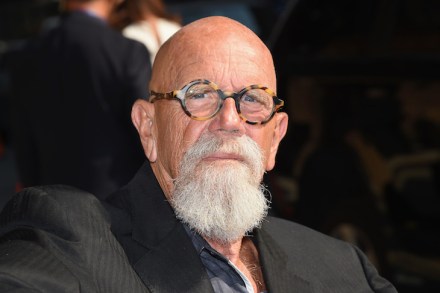
Sometimes a picture — the big picture — is worth more than a thousand words. Consider this Art vs Artist, Part II. As #MeToo rolls inexorably on, the movement has scored another casualty, the wheelchair-bound, 77-year-old Chuck Close, whose reputation as a photo-realist had until last month been as immense as his paintings. Two women have come forward describing similar encounters with the artist in his Manhattan studio. Invited to pose for photographs, neither woman was forewarned that the modelling would entail nudity. One woman confided to the Huffington Post that in 2013 she resisted Close’s request to disrobe, but then complied ‘to be polite’. Close remarked — memorably, it must be said — ‘Your pussy looks delicious.

Ikea’s real genius: making furniture disposable

By all accounts, Ikea founder Ingvar Kamprad was my kind of guy: may he rest in peace (on an Askvoll standard double). Like me, he was a skinflint. For a multibillionaire to buy his clothes at flea markets and select his groceries from supermarket quick-sale shelves is charming. About his retail wares, I’m more ambivalent. Look, hats off to Ingvar for making halfway-attractive furniture available to the hoi polloi at affordable prices. Yet every time I’ve succumbed to the allure of a cheap-and-cheerful Ikea design, I’ve ended up hating it. Part of the problem is the look. Cheap-and-cheerful is not my bag. I’m more into cheap-and-morose. In a profile a while ago, a journalist characterised my home as freighted with ‘grandma furniture’.

I recycle – and lie to myself

‘I just want to say one word to you, just one word. Are you listening? Plastics.’ That iconic punch line from The Graduate, when a businessman gives Dustin Hoffman career advice at a cocktail party, has been circling my head ever since China announced that, as of 2018, it will no longer act as the West’s giant blue wheelie bin. Back in 1968, that businessman was righter than he could have known: ‘There’s a great future in plastics.’ We’re in that future — with dire consequences for aquatic life. Let’s review: what is recycling for? To reduce landfill, whose toxins can leach into groundwater. To diminish litter.

Why cryptocurrencies are the answer

The craze for cryptocurrency can be explained by a host of factors: the allure of getting rich quick; the attraction of off-the-grid accountancy for malefactors like tax evaders and drug dealers (though Bitcoin is traceable); the glamour of the new. Despite blockchain currencies’ wild volatility thus far, I’d still posit that the more underlying attraction is to a reliable store of value. Bitcoin investors may not recognise their motivation as such, but the impulse behind computer-generated currency is revolutionary: to take the production and control of money away from government. Now that we live in a world of 100 per cent fiat currencies — backed by nothing — governments can print their hearts out, and they do.

A purity test for artists is the end of art

However we keep ourselves amused over the holidays this year, two sources of entertainment are off the docket. Amid the deluge of sexual misconduct allegations last month, the BBC dropped an Agatha Christie drama from its Christmas line-up after one of the actors, Ed Westwick, was accused of rape and sexual assault — which Westwick denies, slathering a layer of irony on the mystery’s title: Ordeal by Innocence. Mere hours before the scheduled premiere, the distributor of I Love You, Daddy refused to release the film, in anticipation of an ugly big reveal in the New York Times. The movie’s star, director, producer and writer, Louis C.K., now admits to having masturbated in front of multiple younger female comics (but hey, at least he asked first).

This EU ‘divorce bill’ is more like a ransom

A  ‘bill’ is not commonly subject to negotiation. It arrives after a customer has contracted for the purchase of goods or services, whose price — with the unique exception of American health care bills, which are more like muggings by gangs on mopeds — has been established in advance. For the average upstanding Briton, a bill is not a starting point, subject to haggling. It is something you pay. The Lisbon Treaty’s Article 50 makes no mention of paying financial liabilities in order to leave the EU. Once the post--referendum conversation turned immediately to the ‘divorce bill’, the May government’s big mistake from the off was bickering about its size. A better opening strategy would run not ‘How much?

This EU ‘divorce bill’ is more like a ransom | 29 November 2017

A ‘bill’ is not commonly subject to negotiation. It arrives after a customer has contracted for the purchase of goods or services, whose price — with the unique exception of American health care bills, which are more like muggings by gangs on mopeds — has been established in advance. For the average upstanding Briton, a bill is not a starting point, subject to haggling. It is something you pay. The Lisbon Treaty’s Article 50 makes no mention of paying financial liabilities in order to leave the EU. Once the post-­referendum conversation turned immediately to the ‘divorce bill’, the May government’s big mistake from the off was bickering about its size. A better opening strategy would run not ‘How much?

Security overkill is terror’s real triumph

The moment the news broke on Halloween that an Uzbek in a rental truck had just killed eight people on New York’s West Side cycle path, my heart sank. Now, you might think that any decent human being — I marginally qualify — would be profoundly saddened by the pointless murder of folks merely out enjoying a city’s recreational facilities on a crisp autumn day. But that wasn’t it. Or you might think — since I spend a fair whack of the year in New York, where as usual I get everywhere by bike — that I might be concerned about becoming a terrorist target myself. I use that bike path constantly in summer. Had the attack occurred earlier in the year, one of those victims could have been me. But that wasn’t it, either.

When did fiction become so dangerous?

The assignment of books for review has always been haphazard. Fellow fiction writers can be tempted either to undermine the competition, or to flatter colleagues who might later judge prizes or provide boosting blurbs. There are no clear qualifications for book reviewing — perhaps publication, but most of all, because reviewers are paid for their text but not for the many hours it takes to read the bleeding books, a willingness to work for atrocious wages. Mitigating the gravity of this matter? Aside from the authors whose work is on the block, almost no one reads book reviews, and I say that as someone who writes a fair number. It’s a publishing truism that ‘reviews don’t sell books’ — although negative ones can un-sell books.

Am I the only one to find the #metoo-ing over Harvey Weinstein a little creepy?

Am I the only one to find the #metoo-ing over Harvey Weinstein a little creepy? Bandwagons always make me want to jump off. And talk about kicking an asshole when he’s down. I resent being made to feel sorry for the man. Now that the confessional groundswell over sexual harassment has moved far beyond this one Hollywood toad, we seem to be losing the distinction between actual sexual assault and mere poor taste. The theatre director Max Stafford Clark’s remark to a staff member that he would be ‘up her like a rat up a drainpipe’ in his friskier days sounds like the arm chancing of an earlier generation, and at 76 he was unlikely to have made a young woman feel threatened. He was in a wheelchair, for pity’s sake. So was George H.W.

The young oppress their future selves

Matt Ridley’s fine recent Times column was hardly the first to raise the alarm about the pseudo-Soviet intolerance of the left emerging from university campuses. Yet he began with arresting statistics: ‘38 per cent of Britons and 70 per cent of Germans think the government should be able to prevent speech that is offensive to minorities.’ Given that any populace can be subdivided into a veritably infinite number of minorities, with equally infinite sensitivities, the perceived bruising of which we only encourage, pretty soon none of us may be allowed to say an ever-loving thing. We won’t rehash the whole trigger warning/safe spaces nonsense.

Say nothing

To my embarrassment, ever since my novel We Need to Talk About Kevin was published in 2003, I’ve been a go-to girl regarding American mass murders. I’m embarrassed because my credentials are so poor — I’m only an expert on a school killer I made up — and because I’ve so little to say. That’s one of the standard reactions to these things, whose scale seems only to escalate: being struck dumb. That’s why Sky News and the BBC ring me up. They’re desperate, you see. They have nothing to say either. In the days I accepted many of these gigs, I made what I hoped was one serviceable point. As most of the shooters want attention, surely our mistake is to give it to them.