Limor Simhony Philpott

Dr. Limor Simhony is a freelance writer. She was previously a research fellow at the Institute for National Security Studies (INSS) in Tel Aviv.

The dangers of UpScrolled

From our UK edition

I have spent nearly a decade working in the field of online anti-Semitism and extremism. This, I thought, was long enough to have seen everything the digital world of ‘free expression’ could offer. But I was wrong. I’ve just downloaded UpScrolled. Launched last summer by Issam Hijazi, an Australian-Palestinian, UpScrolled bills itself as a sanctuary for unfiltered voices. No shadowbans, no algorithmic sleight of hand, just pure, equitable discourse. ‘Built for impact. Driven by purpose. Powered by you!’ its homepage trumpets, echoing the libertarian siren song that has lured millions away from the likes of TikTok and X. But UpScrolled is not a beacon of liberty. It is often a place of venom, where the worst impulses of humanity fester.

Violent settlers must be stopped

From our UK edition

A crisis of authority now festers at the heart of Israel. A shrill, violent fringe of extremist settlers in the West Bank is not only terrorising Palestinians, but undermining the authority of the Israeli state, its security and diplomatic relations. This week, there have been reported attacks by settlers near Deir Istiya, near Nablus, and in Jaba, southwest of Bethlehem. These settlers’ growing impunity, and the government’s failure to rein them in, is no longer a side issue. Settler violence is emerging as a national security crisis. This is not hyperbole.

The ICC’s vendetta against Israel has gone too far

From our UK edition

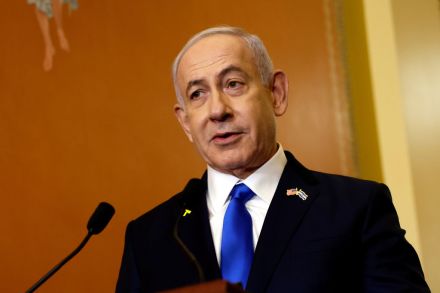
The International Criminal Court (ICC) has issued arrest warrants against Israeli prime minister Benjamin Netanyahu and the country's former defence minister Yoav Gallant. An ICC warrant was also issued for Hamas leader Mohammed Deif, who was killed by Israel in July. The judges decided that there are ‘reasonable grounds’ that the trio are responsible for war crimes. The ICC must end its vendetta against Israel The court’s decision marks a new low in international efforts to portray Israel as a uniquely evil country. Placing leaders of a law-abiding democracy alongside murderous terrorists risks equating Hamas’s pursuit of a genocidal aim with Israel’s need to defend itself following the 7 October attack.

Could Marwan Barghouti be Palestine’s Mandela?

From our UK edition

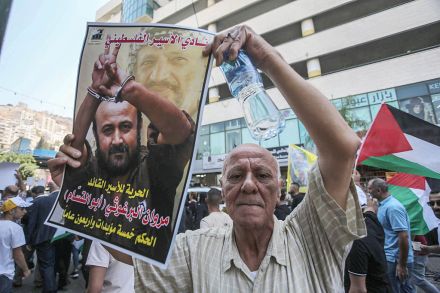
Calls to release Marwan Barghouti – the leader of Fatah’s armed wing, who is currently serving multiple life sentences in Israel – is gaining traction. Supporters see him as the only credible Palestinian leader to challenge Hamas and negotiate peace. But freeing a convicted terrorist is never a simple calculation, and the risks are great. Barghouti’s popularity dwarfs that of any other Palestinian figure. Polls found he could win 50 per cent of the vote if elections were held now, followed by Hamas’s Khalid Mishal (on 35 per cent) and Palestinian Authority (PA) leader Mahmoud Abbas (on 11 per cent) lagging far behind. Without Abbas in the running, Barghouti’s popularity rises to 58 per cent.

Hamas unchecked is as brutal as ever

From our UK edition

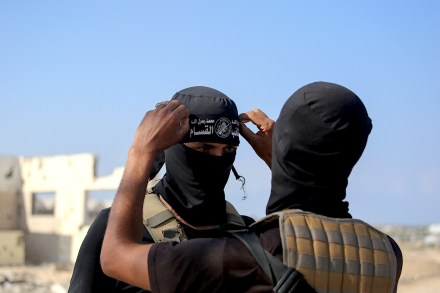
As the dust settles on Israel’s phased withdrawal from Gaza under Donald Trump’s hard-won ceasefire deal, Hamas has slithered straight back into the void. Barely hours after the ink dried on ‘phase one’ of Trump’s plan, the Islamist rulers of Gaza unleashed a wave of reprisals against rival Palestinian clans. Accusations of ‘collaboration’ with Israel, or simple refusal to bow to Hamas’s rule, have triggered executions, abductions and what survivors are calling outright massacres. Instead of rebuilding, Gaza is now witnessing a purge. The message is clear: anyone who worked against Hamas during the war will pay for it now. In Gaza City, fierce clashes have erupted between Hamas and the Doghmush clan, one of Gaza’s most powerful factions.

Starmer must hold his nerve on Palestine Action

From our UK edition

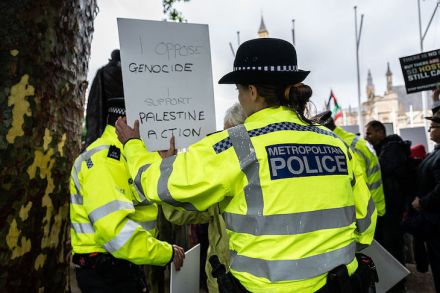
Keir Starmer is hardly famous for his grit. But the proscription of Palestine Action is one issue on which the Prime Minister must hold his nerve. Nearly 900 supporters of Palestine Action – a banned terrorist group – were arrested last weekend alone Nearly 900 supporters of Palestine Action – a banned terrorist group – were arrested last weekend alone. The organisation's supporters – and critics of the proscription – claim that the sheer number of arrests means the current approach isn't working. It simply isn't sustainable, they say, to apprehend hundreds of ordinary people for showing support for Palestine Action. They're wrong: Palestine Action is a dangerous organisation that deserves to have been banned.

Why the Imperial War Museum’s Holocaust error matters

From our UK edition

The Imperial War Museum is supposed to be one of Britain’s guardians of historical truth. Yet in its description of the Nuremberg Laws, the Nazi edicts that laid the legal groundwork for the Holocaust, the museum claims they defined Jews by religious observance. It’s a small phrase, but it’s entirely wrong. And it matters. When Jews are erased from their own history, it becomes easier to downplay anti-Semitism in the present The Nazis did not care whether you kept kosher, went to synagogue or even believed in God. The Nuremberg Laws defined Jewishness by ancestry: if three of your four grandparents were Jewish, you were Jewish. You could be baptised, married to a Christian, serving in the German army. None of it mattered.

The war in Gaza is far from over

From our UK edition

After nearly 21 months of bitter fighting in Gaza, reports suggest Israel and Hamas may be edging closer to a 60-day ceasefire deal – or at least circling it warily. Talks mediated by the US, Qatar and Egypt have resumed, raising hopes of a temporary pause, or even a broader framework for peace. President Trump claimed that Israel has agreed to a deal, although Prime Minister Netanyahu has so far maintained ambiguity. The debate in Israel is unfolding under mounting pressure. Israelis desperately want the remaining hostages released. They are also worried that the war is becoming a slow war of attrition, reminiscent of the 15-year long, costly war against Hezbollah, which bore limited achievements.

Netanyahu wants to topple the Iranian regime

From our UK edition

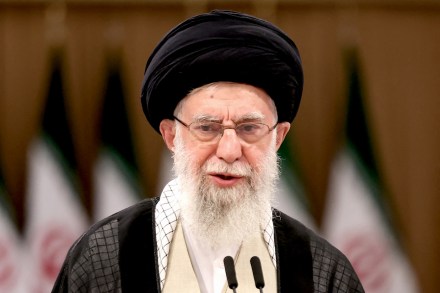
Last night, the Middle East witnessed its fiercest clash yet as Israel and Iran traded blows. A daring Israeli operation, orchestrated by Mossad and the Israeli Air Force (IAF), obliterated Iran’s top military commanders, including IRGC leaders, and struck ballistic missile sites and nuclear facilities. Iran initially retaliated with a barrage of drones, all of which were shot down. It then escalated its attack, firing over 200 ballistic missiles targeting civilians. Several missiles hit the densely populated cities of Tel Aviv, Ramat Gan, and Rishon Lezion, killing three civilians and wounding over 75. Unlike Iran’s barrages last year, which inflicted minor damage, this assault overwhelmed Israel’s defences. A lot less help from allies also meant that more missiles hit Israel.

More than anything, Israelis want the hostages home

From our UK edition

The war in Gaza, now in its 19th month, has reached a tipping point. On Monday, the UK, France, and Canada issued a stark warning to Israel, threatening 'concrete actions' if it doesn’t halt its renewed offensive and lift aid restrictions. The EU followed, with top diplomat Kaja Kallas announcing a review of trade agreements with Israel. Hamas gloated predictably, calling the statement 'an important step' toward restoring international law – as if the terror group ever cared about any law but Sharia. But this diplomatic pile-on risks emboldening the group and alienating an ally without offering viable solutions.

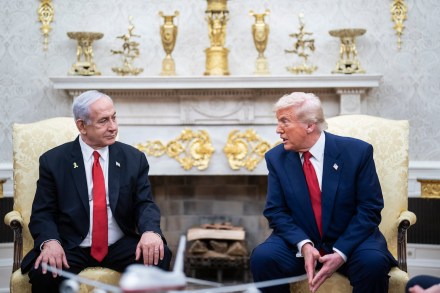
Trump and Netanyahu go their separate ways

From our UK edition

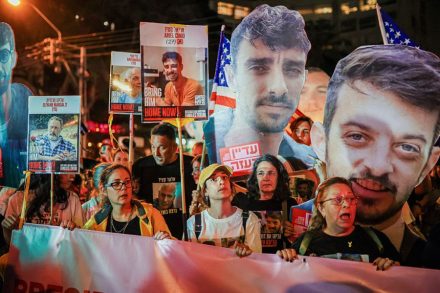
The release of Edan Alexander, the last living American-Israeli hostage held by Hamas, was a moment of profound relief for his family and a rare flicker of hope for war-fatigued Israelis. The 21-year-old soldier, kidnapped on 7 October 2023, walked free on 12 May 2025 after 584 days in hell.  The jubilation was quickly muddied by political spin. Israeli Prime Minister Benjamin Netanyahu, ever the opportunist, claimed the release stemmed from Israel’s relentless military pressure. The truth, however, lies elsewhere: American backchannels, led by Trump’s special envoy Steve Witkoff, secured Alexander’s freedom through quiet diplomacy in Qatar, not IDF bombs in Gaza.

‘Capturing’ Gaza could backfire spectacularly

From our UK edition

Israel’s cabinet has given a green light an audacious plan to retake Gaza, signalling a serious shift in its approach to the war on the Hamas-controlled enclave. Approved on 5 May, the operation aims to seize the entire Strip, hold key territories, and maintain a long-term military presence – a stark departure from the hit-and-retreat tactics of the past.  With a timeline pegged to begin after Donald Trump’s regional visit from 13-16 May, the IDF are mobilising tens of thousands of reservists for what Prime Minister Benjamin Netanyahu calls an ‘intensive’ campaign. But this high-stakes strategy, driven by the twin goals of crushing Hamas and freeing hostages, is fraught with risks and riddled with contradictions.

This Remembrance Day in Israel, ‘they deserved it’ is in the air

From our UK edition

On the eve of Israel’s Remembrance Day, as sirens pierce the quiet of Israeli streets and the nation stands still to honour its fallen, something different will be happening far beyond Israel’s borders. This year, the pain pulses through the hearts of Jews across the diaspora. The grief is no longer distant – it is raw, personal, and inescapable. The surge in anti-Semitism, venomous and unapologetic, has woven our fates together. Yom HaZikaron, Israel’s Remembrance Day for fallen soldiers and victims of terror, has always been a deeply Israeli ritual.

An Israel-Hezbollah ceasefire will never last

From our UK edition

Could this long round of armed conflict between Israel and Hezbollah finally come to an end? It’s too early to know for sure, but all signs seem to point in this direction. Lebanon and Hezbollah have reportedly agreed yesterday to a US ceasefire proposal. American envoy Amos Hochstein arrived in Beirut today to finalise a deal between the sides. It seems that there’s an agreement on most issues, and Hochstein’s role is to tie up a few loose ends. Even if an agreement is reached, it would only be a temporary solution According to the terms of the ceasefire, Hezbollah will have to abide by UN Security Resolution 1701 from 2006. It stipulates that Hezbollah cannot have armed presence in southern Lebanon – south of the Litani river.

Why Netanyahu sacked his defence minister

From our UK edition

Benjamin Netanyahu dropped a bombshell this evening when he fired Defence Minister Yoav Gallant. Outside observers might wonder why the Prime Minister would fire the only member of his government with meaningful military experience when Israel is engaged in a prolonged and complex war on several fronts. Israelis however, have been expecting this to happen for some time. It was no secret that Gallant and Netanyahu had a fractured relationship from the moment the government came to power. Netanyahu fired Gallant in March last year because of his criticism of the government’s judicial reform that threatened to undermine Israel’s democratic institutions. He backtracked on his decision after tens of thousands of furious Israeli spontaneously took to the streets to protest the decision.

Israel is right about UNRWA

From our UK edition

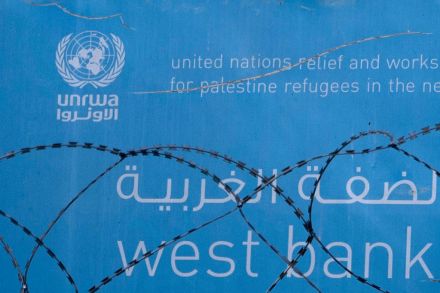
The Israeli parliament resumed its work on Monday after a long recess, and one of the first items on the agenda was voting on a bill that enjoyed rare widespread popularity. The bill decreed that Israel will severe ties with the UN relied and work agency for Palestine refugees (UNRWA), which will heavily restrict the organisation’s ability to operate in Jerusalem, Gaza and the West Bank. It passed with a majority of 92 for and 10 against, with even opposition members of the Knesset supporting the bill. The bill was criticised by the UN, which threatened to suspend Israel’s membership. It was also criticised by Israel’s allies, including the US, UK and France, who argue that UNRWA has an essential role in providing humanitarian aid to Palestinians.

Israel does not want full-scale war with Iran

From our UK edition

Just over three weeks after Iran attacked Israel with 200 ballistic missiles, the Israeli Air Force (IAF) finally launched a retaliatory airstrike on Iranian military facilities last night. The IAF strike reportedly lasted three hours, and was carried out in three waves. It was based on impressively precise intelligence and targeted the missile manufacturing facilities where the ballistic missiles used in Iran’s attack earlier this month were made. The IAF also struck surface-to-air and surface-to-surface missile arrays. As soon as reports of the attack emerged, the Iranian disinformation machine whirred into action.

Iran is playing a dangerous game

From our UK edition

A drone exploded in a sleepy Israeli seaside town yesterday. The target of the attack was Benjamin Netanyahu. By luck, the drone missed its target – Netanyahu’s home – and no one was hurt in the explosion. Hezbollah launched three drones from Lebanon toward Caesarea. Two were shot down by the Israel Defense Forces but, worryingly, the third arrived undetected. Sirens, which are supposed to warn civilians of an impending attack, did not sound, meaning no one knew they should seek refuge in a bomb shelter. The Israeli Prime Minister claimed he was not at home when the drone hit. An Iranian – or Iranian-backed – assassination of the Israeli Prime Minister (or other senior figure) would change the game completely.

Yahya Sinwar’s killing is an immense victory for Israel

From our UK edition

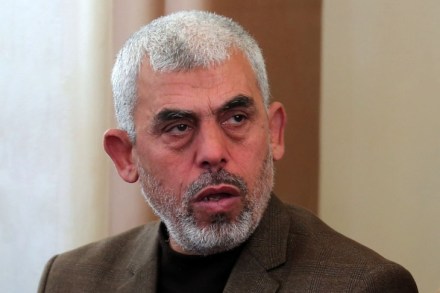
Yahya Sinwar, the leader of Hamas and Israel’s top target in Gaza, has been killed by the Israel Defence Forces (IDF). The Israeli Foreign Minister has confirmed that the Hamas chief was one of three terrorists killed in the Gaza Strip today. Early reports indicate that this wasn’t a targeted hit, but that Israeli forces came across Sinwar’s body by chance, after an IDF tank fired at a building in Rafah where ‘suspicious movement’ had been detected on an upper floor. A body resembling Sinwar was then spotted by IDF troops in the rubble. Sinwar clearly made a critical error The impact of his death cannot be underestimated. Sinwar has been the leader of Hamas’s political bureau since August 2024, after his predecessor Ismail Haniyeh was killed by Israel.

Can the US force Israel to bow to its demands on Gaza?

From our UK edition

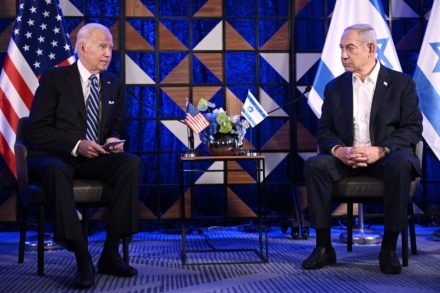
The White House wants Israel to allow more aid into Gaza and implement humanitarian ceasefires within 30 days. If they don't, the US has threatened to withhold military aid to the country. That's according to a leaked letter sent over the weekend by secretary of state Anthony Blinken and defence secretary Lloyd Austin in which they set out a short but punchy list of demands. The letter's unusually harsh tone seems to be motivated by domestic pre-election pressure on the Democratic party. President Joe Biden’s fractured relationship with Israeli PM Benjamin Netanyahu has also played a part – which is why the letter was addressed to defence minister Yoav Gallant and minister of strategic affairs Ron Dremer rather than to Netanyahu himself.