Limor Simhony Philpott

Dr. Limor Simhony is a freelance writer. She was previously a research fellow at the Institute for National Security Studies (INSS) in Tel Aviv.

Britain must learn from Israel’s mistakes as it prepares to leave Afghanistan

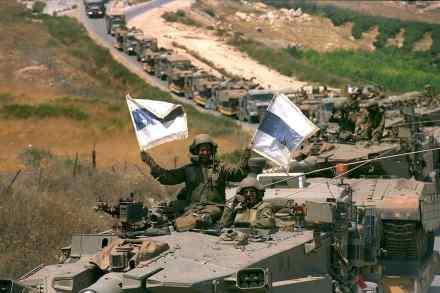
On 24 May 2000 the last Israeli soldier left Lebanon after 18 years of war. A few months earlier I completed my national service as an IDF operations sergeant, serving in command centres on the Lebanese border. Back then I watched the withdrawal with relief; happy that the roadside bombs, shelling, Hezbollah attacks on convoys and outposts, the wounded and the killed – everything that had been my daily reality for two years – was now a thing of the past. Today I watch the withdrawal of American and British forces out of Afghanistan with dread. There are differences between Israel’s involvement in Lebanon and the involvement in Afghanistan; there are also differences between Hezbollah and al-Qaeda and the Taliban.
How Israel can block Iran’s nuclear dreams

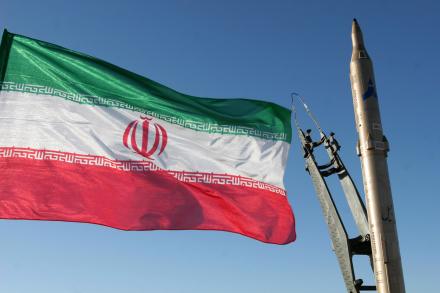
In his first press conference, Iran's new President unequivocally objected to renegotiating the Obama-era nuclear deal. Israel’s new Prime Minister, Naftali Bennett, will be unimpressed. He reacted to the election of hardliner Ibrahim Raisi by saying that it’s ‘the last chance for world powers to wake up... and understand who they are doing business with'. For Israel’s new government, the so-called hangman of Tehran's election presents new problems.

Can Naftali Bennett’s anti-Bibi coalition survive?

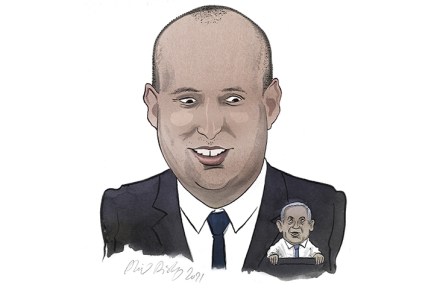
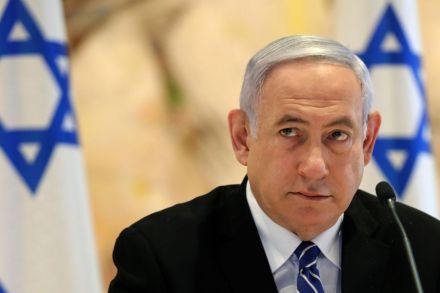
Sunday saw a watershed moment in Israeli politics: Bibi Netanyahu was removed from power after 12 years, and his government replaced by an eclectic coalition headed by Naftali Bennett and Yair Lapid, both of whom will serve as Prime Minister under a rotation agreement, starting with Bennett. It may be that one of Bibi’s greatest achievements was bringing together politicians with little in common but the belief that it was time for Bibi to go. Anyone watching the vote to approve the new government would have been on the edge of their seat: the new government was approved by a single vote (passed 60 to 59).

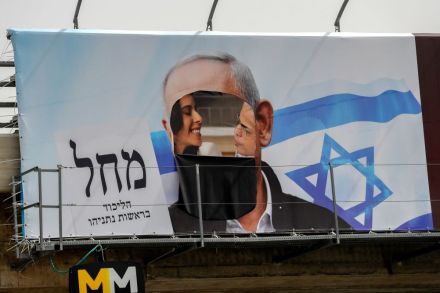
Netanyahu’s departure would be good news for Israel

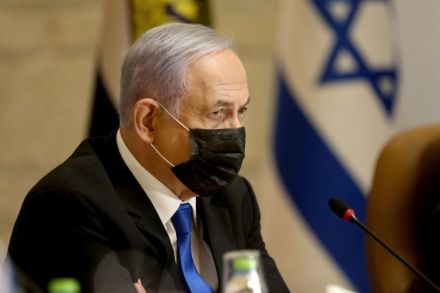
Time is running out for Bibi Netanyahu. In the next couple of days, the fate of Israel’s next government will be decided. If opposition parties manage to reach a deal tonight, it will mean that Bibi and the Likud will no longer be in power – for the first time in twelve years. Four rounds of elections made two things clear: that about two-thirds of the public votes for right-wing parties; and that Bibi has become the Israeli's right’s biggest problem. A dozen years in power has made Netanyahu arrogant, entitled and hated by a large portion of the public, including right-wing voters. This has been made worse by deep resentment towards his wife Sarah and son, Yair, both of whom have meddled in politics. This cost Likud votes, and may now cost it the government.

Bibi is back

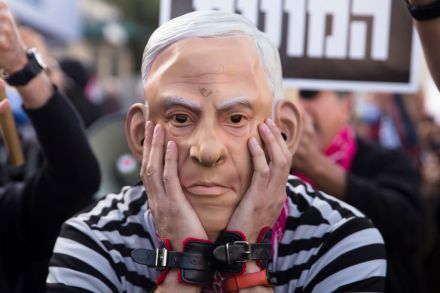
Is Benjamin Netanyahu’s time up? A fortnight ago, it seemed so. Netanyahu’s mandate for forming a coalition expired. The opportunity was handed instead to Yair Lapid, leader of Israel’s second largest political party Yesh Atid. Many dissatisfied Israelis started to hope: after four inconclusive elections, there was finally a chance to oust Netanyahu. But then hostilities broke out between Israel and Hamas, and reports of Netanyahu’s political death appear to be greatly exaggerated. In the weeks before this latest Israeli-Palestinian conflict, there was talk that Israel's new government would be made up of an eclectic coalition that would include parties on the left, right and centre, as well as an Arab-Israeli party.

The battle the Israeli Defense Force can’t win

The hostilities between Israel and Gaza caught Netanyahu’s government by surprise. What started as a local demonstration by Palestinians against ongoing efforts to evict them quickly escalated into violent clashes with a heavy-handed Israeli police. Hamas then demanded Israel remove its forces from the area, including the nearby Al-Aqsa mosque, or face reprisals. When they didn’t, the terror group retaliated by firing rockets into Jerusalem. This was on Monday. By Wednesday there had been fierce exchanges of fire between both sides. Hamas fired over 1,500 rockets towards Israeli cities and towns. Despite Israel’s impressive Iron Dome anti-missile system and widely available shelters, over 200 Israelis have been injured and seven killed.

Can Iran help keep King Bibi in power?

Benjamin Netanyahu has a problem: he doesn’t have sufficient support to form a coalition. With 20 days left to complete this near impossible task, he is desperate; and, when backed into a corner, Netanyahu looks to Iran as his saviour. The timing of the recent explosion in Iran’s Natanz’s nuclear facility – and particularly the fact that Israel has done little to dispel the notion that it was to blame – suggests that the motivation was at least partially political.  This isn't to say the attacks on Iran aren’t normally motivated by interests of national security. The threat of a nuclear-capable Iran is substantial: according to Iran, the Natanz nuclear site holds thousands of advanced centrifuges.

What Britain can learn from Israel’s vaccine passports

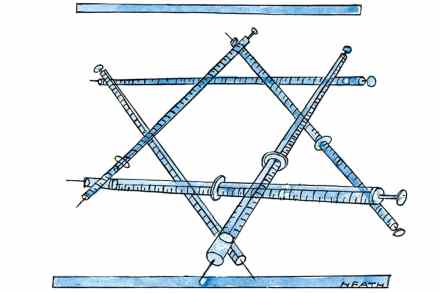
Boris Johnson’s announcement about vaccine passports was met with criticism from backbenchers on both sides of the political spectrum. The scheme was described as potentially ‘discriminatory’ with warnings that it may lead to a ‘two-tier’ Britain. Labour leader Keir Starmer even said the use of vaccine passports is ‘not British.’ Given the deep suspicion towards national identification cards, this did not come a surprise. But if the government eventually chooses to use vaccine passports, some lessons from Israel’s experience may be helpful.

Is time up for King Bibi?

In the run-up to its fourth election in two years, Israel is enjoying its vaccine success story. The number of seriously ill Covid patients is in decline, the R rate is slowly falling and the economy has started to reopen. But prime minister Benjamin Netanyahu is not reaping the rewards. Support for Netanyahu's party, Likud, although still the largest, has shrunk significantly since the last elections where it won 36 seats. Blue and White, which won 33 seats, has since crashed and burnt due to brilliant political manoeuvring by Bibi (and a staggering lack of political sophistication by leader Benny Gantz). Yet Likud is expected to only win 30 seats in this week's snap election. For Bibi, the vaccination programme has been a double-edged sword.

Is it time to ban New Year fireworks?

When I was 11, Iraqi scud missiles exploded next to our home, collapsing part of our roof while I huddled together with my younger siblings on my parents’ bed wearing gas masks. This was in 1991, during the Gulf War when Israel was under attacks for the better part of January and February. I lived with my family near Tel Aviv, in an area designated ‘Zone A’ – the most likely to be hit by missiles. This wasn’t the only time I’ve experienced bombings: as an operations sergeant in the IDF, I was stationed on the border with Lebanon at a time of fierce and frequent fighting with Hezbollah; and as a civilian living in Israel during several rounds of fighting with Hamas that involved rocket attacks.

Mohsen Fakhrizadeh’s death comes at a convenient time for Netanyahu

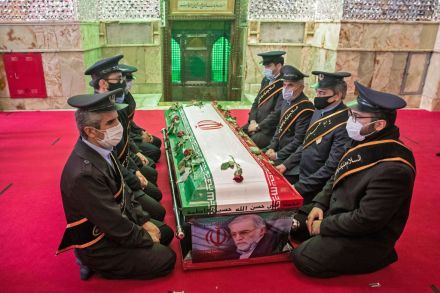
What did Joe Biden make of the assassination of the Iranian nuclear scientist Mohsen Fakhrizadeh? The president-elect has yet to make his feelings known, but it is hard to imagine Biden will be pleased with a killing that has the potential to escalate tensions in the Middle East and obstruct his policy towards Iran.  Although Israel has not admitted to the attack, it carries all the known trademarks of sophisticated Mossad assassinations. Add to that Israeli prime minister Benjamin Netanyahu’s implicit threat against Fakhrizadeh in 2018, and it becomes hard to escape the conclusion that Israel was responsible. So why would Israel risk retaliation by Iran, as well as antagonising Biden and its European and few Middle Eastern allies by carrying out this hit?

King Bibi’s pandemic problem

‘They are S-C-A-R-E-D’. So said Binyamin Netanyahu in a famous 1999 election campaign speech, referring to the media. Now he is the one who is scared. The political mastermind who has been Prime Minister for the past eleven years stands to lose his crown. Israel's political crisis of 2019-2020 saw three general elections without producing a clear winner. Eventually, asserting a need for national unity to combat the pandemic, Bibi masterfully managed to form a coalition under his leadership while dividing the main opposition party, Blue and White. Under the rotation agreement, Bibi is to step down after two years and be replaced by Blue and White leader, Benny Gantz.