Limor Simhony Philpott

Dr. Limor Simhony is a freelance writer. She was previously a research fellow at the Institute for National Security Studies (INSS) in Tel Aviv.

After Hamas, who will control Gaza?

From our UK edition

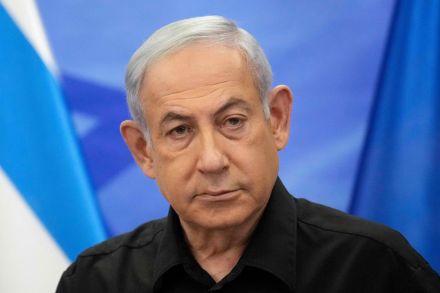
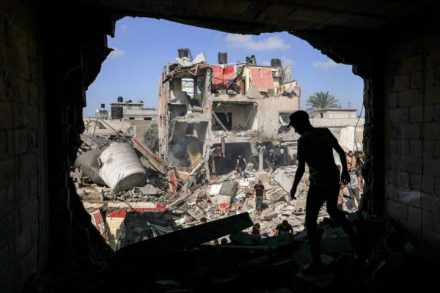
Who will rule Gaza once the war is over? Israel, so far, hasn't provided an answer. The country's prime minister Benjamin Netanyahu has been clear that his aim is to wipe out Hamas. He said this week that Israel will claim responsibility for security in Gaza for an ‘indefinite period', in order to stop Hamas from rearming and establish long-term security. But Israel is unlikely to have the stomach to stay in Gaza as casualties mount. So who will step into this vacuum? One possible solution is for the Palestinian Authority (PA) to take over as the ruling body in Gaza. The PA governed over the Palestinian territories following the 1994 Oslo Accords and resulting peace treaty until they lost to Hamas in the 2006 elections.
‘Humanitarian pauses’ will help Israel defeat Hamas in Gaza

From our UK edition

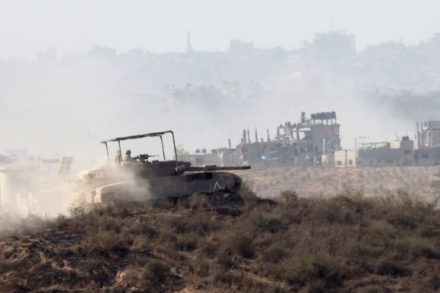
As the IDF continues to close in on Hamas in the heart of Gaza, the US announced that Israel will implement daily four-hour 'humanitarian pauses' in fighting in the north of the strip. Hours after the announcement yesterday, during a press conference, the Israeli defence minister Yoav Gallant spoke rather differently about the pauses. He stated that Israel would not stop the fighting against Hamas until all the hostages held by the group had been returned. Only then could proper humanitarian pauses go ahead. The inconsistent messaging from the American and Israeli sides regarding these humanitarian pauses reflects the American administration's frustration with Israel’s refusal to pause the fighting.

Israel is in a race against time to defeat Hamas

From our UK edition

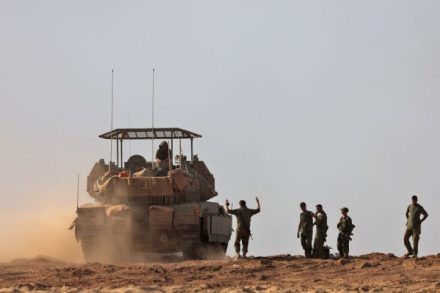
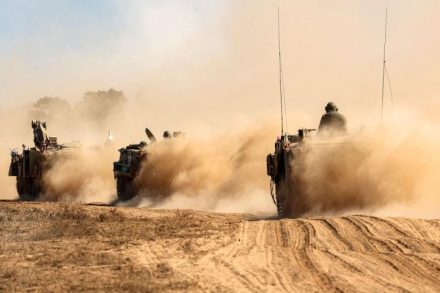
The Israeli Defence Forces (IDF) declared last night that Gaza has been encircled and divided into two separate parts: north and south. The majority of the fighting is in northern Gaza, where Hamas has concentrated its bases and arms. This is a significant new stage in the war, which has so far escalated gradually. The gradual advance of the IDF ground troops had several aims. It allowed Palestinian civilians to move from northern Gaza to the safer south, close to the border with Egypt where limited humanitarian aid has been entering the strip. The majority of civilians have now moved to southern Gaza, but several hundred thousands have remain in the north. Some are worried that they won’t be safe in the south.

What Palestinian ‘solidarity’ marchers in the West don’t understand about Hamas

From our UK edition

The atrocities committed by Hamas on 7 October have been revealed in their terrible savagery. There are accounts of dead babies, their bodies riddled with bullets, entire families burnt alive in their homes, women and girls raped and killed. Bodies tortured and mutilated beyond recognition. Israelis thought that the world would finally recognise Hamas for what it truly is; an Islamist terror organisation seeking to destroy Israel. It did not.  Since the war started, there has been an explosion of anti-Israel and anti-Jewish hatred.

Netanyahu is looking weak

From our UK edition

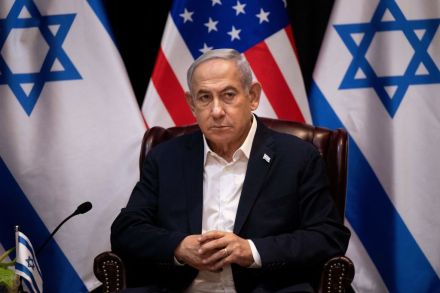
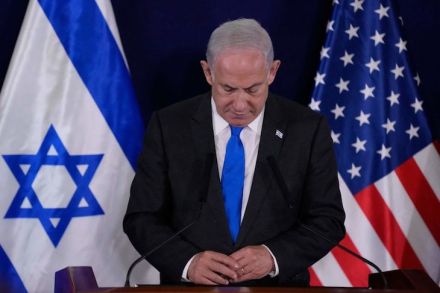
If the Israeli public had expected Benjamin Netanyahu to take responsibility for failing to foresee Hamas’s attack on 7 October, for years of neglecting the safety and security of the towns near the border with Gaza and for allowing Hamas to build a substantial armed force – they would’ve been disappointed by his speech on Wednesday night. Netanyahu, in a typical manner, did not accept responsibility. Unlike the IDF’s Chief of the General Staff, Herzi Halvi, and the head of Israel’s general security service Shin Bet, Ronen Bar, both of whom have publicly admitted to failures for predict the attack, Netanyahu declared that an investigation into the events will take place after the war is over. Everyone will be answerable, ‘including myself’, he added.

Netanyahu has good reasons to delay the ground invasion of Gaza

From our UK edition

Israel has called in more than 300,000 reservists in the 17 days since Hamas’s monstrous attack on 7 October. Many have volunteered for service despite not being called upon. Planes full of Israeli men and women have arrived to Israel from all corners of the earth, carrying those who want to fight in the war. Israel now has more than 500,000 troops ready to be mobilised, and motivation among troops is sky high.  However, a ground offensive into Gaza is currently on hold, despite some limited raids. The IDF’s spokesperson, Admiral Daniel Hagari, has repeatedly declared that forces are ready and will carry out any mission the government will require it to do. The IDF says it is prepared, but the government seems indecisive.

The Gaza hospital strike changes everything

From our UK edition

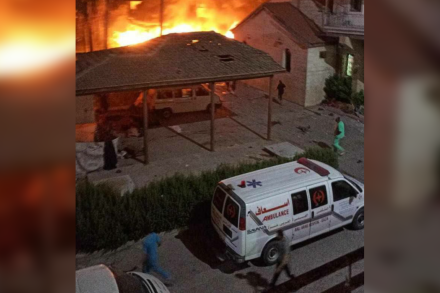
The explosion that killed hundreds in the al-Ahli hospital in Gaza has created a critical moment that may change the course of the war. Hamas claims that an Israeli air strike was behind the explosion. Israel, on the other hand, claims that the explosion was a misfired missile from the terror group Palestinian Islamic Jihad. Israel has not fought a war on two fronts since 1973. While it is prepared for such scenario, it will be difficult, dangerous and costly Israel has released evidence today to support their claim, including a radar image showing that near the time of the explosion, Hamas and Islamic Jihad were firing missiles into Israel, and that the trajectory of their missiles went directly over the hospital.

Netanyahu’s greatest failure

From our UK edition

Over the weekend, the IDF confirmed that it killed the Hamas terrorist who commanded the attack on Israel a week earlier. It was later disclosed that the terrorist was arrested by Israel in 2005 for abducting and killing Israelis. He was released in 2011 by Netanyahu’s government in return for a captive Israeli soldier abducted in 2006 as part of a prisoner exchange deal. Netanyahu knew that Hamas received money, weapons and training from Iran The deal included the release of over 1,000 prisoners, many of them dangerous terrorists who returned to Gaza and rose through the ranks of Hamas. This controversial agreement exemplifies Netanyahu’s failed policy of containment and appeasement towards Hamas.

Netanyahu must go – for Israel’s own good

From our UK edition

Israelis were turning against the country’s prime minister Benjamin Netanyahu even before Hamas’s invasion. Over the past six months, tens of thousands of people have taken to the streets against Netanyahu’s government and its controversial judicial reforms. Israel has been hit by strikes and road blocks and ministers have been heckled in the streets. In an unprecedented move, resistance even reached the army: some reservists vowed to refuse to serve in the Israeli army if the reform passed. Since the atrocity of last weekend, fury at the Israeli government has become even more widespread. When the war broke out, it was clear that Israel was caught napping. This caused an immediate widespread outcry against the government.

An invasion of Gaza is hugely risky for Israel

From our UK edition

In a sign that the Israeli Defence Forces (IDF) is planning to ramp up the war in Gaza, Israel has called for evacuation of 1.1 million Palestinian civilians from the northern area of the Gaza Strip. The UN quickly condemned Israel’s announcement, claiming that an evacuation within the 24-hour timeframe given is ‘impossible’, and have called on Israel to rescind its order. The war, which started on Saturday following a surprise attack by Hamas, saw the biggest single massacre of Jews since the Holocaust. The horrific details of what ensued included the murder of babies, the rape and murder of women and girls, and people being burned alive. Civilians, including children and babies, have been abducted into Gaza.

What happened to ‘Never Again’?

From our UK edition

For Jews everywhere, there was an eery familiarity about the terrible violence unleashed on Israel during Saturday’s attack by Hamas. This was no simple act of terrorism. It was a pogrom. Pogroms were violent attacks against Jews living in the Russian empire in the 19th and early 20th century. They, much like the atrocity this weekend, included homes being torched, the abuse and execution of civilians and the rape of women. In the kibbutz of Kfar Aza, close to the Gaza border and scene of the most depraved Hamas violence, no-one was spared, whether they were female, young or old. All suffered the same fate. All were targeted for being Jewish. Hamas’s pogroms included bodies being set alight and the casual, sadistic murder of children. This is reminiscent of Isis, or the Nazis.

Israelis are furious at Benjamin Netanyahu

From our UK edition

Israelis are livid. Their fury is directed not only at Hamas for massacring over 700 people, wounding thousands and abducting at least 130 including women and children, but also at the Israeli government, led by Benjamin Netanyahu, and the Israeli Defence Forces (IDF) for failing to prevent this terrorist invasion. How did Israeli security forces – among the most sophisticated in the world – not foresee Hamas’s attack? A postmortem is already underway, but what is clear is that Netanyahu's government was caught napping, distracted by its attempts to force through unpopular judicial reforms. This stole attention away from the worsening security situation in Gaza, the West Bank and the border with Lebanon. Now, Israelis have paid a heavy price.

Hamas’s unprecedented attack on Israel was meant to bring war

From our UK edition

In the early hours of this morning, Israelis had a flashback to the surprise attack of the Yom Kippur War that started almost 50 years ago to the day, in October 1973. Hamas says it has launched 5,000 missiles deep into Israeli territory. The missiles were used to mask a much more elaborate attack that saw dozens of Hamas terrorists, dressed in uniform and — according to reports on Israeli media — heavily armed with machine guns and grenades, invade Israeli territory. The terrorists entered towns and villages by foot, paraglides and vehicles. Fighting between Israeli security services and the terrorists has gone on for hours, with reports of dead, injured and kidnapped soldiers and civilians.

Israel is running out of time to stop an Intifada

From our UK edition

How does Israel contain Palestinian terrorism without provoking the third Intifada? Recent weeks have seen the largest escalation in violence between Israel and the Palestinian since 2021. Israeli forces have killed at least 42 Palestinians so far this year; and eleven Israelis, mostly civilians, have been killed in a series of terror attacks. The violence is in danger of spiralling out of control.  Although Israel has been successful in capturing or killing terrorists (but also several innocents), it has encouraged more unrest in the West Bank. The nationalistic rhetoric of members of the Israeli government, including talks of expanding Jewish settlements in Palestinian territory, is making it worse. Hamas has so far largely remained on the sidelines.

Why does Israel want to patch things up with Russia?

From our UK edition

Is Israel cosying up to Russia? When Eli Cohen, Israel’s foreign minister, spoke to his Russian counterpart Sergey Lavrov last week, it was the first such call between the countries’ foreign ministers since the start of the war in Ukraine. Israel’s ministry of foreign affairs, Cohen said, was planning to establish a new ‘responsible’ policy with regard to the country and ‘talk less’ about the war in public. The announcement of the call caused a frenzy, with speculation that Israel wants to adopt a pro-Russia policy. It prompted a public admonition from senior Republican senator, and ally of Israel’s newly reinaugurated prime minister Benjamin Netanyahu, Lindsey Graham.

The rise of Taliban Twitter

From our UK edition

The Taliban takeover of Afghanistan was swift, but this victory wasn't won overnight. For years, the Taliban has been waging a softer fight: one on social media. Since it was removed from power, the Taliban has dedicated enormous resources to developing its presence online.  As it successfully recaptured Afghanistan, the propaganda opportunities which it put to use on Twitter as the eyes of the world watched suggested these efforts have paid off. Images and videos of Taliban forces easily gaining ground and advancing into Afghanistan’s cities – picking up military hardware left by the Americans along the way – spread like wildfire online. Islamists around the world were delighted.

Western deterrence now looks hollow

From our UK edition

The efforts of a 20 year war took only a few weeks to overturn: the Taliban has completed its takeover of Afghanistan. As parliamentarians return to Westminster on Wednesday to discuss the situation, the focal point of the debate should be damage control. One of the major challenges will be restoring deterrence. The withdrawal of troops, which was done hastily and without an organised exit strategy, gave the Taliban the opportunity to make quick advances, often even without the need to use violence. The last few days also saw images of western nations rushing to evacuate remaining personnel. The way these events have unfolded depicts the US and its European allies as weak, risk averse and war-weary — it undermines the West’s deterrence.

Why Iran is stepping up its maritime piracy

From our UK edition

On Tuesday there was an attempted hijacking of a tanker in the Gulf of Oman. According to the UK Maritime Trade Operations (UKMTO), nine armed men boarded a Panama-flagged tanker before leaving several hours later – reportedly after the ship’s crew sabotaged the vessel’s engines. The UK believes this attempted hijacking was the latest in a string of maritime attacks perpetrated by Iran or one of the several militant groups it backs in the Middle East. The failed hijacking follows a drone attack last week on the tanker Mercer Street in the Arabian sea, which is owned in part by the Israeli shipping magnate Eyal Ofer. This attack claimed the lives of British and Romanian nationals onboard the ship.

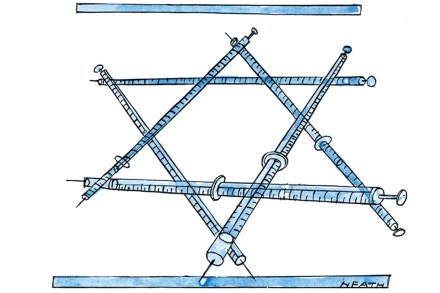
Why Israel is rolling out a third Covid jab

From our UK edition

Israel has today become the first country in the world to offer a third Covid-19 booster vaccine on a large scale. Prime Minister Naftali Bennett announced that Israel will vaccinate all people over the age of 60 again, with the new Israeli President, Isaac Herzog, and his wife, the first people to receive their third shot on Friday morning. Legitimate concerns led to the decision: the number of new Covid cases in Israel has been rapidly increasing, including among the vaccinated – although to a much lesser degree compared with those who have not been vaccinated. There were 2,143 confirmed cases on Thursday, with 286 hospitalisations.

The Afghan withdrawal will only embolden the West’s enemies

From our UK edition

‘How many thousands more Americans, daughters and sons, were you willing to risk?’ Biden asked critics of the decision to withdraw forces from Afghanistan last week. He has the support of the American public – most of whom also wanted to see troops leave Afghanistan after 20 years of fighting and 2,400 fatalities. This risk aversion is one of the reasons America decided to withdraw its forces from Afghanistan. There’s a diminished appetite in the US for prolonged military involvement in the Middle East, especially large-scale deployments of ground troops that inadvertently cost lives.