Lee Langley

Lee Langley is the author of ten novels and has written several film scripts and screenplays.

A novel that will make you want to call social services

Nina Stibbe has a way with children. Her first book, a memoir, was a deceptively wide-eyed view of a literary Hampstead family observed in all its turbulence by the teenage Stibbe, working as the nanny. Written as letters home to her sister, Love, Nina won over fellow writers and critics; reviews spoke of a quirky, life-affirming comic genius. Now she’s written her first novel, and again she has the domestic arena in her sights. Man at the Helm is a wicked anatomising of a dysfunctional family seen through the eyes of a nine-year-old narrator. Think What Maisie Knew with laughs and four-letter words, plus a touch of The Young Visiters — baroque formality undermined by an engagingly frank view of sex. Henry James meets Daisy Ashford.

A lost treasure of Japanese fiction – pocket-sized but world class

Think haiku, netsuke, moss gardens… Small is beautiful. Japanese art, a scholar of the culture once commented, is great in small things. Pushkin Press has a track record for bringing foreign language works, classic and contemporary, to a British readership, and with this pocket-sized, elegant duo they celebrate a modern Japanese master virtually unknown here. Yasushi Inoue, one of Japan’s major literary figures, wrote his first novel, The Hunting Gun, in 1949, followed immediately by Bullfight. After 20 years as a journalist and literary editor, he was stepping into fiction. By the time he died in 1997 he had written 50 novels and nearly 200 short stories and novellas. Of all his books, he said, he felt closest to these two.

Who’s raiding the fridge?

There is a problem with describing what happens in Nagasaki: impossible to reveal much of the plot without flagging up serious spoiler alerts. The story demands an innocent eye; the gaining of knowledge should come page by page, and not be hurried. To set the scene: Shimura-san, a bachelor of 56, set in his ways, lives quietly in a house on the steep hillside above the Nagasaki dockyards. He has an undemanding job as a meteorologist, analysing weather patterns. One day, returning after work, hot, sticky and tormented by the clamour of cicadas, he notices, not for the first time, that a pot of yoghurt is missing from the fridge. Is the fruit juice bottle exactly where he left it that morning? He measures the level, and next day it has dropped.

A Mughal Disneyland and a ripping yarn

Mysore, once the capital of a princely kingdom in South India, has lost its lustre. In Mahesh Rao’s darkly comic novel, grandiose futuristic visions are being floated: in a city desperate to reinvent itself for today’s brave new world, ancient temples and palaces are no longer enough. With India’s space programme about to send a man to the moon, Mysore must make its own giant leap. All hopes are pinned on what is destined to be a global tourist attraction: HeritageLand, planned as Asia’s largest theme park (think Mughal Waterworld — the Disneyland of south India!) And Mysore needs a new marketing slogan — ‘The Geneva of the East?’  suggests a desperate PR person. Well, at least there’s a lake.

‘The Infatuations’, by Javier Marías – review

A café in Madrid. From her table across the room a solitary woman watches an attractive couple share breakfast morning after morning and speculates pleasurably about their relationship. One day they fail to appear and as time passes she feels a deepening sense of loss. Later she learns that the man has been murdered, stabbed to death in the street — an apparently senseless crime. The tragedy of the happy couple touches and disturbs her. Then, almost accidentally, she finds herself becoming involved with the widow and the dead man’s best friend. At first all is straightforward: loss, grieving, consolation. Gradually the relationship becomes more complex: she begins an affair with the friend, recognising that she is little more than a stopgap in his life.

Bookends: Short and sweet

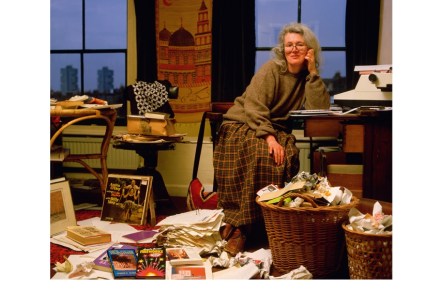
Before texts and Twitter there were postcards. Less hi-tech, but they kept people in touch. Angela Carter (pictured above) and Susannah Clapp were friends, and over the years, postcards from Carter arrived from wherever her travels took her. They could be quirky, surreal — from America a huge chicken swallowing a truck; the Statue of Liberty drowning in a lake. Others were greetings, scribbled comments, hand-drawn cartoons. Fourteen are scattered through Susannah Clapp’s A Card from Angela Carter (Bloomsbury, £10): black-and-white reproductions evoking experiences riotous with colour,  charting the progress of a turbulent life that ended too soon. Carter died of lung cancer in 1992 aged 51.

Wool of bat and lizard leg

When Julia Blackburn and her Dutch husband Herman move into an old village house perched on a cliff high above the Italian Ligurian Riviera they become part of a dwindling community in a landscape of forests and deserted villages with roofless ruins almost swallowed up by the riotous undergrowth. Seven hundred peasants once occupied this mountainous terrain, scraping a pitiful living; shepherds, chestnut farmers, cheese-makers — mezzadri, ‘half-people’, handing over half of everything, down to their last kilo of olives, to the padrone who was virtually their feudal lord; also sharing, when required, their women. They got by on a diet mainly of chestnuts — eaten raw, boiled, roasted, ground into flour, supplemented by an occasional thrush or dormouse.

Living dolls

Born in Japan, growing up in America in the Sixties, Yoko Kawaguchi was perplexed by the persistence of what she felt to be an anachronistic image of Japanese culture: the geisha. ‘That mincing, simpering personification of female subservience to the male infuriated me,’ she writes in the introduction to Butterfly’s Sisters. Her book explores the Western portrayal of Japanese women with emphasis on the geisha, from the mid-19th century to the present day, comparing perception with reality, misunderstandings compounded by prejudice. She details the geisha’s appearance from head to toe (tortoiseshell hairpin to wooden-soled geta), and the life, from the market in virginity to retirement and/or violent death, encompassing history, myth, literature and art.

Indian snakes and ladders

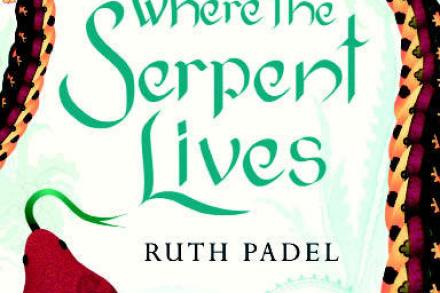
Award-winning poet Ruth Padel established her prose credentials with her autobiographical travel book, Tigers in Red Weather. Journalist Aatish Taseer trawled his own past and background for his memoir, Stranger to History. Now they have produced first novels connected by both dislocation and location — India, though they deal with very different versions of the subcontinent, viewing it from opposite, culturally shaped perspectives. Padel’s Where the Serpent Lives moves between a tangle of human relationships and an environment under threat. Writing about nature, she brings a poet’s intensity to her prose: objects, plants, and the wildlife that stalk her pages, are all fiercely observed. Her narrative spirals like a tropical plant, luxuriant with metaphor and imagery.

Beyond the guidebook

Between the Assassinations is to summer reading what Slum-dog Millionaire was to feelgood movies: the book, like the film, beneath a deceptively beguiling surface, is a Dickensian-dark view of child labour, corruption, poverty, and ruthless privilege in modern India. Aravind Adiga won the Man Booker prize with his first novel, The White Tiger, a savage picture of modern India seen through the eyes of a murderous entrepreneur hell-bent on power and success. Between the Assassinations sometimes reads like a prelude to that book: from the variously hopeless lives we encounter in these stories could have emerged the appalling yet dazzling anti-hero of Tiger.

Sounding a different note

What is inspiration and how does it work? Music and literature have a long record of mutual nourishment: Beethoven inspired Tolstoy who inspired Janacek, and each Kreutzer Sonata was different; miraculously rich and strange. Jeanette Winterson, inspired by Glyndebourne’s 75th anniversary, has asked some distinguished fellow-writers each to produce a work inspired by an opera. The result is Midsummer Nights — 19 short stories, plus Posy Simmonds illustrating the Glyndebourne experience with wry affection. Edited by Winterson, who also provides a story of passion and Puccini, the book offers a glimpse of how the inspirational and the creative juices interact.

On the waterfront | 4 April 2009

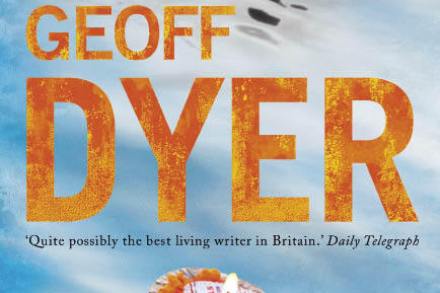
Geoff Dyer is the least categorisable of writers. Give him a genre and he’ll bend it; pigeonhole him and he’ll break out. Clever, funny, an intellectual with a resolutely bloke-ish stance; irreverent and incorrigibly subversive, this is the man who set off to write a study of D. H. Lawrence and came up with Out of Sheer Rage, a rant against academia in which Lawrence figured as a spear-carrier. His book about jazz, But Beautiful, started life as a critical study, and in its final form combined laconic history with poignant vignettes; short stories that uncovered the heart and soul of the music. Fiction as truth.

Troubled waters

Empires of the Indus, by Alice Albinia When Alice Albinia set off for the source of the Indus she was not embarking on a quest for the unknown: she knew where the river rises. She wanted to start her journey at its mouth, the delta on the Arabian Sea, to travel upstream to Tibet and tell the story of the river which gives India its name. Empires of the Indus covers a 2,000-mile journey and 5,000 years of history. Albinia’s prize-winning first book is a personal odyssey through landscape and time, fed by scholarship. Her pages resonate with great names: Timur, Genghis Khan, Alexander, Aurangzeb. But before that we have the conquest of Sindh, the botched finale of the British Raj, Independence, and the horrors of Partition.

Stepping-stones of his past self

Ghost Train to the Eastern Star, by Paul Theroux When Paul Theroux set off from Victoria Station in 1973 his plan was to cross Europe and Asia, taking as many trains as he needed to get him to Tokyo, returning on the Trans-Siberian Express. From the four-month journey came a travel book that was not quite what he intended: ‘I sought trains. I found passengers.’ The Great Railway Bazaar sold 1.5 million copies in 20 languages. Thirty-three years and 40-odd books later, Theroux — ‘twice as old as the person who had ridden those trains’ — set off again, travelling in his own footsteps to see how much he and the world had changed.

A romantic looks back

The unending journey of this book takes Mark Tully from slums to skyscrapers as he explores the past, present and future not only of the subcontinent but of society, both eastern and western; how democracy is facing up to fundamentalism — Hindu, Muslim and an atheism he scathingly labels ‘aggressive secularism’. The Dawkins camp would not be welcome in his compound. There was a time when Tully was the most famous Englishman in India — ‘What does Tully Sahib say?’ the man on the village charpoy would ask when political or economic upheaval loomed. Tully’s mellifluous voice filled the airwaves for the 22 years he ran the BBC’s New Delhi bureau, trusted and loved by his millions of listeners.

A marvel in marble

The Moghul monarchs’ way of life was an extravaganza of such breathtaking splendour that in comparison the Sun King’s Versailles seems understated. Both Shah Jahan and Louis XIV came to the throne in 1643 and their courts had much in common: architectural grandeur, luxury, a love of jewels and a flair for excess. What was unique to the Muslim emperor was his devotion to a consort throughout their long marriage. Her death in childbirth and his desire to create a worthy mausoleum resulted in what many consider the most beautiful building in the world — the Taj Mahal.

A thousand bottles of Mumm

The front cover shows a mature English beauty in an Oriental doorway, elegant in a turban, with twinset and pearls. On the back is a Country Life portrait of a radiant English rose. Both are Ann Allestree, who for 30 years supped at the high table of grand society, travelled, and set down her impressions. Seize the Day is an insider’s view of the wilder reaches of privilege. She met ambassadors, Eastern potentates, and enduring stars — Freya Stark, Harold Acton, Rebecca West. English eccentrics wander through her pages — barmy lords, batty old ladies, posh grotesques to set a Marxist drooling. Lord Binning invites her to dinner, and waves her into the kitchen ‘over a large pool of blood’, having just eviscerated a deer whose liver he intends to serve.

Bright light at the end of the tunnel

Christine Brooke-Rose is not an easy read. She is a sublime roller- coaster: hold on and hurtle with her — the ride will be exhilarating. She is dark, despairing, but her bleakness is Beckettian, the laughs never far away. Now 83, she lives in France, near Avignon. Born in Geneva (British father), she has written 12 novels (four of which are collected in the Christine Brooke-Rose Omnibus), worked as a critic and academic, teaching English language and literature in Paris, been claimed by the French as a nouveau-romancier, a membership she rejects like all other memberships. Perhaps her staunch stand-alone path has led to her status as both eminent and little known.

. . . and a Parisian bombe surprise

This is a French novel, a very French novel. The author won the Prix Goncourt for an earlier book and this one carries hints of Voltaire and Sartre. The publishers suggest that Piano can be read as a metaphor of life and death, heaven and hell; Dante is invoked. Daunting stuff, you might think. A thin book, it comes wrapped in heavyweight literary packaging — in France Jean Echenoz is rated alongside Beckett and Nabokov. But what lies inside this intellectual bombe surprise is a sharp, airy sorbet that slips down with great ease: an existential thriller of the sort that might once have been turned into a movie by Jean Cocteau. It’s a deadpan, elegant and wittily observed tragicomedy: posh French fun.

Breaking out of purdah

Reading Maharanis has something of the poignant pleasure of rummaging in the attic of a great house fallen into desuetude: here are reminders of another age. Princesses stroll in their gardens in the Indian moonlight, fireflies flickering like stars, or roller-skate gaily through their marble palaces, saris billowing, with a staff of 400 to keep the place in order. We share the sense of loss Browning discerned in a Venice deprived of splendour ‘when the kissing had to stop’. Think of them dressing for dinner on a tiger hunt in the jungle (white tie and tails, evening gowns and emeralds) while a 35-piece band played in the dining tent. Back at the palace, guests chose their preferred mode of transport for the following day: ‘horse, elephant or Rolls-Royce’.