Lee Langley

Lee Langley is the author of ten novels and has written several film scripts and screenplays.

A gripping psychological thriller: The Birthday Party, by Laurent Mauvignier, reviewed

Imagine a Stephen King thriller hijacked by Proust. Clammy-handed suspense, nerve-shredding tension, but related in serpentine, elegant prose, each climax held suspended – deferred gratification. What Javier Marías did for the spy story, Laurent Mauvignier does for terror. It begins quietly, with an ominous sense of something waiting to happen. An isolated hamlet in deep rural France; just three houses, one empty, one occupied by a family – Patrice, a farmer, his wife Marion and ten-year-old daughter Ida. In the third, Christine, an elderly bohemian artist, enjoys the seclusion with her dog for company. Each of these characters in turn will take up the narrative in a tortuous relay race.

Bittersweet memories: Ti Amo, by Hanne Ørstavik, reviewed

This is a deceptively slim novel. Its 96 pages contain multitudes: two lives, past and present, seamlessly interwoven. The narrator, a Norwegian novelist, and her Italian husband live in Milan. ‘Ti amo,’ they frequently tell each other. Easier to say ‘I love you’, than for him to say he’s dying, and her to say she doesn’t know what she’ll do without him. When did it all start, she wonders. ‘When did you actually become ill?

Dangerous liaisons: Bad Eminence, by James Greer, reviewed

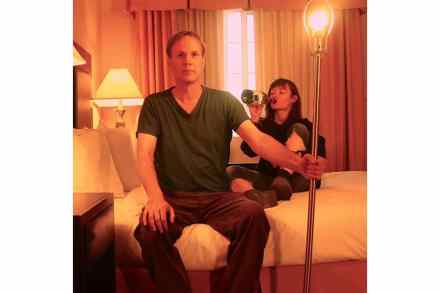
Vanessa Salomon is an internationally successful translator. Clever, beautiful, privileged – ‘born in a trilingual household: French, English and money’ – she can indulge herself professionally with obscure, neglected books. About to embark on a forgotten nouveau roman by Alain Robbe-Grillet, she’s offered an irresistible assignment. A bestselling French novelist who is definitely not Michel Houellebecq wants to pay her an extravagant fee to translate his next book – before he’s written it. Vanessa accepts, and her life free-falls into a nightmare of dangerous, sadistic games, involving two possible Not-Houellebecqs, but which is the imposter? She herself is a very unreliable narrator.

Murder, suicide and apocalypse: Here Goes Nothing, by Steve Toltz, reviewed

Angus Mooney is dead. Freshly murdered, he’s appalled to find himself in an Afterworld, having always rejected the possibility of life after death. Moreover, he can observe his murderer getting on increasingly well with his innocent widow. Mooney’s Afterworld is a deeply unsatisfactory mixture of computerised bureaucracy and urban chaos. In a landscape undreamed of by Dante, his guide is no cicerone but a woman with a welcoming bed and good contacts in Management, who knows her way around the local drinking spots. The Australian novelist Steve Toltz specialises in the blackest of comedy. His first novel, A Fraction of the Whole, was shortlisted for the Booker in 2008. Here Goes Nothing, his third, plays with murder, suicide and apocalypse. Laughter in the dark.

Lasting infamy: Booth, by Karen Joy Fowler, reviewed

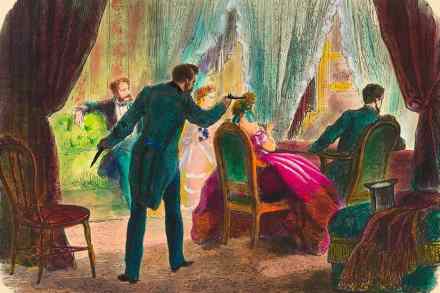
Were it not for an event on the night of 14 April 1865, John Wilkes Booth would be remembered, if at all, as an actor; brother of the more famous Edwin, and son of Junius Brutus – a footnote to the history of American theatre. But that night Booth leaped on to the stage of Ford’s theatre, Washington D.C., shouting ‘Sic semper tyrannis!’ before fleeing. He had just shot Abraham Lincoln. Five days earlier the Civil War had officially ended. Booth, a Confederate sympathiser, feared Lincoln would overthrow the constitution – he was already promising votes to freed slaves. The assassination was Booth’s way to ‘avenge the South’.

tsumura

An unquiet life

From our US edition

Kikuko Tsumura is a multi-prizewinning Japanese author whose mischievously deceptive new novel takes us into what purports to be the office world of Tokyo. The routine at first seems familiar, but intriguing disparities emerge: the present is also a foreign country. There’s No Such Thing as an Easy Job gives us the minutiae of everyday working life — but not as we know it. Think Nicholson Baker’s Mezzanine, freed from lunchtime restrictions. A burnt-out young woman wants a job without responsibility — no stress, no demands. First up: a surveillance assignment observing a novelist suspected of receiving contraband goods.

A wife for King Lear — J.R. Thorp imagines another Lady Macbeth

Shakespeare wastes no time on Lear’s backstory; we meet the brutal old autocrat as he divides his kingdom between two devoted daughters. Learwife begins where the play ends. The mad, broken old man and three daughters are dead; but why has a messenger brought the word to a remote nunnery where a forgotten woman paces the cloisters? She looks the reader in the eye: I am the queen of two crowns, banished 15 years, the famed and gilded woman, bad-luck baleful girl, mother of three… I am 55 years old. I am Lear’s wife. I am here. Other writers, such Jean Rhys, Margaret Atwood and Pat Barker, have given a voice to marginalised women. J.R.

A 21st-century Holden Caulfield: The Book of Form and Emptiness, by Ruth Ozeki, reviewed

The world Ruth Ozeki creates in The Book of Form & Emptiness resembles one of the snow globes that pop up throughout the novel: a whirling chaos of objects and people. The narration is shared between traumatised Benny, a 21st-century Holden Caulfield figure, and ‘The Book’ itself, opinionated, chatty. The author has fun with both wokery and its opposite. Look out for the gender-fluid pet ferret whose preferred pronoun is They. Benny’s father died when the boy was 12, run down by a truck full of chickens. Now going on 14, he hears voices in his head, objects speak to him (coffee cups, sneakers, windowpanes), bombarding him with conflicting advice. He’s haunted by memories of his Japanese jazz clarinetist father.

Brave new virtual world: The Startup Wife, by Tahmima Anam, reviewed

Welcome to Utopia — not an idyllic arcadia but a secretive tech incubator in a Manhattan office block. Here a computer scientist, Asha Ray, the narrator of The Startup Wife, her charismatic husband Cyrus and best friend Jules are nervously pitching their app platform — Asha’s cutting-edge algorithm aimed at people yearning for ritual without religion. Drawing on dreams, obsessions and secret desires — an Odyssey wedding, Game of Thrones funeral, pharaonic celebration — the app will create micro-communities of users; a virtual parish. Their startup gets the crucial nod, and they join the cool, shiny Utopians who are pursuing projects to support humanity ‘when there’s nothing left’. ‘You’re planning for the apocalypse?

Ghosts of the past: The Field, by Robert Seethaler, reviewed

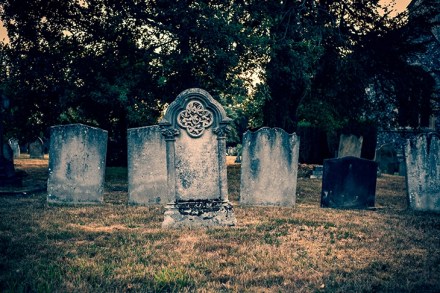
Give dead bones a voice and they speak volumes: George Saunders’s Lincoln in the Bardo was clamorous with the departed having their say. Edgar Lee Masters, 100 years earlier, startled the American literary world with Spoon River Anthology, poems that were miniature autobiographies of the occupants of a small Illinois graveyard. Now, The Field by the Austrian novelist Robert Seethaler has the post-lifers of a German town delivering their own epitaphs. In a neglected corner of an old cemetery a man sits on a bench, listening to the people whose resting place this is. Who they were. The lives they led. Not damned souls from Dante’s circles, or creatures in limbo, but local citizens, focusing on a moment that shaped their life, or the moment it ended.

Two for the road: We Are Not in the World, by Conor O’Callaghan, reviewed

A father and his estranged 20-year-old daughter set off across France, sharing the driver’s cabin of a long-haul truck. This is a road trip like no other: Paddy, deracinated, footloose, divorced, taking on a temporary job for reasons that become clear later; and daughter Kitty, spiky, provocative, shaved head, grubby jeans and sweater, wrapped in an old mink coat she’s pinched from her grandmother. Occasionally she rewards her father with an ambiguous affectionate response as their edgy banter veers in and out of dangerous territory: the minefield of parenthood. The narrative is fractured; nothing told chronologically, the surface deliberately throw-away — skewed punctuation, sentences left hanging.

An unquiet life: There’s No Such Thing as an Easy Job, by Kikuko Tsumura, reviewed

Kikuko Tsumura is a multi-prizewinning Japanese author whose mischievously deceptive new novel takes us into what purports to be the office world of Tokyo. The routine at first seems familiar, but intriguing disparities emerge: the present is also a foreign country. There’s No Such Thing as an Easy Job gives us the minutiae of everyday working life — but not as we know it. Think Diary of a Nobody without the Pooterish self-regard. Or Nicholson Baker’s Mezzanine, freed from lunchtime restrictions. A burnt-out young woman wants a job without responsibility — no stress, no demands. First up: a surveillance assignment observing a novelist suspected of receiving contraband goods.

Lacrimae rerum: That Old Country Music, by Kevin Barry, reviewed

Some of my happiest fiction-reading hours have been spent in the company of Kevin Barry: two short-story collections, both prize-winners, and three captivating novels. First, the baroque mayhem of City of Bohane, characters exploding on the page flashing knives and fancy footwear, its vernacular veering from Clockwork Orange argot to Joycean dazzle. A world away from the beguiling charm of Beatlebone, which imagined a stressed-out John Lennon driving across Ireland to check out the uninhabited island he’d bought years earlier as a future bolthole. Barry’s triumphant third novel, Night Boat to Tangier, long-listed for the Booker, opened with two old crims waiting at the ferry terminal of a Spanish port for the girl who links their lives, reminiscing endlessly as they wait.

As intricate as an origami sculpture: The Lost Future of Pepperharrow reviewed

Steampunk, a shapeshifting and unpredictable genre, has a way of subverting the past, mischievously disordering the universe with historical what-ifs. It’s a field not normally rewarded with prizes and critical hallelujahs. Natasha Pulley’s first novel, The Watchmaker of Filigree Street, proved an exception. In a gaslit London menaced by Fenian terrorism, Nathaniel, a wide-eyed innocent, met and fell for a Japanese watchmaker, Mori, who could remember the future. It hit thejackpot. Five years on, the inscrutable clairvoyant and the Home Office telegraph clerk-turned-translator are back.

Mystery in the Mojave desert

Late one night, on a dimly lit stretch of highway in a small town in the Californian Mojave desert, an elderly Moroccan has just locked up his restaurant when he’s struck by a speeding car and left for dead. A hit and run. An accident? Or something more sinister? The only witness, a Mexican worker with dubious papers, knows better than to talk to the police. And in any case, he didn’t actually see what happened: fixing his bicycle chain, he had looked up just as the man bounced off the windscreen. As he repeatedly tells himself: ‘All I saw was a man falling to the ground.’ The violent death is a catalyst, gradually revealing evasions and lies; unexpected links between people in the fag-end town where The Other Americans is set.

Is it a Rake’s or a Pilgrim’s Progress for Rob Doyle?

‘To live and die without knowing the psychedelic experience,’ says the narrator of Threshold, ‘is comparable to never having encountered literature or travelled to another continent.’ Magic mushrooms in Dublin, opioids in Thailand and San Francisco, hallucinogenic cactus in Bolivia and Peru, ketamine in India… he encounters terror, near-death and ecstasy by every means available, including MDMA — Ecstasy itself. This is no glimpse through the doors of perception; it’s free-fall down the rabbit hole to Wonderland. Or hell, depending on how the trip goes. Rob Doyle’s first novel, Here are the Young Men, was a savage picture of a bunch of Dublin losers on their school-leaving summer: a bildungsroman with booze, drugs and murder on the agenda.

You’d never believe what goes on in the Sainsbury’s car park

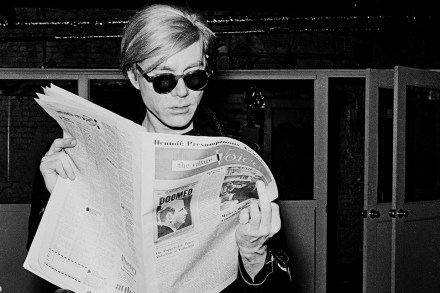
Psychogeography takes many forms: Sebaldian gravitas, Will Self’s provocative flash and dazzle and Iain Sinclair’s jeremiads for lost innocence. Gareth Rees explored east London’s edgelands in his hallucinatory Marshlands. Now, with Car Park Life, he reveals an urban wilderness hiding in plain sight: ‘It is Morrisons in Hastings that lights the fire of my obsession. Not the supermarket itself but the space outside: the car park.’ Strange, often violent stuff happens here: murder, hauntings, sex, from dogging to adultery. Late-night improvised race tracks spring up, where petrolheads compete in hair-raising skid contests, spurred on by whooping spectators.

Fire and fury

Everyone behaves badly in The Polyglot Lovers — no saving graces. It’s a complex, shifting structure of sex, self-hatred and misogyny, examining what the author calls ‘the violence in the male gaze’. Its blithe disregard for social norms and finer feelings is exhilarating; it’s pitiless and scathingly funny. The women invariably make wincingly bad decisions. Feminism for the Fleabag generation? Nothing is simple here, in a world as disorientating as a hall of mirrors. The novel has three parts, each with a narrator and the story is told backwards as it teasingly reveals its leading character — not a person, but a manuscript that will change all three narrators’ lives.

A corpse in waiting

Who is a hero? Javier Cercas, in his 2001 novel Soldiers of Salamis, asked the question, searching for an anonymous hero, a soldier in the Spanish civil war. The book won major prizes and transformed Cercas from a respected Spanish novelist into an international literary figure. Eighteen years on, he returns to the war with his new novel, Lord of All the Dead. This time his theme is the nature of heroism itself, interwoven with a more personal quest: a reluctant picking over the bones of his great-uncle Manuel Mena, a hero of the Franco era who became an embarrassment to his family as the wheel of history turned. It’s a subversive and disenchanted view of war in general and the Spanish conflict in particular, in a fine translation by Anne McLean.

In Pinochet’s shadow

You could call The Remainder a literary kaleidoscope: look at it one way and you see how the past lays a crippling hand on the generation that follows political catastrophe; shift the focus and you’re plunged into a darkly comic road trip with a hungover trio in an empty hearse chasing a lost coffin across the Andes cordillera. The three protagonists are trapped in the past, obsessively dredging up and re-living the ruined lives of their parents, dissidents under Chile’s dictator, Pinochet. The terrors inflicted on the adults have profoundly scarred their offspring; the novel belongs to a category the Chilean novelist Alejandro Zambra has called ‘the literature of the children’. In Santiago, grey ash is falling from the sky, cloaking the city with feathery dust.