Laura Gascoigne

Laura Gascoigne was the chief art critic of The Spectator from 2020 to 2025

Fog, tea and full English breakfasts: Monet and London, at the Courtauld, reviewed

From our UK edition

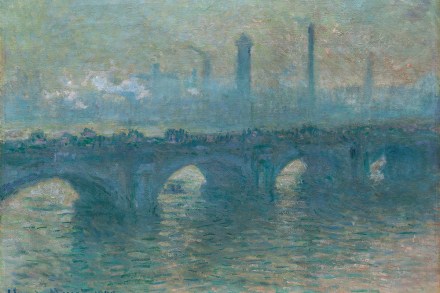
For the maids on the top floors of the Savoy, everything was in turmoil. The 6th had been commandeered by wounded Boer War officers, and since February 1900 a suite of rooms on the 5th had been taken over by a French painter, who was using one as a studio. The officers were nice enough, but the Frenchman spoke almost no English and you could smell the turps down the corridor. Whatever was the management thinking? ‘Without the fog, London wouldn’t be a beautiful city.
The art inspired by the 1924 Paris Olympics was a very mixed bag

From our UK edition

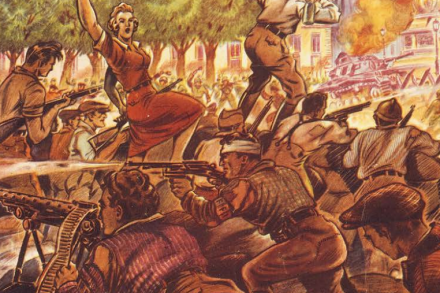
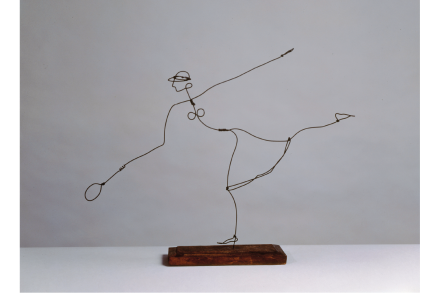
George Orwell took a dim view of competitive sport; he found the idea that ‘running, jumping and kicking a ball are tests of national virtue’ absurd. ‘Serious sport has nothing to do with fair play,’ he wrote in Tribune after scuffles broke out during the Russian Dynamo football team’s 1945 tour. ‘It is bound up with hatred, jealousy, boastfulness, disregard of all rules and sadistic pleasure in witnessing violence: in other words it is war without the shooting.’ Suzanne Lenglen’s loose-fitting knee-length tennis dresses inspired the new ‘style sportif’ of Coco Chanel Baron Pierre de Coubertin, visionary founder of the modern Olympics, took the opposite view: to him the three words ‘Faster, Higher, Stronger’ represented ‘a programme of moral beauty’.

Paul Wood, Ross Clark, Andrew Lycett, Laura Gascoigne and Henry Jeffreys

From our UK edition

33 min listen

On this week’s Spectator Out Loud: as Lebanon reels from the exploding pagers, Paul Wood wonders what’s next for Israel and Hezbollah (1:24); Ross Clark examines Ireland’s low-tax project, following the news that they’re set to receive €13 billion… that they didn’t want (8:40); Reviewing Ben Macintyre’s new book, Andrew Lycett looks at the 1980 Iranian London embassy siege (15:29); Laura Gascoigne argues that Vincent Van Gogh would approve of the new exhibition of his works at the National Gallery (22:35); and Henry Jeffreys provides his notes on corkscrews (28:01).  Produced and presented by Patrick Gibbons.

Inside the mind of Vincent Van Gogh

From our UK edition

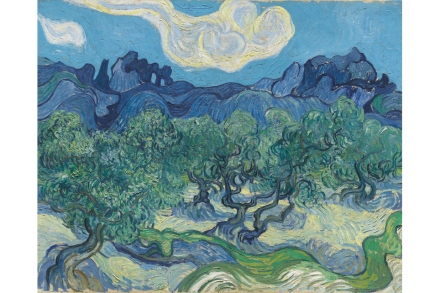
Van Gogh only got one major review in his career, and he was mystified by it. When the critic Albert Aurier described his six paintings in the 1890 Brussels exhibition of Les XX as the product of a ‘terrible and distraught genius’, the artist responded that, far from being a genius, he was ‘very secondary’ and that his sunflowers – now in the National Gallery – were no different ‘from so many pictures of flowers more skilfully painted’. If he were alive today he would probably have protested at the National Gallery making an exhibition of his work the high point of its bicentenary programme, but he would have liked its focus on his inspirations rather than his distress.

Why has Leonora Carrington still not had a big exhibition?

From our UK edition

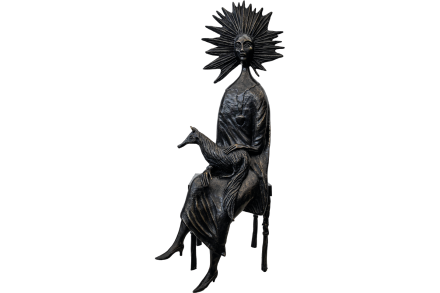
‘It had nothing to endow it with the title of studio at all,’ was Edward James’s first impression of Leonora Carrington’s Mexico City workspace in 1946. ‘The place was combined kitchen, nursery, bedroom, kennel and junk store. The disorder was apocalyptic: the appurtenances of the poorest. My hopes and expectations began to swell.’ Carrington blended Egpytian, Mayan, Mesopotamian and Celtic legends learned at her nanny’s knee Over six decades in the creative chaos of this house on Calle Chihuahua, Carrington would paint some of her best-known works and write her quirky serio-comic novella The Hearing Trumpet, which is narrated by a 92-year-old woman.

The importance of copying

From our UK edition

The lunatics were once in charge of the asylum. The first six directors of the National Gallery were all artists: before art history became an academic discipline, artists were the leading authorities on art. Founded more as a teaching resource than a visitor attraction, until the mid-1940s the gallery was reserved for artists two days a week, when other visitors had to pay for entry. This stopped them getting in the way of artists copying from the masters, an essential part of an art education in the days before cheap colour reproduction. There’s something of the altarpiece in this image of an artist’s progenitors flanking a touchstone for his art It’s rare to see artists copying in the galleries now that they are so jam-packed with tourists.

Porcelain-painting during the French revolution

From our UK edition

People don’t accumulate stuff any more. When the late Victorian houses on our street change hands their interiors are stripped of all decorative features and the walls painted white, unrelieved by pictures: if their Victorian owners returned as ghosts, they would go snow-blind. The Victorians’ passion for accumulating stuff was close to an addiction, and no one accumulated it like the Rothschilds. But the Rothschilds didn’t stop at objects; they also collected exotic animals, especially birds. All the Rothschild chateaux and mansions boasted aviaries – and Baron Ferdinand de Rothschild’s Waddesdon Manor was no exception.

Gus Carter, Paul Wood, Jonathan Aitken, Laura Gascoigne and Flora Watkins

From our UK edition

35 min listen

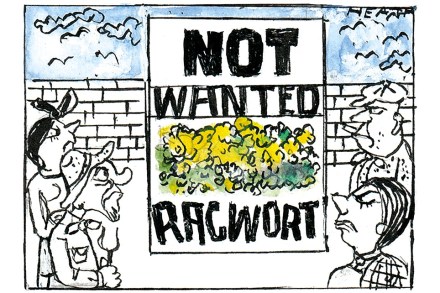
This week: Gus Carter reports from Rotherham (01:10), Paul Wood asks whether anything can stop full-scale conflict in the Middle East (05:55), Jonathan Aitken takes us inside Nixon's resignation melodrama (16:55), Laura Gascoigne reviews Revealing Nature: The Art of Cedric Morris and Lett-Haines (26:08), and Flora Watkins reads her notes on ragwort (31:24).  Produced and presented by Oscar Edmondson.

This British surrealist is a revelation

From our UK edition

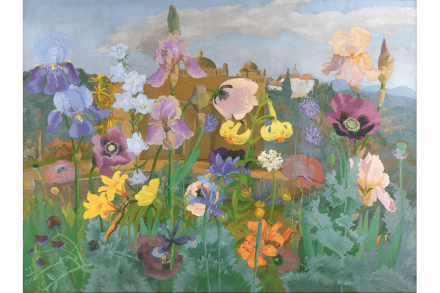
When the 15-year-old Maggi Hambling arrived at Benton End in Hadleigh, Suffolk – home of the East Anglian School of Painting and Drawing – with two paintings to show the school’s founders, Cedric Morris and Arthur Lett-Haines, she was ushered into the dining room where Morris was having dinner. He made some criticisms but was very encouraging, then Lett-Haines came in and made the opposite criticisms but was encouraging too. As teachers, both believed in bringing out a student’s native talent – but as artists and characters, says Hambling: ‘They were polar opposites.

James Heale, Lara Prendergast, Patrick Marnham, Laura Gascoigne and Michael Simmons

From our UK edition

32 min listen

On this week’s Spectator Out Loud: James Heale interviews Woody Johnson, the former American Ambassador to the UK, about a possible second Trump term (1:19); Lara Prendergast reflects on the issue of smartphones for children and what lessons we could learn from Keir Starmer’s approach to privacy (6:35); reviewing Patrick Bishop’s book ‘Paris ’44: The Shame and the Glory’, Patrick Marnham argues the liberation of Paris was hard won (12:37); Laura Gascoigne examines Ukraine’s avant garde movement in light of the Russian invasion (20:34); and, Michael Simmons provides his notes on venn diagrams (28:33).  Presented by Patrick Gibbons.

The tragic fate of Ukraine’s avant-garde

From our UK edition

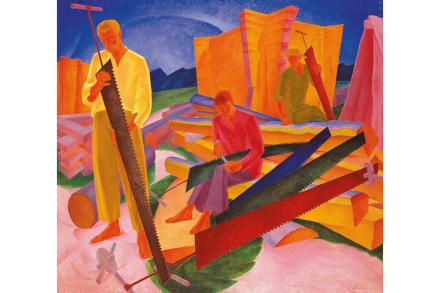
In a recent interview Oleksandr Syrskyi, the new commander-in-chief of the Ukrainian army, said that he spends his time off reading books on the country’s ‘difficult history’. If even he finds it difficult, where do us non-Ukrainians start? In the introduction to its new exhibition, the Royal Academy makes a brave attempt at explaining the political background to Ukrainian modernism, developed in a brief window of creative opportunity before it was slammed shut by Soviet repression.

How a market town in Hampshire shaped Peggy Guggenheim

From our UK edition

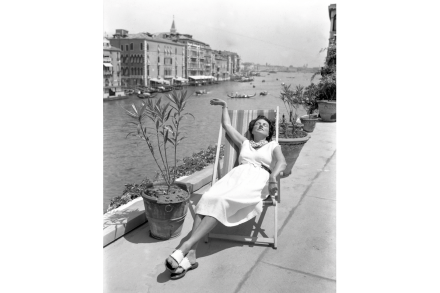
On 24 April 1937 Marguerite Guggenheim – known as Peggy – of Yew Tree Cottage, Hurst was booked by a certain PC Dore for driving an unlicensed vehicle through nearby Petersfield. What was the founder of the famous Venice museum doing in a market town in Hampshire? It’s a long story, vividly told in an exhibition marking the 25th anniversary of the opening of Petersfield Museum on the site of the former police station and courthouse where she paid her £1 fine. ‘Peggy,’ said a friend, ‘is absolutely revolting about sex. Delicacy is unknown to her’ In the 1930s the Jewish-American heiress, who had lost her father Benjamin on the Titanic, was rattling around Europe with a fast crowd of writers and artists.

Are kids’ games under threat?

From our UK edition

We hear a lot about the rights of the child, but the first I heard of the child’s right to play was at the Barbican’s latest exhibition. Among the games-related facts in Francis Alÿs’s new show is a quote from Article 31 of the United Nations Convention on the Rights of Children, confirming a child’s right ‘to engage in play and recreational activities’. Barbie has stood seven times for the US presidency. (As a young looking 65, she could do well) Are children’s games under threat? Alÿs thinks so. Children in Europe today, he laments, have a tenth of the freedom to roam that he enjoyed growing up in the 1960s in a Belgian countryside virtually unchanged since Bruegel.

The beauty of pollution

From our UK edition

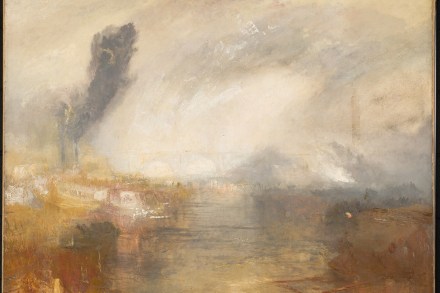
On the back of the British £20 note, J.M.W. Turner appears against the backdrop of his most iconic image. Voted the country’s favourite painting in 2005, ‘The Fighting Temeraire’ (1838) was Turner’s favourite too. It remained in his possession until his death; the 70-year-old artist swore in a letter of 1845 that ‘no consideration of money or favour can induce me to lend my Darling again’. But I suspect he would have approved of his darling’s current loan, along with that letter, to the Laing Art Gallery in Newcastle as part of the National Gallery’s bicentenary programme of loans of national treasures to regional museums.

The art of Japanese woodblock printing

From our UK edition

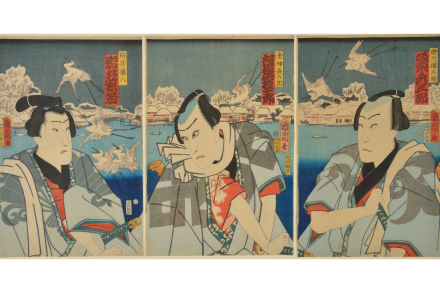
Van Gogh owned a copy of Utagawa Kunisada’s woodblock print of the ‘Yoshiwara Poet Omatsu’ (1861), which is currently on display at the Watts Gallery. It depicts the poetess who rose from humble origins in an elegant kimono at her dressing table and was part of Kunisada’s series of paintings titled Biographies of Famous Women, Ancient and Modern, but Van Gogh may not have known that. By the time he started amassing Japanese prints – he splurged on 600 of them in the winter of 1886 – they had become collectibles sought after by avant-garde artists for their clear lines, bright colours and the immediacy of their cropped figure compositions anticipating photography.

The most original sea painter since Turner? Lowry

From our UK edition

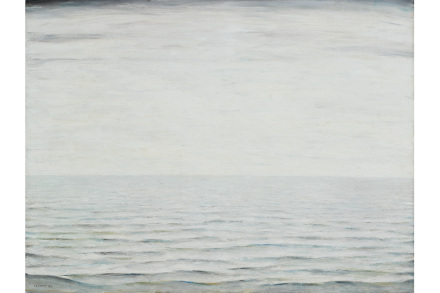
In 1958 an elderly gentleman staying at the Castle Hotel in Berwick-upon-Tweed gave the receptionist a doodle he had made on the hotel’s notepaper. She kept it in a box and 43 years later, on the advice of Antiques Roadshow, sold it at auction for £8,000. ‘I don’t think anyone since Turner has looked at the sea with such an original eye’ A contemporary photograph shows that gentleman in his trademark trilby, dark suit and tie – no casual wear for L.S. Lowry – standing on the pier with Berwick in the background. Lowry (1887-1976) is not best known for his paintings of the sea, but there are 21 – including the receptionist’s sketch – in this interesting little exhibition in the Northumbrian town which he regular visited, and they cast him in an unaccustomed light.

How Miss La La captured Degas’s imagination

From our UK edition

‘Can you come Saturday morning to my studio, 19 bis rue Fontaine?’ Degas wrote to Edmond de Goncourt in 1879. ‘From 10.30 to half-past noon, I will have my négresse and her partner who will come expressly to be at your disposal.’ Not content with dangling from a rope by her teeth, she suspended a 300-kilo cannon barrel from her jaw It’s not what it sounds like. The ‘négresse’ in question was Anna Albertine Olga Brown, stage name Miss La La, an aerialist at the Cirque Fernando who had been sitting – or more accurately hanging – in Degas’s studio for a painting for that year’s fourth Impressionist exhibition. As his friend was working on a circus novel, he thought he might be interested in meeting her.

The craft renaissance

From our UK edition

As long ago as the 1960s, the poet Edward James was worried that traditional crafts were dying out. Having frittered much of the family fortune he had inherited, aged five, on supporting struggling surrealists (he commissioned the Mae West lips sofa and lobster telephone from a scuffling Dali) and on backing shows starring his actress girlfriends (‘very wealth-consuming,’ he admitted, ‘because invariably they flopped’) then creating an 80-acre sculpture garden in the Sierra Gorda mountains of Mexico, the man described as ‘the last of the great eccentrics’ decided in his late fifties to invest his remaining money in something more sensible.

Is there still life in British still life?

From our UK edition

‘The tyrannical rule of nature morte is, at last, over,’ announced Paul Nash in the Listener in 1931. ‘Apples have had their day.’ Since Cézanne fulfilled his famous boast that he would astonish Paris with an apple, artists had been trying the same trick in London, with limited success. Astonishment, unfortunately, only works once. Nash had had it up to here with them apples: tired of post-impressionism, tired of still life. An electric toothbrush occupied the same place in Hamilton’s heart as Mont Sainte-Victoire in Cézanne’s Continental ghosts haunt the tabletops of Pallant House Gallery’s informative new survey of modern and contemporary British still life.

Quentin Letts, Owen Matthews, Michael Hann, Laura Gascoigne, and Michael Simmons

From our UK edition

31 min listen

On this week’s Spectator Out Loud: Quentin Letts takes us through his diary for the week (1:12); Owen Matthews details the shadow fleet helping Russia to evade sanctions (7:15); Michael Hann reports on the country music revival (15:05); Laura Gascoigne reviews exhibitions at the Tate Britain and at Studio Voltaire (21:20); and, Michael Simmons provides his notes on the post-pub stable, the doner kebab (26:20). Produced by Patrick Gibbons and Oscar Edmondson.