Laura Gascoigne

Laura Gascoigne was the chief art critic of The Spectator from 2020 to 2025

Exceptional career woman, unexceptional painter: Lavinia Fontana, at the National Gallery of Ireland, reviewed

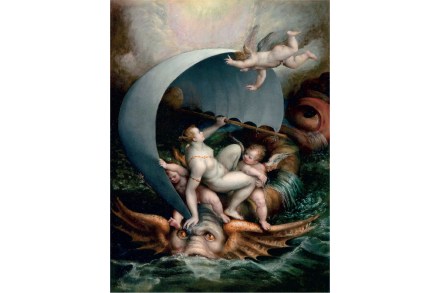
Reviewing the Prado’s joint exhibition of Sofonisba Anguissola and Lavinia Fontana in the Art Newspaper three years ago, Brian Allen pronounced it well worth seeing but predicted that each of these pioneering 16th-century women artists ‘would wither in the spotlight of her own retrospective’. Was he right? In its new monographic exhibition devoted to Fontana, the National Gallery of Ireland puts his waspish prediction to the test. Her ‘Galatea and Cherubs’ and ‘Venus and Mars’ are believed to be the first nudes painted by a woman Ireland’s National Gallery was an early investor in Fontana, acquiring her most ambitious work, ‘The Visit of the Queen of Sheba to King Solomon’ (1599), eight years after opening in 1864.
As seductive as Chagall: Sarah Sze’s The Waiting Room reviewed

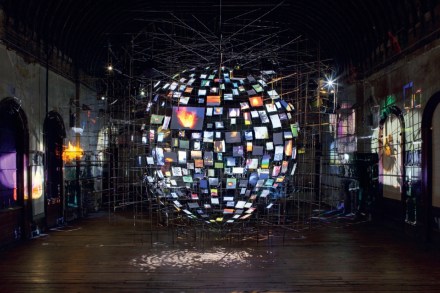
Exiting Peckham Rye station, you’re not aware of it, but standing on the platform you can see a mansard roof with ornamental railings silhouetted against the sky like a French chateau. Designed in the 1860s by Charles Henry Driver, architect of Sao Paolo’s Estacao da Luz, it once covered a vaulted waiting room which, after an intermediate existence as a billiard hall, was closed to the public in 1962. In short, it is just the sort of hidden space to tickle the fancies of impresarios-at-large Artangel, who have made it the site of the first UK installation by American artist Sarah Sze.

The quiet genius of Gwen John

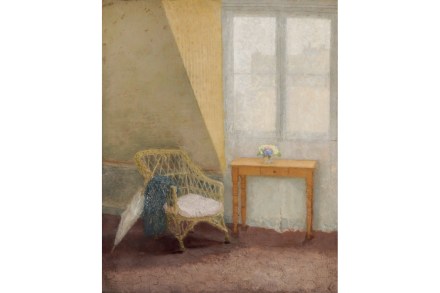
In the rush to right the historical gender balance, galleries have been corralling neglected women artists into group exhibitions: the Whitechapel Gallery rounded up 80 women abstract expressionists for its recent Action, Gesture, Paint show. But imbalances can’t be corrected retrospectively. Rather than elevating women artists who didn’t make it in a male-dominated world – not all of whose work, if we’re honest, helps the female cause – we should be celebrating the grit and talent of the few who did. And Berthe Morisot and Gwen John – currently the subjects of solo shows at Dulwich Picture Gallery and Pallant House – had both in spades.

From Botticelli to Marvel: why artists love St Francis

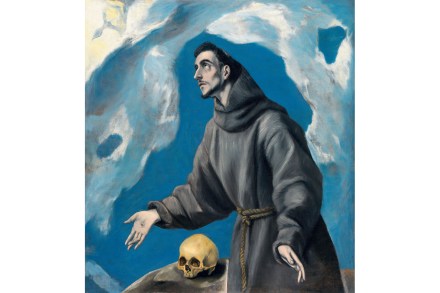
‘A small, black, repulsive picture’ is not how most people today would describe Zurbaran’s haunting painting of ‘Saint Francis in Meditation’ (1635-9) in the National Gallery. But that was how one Protestant critic of its acquisition in 1853 described this image of an Italian saint satirised three centuries earlier by the German Lutheran cleric Erasmus Alber in his Koran of the Franciscans. Alber chose his title advisedly, for one of this peacemaking saint’s legendary acts of diplomacy was initiating an interfaith dialogue with the Muslim Sultan of Egypt, al-Malik al-Kamil. In 1219, so the story goes, Francis crossed to Damietta, then under siege by troops of the Fifth Crusade, slipped unarmed into the city and was arrested and brought before the Sultan.

Hitching them together does neither any favours: Hilma af Klint & Piet Mondrian, at Tate Modern, reviewed

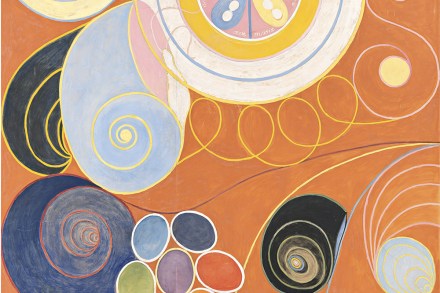
In July 1928, an unknown Swedish woman artist mounted a solo show of her revolutionary abstract paintings at the World Conference on Spiritual Science in London. It was a moment the 65-year-old Hilma af Klint had waited a long time for, but her confident prediction 20 years earlier that ‘the experiments I have undertaken will astound humanity’ was not fulfilled. So deafening, in fact, was the critical silence that greeted her work that she left instructions for it to remain under wraps until 20 years after her death. The world wasn’t ready for her ‘future pictures’. Entering the room devoted to Mondrian’s signature grids, you could be in a different exhibition What a difference a century makes.

Rossetti’s muse was a better painter than he was: The Rossettis, at Tate Britain, reviewed

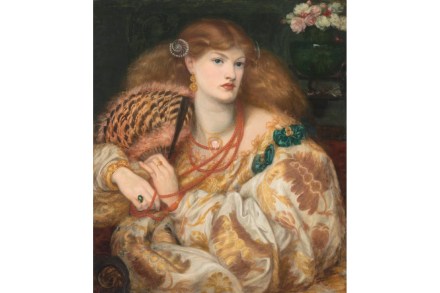
‘A queer fellow’ is how John Everett Millais described Dante Gabriel Rossetti after his death, ‘so dogmatic and so irritable when opposed.’ What’s queer in England is quite normal in Italy, where heated arguments are described as ‘discussioni’, but history has tended to forget that Rossetti was Italian. His fellow Pre-Raphaelites, however, were very conscious of his foreignness, though Holman Hunt found the ‘maccaroni’ served at the Rossetti family table – where you were as likely to meet Giuseppe Mazzini as Niccolo Paganini – ‘delicious’.

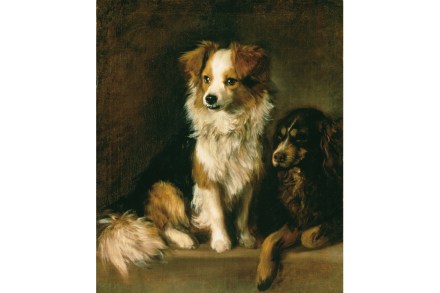
Artists’ dogs win the rosettes: Portraits of Dogs – From Gainsborough to Hockney, at the Wallace Collection, reviewed

Walking on Hampstead Heath the December before Covid, I got caught up in a festive party of bichon frises dressed, like their owners, in Christmas jumpers. It seemed bizarre at the time but wouldn’t surprise me now. During lockdown the local dog population exploded and the smaller breeds now wear jumpers all winter. There are no dogs in jumpers in the Wallace Collection’s new show – though, given the level of anthropomorphism, there might as well be. The ‘Allegorical Dog’ section, devoted to Edwin Landseer, includes ‘Trial by Jury’ (c.1840) with a poodle sitting as judge, and a canine interpretation of the parable of Dives and Lazarus featuring a well-fed St Bernard guarding a bone from a hungry terrier (see below).

After Impressionism – Inventing Modern Art, at the National Gallery, reviewed

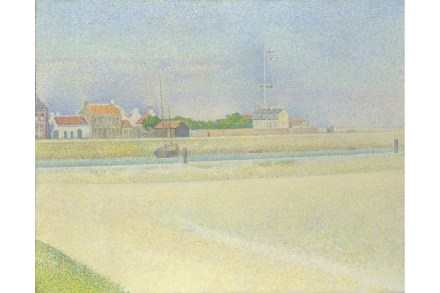
Getting the words ‘impressionism’ and ‘modern art’ into one exhibition title is a stroke of marketing genius on the part of the National Gallery, but is it too much for a single blockbuster? Symbolism, cloisonnisme, pointillism, expressionism, cubism, abstraction: if impressionism was a watershed in modern art, the streams that flowed from it were many and various. By setting a time frame of 1886 to 1914 – from the last impressionist exhibition to the first world war – After Impressionism: Inventing Modern Art narrows its options only to widen them by expanding its focus beyond Paris to Brussels, Barcelona, Vienna and Berlin.

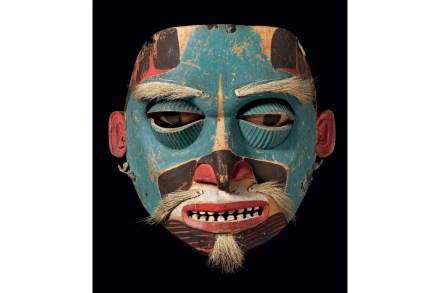
Don’t miss the exquisite Native-American carvings at the Sainsbury Centre

It’s payback time: women, artists from ethnic minorities and non-western traditions are taking over the exhibition schedules. On the heels of the seven women expressionists in Making Modernism at the Royal Academy comes Souls Grown Deep like the Rivers: Black Artists from the American South. ‘We are aware that art history has excluded a lot of artists and it is incumbent on us to broaden our perspective,’ said Academy secretary Axel Rüger at the press view – and for anyone who failed to grasp the magnitude of the moment one of the artists, Lonnie Holley, added: ‘This is the Royal Academy of Arts. This is not just some come-by-lately museum, hear what I’m saying?

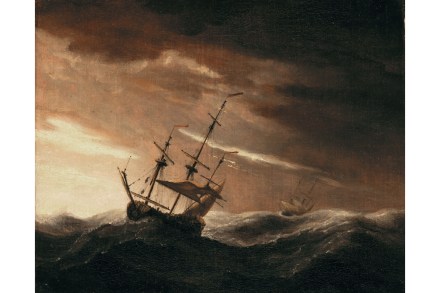
How two Dutchmen introduced marine art to Britain

In March 1675 the Keeper of His Majesty’s Lodgings at Greenwich received an order for ‘Three pairs of shutters for the three windows in a lower room, at the Queen’s building next to the park (where the Dutch painters work’). Willem van de Velde and his son, also called Willem, would have preferred a studio with north light, but they weren’t complaining. They had been put on a retainer of £100 a year by Charles II – with an additional £50 from James, Duke of York – for the father to draw ‘Draughts of Sea Battles’ and the son to turn ‘said Draughts into Colours’.

Thoroughly unsettling, never simplistic: Mike Nelson – Extinction Beckons, at the Hayward Gallery, reviewed

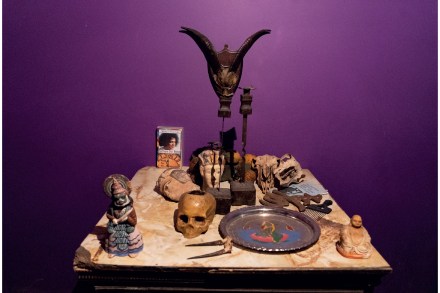
You enter through the gift shop. Mike Nelson has turned the Hayward Gallery upside down and back to front for his survey exhibition, Extinction Beckons. ‘It’s been a very intensive four weeks,’ says an assistant putting the finishing touches to the multi-room installation ‘The Deliverance and The Patience’ (2001) when I visit two days before the opening. Lit by one of Nelson’s signature red lights, even the green sign reading ‘FIRE EXIT’ makes me nervous Having the place to myself feels like having sole occupancy of the haunted house at the fair. This is less of a house, though, more a warren of passages and poky rooms bearing unsettling signs of previous habitation. Can the Hayward’s functional spaces really feel this spooky?

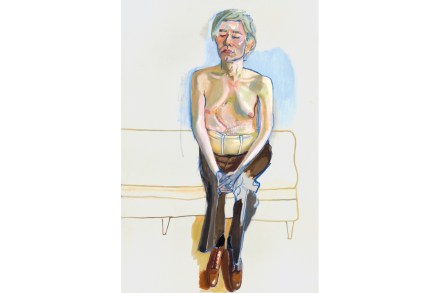
Humanity, clarity and warmth: Alice Neel, at the Barbican Art Gallery, reviewed

If you want to be taken seriously as a contemporary painter, paint big. ‘Blotter’, the picture that won the 34-year-old Peter Doig the John Moores Painting Prize in 1993, was over 8ft x 7ft. The pictures in his current show at the Courtauld are so big that only 12 of them fit in the gallery space. Lovers of paint owe Doig a debt of gratitude for rescuing the medium from the conceptual doldrums ‘Blotter’ was a dreamlike image based on a photo of the artist’s brother standing on a frozen lake in Canada, where Doig spent most of his childhood. Its title referred partly to his technique of letting the paint soak into unprimed canvas, partly to the way a single figure is absorbed into a landscape.

How Vermeer learnt to embrace the everyday – and transfigured it

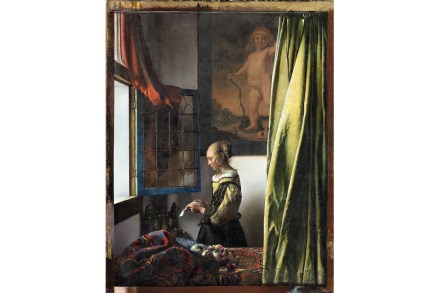
Has any artist ever painted fewer pictures than Johannes Vermeer? At the last authenticated count there were 37 still in existence, and five more are known from references in early sources. With allowance for wastage and disappearance historians estimate that he produced no more than 50, a rate of two a year over a career spanning two decades. So when 28 are assembled in one exhibition, as currently at the Rijksmuseum, it counts as a blockbuster. Astonishingly, this is the museum’s first Vermeer exhibition. Holland’s national gallery has not always valued its most popular master: when it opened in 1885, the only Vermeer on show, ‘Woman in Blue Reading a Letter’ (c.1663-64), was a loan.

The county that inspired a whole way of painting: Sussex Landscape, at Pallant House, reviewed

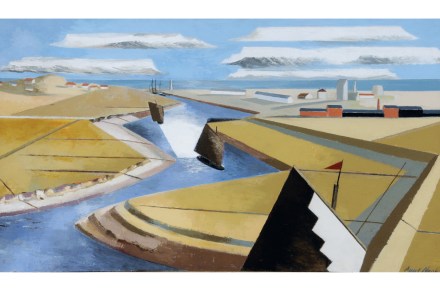
In a national vote on which county’s landscape best embodies Englishness, every county would presumably vote for itself. But when the War Office commissioned Frank Newbould in 1942 to design a poster with the patriotic slogan ‘Your BRITAIN – fight for it now’, it featured Sussex, with a shepherd herding sheep in the foreground and Belle Tout lighthouse on the distant horizon. In the ‘green and pleasant’ stakes, Sussex holds the advantage that the seeds of our alternative national anthem ‘Jerusalem’ were sown during William Blake’s stay from 1800 to 1803 in the coastal village of Felpham near Bognor Regis. But while it has prompted the occasional poem, Sussex has inspired more than its share of art.

A crash course in all things Hispanic: RA’s Spain and the Hispanic World reviewed

‘Spain must be much more interesting than Liverpool,’ decided the 12-year-old Archer M. Huntington after buying a book on Spanish gypsies in the port city. The family of American railroad magnate Collis P. Huntington had just docked at the start of an 1882 European tour that would introduce Archer to the National Gallery and the Louvre. ‘I knew nothing about pictures,’ he later admitted, ‘but I knew instinctively that I was in a new world.’ It was the Hispanic world to which he was most attracted, and he hatched a plan to create a museum devoted to its study. His preparations were thorough; he learned Arabic as well as Spanish before setting off in 1892 on the first of three explorations of the Iberian Peninsula.

The grisliest images are the earliest: Bearing Witness? Violence and Trauma on Paper, at the Fitzwilliam Museum, reviewed

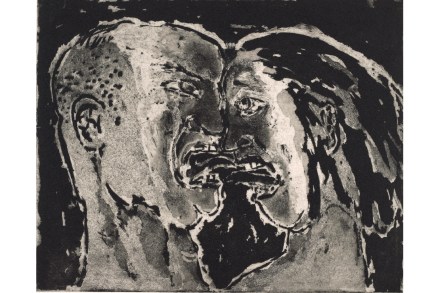
‘Graphic’ scenes of violence are now associated with film, but the word betrays an older ancestry. The first mass media images to shock the public were engravings documenting contemporary social ills pioneered by the Victorian magazine The Graphic, though the association goes a long way further back, to Jacques Callot’s etching series ‘Miseries of War’ (1633) recording atrocities perpetrated by both sides during the French invasion of his native Lorraine in the Thirty Years’ War. The grisliest of those images, ‘The Hangman’s Tree’, is the earliest work in Bearing Witness? Violence and Trauma on Paper, at the Fitzwilliam Museum in Cambridge.

Other artists’ still lifes may be showier, but none are as companionable as Giorgio Morandi’s

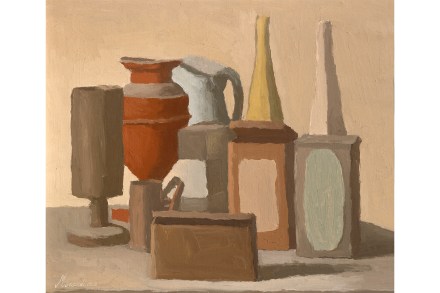
There are various staples of still life painting, some symbolic, some not. Skulls and musical instruments suggest the transience of human pleasure; crocks and bottles are usually just vehicles for displays of technical virtuosity. Crocks and bottles are what Giorgio Morandi painted, not because he wanted to show off but because he liked their lack of symbolism. So it’s odd to find a still life of musical instruments in the Estorick’s new Morandi exhibition. The habitual axis of Morandi’s still lifes is vertical, but the dingy brown trumpet, mandolin and guitar in this composition lie in a heap as if too bored to exert themselves. The picture strikes a bum note. The subject, it turns out, was imposed on him, a commission from a new patron he was eager to please.

Did this Lithuanian invent abstraction? M.K. Ciurlionis, at Dulwich Picture Gallery, reviewed

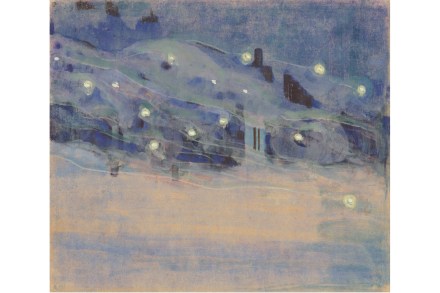
Trivia question: name a famous Lithuanian. Google came up with four I’d never heard of and one I had: Hannibal Lecter. It seems that Lithuanians are famous only in Lithuania unless they’re the monstrous inventions of non-Lithuanians – an injustice Dulwich Picture Gallery is helping to correct with its M.K. Ciurlionis exhibition. Mikalojus Konstantinas Ciurlionis is not just Lithuania’s most famous artist; he is also the country’s most famous composer. On his death in 1911 he left more than 400 musical compositions and more than 300 artistic ones, the latter squeezed into six short years before pneumonia carried him off aged 35. The son of a church organist, he was a musical prodigy, mastering the piano aged five and the organ aged six.

An Uffizi Adoration that upstages even the Botticellis

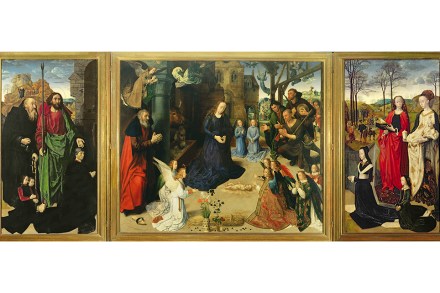
Tourists who queue for hours outside the Uffizi to see Botticelli’s ‘Primavera’ and ‘Birth of Venus’ are sometimes surprised to find his world-famous paintings upstaged by the work of a non-Italian they’ve never heard of. At three metres tall and five metres wide, Hugo van der Goes’s ‘Adoration of the Shepherds’ – known as the ‘Portinari Altarpiece’ – is certainly imposing, but it’s not the size that impresses so much as the colour: beside the glow of its Flemish oil paint, Botticelli’s tempera looks pasty. Despite its modern medium, though, and the realism of its technique, this monumental altarpiece by Botticelli’s Netherlandish contemporary appears more gothic than renaissance in feeling.