Laura Gascoigne

Laura Gascoigne was the chief art critic of The Spectator from 2020 to 2025

Suppress your groans: this women-only show is fascinating

In a Victorian art dealer’s shop a woman waits with her young son while the supercilious owner examines her work; behind her two top-hatted gents interrupt their inspection of a drawing of a dancer in a tutu to give her the once-over. The woman’s shabby umbrella, propped against the counter, awaits reopening in the rain outside. She knows what the dealer will say, and so do we. Every picture tells a story, and Emily Mary Osborn’s ‘Nameless and Friendless’ (1857) summarises the plot of Tate Britain’s latest exhibition, Now You See Us. Unlike her picture’s protagonist, Osborn was herself a successful artist in a field dominated by men – not the fate of many of the artists in the Tate’s new survey of four centuries of British art by women.

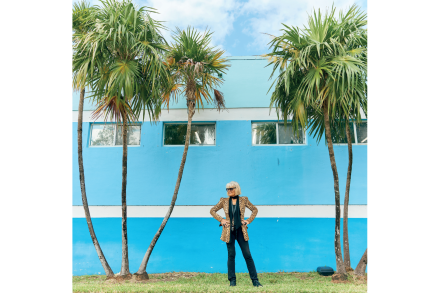
The woman who revolutionised British fashion: Barbara Hulanicki interviewed

‘I was one of your original customers in Kensington Church Street,’ I tell the founder of Biba when we meet. ‘Are you coming to complain?’ she shoots back. At 87 and fresh off a flight from Miami, Barbara Hulanicki is as sharp as a tack. The designer was in London for the opening of The Biba Story, the Fashion and Textile Museum’s celebration of the revolution she accomplished in 1960s street fashion. Believe me, it was a revolution – I was there and yes, I remember. In fact I can summon a mental inventory of all the items of clothing I bought from Biba over its short life, from the lilac fit-and-flare mini-coat that was my first proud purchase in 1967 to the brown maxi-coat with the power shoulders and the shaggy fake-fur trim that was my last in 1972.

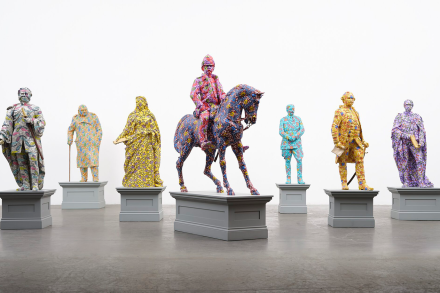
Beguiling: Yinka Shonibare, at the Serpentine Galleries, reviewed

More than seven centuries ago, the medieval cartographer Richard of Haldingham created Hereford Cathedral’s Mappa Mundi; I say ‘created’ because when he drew his map it was largely a work of the imagination. Its terra incognita is populated with bizarre creatures born of the fever dreams of early travel writers: his Africa is inhabited by Monocules, one-eyed, one-legged men who use their single foot as a parasol, and his Asia is roamed by the Bonnacon, a bull-like creature with inward-curling horns whose only defence is his projectile faeces.

Fascinating insight into the mind of Michelangelo

You’re pushing 60 and an important patron asks you to repeat an artistic feat you accomplished in your thirties. There’s nothing more daunting than having to compete with your younger self, but the patron is the Pope. How can you say no? Besides, it’s an excuse to get away from Florence, where your work for the republicans who expelled the Medici has become an embarrassment since their return. So you tell Pope Clement VII that, yes, you will move to Rome and paint a Last Judgment on the altar wall of the Sistine Chapel.

Kandinsky is the star of Tate’s expressionist show

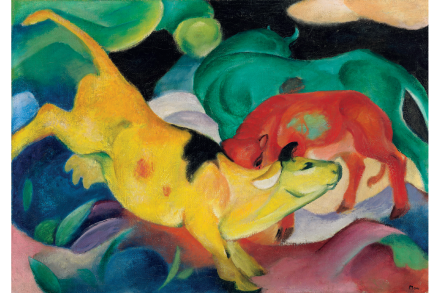
‘We invented the name Blaue Reiter whilst sitting around a coffee table in Marc’s garden at Sindelsdorf… we both loved blue, Marc liked horses and I liked riders, so the name came of its own accord.’ Christened so casually by Wassily Kandinsky and Franz Marc in 1911, the Blue Rider was always more of an idea than an art society, but the Tate Modern’s new exhibition – the first in the UK since 1960 – makes it sound more contemporary by describing it as a transnational collective.

How flabby our ideas of draughtsmanship have become

The term drawing is a broad umbrella, so in an exhibition of 120 works it helps to outline some distinctions. A good place to start is to ask what drawings are for, and that is what Oxford’s Ashmolean Museum has done with its current show of sketches by Flemish masters – staged in collaboration with Antwerp’s Museum Plantin-Moretus – dividing them into studies, designs and stand-alone finished works. Van Dyck’s teenage studies are a measure of how flabby our ideas of draughtsmanship have become If you’ve ever had the chance to visit it, you’ll know what a special place the Plantin-Moretus is.

Matthew Parris, Laurie Graham, Rachel Johnson, Laura Gascoigne and Angus Colwell

32 min listen

This week: Matthew Parris questions what's left to say about the Tories (00:57), Laurie Graham discusses her struggle to see a GP (07:35), Rachel Johnson makes the case against women only clubs (13:38), Laura Gascoigne tells us the truth about Caravaggio's last painting (19:21) and Angus Colwell reads his notes on wild garlic (28:58).  Produced by Oscar Edmondson, Margaret Mitchell and Patrick Gibbons.  Presented by Oscar Edmondson.

The tumultuous story behind Caravaggio’s last painting

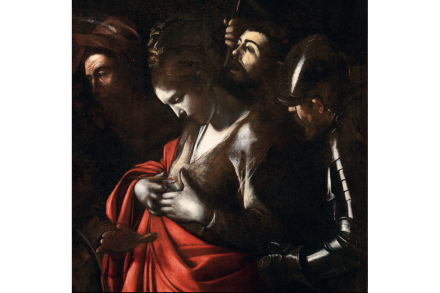
For centuries no one knew who it was by or even what it was of. The picture that had hung unnoticed in a succession of noble palazzi in the Italian province of Salerno, with its deep chiaroscuro and close-cropped composition, looked like a Caravaggio – but after Caravaggio almost every painting in Naples did. When it entered the collection of the Banca Commerciale Italiana in 1973 it was attributed to Mattia Preti, a Calabrian Caravaggista of the next generation who had caught the tenebrist bug. But in 1980, a letter discovered in the Naples State Archive changed the picture. Written on 11 May 1610 by Lanfranco Massa – the Naples agent of the Genoese nobleman Marcantonio Doria – it explained a delay in the transportation of a painting of Saint Ursula to Genoa.

The ghostly charcoals of Frank Auerbach

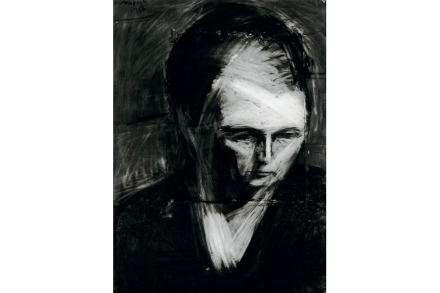
‘In some curious way, the practice of art and the awareness of the imminence of death are connected,’ Frank Auerbach said in 2012. ‘Otherwise, we would not find it necessary to do the work art finally does – to pin something down and take it out of time.’ There’s no sense of the imminence of death in Auerbach’s postwar landscapes of London building sites stirring with new life, but there is in his contemporary charcoal portraits, as scarred and sooty as the Blitzed city in which they were made. Auerbach started making large charcoal drawings from life as a student in David Bomberg’s evening classes at Borough Polytechnic, and carried on because the medium was cheap and allowed the endless revisions he found necessary to pin things down.

Insipid show of a weak painter: Angelica Kauffman, at the Royal Academy, reviewed

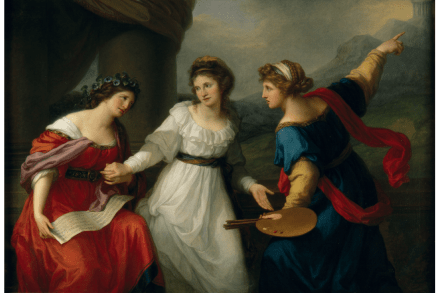
Angelica Kauffman’s funeral in Rome in 1807 was designed by her friend Canova on the model of Raphael’s. The corpse of ‘the great Woman, the always illustrious holy and most pious… was accompanied to the Church by two very numerous Brotherhoods… followed by the rest of the Academicians & Virtuosi who carried in triumph two of her Pictures’. At the Royal Academy in London, the account of her obsequies was read out at the general assembly and entered in the minutes; as a founding member of the institution – one of only two women so honoured, with Mary Moser – Kauffman was gone, but not forgotten. Kauffman was a decorative artist at heart.

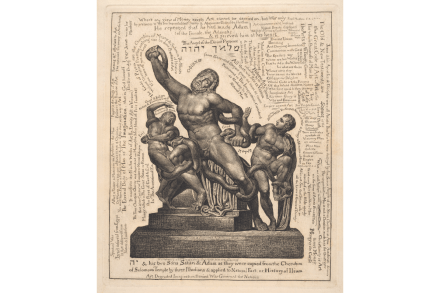
The true inventor of the superhero comic? William Blake

Among the documents in the West Sussex Record Office is an indictment for sedition of a certain William Blake. During an altercation in a Felpham garden in August 1803, he is accused by one John Scofield, a soldier in the British army then at war with France, of having shouted: ‘Damn the King. The soldiers are all slaves.’ Fortunately for the accused, when the case came to trial in Chichester the following January the ‘invented character’ of Scofield’s evidence was judged to be ‘so obvious that an acquittal resulted’. It looks as if Blake got off lightly.

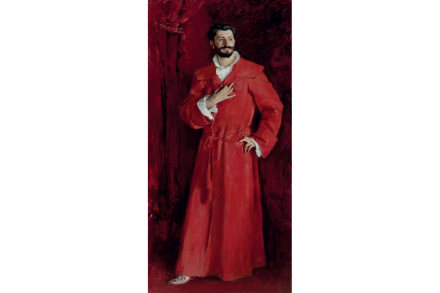
Dazzling but it’s all show: Tate Britain’s Sargent and Fashion reviewed

Madame Ramon Subercaseaux, the beautiful wife of a Chilean diplomat, was not a Parisienne. So when the 25-year-old John Singer Sargent’s portrait of her in a black and white ensemble straight out of the Renoir playbook won a second-class medal at the 1881 Paris Salon, French pride was wounded. Édouard Pailleron, father of the purebred French children in Sargent’s other Salon submission, kicked up a fuss and had to be placated with another medal. But that was nothing to the scandal that erupted three years later over the American artist’s provocative portrait of femme du monde Virginie Gautreau, salaciously anonymised as ‘Madame X’.

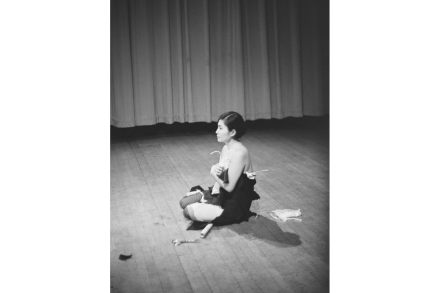
The genius of Yoko Ono

The first I heard of Yoko Ono was when my sister’s boyfriend brought home a little book of hers called Grapefruit. It was 1970, four years after John Lennon took the bite out of an apple that led to the break-up of the Beatles. The apple had been on a plinth in Ono’s 1966 exhibition at London gallery Indica with a price tag of £200, for which the purchaser was promised the ‘excitement of watching the apple decay’. Lennon then offered Ono an imaginary five shillings to bang an imaginary nail into her conceptual piece, ‘Painting to Hammer a Nail’ (1961). ‘I met a guy who plays the same game I played,’ she reported.

Winning: When Forms Come Alive, at the Hayward, reviewed

In case you didn’t know, we live in a ‘post-minimalist’ age, sculpturally speaking. Not a maximalist age, though some of the works in the Hayward’s new sculpture show are huge – an age of revolution against neatness. Who’s to blame for this call to disorder? Women. The two prime movers of this movement, if you can call it that, could not be more different, but both rebelled against minimalist geometry. As a student at Black Mountain College in the late 1940s, Ruth Asawa travelled to Toluca, Mexico, and saw villagers looping wire to make baskets for eggs. It struck her as a way of drawing in three dimensions and later, after becoming a mother of six, of working from home.

Like swallowing a pack of Parma Violets: CUTE, at Somerset House, reviewed

It’s funny how badly some 1960s films have dated. Watch What’s New Pussycat? today and you feel faintly sick. Never mind the chorus line of high-kicking cartoon cupids in the title sequence, what about the lyrics of Tom Jones’s theme song? ‘So go and powder your cute little pussycat nose…’ Yuck. Tim Berners-Lee, asked what uses of his invention he hadn’t foreseen, replied with one word: ‘Kittens.’ But if you think we’ve moved on, you’d better not visit CUTE. Coinciding with the 50th birthday of Japanese cartoon character Hello Kitty, Somerset House’s latest exhibition – ‘a landmark exploration of the irresistible force of cuteness’ – takes as its starting point the craze for funny cat memes unleashed by the internet.

Joyous chaos: Lucy Harwood, at Firstsite, reviewed

‘Welcome to England’s Most Misunderstood County’, reads an imitation road sign inside the entrance to Firstsite gallery. It’s part of ‘The Essex Way’ (2021), a monumental collage commissioned from local boy Michael Landy to mark the 10th anniversary of the Colchester gallery’s opening. With its discombobulating mix of illustrations of native birdlife and views of landmarks such as the Veolia landfill site at Rainham, Landy’s mural is designed, like the gallery’s current exhibition series, to challenge assumptions about the county now most commonly associated with Towie.

Modern, timeless, effortlessly avant-garde: Pasquarosa, at the Estorick Collection, reviewed

In February 1929, an exhibition by a young unknown female painter opened at the Arlington Gallery on Bond Street. This was not surprising in itself, given that the gallery specialised in lesser-known artists. More surprising was the fact that this artist was a woman – and Italian. As the critic Emilio Cecchi noted in the catalogue: ‘As regards the best Italian art of today the English public knows very little.’ What piqued people’s interest in this particular Italian artist was her fascinating backstory. Born in 1896 in Anticoli Corrado, a small hill town northeast of Rome known as a nursery for artists’ models, Pasquarosa Marcelli had never painted and was virtually illiterate when she moved to the capital in 1912, aged 16, to work as a model.

The killer satire of James Gillray

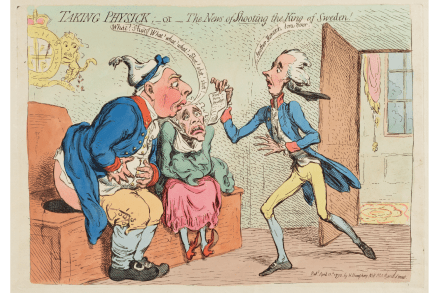
‘I hope the day will never come when I shall neither be the subject of calumny or ridicule, for then I shall be neglected and forgotten’, is how Samuel Johnson greeted the news that James Gillray had caricatured him as Dr Pomposo. In Georgian London, a caricature was a fast-track to celebrity. And, as described by one contemporary observer, the print shop window was ‘the temple of fame in grotesque’. Gillray was chiefly responsible for this. When he emerged on to the print publishing scene in the 1780s, the British art of ‘caricatura’ – an Italian import – was in its infancy. It grew up fast.

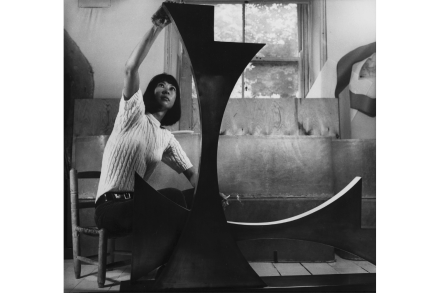
The spare, graceful, revelatory sculptures of Kim Lim

In 1989, the sculptor Lorna Green circulated a questionnaire among 320 of her female peers about their experiences as women in a male-dominated field; three years ago she sent a follow-up survey. The work of 29 respondents to both is currently on show in an instructive exhibition, If Not Now, When? Generations of Women in Sculpture in Britain 1960-2023 at the Saatchi Gallery (until 22 January). They include Kim Lim (1936-97), who is the subject of an overdue retrospective at the Hepworth Wakefield.