Laura Gascoigne

Laura Gascoigne was the chief art critic of The Spectator from 2020 to 2025

A Nativity that sends shivers down the spine

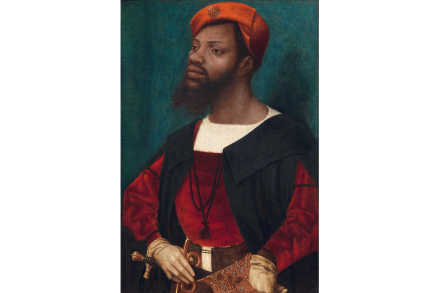
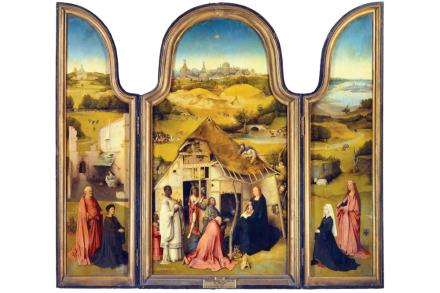
Hieronymus Bosch was not a natural painter of religious images. His terrifying visions of Hell may have helped to keep congregations on the path of righteousness, but they did not inspire feelings of devotion – which could explain why none of the large altarpieces he painted remained over their altars after his death. In the eyes of the church, his Last Judgments were titillating: one painting showing ‘monstrous creatures from the underworld’ was removed from a church in his native ‘s-Hertogenbosch during his lifetime by officials offended by its orgy of nudity. Even his ‘Adoration of the Magi’ (c.
Masterclass of an exhibition: Impressionists on Paper, at the RA, reviewed

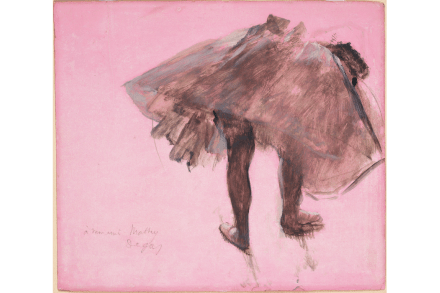
Viewers have different relationships with small pictures, or perhaps it’s the other way round: small pictures have different relationships with them. A big picture clamours for attention; a small picture you have to lean in to hear. No picture is more intimate than a drawing, and none brings you closer to the artist’s hand. A drawing can’t lie; it wears its facture on its sleeve. If you look closely, you can work out how it was made and even track the artist’s changes of direction. You can see, for instance, how Van Gogh launched into ‘The Fortifications of Paris with Houses’ (1887) in watercolour, then fortified the fortifications with gouache and chalk. A graphic artist by nature, he was at sea with watercolour washes.

Raucous, expressive and laugh-out-loud funny: Nicole Eisenman, at the Whitechapel Gallery, reviewed

There’s a photograph in Nicole Eisenman’s Whitechapel exhibition of the 28-year-old artist, in 1993, sitting at her easel with a big bow in her hair and a bevy of studio assistants – a feminist piss-take of the trope of the heroic male artist surrounded by adoring acolytes. Her resemblance in the photo to stand-up comic Sarah Silverman is not entirely coincidental; Eisenman is Jewish-American and funny. At the time she was producing the bawdy satires on downtown New York lesbian life – battles of the sexes redrawing Michelangelo’s ‘Battle of Cascina’ in the style of Where’s Wally? – which plaster the wall facing the exhibition entrance. She could have been a cartoonist, but she chose art.

Embarrassment of riches: South Asian Miniature Painting, at MK Gallery, reviewed

In 1633, British merchants travelling east were issued with a royal command from Charles I: ‘As the king has considered that there is a great deal of learning fit to be known written in Arabic, and great scarcity of Arabic and Persian books in this country… every ship… at every voyage shall bring home an Arabic or Persian manuscript book, to be delivered to… the Archbishop of Canterbury, who shall dispose of them as the King shall think fit.’ One suspects that a hunger for learning wasn’t the whole story, and that the sight of the exquisite illustrations adorning books sent from India as diplomatic gifts had whetted Charles I’s collector’s appetite. He wasn’t alone.

The importance of lesbianism to British modernism: Double Weave, at Ditchling Museum, reviewed

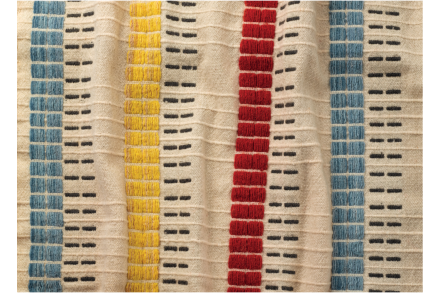
The name of Ditchling used to be synonymous with Eric Gill, but since he was outed as an abuser of his own daughters the association has become an embarrassment. Obliged to quietly drop its most famous name, Ditchling Museum of Art + Craft has been exploring less controversial connections. Its latest show, about Bourne and Allen, is a tribute to a forgotten creative partnership that casts a fascinating sidelight on the contribution of women’s traditional crafts – and lesbianism – to British modernism. After the Festival Hall put them on the map, they were approached to weave the fabrics for Ben-Hur Hilary Bourne was a Ditchling girl.

How Philip Guston became a hero to a new generation of figurative painters

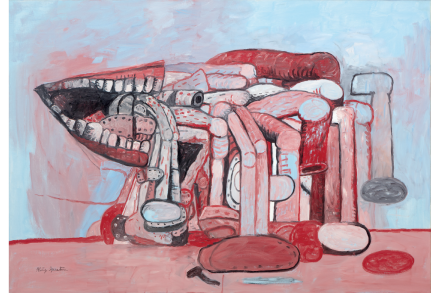
Why do painters represent things? There was a time when the answers seemed obvious. Art glorified power, earthly and divine, and provided moral exemplars of how to behave – in the case of sacred paintings – or how not to in the case of profane ones. When modernism threw all that into doubt, the picture frame remained. The question for modern artists was, what to put in it? Fifteen years of non-representational painting prompted Guston to question its usefulness For the first decade of his career, Philip Guston had an old-fashioned answer: the murals he painted in the style of Italian Renaissance frescoes in the US and Mexico during the 1930s promoted ideals of social justice.

Proof that Rubens really was a champion of the female sex: Rubens & Women, at the Dulwich Picture Gallery reviewed

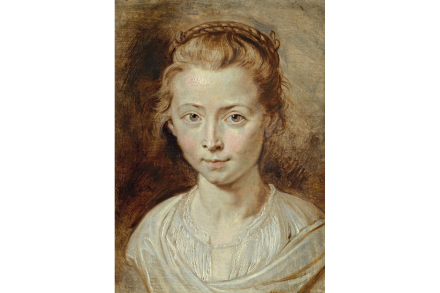
‘She is a princess endowed with all the virtues of sex; long experience has taught her how to govern these people… I think that if Her Highness could govern in her own way, everything would turn out very happily.’ The ‘princess’ in question was Isabel Clara Eugenia, Infanta of Spain and regent of the Spanish Netherlands; ‘these people’ were the pesky, ungovernable Flemings and the author of the glowing testimonial was Peter Paul Rubens who, since the death of Isabel’s husband the Archduke Albert in 1621, had become her trusted diplomatic adviser. It was quite a step up for a mere court painter, especially one with a skeleton in the family closet.

Marina Abramovic’s show is only of interest to diehard fans

‘Do women have to be naked to get into the Met Museum?’ More than 30 years after the Guerrilla Girls posed this question on their feminist poster, the answer suggested by the Royal Academy’s Marina Abramovic retrospective – touted as the first solo show by a woman artist in the main galleries – is: ‘They don’t have to, but it helps.’ Abramovic achieved fame in the 1970s with a series of gruelling performances that tested the limits of her mental and physical endurance.

You don’t have to be ‘woke’ to be troubled by the Fitzwilliam Museum’s links to slavery

What happens when a museum outlives the worldview of its founder? For publicly funded museums with collections amassed during the Empire that no longer reflect the perspectives of a post-imperial multiracial audience, it’s a difficult question. For the Fitzwilliam Museum, there’s an added embarrassment: the £100,000 bequest from Richard, 7th Viscount Fitzwilliam with which it was endowed and built in 1816, was based on an inheritance from the Anglo-Dutch merchant Matthew Decker, Fitzwilliam’s grandfather and a founding director of the South Sea Company that transported more than 50,000 captured Africans across the Atlantic in the first half of the 18th century. Worse, interest on the endowment still contributes to the museum’s funding.

Surreal, pacy and fun: Christian Marclay’s Doors, at White Cube, reviewed

Sliding doors may change your life, but there’s no mystery in their transparency. A hinged wooden door is another matter; you’re never quite sure what’s behind it. Christian Marclay has a thing about doors; not an obsession, he insists, just a general interest ‘in things we don’t pay much attention to’. For the British launch of his new video montage ‘Doors’ he has filled the ground-floor gallery of White Cube Mason’s Yard with doors picked out of London skips, sawn up and reassembled into what could be taken for minimalist sculptures if the knobs, knockers, locks and hinges weren’t still attached: ‘I don’t want to mess about with their “doorness”,’ he explains.

Lyrical and dreamlike: A World of Private Mystery – British Neo-Romantics, at the Fry Art Gallery, reviewed

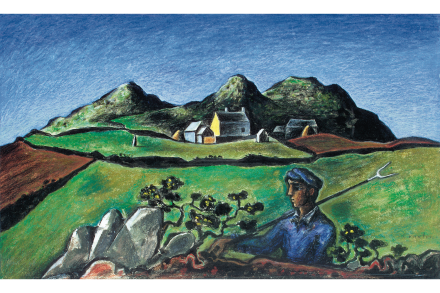
‘My daughter’s moving to Saffron Walden, away from all this,’ said the railway man at Stratford station, gesturing at the tower blocks overlooking the platform. ‘It’s like going back to the 1970s and ’80s.’ For the neo-romantics the pastoral mode was an escape from the grimness of everyday wartime reality Further back, in the case of Saffron Walden’s Fry Art Gallery. Purpose-built by a Victorian banker to house his collection, this gem of a gallery has since been devoted to collecting and showing artists who have lived and worked in north-west Essex, beginning with the group that congregated around Edward Bawden and Eric Ravilious in Great Bardfield from the 1930s.

At the Science Gallery I argued with a robot about love and Rilke

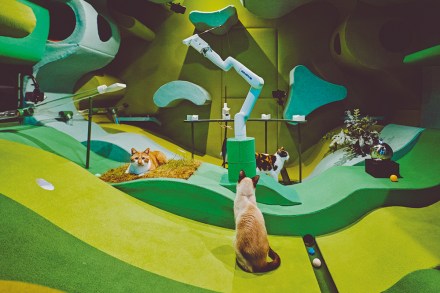
A little-known fact about the Fairlight Computer Musical Instrument, the first sampling synthesiser, introduced in 1979, is that it incorporated a psychotherapist called Liza. Stressed musicians could key in an emotional problem and Liza would begin the session with the soothing opening: ‘What is it that troubles you about x?’ She was flummoxed by a frivolous question from my husband, an early Fairlight owner, about a hole in her bucket but dealt expeditiously with my nine-year-old stepson. When he told her to get lost, she shut the system down.

An extraordinary woman: The Art of Lucy Kemp-Welch, at Russell-Cotes Art Gallery, reviewed

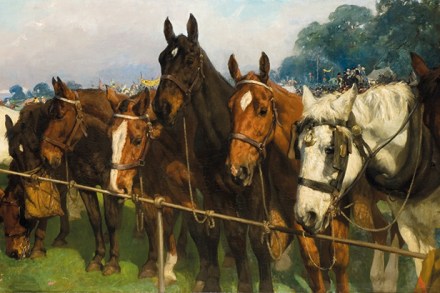
In March 1913 two horse painters met at the Lyceum Club to discuss the establishment of a Society of Animal Painters to raise the profile of their genre. Of the two, it was Alfred Munnings whose profile needed raising. Lucy Kemp-Welch had been a celebrity since her twenties when her 5x10ft canvas ‘Colt Hunting in the New Forest’ caused a sensation at the 1897 RA Summer Exhibition and was purchased by the Chantrey Bequest for the new National Gallery of British Art on Millbank. She threw herself into every activity she depicted, whether rounding up colts or hauling timber The daughter of a Bournemouth solicitor, Kemp-Welch had been riding and sketching horses since the age of five and had developed a photographic memory for catching them in action.

Lumpy, bulgy, human: Threads, at Arnolfini Bristol, reviewed

Trophy office blocks designed as landmarks are not welcoming to humans; their glass and steel reception areas feel more suited to robots. But this summer the cavernous lobbies of two City buildings – 99 Bishopsgate and 30 Fenchurch Street – have been humanised by To Boldly Sew, an exhibition of wall hangings by the winner of this year’s Brookfield Properties Crafts Award, Alice Kettle. As the owners of Renaissance palazzi and Jacobean mansions understood, wall hangings bring warmth and colour to a cold interior: once more prized than paintings, they doubled as decorations and draught excluders. Now, dignified with the name of ‘fibre arts’, fabrics are back in the fine-art fold and most of the artists working with them are women.

The wonders of 18th-century automata

At the Paris International Exhibition of 1867, Mark Twain was mesmerised by a life-sized silver swan with ‘a living grace about his movement and a living intelligence in his eyes… swimming about as comfortably and unconcernedly as if he had been born in a morass instead of a jeweller’s shop’. The Silver Swan has been its leading attraction, drawing spellbound visitors to its afternoon performances The jeweller’s shop this mechanical marvel had been born in 100 years earlier was Cox’s Jewelry Museum in London, but its mechanism of 700 components powered by three clockwork motors was the invention of Belgian-born horologist John Joseph Merlin (1735-1803), aka ‘the Ingenious Mechanic’.

Huge, impersonal canvases designed for the walls of billionaires: Tate Modern’s Capturing the Moment reviewed

‘Photography has arrived at a point where it is capable of liberating painting from all literature, from the anecdote, and even from the subject. So shouldn’t painters profit from their newly acquired liberty, and make use of it to do other things?’ argued Picasso. The inventor of cubism took advantage of his liberty in ‘Buste de Femme’ (1938) to turn Dora Maar into a precursor of Peppa Pig, flaring her nostrils to form a snout. Perhaps he wanted to teach a photographer a lesson about paint by rubbing her nose in it. Picasso didn’t abandon the subject or the anecdote.

Fascinating forgeries: Art and Artifice – Fakes from the Collection, at the Courtauld, reviewed

In 1998 curators at the Courtauld Institute received an anonymous phone call informing them that 11 drawings in their collection were fakes. The caller intimated that he was an associate of the notorious forger Eric Hebborn, who had claimed in his 1991 memoir, Drawn to Trouble, to have sold the institute a fake Rowlandson. The Sienese turned their training as restorers of Renaissance paintings to more profitable use The Courtauld had, in fact, already rumbled the Rowlandson before Hebborn boasted of putting one over on it; now it looked like it could be more than one. The other ten included three sketches by Tiepolo, three by Guardi and a drawing by Michelangelo.

Joshua Reynolds’s revival

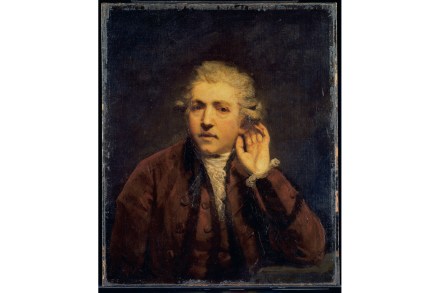
In front of the banner advertising the RA Summer Exhibition, the swagger statue of Sir Joshua Reynolds (1723-92) by Alfred Drury stands garlanded with flowers. But the Academy he founded won’t be marking his tercentenary with a retrospective, just a small display and a series of artists’ lectures. For an anniversary show, you have to travel to his native Devon. Ever since the Pre-Raphaelites dubbed him ‘Sir Sloshua’, Reynolds has been out of fashion Ever since the Pre-Raphaelites dubbed him ‘Sir Sloshua’, Joshua Reynolds has been out of fashion: blame the outmoded ideals of beauty he promoted in his Discourses and his role as portraitist to the Georgian establishment.

Two artists who broke the rules: Soutine | Kossoff, at Hastings Contemporary, reviewed

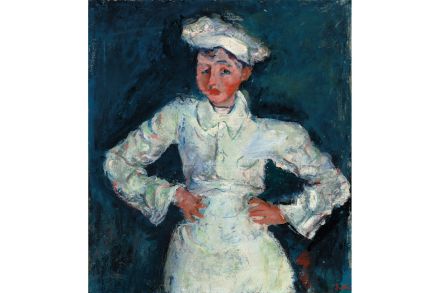
Rules in art exist to be broken but it takes chutzpah, which could explain why so many rule-breakers in modern figurative art were Jewish. Given that they were breaking the law by making figurative art in the first place, they went for broke. Where Soutine’s subjects look small and doll-like, Kossoff’s feel monumental regardless of scale Born a generation apart, Chaïm Soutine (1893-1943) and Leon Kossoff (1926-2019) had much in common. Both were brought up in Jewish working-class families with no pictures on the walls: Soutine the son of a Belarusian tailor; Kossoff, of a Ukrainian immigrant baker in London’s East End. Both were rule-breakers – Soutine because he didn’t have the patience for the rules, Kossoff because he had difficulty following them.

Birmingham barbershop meets the Folies-Bergère: Hurvin Anderson’s Salon Paintings, at the Hepworth Wakefield, reviewed

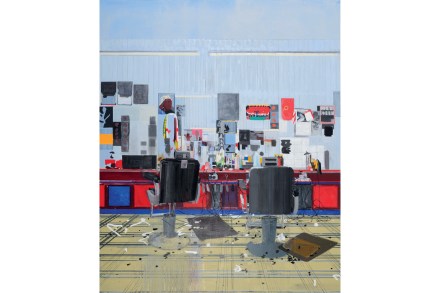
There’s a nice irony to the title Salon Paintings when the salon in question is a barbershop, an irony that won’t be lost on Hurvin Anderson. Born to Jamaican parents in Birmingham in 1965 and trained at Wimbledon and the Royal College at a time when the Euston Road School discipline of measured observation was still being taught in English art schools, Anderson is steeped in the European painting tradition. Explaining the fascination of the mirrored interior of the Birmingham barbershop that first inspired the series of paintings in his exhibition at the Hepworth Wakefield – begun in 2006 and completed this year – he compares it to Manet’s ‘Bar at the Folies-Bergère’: the barbershop as the Caribbean equivalent of the impressionist café.