Lara Prendergast

Lara Prendergast

Lara Prendergast is executive editor of The Spectator. She hosts two Spectator podcasts, The Edition and Table Talk, and edits The Spectator’s food and drink coverage.

Charlie Hebdo attack: French march in defiance alongside world leaders

From our UK edition

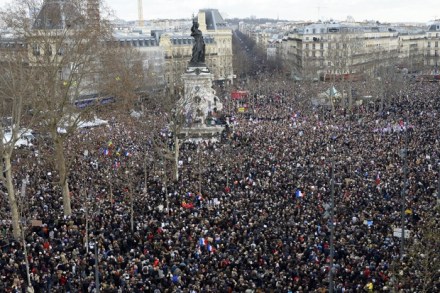
Up to 0ne million people are expected to march through the streets of Paris today, in defiance of the terrorist attacks on the city during the past week. David Cameron will join the march, alongside approximately 40 other world leaders, including French President Francois Hollande. Security has been increased around the city, with more than 5,500 police officers expected to be on guard.

Gun attack on French satirical magazine Charlie Hebdo ‘kills 12’

From our UK edition

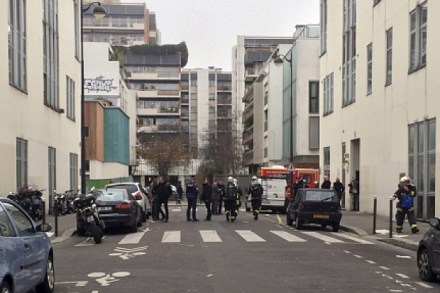
Gunmen have attacked the Paris office of the French satirical magazine Charlie Hebdo. Current reports suggest that up to 12 people have been killed. One eyewitness told French TV channel Itele: 'Two black-hooded men entered the building with Kalashnikovs. A few minutes later we heard lots of shots.' Ils ont tiré à deux reprises les balles ont traversé la porte et la fenêtre pic.twitter.com/Jhgi4MBlnp — yve cresson (@yvecresson) January 7, 2015 The magazine has courted controversy in the past by publishing cartoons of the prophet Muhammad. An hour ago the magazine's Twitter account posted a cartoon of the Islamic State militant group leader, Abu Bakr al-Baghdadi. The attackers reportedly escaped in two vehicles.

Low life’s Limpopo legend

From our UK edition

‘You’ve got a lot to live up to,’ said the ranger. ‘The last Spectator journalist who stayed here was Jeremy Clarke. He made quite the impression.’ Like some sort of Zulu legend, our ‘Low life’ columnist’s time at Shambala game reserve is now talked about around the campfire — or braai as it is known in South Africa. ‘I heard he commandeered a safari vehicle and set off to find a drinking hole,’ said one of the camp staff. ‘He held a wet T-shirt competition,’ said another. ‘All the local women were very impressed.’ Apparently even Douw Steyn, who owns the reserve, still reminisces about Jeremy’s time there. You might not have heard of Steyn, but you will know his work.

Does Allen Jones deserve a retrospective at the Royal Academy?

From our UK edition

It has been a vintage season for mannequins. At the Fitzwilliam Museum in Cambridge, an exhibition called Silent Partners looks at the relationship between artist and mannequin, from function to fetish. In London, the Royal Academy is hosting a retrospective of the work of British artist and Academician Allen Jones. Jones, who is now 77, became obsessed with mass-produced imagery of eroticised women. As the show makes clear, he never really got over it. During the 1960s, Jones emerged as a leading pop artist. His contemporaries at the Royal College of Art included Patrick Caulfield and David Hockney, but he was expelled after a year. His big break came in 1969 with his trio of fibreglass sculptures that portrayed women as pieces of furniture.

Sir Malcolm Rifkind suggests internet companies are ‘a safe haven for terrorists’

From our UK edition

The battle between the spooks and the geeks is heating up. A new report into the murder of Fusilier Lee Rigby has suggested that the brutal attack could have been prevented if an internet company (which remains unnamed in the report) had allowed online exchanges between the two killers to be accessed by intelligence services. While the 191-page report suggests that both MI5 and MI6 made errors, the real villains to emerge are the US-based web giants. Sir Malcolm Rifkind, who chaired the report, has suggested that internet companies are 'providing a safe haven for terrorists'. The report says: ‘What is clear is that the one party which could have made a difference was the company on whose system the exchange took place.

George Clooney’s wife heads to Greece to prove he hasn’t lost his Marbles battle

From our UK edition

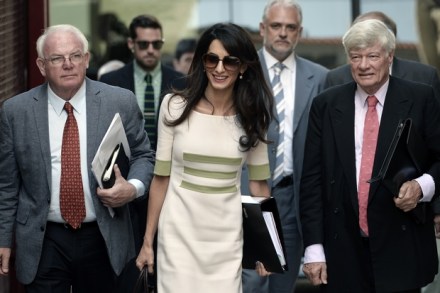
It was never clear why George Clooney became so attached to the Elgin Marbles. He didn’t even seem to know where they were from when he delivered his plea to the British Museum earlier this year: ‘They’ve had a very nice stay here, certainly. London’s gotten crowded. There’s plenty of room back there in Greece. England can take the lead on this kind of thing – letting art go back where it came from. The Greeks are nothing but generous. They would loan it back once in a while.’ ‘Even in England, the polling is in favour of returning the marbles to the Pantheon [sic].

White Dee: I might back Ukip instead of Labour

From our UK edition

Back in February, Benefits Street star 'White Dee' promised to give David Cameron a ‘run for his money’. In her Spectator diary, she described how ‘Ladbrokes has made me 50-1 to be the next MP for Birmingham Ladywood, and until I read that patronising nonsense I wasn’t going to stand. Now, I think I will. As an independent, mind. How far will I get? Let’s just see.’ Dee hadn’t yet made it clear which party she was thinking of joining. She’s speaking at the Tory conference today, although she has been a strident critic of their policies. Previously, she has indicated that she used to vote LibDem, until they joined forces with the Tories, after which she switched to Labour.

Tate Britain’s Turner show reveals an old master – though the Spectator didn’t think so at the time

From our UK edition

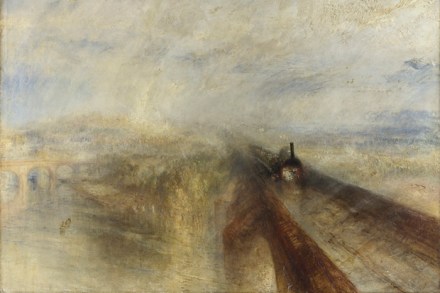
Juvenilia is the work produced during an artist’s youth. It would seem logical to think, therefore, that an artist’s output during their old age would be classified as ‘senilia’. Yet no such word exists. But how else to classify the three blockbuster exhibitions this year that deal with Matisse, Turner and Rembrandt’s late work? These titans produced some of their finest art during old age. The exuberance of Matisse’s cut-outs are all the more astonishing given that they were produced not in the first bloom of life but rather in the dying embers of it. Rembrandt’s late works — on display at the National Gallery from October and discussed by Martin Gayford on p64 — will include some of his most soulful paintings. Late Turner at Tate Britain has a similar narrative.

The John Cantlie video shows Islamic State have taken a leaf out of Vice’s book

From our UK edition

Islamic State (IS) have just released a new video that features the journalist John Cantlie. Until now, his whereabouts in Syria were unknown, but it now looks as if he has been captured by IS. This time, the video takes a different format. There is (thankfully) no beheading, but it’s sinister in different ways. Cantlie, believed to be 43, says he will broadcast a series of videos that will reveal the ‘manipulated truths’ employed by the Western media.  The video is entitled ‘Lend me your ears’. In it, Cantlie says:  ‘Now, I know what you're thinking. You're thinking: “He's only doing this because he's a prisoner, he's got a gun at his head and he's being forced to do this,” right? ‘Well, it's true.

History of art needn’t be a subject just for posh public-school girls

From our UK edition

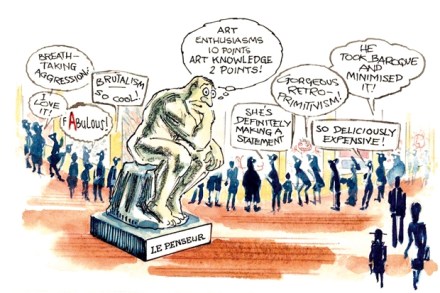
When I think back to history lessons at school, the predominant focus was always on war. From the Battle of Hastings to the Battle of Agincourt, the Crusades to Nazi Germany, the curriculum seemed jammed full of stories about aggressive military affairs. Fascinating, but it was a relief to reach sixth form and discover another way to study the past — through a cultural lens, via the history of art. History of art is often viewed derisively in the UK. It’s almost ignored by the state system, yet is offered by many independent schools. Because of this, it’s seen as a ‘posh’ choice, in much the same way classics is. A--level history of art is available at only 17 state secondary schools out of more than 3,000, plus a further 15 sixth-form colleges.

Jennifer Lawrence’s leaked photos highlight feminism’s next frontier: cyberspace

From our UK edition

[audioplayer src="http://traffic.libsyn.com/spectator/TheViewFrom22_4_Sept_2014_v4.mp3" title="Isabel Hardman, Emma Barnett and Jamie Bartlett discuss the leaked photos" startat=1312] Listen [/audioplayer]Nobody wants naked photos of themselves leaked across the internet so a global network of creeps can beat off to them. But celebs and plebs alike are increasingly confronted by this unsavoury reality. Whether it’s anonymous hackers or enraged ex-boyfriends who post the images, the story is the same: women are being let down by their ignorance of the pitfalls of technology. You should be able to take naked photos of yourself.

Leader of Rotherham Council resigns over child abuse scandal

From our UK edition

The leader of Rotherham Council has resigned following the results of a report which found that at least 1,400 children were victims of ‘appalling’ sexual exploitation in the town during a sixteen year period. The report details the ‘blatant’ collective failures during most of Roger Stone’s leadership. Professor Alexis Jay, a former senior social worker who wrote the latest report, described how children had been ‘set alight, threatened with guns, made to witness brutally violent rapes and threatened they would be next if they told anyone’. The report suggests that Rotherman Council and the police knew about the level of exploitation but did not act.

Vice News and Isis have formed a bizarre symbiotic relationship

From our UK edition

If you haven’t watched Vice News’s five-part documentary about Isis yet, I’d highly recommend it. They've gone where no other media company has managed: into the heart of the Islamic State. As a result, Isis and Vice have formed a bizarre symbiotic relationship. Both are youth-focused, both have global ambitions and both have a pioneering spirit. Even their black-and-white branding is similar. The documentary veers between the terrifying and the absurd, and wouldn't pass any of the BBC’s impartiality tests. But Vice scooped their deep-pocketed rivals by bedding in with these mad jihadis. They may be the new kids on the block, but they deserve to be taken seriously.

Scoops, snark and jihad – this is Vice News’s war

From our UK edition

War can reshape the medium of television. The First Gulf War was a landmark moment in broadcasting: CNN had reporters in Baghdad when the first bombs fell, no one else did, America was riveted and the concept of 24-hour news (accompanied by thousands of graphics) suddenly took off. And now, just as a third conflict kicks off in Iraq, we have a new television insurgent: Vice News, which is shaking up war reporting with its extraordinary coverage of the jihadis tearing up Syria and Iraq. The idea of watching television made by a magazine seems bizarre — or, at least, it did this time last month. Vice started life as a provocative publication. It was dubbed the ‘hipster’s bible’, but underneath all the snark, Vice had big plans.

Less cuddly, more creepy: The Human Factor at the Hayward Gallery

From our UK edition

Jeff Koons’s ‘Bear and Policeman’ has been used to advertise the Hayward Gallery’s latest show The Human Factor (until 7 September). But don’t be fooled; this exploration of the human figure is neither cute nor cuddly. It includes photos of rotting corpses, mannequins made from animal guts and live bees. It’s more creepy than kitsch. The show sets out to survey how artists over the past 25 years have reinvented figurative sculpture. Within the concrete rooms, the curators have installed a mix of diverse pieces. The effect is part morgue, part Madame Tussauds.

The government’s drugs strategy is miles behind today’s drug dealers

From our UK edition

New powers to tackle the huge growth in 'legal' highs are set to be introduced. Dame Sally Davies, the chief medical officer, is said to be pushing for the most radical move, a blanket ban on all psychoactive substances. My heart sinks. Do those at the top of government really think that a blanket ban will solve the problem? The evidence doesn't suggest so: prohibition very rarely reduces drug use. So why do they think that an even more extreme level of prohibition will help? New varieties of 'legal' high will be invented and put on sale on the internet. Many of these drugs are already imported from foreign websites, and it's hard to see how this ban can stop this from happening.

Report claims ‘aggressive Islamist agenda’ pursued in ‘Trojan horse’ schools

From our UK edition

The Department of Education has published a damning report today which suggests there was an ‘aggressive Islamist agenda’ pursued in a number of the ‘Trojan horse’ schools in Birmingham. Peter Clarke, a former counter-terror chief, published the report, which found evidence of a coordinated plan to impose strict Islamic teaching on pupils. Michael Gove, the former Education Secretary commissioned the report.

Spectator archive: A history of passenger planes shot down

From our UK edition

Malaysia Airlines flight MH17 crashed in Ukraine after being hit by a missile. It's not the first civilian flight to have been shot down in error though. Here are four other times mistakes have been made in the past 60 years, and the Spectator's responses to them: Iran Air Flight 655 (1988) On 3 July 1988, as the Iran-Iraq war was drawing to a close, a US military ship, the USS Vincennes, mistook Iran Air Flight 655 for a fighter jet and launched a missile at the plane. 290 people were killed: It is ironic that the nation which has done most in the world to further the idea of inalienable human rights should have destroyed 290 innocent lives by shooting down a civilian aircraft on the very eve of the anniversary of its foundation.

Don’t tell schoolboys to call themselves feminists

From our UK edition

In the Independent this week, Yvette Cooper suggested that British boys should grow up as ‘confident feminists’. They need to have lessons in feminism to help them learn how to treat women, she argued. But school shouldn’t be a place where you indoctrinate pupils to believe a particular ideology. And feminism, for all its admirable achievements in the 20th century, is an ideology. Compulsory sex education in which boys are taught to be feminists is beyond silly. By all means explain that they shouldn’t go round lifting up girls' skirts for a peek, but it’s possible to do this without telling them they must call themselves feminists. They might not like that kind of prescription. Schoolboys do tend to be a bit… truculent.

Podcast: paedomania, the next EU commissioner and the National Theatre

From our UK edition

What kind of idiot tries to stand in the way of a national child abuse panic? Matthew Parris, that’s who. In this week’s Spectator, he suggests that the panic about paedophilia is careering right out of control. Dr Liz Davies begs to differ. In her view, the inquiry is 20 years too late. In this week’s View from 22 podcast, they discuss whether Westminster needs to calm down. For the next EU commissioner, Cameron needs a Eurosceptic Nick Clegg, says James Forsyth. But would the real Nick Clegg accept the role? The Prime Minister doesn’t have long to make up his mind — the makeup of the next commission will be discussed at a European summit next week. James and Isabel Hardman discuss the runners and the riders for this plum position.