Kristina Murkett

Kristina Murkett is an English teacher, private tutor and journalist

How Britain can really help India tackle its Covid crisis

From our UK edition

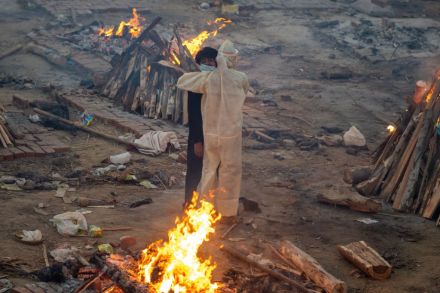
India's Covid situation is dire: hospitals have run out of beds (some hospitals are treating patients in cars), people are turning to the black market for drugs and oxygen cylinders, and mass cremations are taking place in car parks. The official daily death toll is around 2000, but the likely reality is much, much higher. Britain has offered to help by sending 600 pieces of medical equipment to support the country in its Covid crisis. But the reality is that our country could do much more to help its ally than just offer a token shipment of supplies. The UK continues to block a patent waiver designed to boost the global production of Covid vaccines.

Locked-down students are paying a heavy price

From our UK edition

Students are the forgotten victims of lockdown. Having worked hard to achieve their grades, undergraduates have been consigned to their bedrooms to learn online. There's been no socialising, freshers fun or the chance to make new friends. The only thing that has been the same for the Covid class of 2021 are sky high fees. Finally, the government has announced that all university students will be able to return from the 17 May. While some undergraduates may be relieved to get some much-needed clarity, most will be deeply, deeply frustrated. Many students are asking why universities did not open again when schools did.

Vaccine passports are a kick in the teeth for young people

From our UK edition

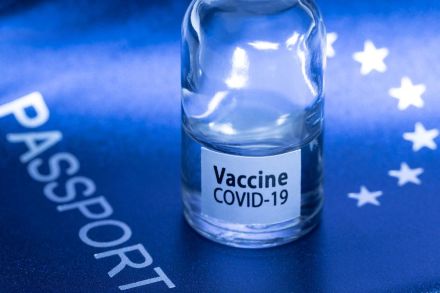
After a year in which young people have lost their jobs, been denied time in the classroom and at university and not been allowed to see their friends, could they now be penalised again? Boris Johnson said we 'have to be very careful how you handle this and don't start a system that is discriminatory' when vaccine passports, or 'Covid status certification', were raised at a briefing this week. Yet it's hard to imagine a more grossly unfair, discriminatory system than introducing vaccine passports before young people have the opportunity to be vaccinated. Young people have sacrificed so much for a disease that they are relatively invulnerable to.

Why can’t other politicians say sorry like Angela Merkel?

From our UK edition

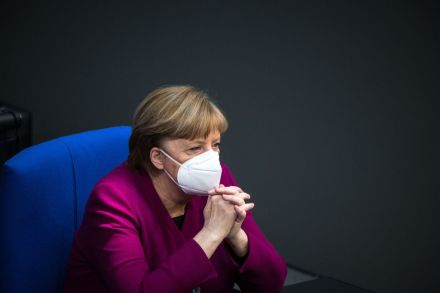
Angela Merkel did something remarkable this week: she said sorry. Having announced an Easter lockdown in Germany, the Chancellor partly reversed her decision. ‘This mistake is my mistake alone,’ she said, urging ‘all citizens to forgive’ her. Was this a particularly groundbreaking speech? Perhaps not. But one thing is clear: it is exceptionally rare to hear a politician admit blame and take responsibility so explicitly, unconditionally and openly. And when it does happen, it is more often than not from a woman. Last summer, Nicola Sturgeon apologised to pupils over the controversial exam results in a similar fashion to Merkel: ‘Despite our best intentions, I do acknowledge that we did not get this right and I'm sorry for that.

Don’t blame private schools for failing to tackle ‘rape culture’

From our UK edition

The allegations levelled against some of Britain’s top private schools have been deeply troubling. Dulwich College turns boys into sexual abusers, one former pupil has claimed. A ‘dossier of rape culture’ has been compiled by ex students at Westminster School; Latymer Upper School has reported sex abuse allegations to the police. These are just a handful of examples: Everyone’s Invited – an online campaign which invites young people to post anonymous testimonies of sexual assault and harassment – has over 4100 testimonies from girls as young as nine. For teachers like me who have taught sex education to 14 and 15 year old boys, these allegations are shocking but perhaps not surprising.

Undercover police in nightclubs is a terrible idea

From our UK edition

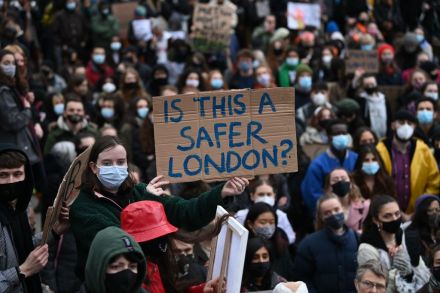
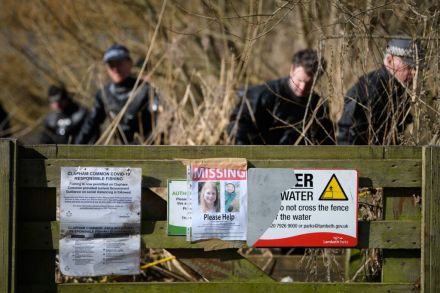
It has been a dreadful week for the police. A police officer has been charged with the kidnap and murder of Sarah Everard; officers badly mishandled the Clapham Common vigil, drawing political criticism from all sides; there have been numerous calls for Commissioner Cressida Dick to resign; and now another officer involved in the search operation for Sarah Everard is under investigation for sending his colleagues a graphic meme about violence against women. In an attempt to get a grip on the situation, Boris Johnson has announced a new plan to protect women: bars and nightclubs will be patrolled by plain clothes officers to identify predatory men.

Telling men to ‘educate themselves’ won’t make women safe

From our UK edition

Sarah Everard's disappearance has sent shockwaves throughout the capital. The case has led to women sharing stories of how they don't feel safe walking the streets at night. One Green party peer has said men should face a curfew until things change. Others have called for men to 'educate themselves' about the fears women face in the wake of this tragic story. But is this really the right approach? I'm not convinced. What is clear is that Sarah Everard did nothing wrong. Returning from a friend's house on that fateful night, she wore bright clothing, she walked down a main road, she called her boyfriend on her way back. For women, decisions about personal safety are a part of everyday life.

Meghan’s critics and defenders are both wrong

From our UK edition

When it comes to Harry and Meghan, is it time for everyone to take a collective deep breath? With the build-up to the ‘tell-all’ Oprah interview and the recent disclosure of bullying allegations, it feels like hysteria around the couple is at fever pitch. In the war of the Waleses, is there room for a middle ground? The more vicious Meghan Markle's critics are, the more her supporters portray her as an almost Christ-like figure. Her detractors then become irritated by the virtue-signalling, her defenders cite racism and sexism, and the vicious circle continues. Every action just seems to entrench each side’s position until there is no room for manoeuvre.

Taylor Swift and the problem with ‘sexist’ jokes

From our UK edition

It is the third day of Women’s History Month, and instead of talking about a range of female accomplishments and achievements; everyone is instead, once again, talking about Taylor Swift. Swift tweeted yesterday, criticising the Netflix series Ginny and Georgia for its 'lazy, deeply sexist joke' which apparently is 'degrading hard working women.' The joke comes from the series’ finale, when 15 year old Ginny argues with her 30 year old mother and cries, 'What do you care, you go through men faster than Taylor Swift!' A lazy joke? Yes. A deeply sexist one? I’m not so sure. After a decade of mass tabloid coverage of her relationships, it’s understandable that Swift might be tired of her love life being a punchline.

Prepare for the next A-level fiasco

From our UK edition

When I was at school, the best grade you could hope to achieve on your termly report card was A5, with A being the highest grade for attainment, and 5 being the lowest grade for effort. I expect there will be a lot more students hoping for, and outright expecting, their own A5s this summer.  In light of the news that GCSEs and A-levels exams will be cancelled this year, Ofqual has now confirmed that grades will be decided by teachers. Schools can use mock exams, coursework and essays, or assessments set by exam boards, but these are optional, will not be taken in exam conditions, nor decide final grades. Make no mistake: this is going to be a disaster.

Eton was right to sack teacher Will Knowland

From our UK edition

Last week Eton College made the controversial decision to sack an English teacher after he refused to take down his YouTube video entitled ‘The Patriarchy Paradox’. In the 30-minute lecture, Will Knowland argues that the patriarchy results from biological differences rather than social constructs and that the system benefits women. Eton’s decision is not, as many people would argue, an attack on free speech and fundamental liberties. It is an attack on foolishness. If Knowland’s intention had been to encourage healthy academic debate, then there are many other outlets he could have chosen: an assembly, a debate, or one of his English lessons.

Mary Wollstonecraft’s naked statue is a missed opportunity

From our UK edition

It has not been a good year for statues. The latest creative controversy now surrounds the newly unveiled Mary Wollstonecraft memorial in Newington Green, Islington. Sadly, this monument to the ‘mother of feminism’ is more pubic art than public art: a tiny, naked female, all shredded abs and bouffant bush, on top of a strange swirl of organic matter. Apparently, the statue is not Wollstonecraft herself, but a tribute to her spirit. This is rather ironic, given that Wollstonecraft dedicated a whole chapter to Vindication of the Rights of Woman to how women’s minds should be admired over their bodies. It is wrong on so many levels.

Working-class boys and the myth of white privilege

From our UK edition

Does white privilege exist? For many white working-class pupils, in particular boys, it doesn't. For years, it has been clear that these youngsters are struggling. Now for poor white kids, things are arguably worse than ever. Among poor white children, only 24 per cent of boys and 32 per cent of girls achieve five good GCSEs. As many as 73 per cent of children at Pupil Referral Units are white British. Only 13 per cent of white British boys on free school meals go to university. The attainment gap between white pupils who qualify for free school meals and more affluent white children is the widest of any ethnic group. These dire statistics might sound horrifying, yet they are hardly surprising; the warnings have been there for a while.

The cancelling of next year’s GCSEs looks inevitable

From our UK edition

When the Scottish government made the decision this summer to do a U-turn and award teachers’ predicted grades instead of exams, it was inevitable that England and Wales would follow. Now that Scotland has cancelled National Highers next summer, the question is: will GCSEs again follow suit? With less than 84 per cent of secondary schools fully open at the moment, it is clear that schools are caught between a rock and a hard place. They are also inching towards a cliff edge. It is estimated that thousands of children and young people were not in school last week, and further disruption is inevitable.

The sanctimony of the celebrity Facebook boycott

From our UK edition

Kim Kardashian West is the latest in a long line of celebrities, including Katy Perry, Leonardo DiCaprio and Jennifer Lawrence, to freeze their social media accounts in order to protest against the spread of ‘hate, propaganda and misinformation’. But while the #StopHateForProfit campaign has no shortage of famous people signing up, it won’t be long before the same celebrities return to social media; the latest campaign lasts for just 24 hours. So is this really about stopping hate or is a bid to generate some easy publicity? It’s hard not to be sceptical. That’s not to say, of course, that the campaign isn’t a worthy cause. Created in June, its aim is to put pressure on Facebook and Instagram to do more to stop the spread of hate speech and fake news.

Do we really still need a Women’s Prize for Fiction?

From our UK edition

This year marks the 25th anniversary of the Women’s Prize For Fiction, and there is much to celebrate. Over the last quarter of a century the prize has become one of the most successful awards in the world, and has exposed readers to important, challenging and accomplished works by female authors. There is no doubt that the Prize will go down in the ‘herstory’ books as a force for good. However, with Maggie O'Farrell announced as the 25th winner last night, perhaps it no longer needs to be part of our future. Much has changed in 25 years. In 1991, when the idea for the Prize was in its early embryonic form, there was not a single female writer in the Booker Prize shortlist, and clearly many female writers were being overlooked.

Universities should ignore this year’s A-Level results

From our UK edition

I had just finished my last day teaching at school when I found out: it had been a blur of Microsoft Teams training, unexpected farewells to pupils and packing up suitcases full of books. Much like my students, I was exhausted, apprehensive, and more than a little confused. I turned the radio on, and that’s when I heard Boris Johnson’s announcement: 'Exams will not take place as planned in May and June, though we will make sure that pupils get the qualifications that they need and deserve for their academic career.' Five months later, it is clear that not all A-level pupils have got the qualifications that they need, and that even more have not got the qualifications they deserve. Universities must acknowledge this, and they must do so quickly.