Kristina Murkett

Kristina Murkett is an English teacher, private tutor and journalist

Hollywood, please stop the biopics

From our UK edition

Having just watched the overwhelmingly underwhelming Bob Marley: One Love, I have decided that Hollywood’s obsession with biopics must be stopped. Biopics have become so ubiquitous, so pervasive, so unoriginal, that Kingsley Ben-Adir, who plays Marley in the film, has already starred in two other biopics: The Comey Rule as Barack Obama and One Night in Miami as Malcolm X.  A biopic can feel like little more than a Wikipedia page Real-life stories have become so popular that this year we will be treated to not one, but two dramatisations of Prince Andrew’s disastrous BBC Newsnight interview.

Why banning phones in schools won’t work

From our UK edition

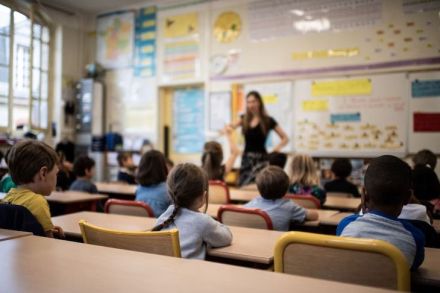
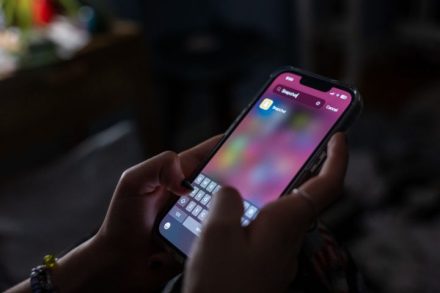
Breaking news: schools have finally been given guidance on stopping kids from using mobile phones during the school day, three years after the government first called for a ban on phones in schools. The guidance is about as groundbreaking as announcing that loudspeakers should be banned in libraries. Less than 1 per cent of schools currently allow unrestricted phone use, and around two thirds already have rules which mean that teachers should never see students using phones. This is a non-policy for a non-problem, and yet another example of a government with no serious ideas trying to look busy. As I say to my students: activity is not the same as purpose.

Can we blame universities for cashing in on foreign students?

From our UK edition

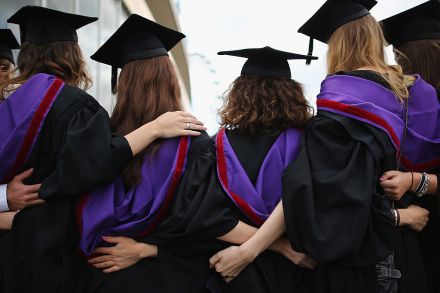
As an English teacher and sixth form tutor, I spend a lot of my time at the moment celebrating and comforting students as they hear about their UCAS offers. I try to reassure them when they are disappointed – which many of them were last week in particular, when Cambridge offers came out – that the system is flawed and far from always fair. Many of them this weekend will have realised just how unfair it can be, as a Sunday Times investigation revealed that British universities are paying tens of millions of pounds a year to recruit lucrative overseas students with far lower grades than those required of UK applicants.

Parents should share blame for plummeting school attendance

From our UK edition

Is school optional nowadays? In summer 2022, 140,000 children were classed as ‘severely absent’ from the classroom, a rise of 134 per cent on before the pandemic. Some 1.5 million pupils – one in five children – are ‘persistently absent’, which means they miss more than 10 per cent of lessons. The problem is getting worse: for secondary students, absence rates in the first half of the 2023 autumn term were higher than in the same period a year before. Education Secretary Gillian Keegan has vowed to make ‘tackling attendance’ her ‘number one priority’. Today, the government has announced £15 million of investment to expand its ‘attendance hubs’ programme to over 2,000 schools.

Teenage teachers won’t fix Britain’s classroom troubles

From our UK edition

Teaching in the UK is in trouble. Less than half the number of secondary school teachers required this year, a record low, have been recruited, according to government figures released last week. STEM (science, engineering, technology and maths) subjects are particularly struggling: we only have 17 per cent of our target number of physics teachers and 63 per cent of maths teachers (down from 88 per cent last year). Yet this is a problem across the curriculum: the only subjects where the government met its targets were classics, PE and history. Teach First, the largest teacher training programme in the UK, announced this weekend that in order to tackle this recruitment crisis it will consider being part of a new apprenticeship scheme for trainees as young as 18.

The lost world of MSN Messenger

From our UK edition

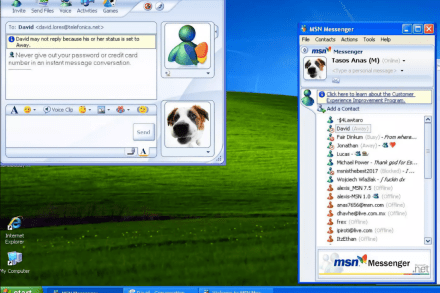
Despite only being 30, the students at the school at which I work often make me feel old. They love nothing more than testing my knowledge of their Gen-Z slang: no, I don’t know what you mean when you say Romeo is a ‘simp’ or whether Macbeth’s behaviour is ‘sus’. My average 12-year-old student is far better at IT than I am and yet they’ve never seen an iPod before. The other day, a student asked me where txt speak came from, because they didn’t realise that SMS messages had a character limit. And despite their love of Y2K music and fashion, most of my students have never heard of the millennial rite of passage that was MSN Messenger.

At last, Hollywood mocks cancel culture

From our UK edition

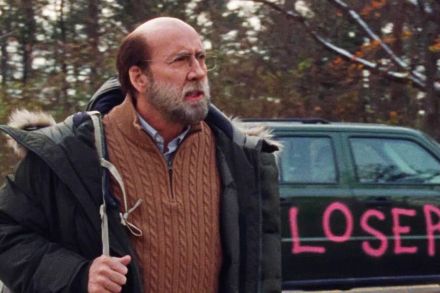
Dream Scenario is a film about modern celebrity culture and the terror of losing yourself to the internet’s virtual mob. It’s the story of evolutionary biology professor Paul Matthews, a balding, befuddled, bespectacled everyman who is the walking embodiment of anonymity – played by Nicholas Cage, the face that launched a thousand memes. At the start of the film, he gives a lecture on how zebras have adapted to avoid the mortal danger of standing out from the herd. Suddenly, in a supernatural, psychopathological epidemic, anorak-clad Paul finds himself appearing in everyone’s dreams. At first, he is just a benign bystander; in one dream, he stands there admiring a mushroom while his student is stabbed by a serial killer.

In defence of Ofsted

From our UK edition

When it comes to Ofsted, people often like to trot out the old adage that 'you don’t grow a pig by weighing it.' Others might rebuttal that you grow the pig by measuring its progress and making necessary adjustments to its diet, hence the need for inspections. However, a new report by Beyond Ofsted, an National Education Union-funded inquiry, is now suggesting that the pig will grow best if we allow it to self-evaluate its weight instead.  There is no doubt that radical reform is needed.

The many problems with Andrea Jenkyns’s letter to Rishi Sunak

From our UK edition

Dear the parents/guardians of Andrea Jenkyns (age 49 years and 5 months), I am concerned that Andrea's most recent piece – her no-confidence letter to the Prime Minister – does not reflect her true abilities, and given her experience as both Secretary of State for Skills and Secretary of State for Education, I suspect Andrea may not be trying her best here. Andrea’s letter starts well: I enjoyed her use of repetition in the short simple sentence, 'Enough is enough.' However, I’m afraid this is not enough in itself.

The Tory crackdown addiction

From our UK edition

If there’s one thing this government is addicted to, it’s crackdowns. Rishi Sunak loves to talk tough on how he is going to ‘crack down’ on small boats, climate protestors, Mickey Mouse degrees, banks blacklisting, anti-social behaviour. Just last week Home Secretary Suella Braverman vowed to crack down on homeless people living in tents as a ‘lifestyle’ choice, as if the destitute choose to sleep outside because they like stargazing, rather than because they are crippled by poverty, addiction and mental health issues. As the government chases ever more intense crackdown highs, it gets its hits from banning things. American Bully XLs. Smoking. Laughing gas. Drip pricing. Noisy protests.

Rishi Sunak’s exam shake-up doesn’t add up

From our UK edition

After 13 years in power, the Conservatives have decided to rebrand themselves as the ‘party of change’. Today, Rishi Sunak announced that the Tories will ban smoking for the next generation, scrap a significant portion of HS2, and abolish A-levels and T-levels in favour of new ‘Advanced British Standards’. Rishi Sunak is no longer ‘Inaction Man’, but ‘Over-reaction Man’ While it is encouraging to see the government finally being proactive rather than reactive on education policy, the government will have to put its money where its mouth is if it wants to prove that this is more than a headline-grabbing pre-election gimmick.

Starmer’s private school tax is a terrible, vote-losing idea

From our UK edition

Today Labour have confirmed that they will impose VAT on private schools in its first year of power if it wins the next general election, rather than phasing in new charges over several academic years. In order to improve state education, Labour needs to raise money from somewhere, and private schools are an easy ideological target. The problem is that no one is exactly sure how much money the VAT will actually raise: Keir Starmer has estimated £1.7 billion, but schools will be able to offset certain costs against the VAT (for example, utility bills and building projects).

The worrying decline of the male teacher

From our UK edition

Teacher recruitment levels are in crisis, and have been for some time. Only half the number of secondary teachers needed for this academic year have actually been recruited, according to figures obtained by the National Education Union (NEU) and the National Association of Head Teachers (NAHT). Teacher vacancies have doubled since the start of the pandemic, while one in five teachers who qualified in 2020 have already quit; even the previously reliable juggernaut Teach First has been branded ‘inadequate’ over its ability to recruit by the Department for Education. What's more, the shortage of male teachers has led to a worrying gender imbalance.

The Tories’ dreadful handling of the school concrete crisis

From our UK edition

Pupils are due to head back to school over the coming days, but now it seems that some of them might not. Yesterday, the government told schools to prepare evacuation plans for buildings made with RAAC concrete. This morning, schools were instructed to close these buildings altogether. This has caused immense disruption to at least 156 schools who now have to arrange alternative provision a mere couple of days, or in some cases, hours, before their students were due to crowd their corridors. To add insult to injury, schools will have to pay for these new measures themselves, and some parents have already been warned that disruption may last until 2025.

The politics of exam results

From our UK edition

August always means an anxious wait for results days, but this year pupils will be feeling particularly apprehensive. England’s exams regulator, Ofqual, has said that national results will be lower than last year’s and are expected to be similar to those before Covid. Some reports estimate that around 50,000 A-level students will therefore miss out on getting the A* and A grades they could have expected if they took their exams last year. They will also face intense competition for top university places given the record numbers of international students applying too. Readjusting after the grade inflation of the pandemic was always going to be painful. In 2019, 25.

The trouble with Rishi Sunak’s ‘Mickey Mouse’ degree crackdown

From our UK edition

Rishi Sunak is a big fan of a ‘crack down’. He has previously vowed to crack down on migration, anti-social behaviour and climate protests. ‘Rip off’ university courses that ‘don’t offer the prospect of a decent job at the end of it' are the PM's latest target. But Sunak’s tough talk and aggressive rhetoric smacks of over-compensating for any lack of real detail. Politicians love to poke fun at ‘Mickey Mouse’ degrees, but rarely define what they actually mean. In an interview on Good Morning Britain, higher education minister Robert Halfon couldn’t name a single degree, salary threshold or ‘good job’ against which the criteria for a ‘Mickey Mouse’ degree could be set.

Is this really the best Labour can offer teachers?

From our UK edition

Bridget Phillipson was appointed Labour’s shadow education secretary in November 2021. After 18 months in the role, she has now finally unveiled Labour’s ambitious new idea to help tackle the teacher retention and recruitment crisis: use the tax raid on private school fees to fund a £2,400 welcome bonus to every teacher who has completed their two years of training. This is a classic case of copying someone’s homework, except – no surprises – it wasn’t very good the first time round. The Conservatives have already increased the starting salaries of newly-qualified teachers to £30,000. Teaching unions have already overwhelmingly voted to reject a one-off payment.

Humza Yousaf should think again before scrapping end-of-year exams

From our UK edition

One of the most wonderful things about walking around Oxford at this time of year is seeing hordes of young people celebrating the end of exams: finals, A-levels. GCSEs. Hundreds of miles north in Scotland, younger students may soon have another reason to celebrate altogether: the end of National 5 qualifications. An imminent review of secondary Scottish assessment is widely anticipated to recommend ditching exams for 15 and 16 year olds, and replacing National 5 qualifications (the Scottish equivalent to GCSEs) with a new system. Under the new proposals, students would be judged on coursework alongside a Scottish ‘diploma’ which recognises extra-curricular activities, sport and volunteering.

Britain’s schools are facing an epidemic of bad behaviour

From our UK edition

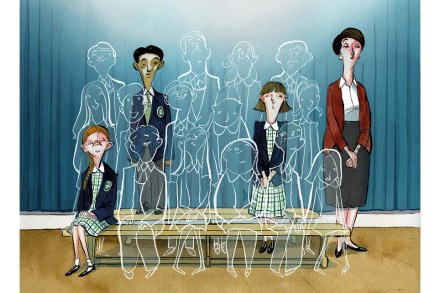
Something troubling is happening in Britain’s schools. This week, the government released its findings from the first national survey into pupil behaviour in classrooms. The results are a hard lesson to learn. But, as a teacher who has witnessed chairs being thrown and pupils urinating on teachers’ cars, it doesn’t come as a surprise. Over 40 per cent of students say that they feel unsafe each week because of poor behaviour, according to the survey. Students have the lowest perception of how well behaviour is going in school. This suggests that teachers and school leaders have normalised lower standards and expectations, to the point that roughly six weeks of lesson time is lost due to disruption a year. Poor behaviour also seems to have worsened in recent years.