Katja Hoyer

Katja Hoyer

Katja Hoyer is an Anglo-German historian. Her latest book is Beyond the Wall: East Germany, 1949-1990.

Why can’t Friedrich Merz just say sorry?

From our UK edition

‘We live in one of the most beautiful countries in the world,’ began a seemingly innocuous speech by German Chancellor Friedrich Merz last week. The words that followed earned him the wrath of the largest state in South America. Just back from the Cop climate summit in Belem, Brazil, Merz declared that his delegation had been ‘glad to return from that place’. When he’d asked the accompanying journalists if anyone would like to stay, ‘nobody raised their hand’. Appearing to compare their country unfavourably to Germany, Merz’s remarks offended many of Brazil’s leaders.
What drove the German housewife to vote for Hitler?

From our UK edition

‘It happened, therefore it can happen again,’ warned the Holocaust survivor Primo Levi, explaining why witnesses to the horrors of Nazism and genocide must be listened to, and why it is important for future generations to stay vigilant against a repeat of such atrocities. The underlying assumption is that the Nazis’ rise to power and the terrible crimes that followed were preventable. We believe that German democracy need not have died; that Hitler could have been stopped from plunging much of the world into a horrific war and from eradicating the vast majority of European Jews.

The plight of Germany’s powerless centrists

From our UK edition

Germany is a tense country these days. Conversations with friends and relatives there invariably turn to politics, and, when they do, things can get heated very quickly. Gone is the casual sarcasm and the grumbling that marked political dinner table discourse in years gone by. It has been replaced by anger and intense frustration. The political mainstream and its supporters sense this disaffection, too, and it frightens them. But their panicked efforts to do something about it are backfiring, alienating even more voters. Many centrists fear a breakdown of the democratic post-war order Widespread disgruntlement with the status quo isn’t just anecdotal. It can be measured in numbers.

Germany’s Bundeswehr bears no resemblance to an actual army

From our UK edition

Confusion abounded this week when the new German Chancellor Friedrich Merz said that Ukraine could use western missiles to hit targets deep within Russia. ‘There are no more range limitations for weapons delivered to Ukraine. Neither from the Brits, nor the French, nor from us. Not from the Americans either,’ he said. The problem was twofold. Firstly, that is not the official policy of western allies. Secondly, Germany has not provided Ukraine with any long-range missiles. Partly that is a political choice by Germany, but there is also the fact of the inherent weakness of the Bundeswehr itself. Merz’s new government has recognised the limited nature of his military, vowing to build ‘the strongest conventional army in Europe’.

Is monarchism a threat to the German state?

From our UK edition

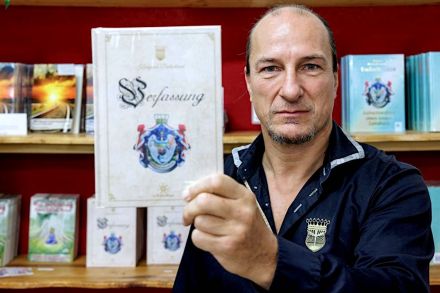
Last week a man called Peter Fitzek was apprehended by police. He calls himself King Peter I, and he is the head of the ‘Kingdom of Germany’, the largest of a number of groups that don’t accept the legitimacy of the current German state and want to replace it with their own. Monarchism may not be widespread in Germany, but the idea certainly has a dedicated following. Police came down hard on Fitzek’s realm in coordinated morning raids last Tuesday. Over 800 police officers stormed and searched properties in seven German states, leading to the arrest of ‘King Peter’ and three other people deemed to be the ringleaders of the group, which is estimated to be 1,000 members strong (though Fitzek claims it’s 6,000 nationally).

Merz’s plan to reclaim Germany’s place on the world stage

From our UK edition

'Germany is back,' said Friedrich Merz, the man likely to be elected as the new German Chancellor this coming week. What sounds like a promise to some and a threat to others is certainly a sign that the new German leadership will aim to take a more assertive role in European and world politics. Merz isn’t even chancellor yet, but he’s already keen to signal that he will take a more active interest in foreign policy than his predecessor. The outgoing chancellor Olaf Scholz has gained a bit of a reputation for his reluctance to respond to international events, particularly the war in Ukraine. Shortly after the invasion began in 2022, he took such a low profile that ‘Where is Olaf?’ jokes were making the rounds.

Merz’s coalition treaty is an empty, promise-free shell

From our UK edition

It took just over six weeks for the new German coalition to form. That is very quick: in the past it has often taken months for parties to come to an agreement after elections. So what has made this process so smooth? I would like to think it was a sense of urgency, but I suspect it’s more to do with the programme being easy to agree on. The coalition treaty put together by the CDU and SPD parties is decidedly non-committal and unimaginative – a far cry from the change voters were promised. The 146-page document had barely been released on Wednesday before one of its architects warned that some of its content may not be deliverable.

Merz has paid a high price to pass Germany’s spending package

From our UK edition

Yesterday, the German parliament approved a historic amount of debt-funded investment in defence and infrastructure. Over the next few years, Germany may spend up to €1 trillion (£841 billion) on its depleted military and crumbling roads, buildings and train tracks. These eyewatering amounts of money are intended to act as the glue with which to bind the country’s prospective coalition together. But they also give an indication of how much of their own programme the election-winning conservatives are willing to sacrifice in exchange for power. The likely next chancellor, Friedrich Merz, now starts on a credibility deficit. He’ll have to work hard to get back into the good books of conservative voters.

Is Friedrich Merz floundering already?

From our UK edition

Friedrich Merz promised to do things differently. Ahead of the country's federal election last month, the likely next chancellor of Germany said he had a ‘clear plan for Germany’s economic future’. From day one in office, he wanted to be seen to enact the change so many Germans had voted for. But, held to ransom by the election's losers, his centre-right Union is already being forced into so many compromises that Merz may turn out to be just as ineffective and unpopular as his predecessor, Olaf Scholz. Merz wasn’t off to a bad start. Okay, most Germans tell pollsters that they are sceptical that he’ll be a good chancellor, but they are open to persuasion.

Can Germany rise to the challenge of protecting Europe?

From our UK edition

When European leaders discussed their response to US-Russian negotiations about ending the war in Ukraine, the German Chancellor Olaf Scholz felt ‘a little irritated’. France and Britain suggested sending European troops to secure a peace deal. Days away from an election likely to boot him out of power, Scholz found this an ‘inappropriate debate at the wrong time'. It will likely fall to his successor to shoulder Germany’s fair share of responsibility for European security. US and Russian officials have today held the first of peace talks in Saudi Arabia, forcing European countries to determine their role as a matter of urgency. British Prime Minister Keir Starmer said ‘European nations must step up’ which also means being ready to send British troops if necessary.

Why can’t Germany kick its addiction to Russian energy?

From our UK edition

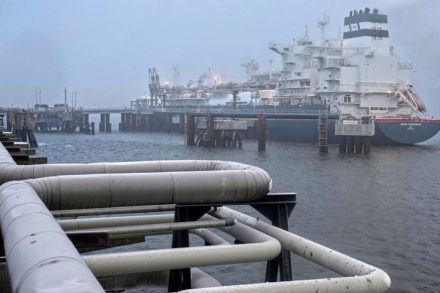
Despite imposing economic sanctions on Russia, the European Union has been importing record amounts of liquefied natural gas (LNG), a report has found. Russian LNG is exempted from the EU's sanctions. A German state-controlled energy company appears to play a major role in this circumvention of sanctions. It’s not the only indicator that Germany is more reluctant to break its old ties with Russia than it lets on. The clamour for resuming economic ties with Russia comes from many different corners According to data collated by the commodities intelligence firm Kpler and first reported on by the news outlet Politico, the EU imported 837,300 metric tons of Russian LNG in the first 15 days of 2025 alone, up from 760,100 tons last year.

Germans no longer feel safe after these horrific crimes

From our UK edition

In a knife attack in the Bavarian town of Aschaffenburg, a two-year-old boy and a 41-year-old man were killed in a park on Wednesday. Three more people were injured, among them two-year-old girl. A suspect has been arrested and identified as an Afghan national with a history of violence and psychiatric issues. The horrific details of the incident were released by police and the Bavarian Minister of the Interior Joachim Herrmann shortly after and caused widespread outrage. The 28-year-old suspect reportedly targeted a particular boy, who was in the park with other children from his kindergarten group. He walked up to him and stabbed him to death with a kitchen knife. A bystander intervened and was also killed.

Why German politicians fear Musk’s AfD interview

From our UK edition

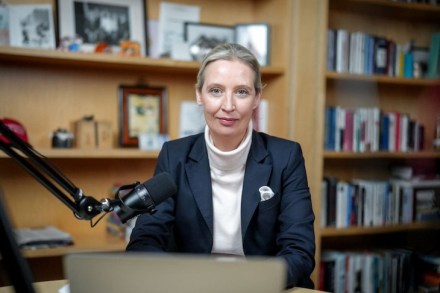
Over 200,000 listeners tuned into Elon Musk’s online conversation with Alice Weidel, the co-leader of Germany’s Alternative für Deutschland (AfD), on the social media platform X yesterday. Musk has endorsed the anti-immigration party as ‘the last spark of hope’ for Germany. Reactions were expectedly tetchy in Weidel’s home country where the AfD is polling in second place ahead of snap elections in February. For about 75 minutes, Musk and Weidel chatted about everything from energy and immigration policy to God, Hitler and life on Mars. I’d never seen Weidel act so casually. She actually giggled when Musk jokingly said ‘yes’ to her suggestion that nobody wants to be surrounded by yes men.

The truth about grooming gangs, ‘why I’m voting for the AfD’ & exploring YouTube rabbit holes

From our UK edition

47 min listen

This week: what does justice look like for the victims of the grooming gangs?In the cover piece for the magazine, Douglas Murray writes about the conspiracy of silence on the grooming gangs and offers his view on what justice should look like for the perpetrators. He also encourages the government to take a step back and consider its own failings. He writes: ‘If any government or political party wants to do something about the scandal, they will need to stop reviewing and start acting. Where to begin? One good starting point would be to work out why Pakistani rapists in Britain seem to have more rights than their victims.’ To unpack his piece in a little more detail, we were joined by journalist Julie Bindel, who has been reporting on the grooming gangs for almost 20 years.

Why Germans love Dinner for One

From our UK edition

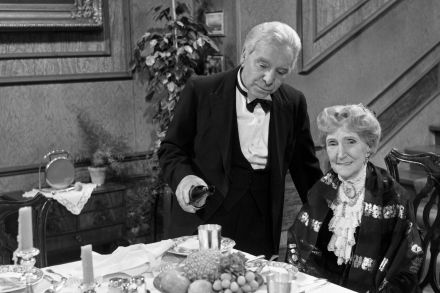
On his first state visit to Germany as monarch last year, King Charles III cracked a joke only Germans would find funny. Speaking in front of President Frank-Walter Steinmeier at a banquet in Berlin, he said in German: ‘It is nice of you that you have all come and didn’t leave me alone with a Dinner for One.’ Raucous laughter filled the room. Back home, the same sentence would have earned the King nothing but blank stares. He was referring to a British comedy TV sketch so popular in Germany that many people can recite its most popular lines by heart. Yet in the UK, few people have ever heard of it.

How the Magdeburg Christmas market attack will change Germany

From our UK edition

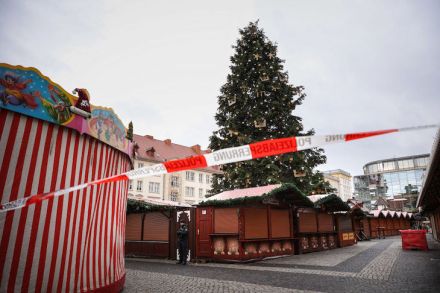
More than 200 people were injured and at least five lost their lives after a man ploughed a car into crowds at a Christmas market in the German city of Magdeburg last night. Among those who were indiscriminately murdered was a small child. Like many Germans, I felt a deep, burning anger rising in me when I heard about the incident. It immediately brought back sickening memories of the 2016 Christmas market attack in Berlin in which 13 people were killed and dozens injured. My sister worked very closely nearby that day. I remember texting ‘Are you okay?’ with a shaky hand and waiting agonising minutes before her reply finally came. It was sheer luck that she and her colleagues had decided not to go to the Christmas market that day.

German politics is a mess

From our UK edition

The German Chancellor Olaf Scholz lost a confidence vote in parliament yesterday. It’s almost certain now that Germans will head to the polls for a snap election on 23 February. What is less certain is whether this will bring about the change so many of them crave. Of 717 Bundestag deputies only 207 expressed their ongoing confidence in the German Chancellor, the vast majority who did so being members of Scholz’s own party, the Social Democrats (SPD). This didn’t come as a surprise since he intended to lose the vote: Scholz's ruling coalition collapsed last month, leaving him to run a minority government. The only way out of this stalemate is a fresh election triggered by a lost confidence vote.

Olaf Scholz’s dreams of election victory are wishful thinking

From our UK edition

Three years ago today, Olaf Scholz was sworn in as Germany's chancellor. He had narrowly won the election by presenting himself as Angela Merkel’s natural successor. Appearing as the continuity candidate was good enough to clinch it in 2021, but Scholz is unlikely to pull that off again in Germany’s snap election, expected to be held on 23 February next year. Scholz’s Social Democratic party (SPD) appears to have reached a nadir. Polls give it 15 or 16 per cent of the vote share, third place behind the centre-right CDU/CSU in first place and the far-right Alternative für Deutschland (AfD) in second. You’d have to go back to the 19th century to see a worse result for the SPD, Germany’s oldest party.

Why are Germans happy to continue paying a dog tax?

From our UK edition

Local authorities in Germany are making more money than ever from dogs – or their owners to be precise. The very idea of charging dog owners an annual tax for keeping their pets may sound archaic to British ears but it carries on fairly unchallenged in Germany. In 2023, Germany’s municipal authorities received a total of €421 million (£351 million) in tax from the country’s dog owners. The figure has risen by 41 per cent over the last decade. Each municipal authority sets its own fees. Having a dog in Berlin will set you back €120 (£100) a year with every additional dog costing €180 (£150). Stuttgart charges extra for breeds considered dangerous: owning a Bull Terrier or American Staffordshire Terrier costs €612 (£510) a year.

Germany and the fuss over the ‘idiot’s apostrophe’

From our UK edition

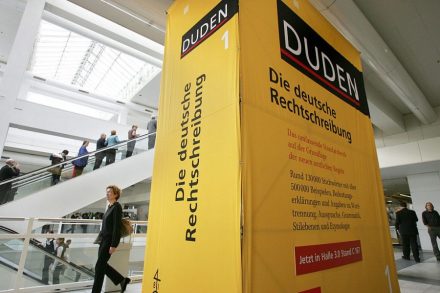
‘Now it’s official,’ the German press lamented, ‘the idiot’s apostrophe is correct.’ The Council for German Orthography, the body that regulates German spelling and grammar, has relaxed the rules on when and how apostrophes can be used to show possession. What seems like a matter for grammar pedants has fuelled angst for the very future of the German language. The issue itself isn’t new. Unlike English, German doesn’t traditionally use apostrophes to show possession. So Uncle Tom's Cabin, for example, becomes Onkel Toms Hütte in the German translation. But this rule has long been eroded. It’s common to find places like ‘Tina's Wolllädchen’ – ‘Tina’s Little Wool Shop’ – which should be ‘Tinas Wolllädchen’ according to the old rules.