Kate Teltscher

Seeing the wood for the trees

From our UK edition

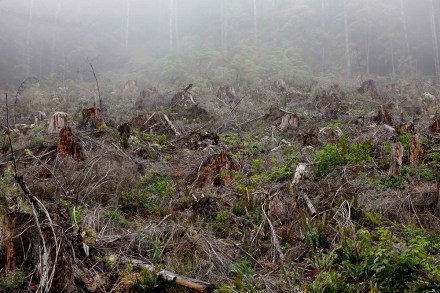
For a fortnight, four women have been combing through a 30-metre forest plot with infinite care. They have noted the age and height of every tree, measured every fallen branch and twig, identified every plant and assessed the depth and composition of the forest floor. The purpose of this backbreaking work is to understand the critical role played by old-growth forest in carbon storage. Unusually for a field experiment, the team includes a mother and her two daughters. Teenagers are not generally known for their willingness to spend weeks in the undergrowth, but then Suzanne Simard is not your average mother. She is the pioneering Canadian ecologist who has changed the way we think about forests.  Suddenly, lightning flashes overhead.
The world’s largest flower is also its ugliest

From our UK edition

Plants regularly lose out to animals in the charisma stakes. In Pathless Forest, Chris Thorogood seeks to promote a new face of Southeast Asian conservation: Rafflesia, one of the strangest and most gruesome plants on the planet. Rafflesia is a parasitic plant, deriving everything that it needs from its host, spending most of its life as a microscopic thread hidden inside a vine. It cannot photo-synthesise and survives without roots, stem or leaves. Once every few years, buds emerge which take nine months to mature. Finally open, the enormous five-lobed flowers resemble slabs of bloody, white-flecked meat. Most spectacular of all is Rafflesia arnoldii, the largest single flower in the world, a metre across, weighing up to 10kg. And then there’s the smell.

A guide to the apothecary’s garden

From our UK edition

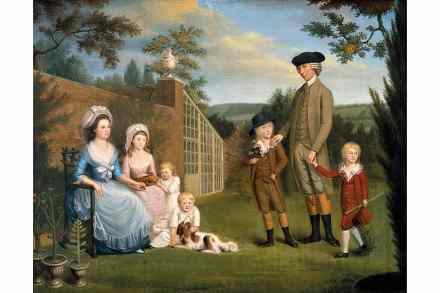
On 23 May 1804, two months before his daughter’s wedding, John Coakley Lettsom threw open his estate in Camberwell. Some 800 guests made their way to Grove Hill, with its panoramic views across the Thames to London. A leading doctor and noted philanthropist, a prolific author on matters medical, social and moral, Lettsom was famously convivial. But if any of his guests had been expecting music, dancing and cards, they were in for a disappointment. Lettsom was a Quaker — though not of the strictest variety — and the evening’s entertainment centred on ‘rational pleasure’. Guests were invited to view the shells, corals and minerals on display in his museum, to inspect the natural history volumes in his library and admire the blooms in his conservatory.