Kate Chisholm

Marvels of the masked ball: dressing up in Georgian London

In the satirical print ‘Remarkable Characters at Mrs Cornely’s Masquerade’ from February 1771, the Georgian craze for dressing up as fantastical characters is shown in all its theatricality and wild invention. The harlequin was always popular, as was the domino, but here we also have a ‘Savoyard’ (supposedly from Savoy) playing a hurdy-gurdy with his dancing bear in tow, a nun in full habit, ‘Mad Tom’ with wild hair and ragged clothes, and, perhaps weirdest of all, a coffin, decorated with a skull and crossbones. Peeping out from beneath its sombre frame are the two ridiculously dainty feet of the masquerader.

Scrawled outpourings of love and defiance

To come across dates and names carved into a choirstall or ancient tree is to experience a momentary frisson, a startled connection with the past. Yet this practice of making ‘unauthorised’ personal graphic statements in public spaces is often thought of as antisocial, something to be erased immediately. Unless of course they are by Banksy, whose spray-painted outpourings cost local councils a great deal to clean off before they came to be regarded as valid documents, articulating the thoughts and imaginings of the disaffected. In her ingenious new book Writing on the Wall, the art historian Madeleine Pelling has chosen to use these often transitory pieces of historical evidence as a way of illustrating the huge cultural changes that took place in the 18th century.

The savage power of 18th-century caricature

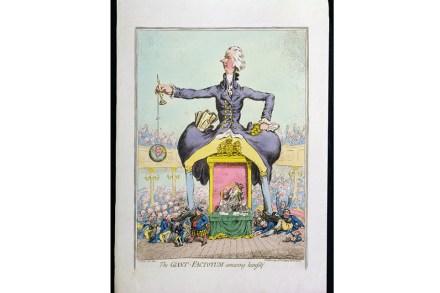
Thanks to the work of the caricaturists of the late 18th century, the mistresses of the future George IV – Mrs Fitzherbert, Mary ‘Perdita’ Robinson and Lady Jersey among them – are better known to us than his eventual wife, Caroline of Brunswick. The Prince of Wales’s decadent, spendthrift lifestyle (we see him emerging in 1788 from a lavish four-poster from which Mrs Fitzherbert arises en déshabillé), combined with his florid face and corpulent physique, were perfect fodder for this new genre of artistry, which used caricature (or visual exaggeration) to make political points. James Gillray, Thomas Rowlandson and Isaac Cruikshank were its chief proponents.

Why we must defend Radio 3 from threatened cuts

Who doesn’t love Eurovision? All that razzmatazz. The ghastly frocks and gloopy pop songs, the false bonhomie and bare-faced bias when the voting comes around. It’s an irresistible annual event, guaranteed to put a smile on your face and provide the pretence that we are all one happy European family. But all that showbiz comes at a cost (€6.2 million, and rising), with the host country’s broadcaster expected to cough up about one-third of that. What might have to be lost by the cash-strapped Corporation in the next year, or curtailed, to ensure that we put on the biggest and best show ever next year? The BBC budget has become a hot topic in recent weeks.

A mighty contest from trivial things — the quarrel between Alexander Pope and Edmund Curll

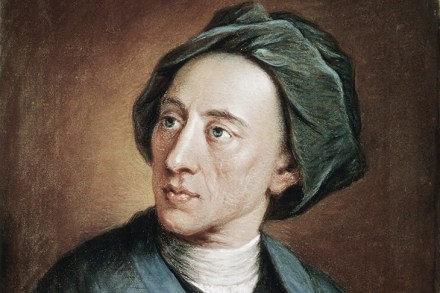
Rapid technological advance, a dark underworld of uncensored publishing, a threatened rupture with Scotland, even fears of a new outbreak of plague. Close scrutiny of the first few decades of the 18th century reveals some startling (and oddly reassuring) parallels with our own trying times. In his new book, Pat Rogers, an expert on the writings of Alexander Pope and much else, resurrects what you might think was an obscure battle over copyright between Pope and the Grub Street bookseller and printer Edmund Curll. Their quarrel, though, becomes a prism through which Rogers captures the upheavals, hubbub and stench but, above all, the wit of that period, when words could have the explosive impact of hand grenades.

Aftermath: when will the country truly recover from the virus?

31 min listen

The vaccine might be just around the corner, but can the country truly recover? (01:00) How can the Labour party win back the working class? (11:15) And finally, should we celebrate the new statue of Mary Wollstonecraft? (23:10)With The Spectator's political editor James Forsyth, chair of the Health Select Committee Jeremy Hunt, firefighter and writer Paul Embery, Times Radio presenter and former Labour MP Gloria de Piero, The Spectator's radio critic Kate Chisholm, and Spectator contributor and feminist writer Julie Bindel. Presented by Lara Prendergast.Produced by Cindy Yu, Max Jeffery, Matt Taylor and Sam Russell.

Maggi Hambling’s Wollstonecraft statue is hideous but fitting

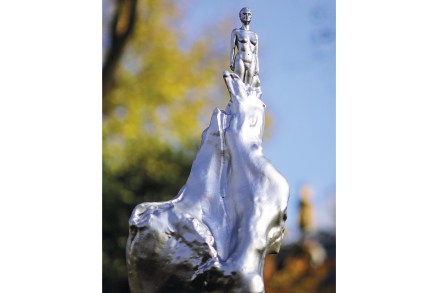
Frankly, it is rather hideous — but also quite wonderful, shimmering against the weak blue of a late November sky. The new statue ‘for’ Mary Wollstonecraft (1759-97), the radical writer, journalist, teacher and novelist, had drawn quite a crowd to Newington Green in north London when I went to see it. They were gathered round it, puzzled and questioning, trying to work out what to think of the tiny figure on top, the garish silvery finish, the heaving bulbous mass below. The memorial, designed by the sculptor Maggi Hambling, has been vilified since its unveiling a few weeks ago by critics who have focused on the nude female figure, bothered by the beautifully styled tits and perhaps perturbed by the very obvious bush of pubic hair.

The comfort of building your own coffin

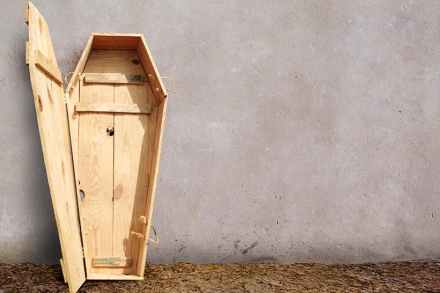
H.G. Wells got it right in his comic novel The History of Mr Polly, where the wake is so much more fun than the wedding breakfast. How often have you come home from a wedding feeling slightly nauseous from an overdose of cheap champagne and fake bonhomie? Yet a funeral can be heartwarming and inspiring; a celebration, a gathering, without the flimflam and interminable jollity. But how many of us will make plans for that final reckoning? How many will decide on the venue, the music, the food and flowers? Most likely it will be your relatives who will choose the coffin in the funeral director’s brochure (£265 for cardboard, rising to £1,990 if you want one in oak with the Head of Christ carved on the side).

The Edition podcast: has the great Brexit divide mended?

31 min listen

First, as the news agenda is dominated by things like Huawei, HS2, and public spending, could politics be – whisper it – returning to normal? In his cover piece this week, Rod Liddle writes how, for the most part, the election result has put a lid on the civil war between Remainers and Brexiteers. One such Remainer who has reconciled herself with the result is Stefanie Bolzen, the UK Correspondent for Die Welt. She writes in the issue this week about just why Germans are so heartbroken about Brexit. Stefanie and Rod chat Brexit emotions on the podcast. Next, is there anything to be gleaned from the Chinese response to the coronavirus?

How podcasts have transformed radio

As if on cue, Lemn Sissay’s new series for Radio 4 tackles all those questions we would rather ignore in this season of good cheer and overindulgence. He starts out with a programme about homelessness, reminding us that the Christmas story begins with a young unmarried couple, ostracised because she’s pregnant and her current partner is not the father, who are desperately in need of a bed for the night. Cut to 2019 years later. ‘How do you decide how much to give?’ he asks a young woman in his audience who, it turns out, works with a charity for homeless people. ‘Do you ever feel you’ve not given enough?

The pleasures and perils of talking about art on the radio

‘I like not knowing why I like it,’ declared Fiona Shaw, the actress, about Georgia O’Keeffe’s extraordinary blast of colour, ‘Lake George, Coat and Red’. O’Keeffe was inspired by the lake in upstate New York but there’s no discernible lake on the canvas and no coat, although there is plenty of red. When Shaw is asked to describe the painting for us, her listeners, by Alastair Sooke, the presenter of The Way I See It, she puts her head in her hands. It’s almost like an amateur painting, Shaw concludes, and yet ‘it absolutely isn’t’. It’s an early work from 1919 when O’Keeffe was 32.

The Polish electronic music revolution of the 1950s

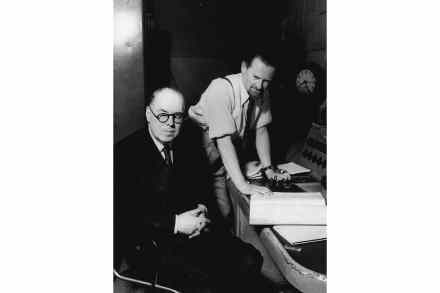
It was created in November 1957, a year before the BBC’s fabled Radiophonic Workshop, and was far more influential in shaping the development of electronic music, yet the Polish Radio Experimental Studio (PRES) is now virtually unknown even in Poland. Radio 3’s feature on Sunday night, Poles Apart (produced by Andrew Carter), made the case for its significance, taking us back to those early days of analogue bleeps, bongs, blurps and squelches. Robert Worby and the eerily electronic undercurrent to the programme gave us a completely new perspective on what else was going on in Poland in the 1960s besides the trouble at the Gdansk shipyards and the suppression of political thought.

From Brexit to Beethoven: John Humphrys returns to radio

Some listeners will have had quite a shock first thing on Monday. Turning on at six to Classic FM they would have heard a familiar voice but not quite the one they expected. In yet another surprising turn of events, John Humphrys, the fox terrier of news broadcasting, has just completed a stint on Classic FM’s breakfast show, swapping Brexit for Beethoven and smooth radio for the ebullient hectoring of the Today programme. ‘No need to readjust your radio,’ laughed Humphrys just after seven, before introducing the next track, Shostakovich’s Jazz Suite.

Without Joe Grundy The Archers feels lost

There was something really creepy about listening to the ten-minute countryside podcast released last weekend by Radio 4 supposedly transporting us to Marneys Field in Ambridge. Two worlds colliding. The fake countryside of Borsetshire was transfigured — no longer pretending to exist but existing, as if to make us all pretend we believe in it for real. We can hear David in the distance calling in the cows, just like an episode of The Archers. But those birds cheeping furiously; that tractor rushing past. The wind, the thunder, the sudden downpour. They could all have come from a nature documentary.

What’s the point of the Today programme?

What else is there to write about in the week that John Humphrys, that titan of the BBC airwaves, retires from his duties on the Today programme? Love or hate his terrier-like style of interviewing — baiting and occasionally biting his victims metaphorically on air — there’s no denying his stature as a news broadcaster or his influence on that staple of the Radio 4 schedule. He will surely be missed, much as Sue MacGregor, Brian Redhead, Jim Naughtie et al are missed, their presence in our lives determined by that early-morning slot, the first voice we might hear each day, the voice that brings news of never-to-be-forgotten events, the voice that infuriates and intrigues in equal measure.

General de Gaulle’s advice to the young Queen Elizabeth

There were so many ear-catching moments in Peter Hennessy’s series for Radio 4, Winds of Change, adapted from his new book by Libby Spurrier and produced by Simon Elmes. Harold Wilson answering a journalist’s question after a sleepless night while awaiting the results of the 1964 election, quizzical, cheeky and so quick off the mark. When asked if he felt like a prime minister, he replied: ‘Quite honestly, I feel like a drink.’ Later he was waylaid at Euston station having just got off the morning train from Liverpool and was still unsure of the result. (Labour won by just four seats after 13 years of Conservative rule.) At 3.50 that afternoon, Wilson, sitting by the phone in Transport House, at last received a message from the Palace.

Why 80 per cent of young people in this Macedonian town have turned to posting ‘fake news’

It’s such a relief to turn on the radio and hear the voice of Neil MacGregor. That reasoned authority, his deep knowledge of history and how things have come to be as they are, his measured common sense and ability to see round an argument or story. He’s like the voice of how things used to be, when the world was not so topsy-turvy and the news reports made sense. His series, As Others See Us, returns to Radio 4 this week (produced by Tom Alban), taking him this time to Singapore, the USA, Australia, Poland and Spain to talk to people there about Britain’s past connections, present woes and future prospects. It’s fascinating, salutary, and more than a little disturbing. Take Singapore, for instance.

The joys of Radio 4’s Word of Mouth

I first heard Lemn Sissay talking about his childhood experiences on Radio 4 in 2009. At that time he was still fighting Wigan social services for sight of the official dossier on his years as a child in care, fostered at first and then dumped back in the system and institutionalised in care homes and then a remand home. Eighteen years of his life stored in an Iron Mountain data facility. He’d been asking for his files, the story of his life, since he came of age. It was not easy to forget that programme; the banal cruelties of the system and Sissay’s resolute dignity in talking about them. At 18 he was told that the name he had been given by his foster parents was not his birth name.

Will you last beyond the madeleine? Radio 4’s In Search of Lost Time reviewed

The madeleine upon which Proust’s seven-volume epic In Search of Lost Time pivots makes its significant appearance after just 18 minutes in the new Radio 4 adaptation — with which, if you’re not obsessed with the Ashes or holed up with the family in some dank seaside cottage, you can while away this bank holiday weekend. It’s always a surprise to realise that the most significant cake ever baked (after Alfred’s burnt tarts) makes its fictional appearance so soon, almost before Proust’s characters, Swann, Gilberte and the Guermantes, have taken shape in your mind.

The joys of scavenging the Thames

‘It’s very hard for you to really live in the day,’ says Ruth, ‘because you don’t know by evening you may have a letter from an agency saying you’ve got to go tomorrow.’ She arrived in the UK in 1937, aged 15, sent here by her Jewish family to escape the Nazis. Now 98, she was talking to Nikki Tapper, a presenter for BBC West Midlands, at a community centre in Birmingham, which since 2015 has committed itself to be a city of sanctuary.