Kate Chisholm

Don’t go breaking my heart

From our UK edition

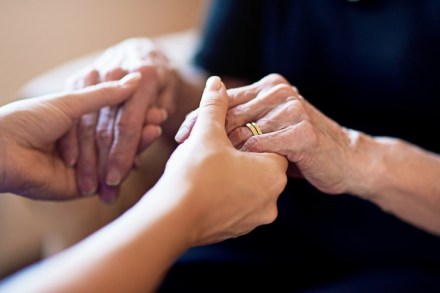
It’s been heart week on Radio 4, celebrating the anniversary of the first ‘successful’ heart transplant in 1967, which was performed, controversially, by Dr Christiaan Barnard in South Africa on a patient called Louis Washkansky (who survived the operation and lived for 18 days). The heart, that mysterious, almost mystical organ, is freighted with such cultural significance that back then there were some who thought such feats of medical skill were tampering dangerously with our humanity. Change the heart, and the person within would never be the same.

Sound of the Gods

From our UK edition

At the launch of the Christmas radio schedules last week, James Purnell, director of radio (and much more) at the BBC, stressed repeatedly the need for radio to be ‘reinvented’ for this new digital age. But what did he mean by reinvent? Was he hinting at the need for a new, leaner radio, the sound-only stations running up cheaper bills for the corporation? Or was he envisaging a translation of the existing radio networks into something more than just audio, focusing not so much on what goes on in the studio but on the new digital future, visualised and captured online.

Watch this space | 23 November 2017

From our UK edition

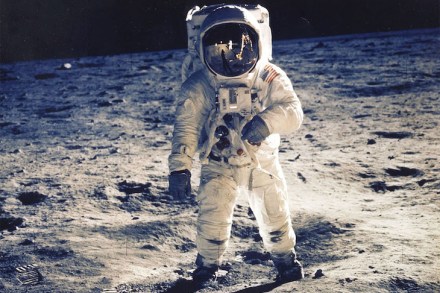
Wally Funk is on a mission — to make real her dream that a woman will walk on the moon in her lifetime. She was one of 13 female pilots who trained at Nasa alongside the Mercury 7 astronauts as they prepared to go to the moon. But when the Apollo programme was abandoned in 1972 (in part because of the costs of the Vietnam war) her dreams of going into space were also junked. Now, though, she has renewed hope, as governments and corporations have resurrected the space race, no longer confined this time to America versus Russia but also involving China, India, the European Space Agency (Esa), as well as Virgin Galactic, Moon Express and Blue Origin.

Local heroes | 16 November 2017

From our UK edition

It’s 50 years since the first local radio stations were launched by the BBC in yet another instance of the corporation working hard to stay ahead of the game, on this occasion responding to the challenge of the pirate stations, whose audiences were local and known to be very loyal. Radio Leicester was the first to go on air on8 November 1967, launched by a very plummy-voiced postmaster-general as ‘the first hometown radio station in Britain’. (The BBC executive behind the idea, Frank Gillard, had spent time in America and been impressed by local radio there, wishing to replicate its homespun feel.) Others followed quickly, dependent on whether the local council was happy to provide part-funding (they are now solely funded by the BBC).

Ulysses on speed

From our UK edition

It’s always odd to hear a familiar voice on a different programme, playing an alternative role. They never sound quite as comfortable behind the mike, as if they are wearing clothes that don’t quite fit. The voice has a different timbre, as it did on Sunday when Garry Richardson, who since 1981 has been keeping Today listeners updated on all the latest sports news, revealed his other passion. Since he was ten, when he was first taken to see the man from Knotty Ash at Blackpool in 1967, he’s been a fan of that extraordinarily tenacious star of the entertainment world, Ken Dodd. In Sir Ken Dodd: What a Beautiful Day!

All’s well that ends well | 2 November 2017

From our UK edition

Mandy was 38 when she was told she was ‘in the end stage’, suffering from COPD and finding it more and more difficult to breathe. Matthew, in his twenties, was given just four to five years of life after being diagnosed with a brain tumour. Vivek, also in his twenties, is confined to a wheelchair because he suffers from Duchenne muscular dystrophy and is already reliant on a ventilator for much of the time. Sophie has stage four lung cancer and tumours in her lungs, lymph nodes, bones and brain. You might think a programme made up of their thoughts, words, experiences would be one of lament and moping, misery and fear. Not a bit of it. Before I Go on the World Service (beautifully made by Sue Nelson) was not in the least bit self-pitying.

The ties that bound us

From our UK edition

Only Neil MacGregor could do it — take us in a single thread from a blackened copper coin, about the size of a 10p piece, dating from Rome in about 200 AD, to a packed music hall in London during the first world war. In his new 30-part series for Radio 4, Living with the Gods, the former director of the British Museum looks at the ways in which societies come together through shared rituals and beliefs and how these rituals are developed and used to make sense of our place in a universe beyond human comprehension. One side of the coin shows a fire burning within the Temple of Vesta, dedicated to the Roman goddess of fire, and surrounded by the Vestal Virgins, whose job it was to keep the flames alight, to protect the ‘hearth’, or the focus of Rome’s power.

Speed limit | 19 October 2017

From our UK edition

Slow radio is popping up everywhere at the moment — programmes that have no outward form but just meander through the schedule, and often, but not always, are played out live in real time. In spite of their spontaneous feel and free flow these programmes have usually been carefully orchestrated, and that’s part of slow radio’s appeal: crafted to sound like life itself, impressionistic, en plein air, long-running. It’s not to everyone’s taste — too slow, too redolent of nostalgia for a mystical past where there was once time and space to think. Who wants to follow Horatio Clare’s every footfall as he tramps for ten miles along Offa’s Dyke (as happened on Radio 3 in the spring)?

Faulty connection

From our UK edition

There’s no doubting her passion for the programme of which she is now chief of staff. Talking to Roger Bolton on Radio 4’s Feedback slot, Sarah Sands told us repeatedly how much she loved Today, how it was ‘a privilege’ to be in charge of such a ‘flagship’ programme, how its length, three hours, was such a luxury after years spent in the newspaper business. She was so happy to have so much time to cover big subjects and invite so many experts into the studio to talk about their subject. She relished the challenge of preserving the programme’s ‘depth and resonance’, its ‘great intelligence’ and ‘thoughtfulness’.

Split decision | 5 October 2017

From our UK edition

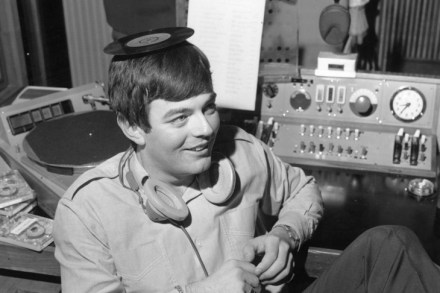
Think back to that morning in September 1967 when the Light Programme was split in two, Tony Blackburn launching Radio 1 with a jaunty new jingle announcing it was all ‘Just for Fun’ while staid old Radio 2 went on with the Breakfast Show and told its listeners to ‘Wake Up Easy’. What is so surprising is just how radical the changes at the BBC were. On that unsuspecting morning, as the Pope urged for peace in Vietnam and a cannabis farm was discovered in Bristol, the Beeb’s radio output was completely overhauled.

Woman of a thousand voices

From our UK edition

‘On air, I could be the most glamorous, gorgeous, tall, black-haired female… Whatever I wanted to be, I could be… That was the thrilling part to me,’ said Lurene Tuttle, talking about her career as a star of American radio in its heyday from the 1930s to the 1950s. She was known as ‘the Woman of a Thousand Voices’ because of her talent for voicing any part, from child to OAP, glamour puss to gangster moll, hard-nosed executive to soft-hearted minion. On Saturday we heard her in full flow on Radio 4 Extra in an episode of Suspense, brought out of the archive from June 1949 for the three-hour special celebrating The Golden Age of American Radio. It was terrifying.

Mothers’ ruin

From our UK edition

At the heart of Basic Instincts, the new exhibition at the Foundling Museum in London, is an extraordinarily powerful painting of a mother and baby. At one time the ‘Angel of Mercy’ was sold as a greetings card by its owner, the Yale Center of British Art in Connecticut, presumably intended as something you might send your own mother or child. But take a second glance and you might well wonder who bought the card and who they might have sent it to. In Joseph Highmore’s Georgian scene, a young, fashionably dressed woman is splayed across the canvas, her feet in delicate silk shoes, a tiny baby, naked, resting precariously on her lap.

Seeing the light | 21 September 2017

From our UK edition

‘You can’t lie… on radio,’ says Liza Tarbuck. The Radio 2 DJ was being interviewed for the network’s birthday portrait, celebrating 50 years since it morphed from the Light Programme into its present status as the UK’s best-loved radio station — with almost 15 million listeners each week. ‘The intimacy of radio dictates you can’t lie because people can hear it.’ She’s absolutely right. As she went on to explain, when you’re driving and it’s just the radio and you, no distraction, ‘You can hear things in my voice that I don’t even know I’m giving away.

Face time | 14 September 2017

From our UK edition

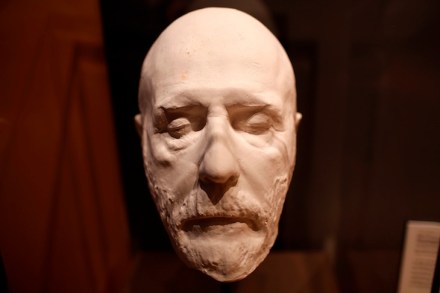
The inimitably pukka voice of Jacob Rees-Mogg echoed through Radio 4 on Thursday morning. He was not, though, talking about nappies, nannies or even Brexit; his topic instead was death masks and specifically that made of his father William, the newspaper editor and vice-chairman of the BBC, who died in 2012. Not long after Rees-Mogg had passed from this life, his facial features were immortalised in wax and silicon rubber by Nick Reynolds, godson of Ronnie Biggs and son of Bruce Reynolds (whose names you may recall from the great train robbery of August 1963).

The listening project

From our UK edition

As Classic FM celebrated its quarter-century on Wednesday with not a recording but a live broadcast of a concert from Dumfries House in Scotland — Bach, Mendelssohn, Chopin and Liszt, and the première of a specially commissioned work by the Welsh composer Paul Mealor — Radio 3 has upped the ante by announcing an autumn schedule that promises to be ‘an antidote to today’s often frenzied world’. Its new programming ranges from a special opera season and a series of organ and choral music to ‘an immersive audio impression’ of what it feels like to hang vertically on the side of a mountain, wind whistling through the ears, feet teetering on the edge.

Universal appeal | 24 August 2017

From our UK edition

Yet another sign that we are living in very strange times: a pair of celebrities, their names made by TV, have switched over to radio for their next project. Not starring in their own series on BBC2 or Channel 4, but on a medium that could have become redundant yet is refusing to give way (the latest Rajar figures indicated that listening is on the up across all networks). Plenty of stars made by radio have gone on to household-name status on TV (Steve Coogan, David Mitchell, Chris Morris). But Eric Monkman and Bobby Seagull, who began trending on Twitter because of their appearances on BBC2’s University Challenge — Monkman, the geek with his razor-sharp eagerness to get on the button; Seagull, the cool, smiley guy — are now starring on Radio 4 in their own show.

The pleasures of reading aloud | 24 August 2017

From our UK edition

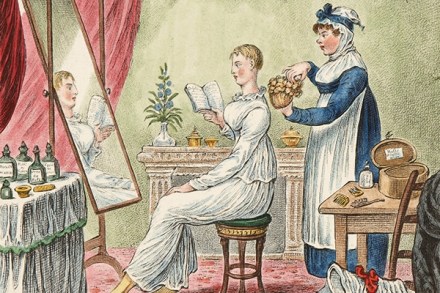
‘I have nothing to doe but work and read my Eyes out,’ complained Anne Vernon in 1734, writing from her country residence in Oxfordshire to a friend in London. She and her circle of correspondents (who included Mary Delany, the artist and bluestocking) swapped rhyming jokes, ‘a Dictionary of hard words’, and notes on what they were currently reading. Their letters are suggestive of the boredom suffered by women of a certain class, constrained by social respectability and suffering the restlessness of busy but unfulfilled minds. But that’s not their interest for Abigail Williams in this fascinating study of habits of reading in the Georgian period.

India in a day

From our UK edition

Bold programming by the powers-that-be at Radio 4 meant it was possible to listen to all seven episodes of Ayeesha Menon’s adaptation of Salman Rushdie’s Midnight’s Children in a single day on Tuesday, exactly 70 years since independent India was born, and Pakistan created. Four and three-quarter hours of meticulously crafted drama (directed by Tracey Neale and Emma Harding) ingeniously slotted into episodes of different lengths throughout the day, some just 15 minutes, others a full hour (the adapter having to create and sustain pace in a variety of ways to suit the different lengths).

Big Auntie

From our UK edition

It’s sneaky, the way in which the BBC, so much regarded as part of the family as to be nicknamed ‘Auntie’, has introduced the need to login (or register) whenever you want to listen to something on iPlayer. Maybe I’m doing something wrong because the alert message assures me I will be kept logged in, and that I should only have to login once. But even that is once too much. After all, until now, we’ve had the chance to listen again to whatever we fancy with very little fuss and almost instantly.

Separation anxiety

From our UK edition

As Europe remembers Passchendaele, India and Pakistan recall Partition, just 70 years ago, when Britain so hastily abandoned its Indian empire, exhausted by the costs of war in the world and troubled by the upsurge in violence between Muslims, Hindus and Sikhs as the campaign for Britain to Quit India took root. In Partition Voices on Radio 4 (produced by Mike Gallagher, Tim Smith and Ant Adeane), we heard from those who witnessed the bloody terror that broke out across the subcontinent as it was divided on religious, not political, ethnic or communal grounds, many of whom fled to Britain to make new lives for themselves.