Kate Chisholm

The power of words | 3 May 2018

From our UK edition

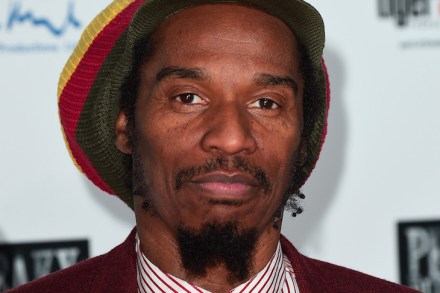
‘For me rhyming was normal,’ said Benjamin Zephaniah, reading from his autobiography on Radio 4. Back in the 1960s, on Saturday afternoons in their house in Hockley, Birmingham, where Zephaniah grew up with his seven siblings, the drinks trolley would come out and the record player be plugged in — Desmond Dekker, Millie Small and Prince Buster — ‘the lyrics of Caribbean life’. The church, too, gave him a love of words and vocal performance, Zephaniah delivering his first gig by reciting a list of the books of the Bible both ways, forwards and in reverse order. The music and the poetry were part of everyday life, ‘it was how we communicated’.

All the world’s a stage | 26 April 2018

From our UK edition

How to stage Shakespeare on air and bring the text to life without the benefit of set, costumes, choreography and all the physical business of a theatrical performance? That’s the question faced by drama directors on radio, and Emma Harding in particular whose adaptation of The Merchant of Venice was broadcast last Sunday on Radio 3. Updated to 2008, just as the financial crash was beginning to impact on individual lives, the play opens with the pulsating beat of a track from the contemporary charts (music and the odd bit of additional dialogue being the only way to indicate setting). For yes, shock horror, in this version of the play Antonio and his merchant banker friends order lattes in a noisy coffee bar.

Speech impediment | 19 April 2018

From our UK edition

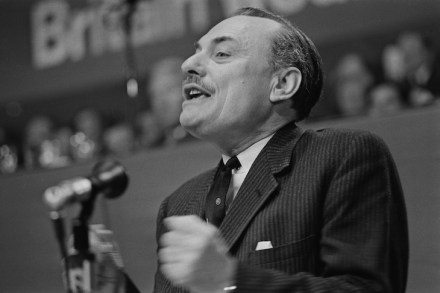
It was a provocative decision by the producers of Archive on 4, 50 Years On: Rivers of Blood (Nathan Gower and David Prest) to base their programme around a full exposition of Enoch Powell’s infamous 1968 speech on immigration, all 3,183 words of it, spoken by an actor (Ian McDiarmid) as if he were giving the speech in front of an audience. Why give further publicity to a speech that gave such offence at the time, and so dangerously expressed such inflammatory opinions? But the explosive reaction to the Radio 4 programme on social media, even before it went out on air, explains and justifies their decision.

Good morning, Martha

From our UK edition

Like a breath of fresh air Martha Kearney has arrived on Radio 4’s Today programme, taking over from Sarah Montague (who will now host the lunchtime news programme formerly presided over by Kearney). Her presenting style is just so different, less confrontational, more investigative, perhaps developed by her because at lunchtime the mood is different, less rushed, more ambulant. The tone on the World At One was always much more reflective than reactive, Kearney pondering events rather than racing through to the next interview, butting in, hustling, flustering her guests. On Monday morning’s Today, she interviewed the author of a book on ‘elastic thinking’.

Communal listening | 5 April 2018

From our UK edition

To Herne Bay in Kent for the UK International Radio Drama Festival: 50 plays from 17 countries in 15 languages broadcast over five days to the festival audience. It’s an opportunity to find out what radio plays sound like in other countries, but also to experience a different kind of listening. About 25 of us were invited into a suite of rooms furnished with flock wallpaper, floral sofas and armchairs to take us back to the great age of radio listening in the 1950s. A kettle boils in the background; buttered scones on a tiered rack are sitting ready for us to pounce on at the next pause between plays.

Of innocence and experience

From our UK edition

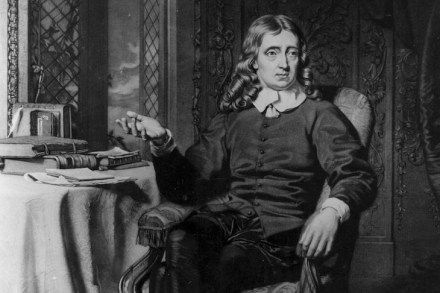
It’s a tough listen, Paradise Lost on Radio 4 at the weekend. In bold defiance of the demands of a broad audience, Milton’s 10,000 lines of high-flown, complex verse runs for two-and-a-half hours (broadcast in two parts on Saturday and Sunday). You need to concentrate and take in every word, not be busy with something else, ears half-cocked to gather the general meaning. But, if you stay with it, the majesty of the subject, that galactic struggle between good and evil, and the mighty flow of words will ensure that all foolish thought is thenceforth banished (at least until the next Trumpian tweet or fallacious Facebook rumour).

The new seekers | 22 March 2018

From our UK edition

As Bob Shennan, the BBC’s director of radio and music admitted this week, there are almost two million podcast-only listeners in the UK who never tune into BBC Radio. They’re captivated by specialist music (Heart, Absolute, etc), specialist talks (mostly religious such as Premier Christian) or specialist news and current affairs (the Economist, Monocle). And they never feel the need to cross over into Auntie’s sphere of influence. The BBC’s response, says Shennan, must be to produce ‘a revitalised audio product’ to meet the needs, or rather demands, of these new audiences. ‘Audio product’ seems a long way from Music While You Work or Down Your Way.

The lady vanishes | 15 March 2018

From our UK edition

‘Close your eyes and be absorbed by the storytelling,’ urged Jon Manel (the new head of podcasting at BBC World Service) as we settled into our chairs. We were just about to hear the ‘world première’ of the latest podcast from the BBC World Service, launched dramatically in the Radio Theatre at Broadcasting House in front of a packed, expectant audience, with full surround sound, every raindrop magnified (and there was a lot of it). It was odd to realise quite how far podcasting has already transformed radio.

How Stephen Hawking moved me to tears

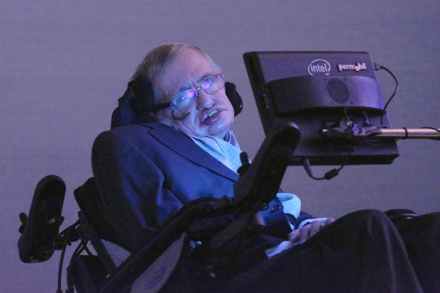
Stephen Hawking has died at the age of 76. Here, Kate Chisholm describes listening to the Cambridge professor deliver the 2016 Reith Lectures: You don’t expect to be brought close to tears by the Reith Lectures, which are after all at the most extreme end of Radio 4’s commitment to ‘educating’ its audience. Yet when Stephen Hawking delivered this year’s talks at the Royal Institution in London (in front of a lucky audience of listeners and scientists) there was both much laughter and a heightened sense of emotion.

Ladies first | 8 March 2018

From our UK edition

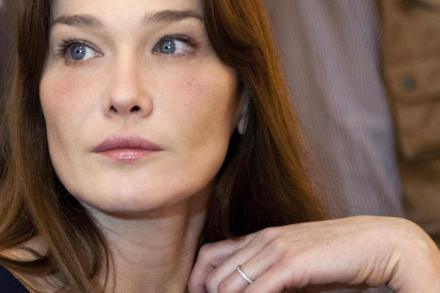
You can’t move for women’s voices on the airwaves at the moment — Julie Walters on Classic FM leading off its new big series on turning points in music. Kate Molleson and Georgia Mann joining Sarah Walker and Fiona Talkington on Radio 3 (which this week also gave a big nod to female composers such as Amy Beach, Florence Price and Sofia Gubaidulina). Emma Barnett spicing up the political interview on Radio Five Live. It feels a bit like tokenism, too much too late. As if it’s going to make up for all those centuries of men in the driving seat of life. But the effect of hearing women’s voices almost whenever you switch on is like drinking fresh lemonade on a hot day, slightly acidic but invigorating. Take Carla Bruni on Radio 2. Not exactly a feminist icon.

Tapestry of war

From our UK edition

It feels like a long time since the launch of Home Front on Radio 4 back in June 2014, retracing day-by-day events of 100 years ago as Britain went to war. It is a long time. Yet still the violence in Europe rages on while back home the families of the men and boys in trenches carry on as normal, putting on plays at the local theatre, selling toys, running art classes, working the trams. A new season (number 13, with two more to go before the series ends on 9 November) starts up again on Monday. It may be an everyday story, says its editor, Jessica Dromgoole, but it’s most definitely not a soap. Every episode has been recorded for broadcast in the same studio in Birmingham where The Archers is made.

Light and dark | 22 February 2018

From our UK edition

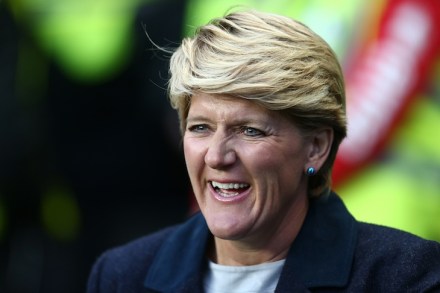
This week’s edition of Ramblings with Clare Balding did all the usual things: a walk in the country (cue breathy conversation as we followed her up hill and down dale), braving the elements (there’s always rain at some point) with a dog in tow, and in the company of someone for whom the walk has some meaning. But then the programme took off into something quite unexpected as her walking companion, Christina Edwards, began to explain why this particular ramble, in the heart of Northamptonshire, was so familiar to her, and why they were retracing her steps not in daylight, when the rolling hills and gentle fields could best be appreciated, but as darkness fell.

The spying game

From our UK edition

Some of us grew up worrying about reds under the bed, which was perhaps not as foolish as all that if a report on Saturday morning’s Today programme on Radio 4 is to be believed. Amid a cacophony of weird-sounding bleeps and disembodied voices, Gordon Corera, the BBC’s security correspondent (always clear, calm and collected, no matter the brief), told us about the ‘number stations’ that proliferated in the Cold War and are now being brought back to life. Anyone can tune in to them, but only those in the know can understand what they mean, and although the source of the transmissions can be traced it’s impossible to pick up those who are listening in to them, which is why they have come back into use.

State of independence

From our UK edition

When the BBC’s Arabic-language network went out on air for the first time 80 years ago, on 3 January 1938, its mission was to provide ‘reliable news’ to a region that was being fed German and Italian ‘propaganda’ via short-wave transmissions from those countries. News is still its main focus, says Bassam Andari, news-gathering editor for the Arabic service, who has been with the corporation since 1994, arriving in London from Lebanon. He grew up listening to the station during the civil war in that country in the 1970s. ‘My mother would switch the radio on to the BBC every morning to find out what was happening in the world, not just in Lebanon,’ he recalls.

Self discovery

From our UK edition

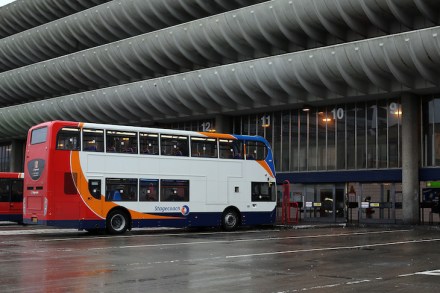
It’s a pity Will Self didn’t embark on his bus tour round Britain before the Brexit vote. If he had, we might have all had a better understanding of what’s going on in the shires. In his series of ten short programmes on Radio 4, Great British Bus Journey (produced by Laurence Grissell), Self sets out to emulate Daniel Defoe, William Cobbett and J.B. Priestley by taking the bus not to the big centres of life in the UK but those smaller towns and cities we often rush past on the motorway or have no reason to add to our bucket list. Places like Plymouth, Preston, East Kilbride, Wolverhampton and Swansea. His big question is to find out what it means to be British today (the intention behind those earlier cross-country trips by horse and chauffeur-driven car).

As time goes by | 25 January 2018

From our UK edition

If you were to ask me by the end of the week what I had written about in this column at the beginning I would probably look blank, fumble desperately through a foggy recollection of plays, news items, snatches of interviews and then reply, ‘I’ve no idea.’ This business of forgetting so soon what was once so clear in the mind is, says Francis O’Gorman in this week’s The Essay on Radio 3 (produced by Lisa Needham), very much part of our modern world. Too much information to take in, too little time to process it. The result, too much forgetting. It’s virtually impossible to remember what you once put down as ‘your favourite meal’ on an online shopping site.

Prick up your ears

From our UK edition

On paper and on air, there’s nothing to suggest that the Radio 4 series Across the Red Line will have sufficient listening power to draw you in so that once you’ve reached home and need to get out of the car you’ll rush straight in to switch on the radio. The billing in Radio Times describes it simply as a 45-minute show in which the journalist Anne McElvoy ‘invites figures on opposing sides of a political issue to listen to each other’. And that’s exactly what it is. A pair of talking heads tossing about a topical football, guided by McElvoy, who has as her sidekick a conflict resolution expert, Gabrielle Rifkind, brought in to moderate the session if things get lively.

Lessons from Rwanda

From our UK edition

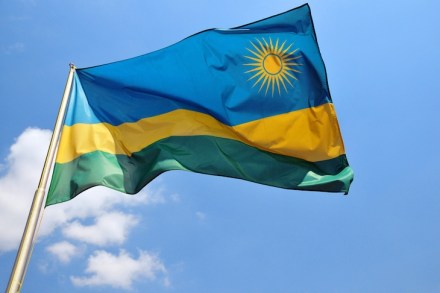
What an incredible statement we heard on My Perfect Country. ‘I can walk into a boardroom and forget I am a woman,’ pronounced Isabelle Masozera, a PR executive, on the World Service programme, which this week visited Rwanda to find out what is happening there to make it qualify for ‘my perfect country’ status. Her words hit home because of the BBC’s current difficulties over equal pay and opportunities. It appears that the corporation has been less than speedy or judicious in its response to the revelations last year about the substantial differences in earnings between some of its male and female employees.

Top of the pods

From our UK edition

It’s racing up the UK podcast charts, overtaking (as I write) the established favourites such as No Such Thing as a Fish, Kermode and Mayo’s Film Review and This American Life, and only just behind the reigning number one, My Dad Wrote a Porno (don’t ask; it’s meant to be funny). Briefly, at the height of Brexit fever last month as phase one came to an end and Theresa May rushed to Brussels for a meeting with President Juncker and co., Brexitcast topped the list, scoring the highest number of downloads. It could well make it to the top again. I had a listen, out of curiosity, not expecting to last the full half-hour. How could yet more talk about the single market and the Norwegian model attract so many listeners?

Foreign exchange

From our UK edition

The season of Advent, for most children, means anticipation, gleeful waiting, the counting down of days. But after a certain age the build-up to Christmas changes its nature, becomes more like anxious preparation. It can, though, be thought of as a time of reflection. Radio 3’s Christmas Around Europe has for years nourished that feeling by taking us on a leisurely, day-long musical tour around the continent, usually on the last Sunday before Christmas. It’s a chance to step back from the frenetic fuss and wander in the mind, as the music plays, to other times and distant places, to take oneself beyond the present, or rather into another kind of present.