Kate Chisholm

JAM today

From our UK edition

On the page a minute’s worth of words doesn’t look like much. A hundred and forty-four or thereabouts. But try spouting forth for 60 seconds on any given subject without hesitation, deviation or repetition and those 144 words become an awful lot to find, especially when they have to be summoned up at speed from some inner reservoir of thoughts and phrases. Maybe that’s the reason why Just a Minute is still such a fixture on the Radio 4 schedule. The panellists make it sound so easy that we’re always puzzled when a new, unpractised contestant struggles to survive for longer than 20 seconds. We’re puzzled but we also relish their embarrassment. We feel superior. If only we were invited on to the show, we would be able to talk, no problem.
Healing art

From our UK edition

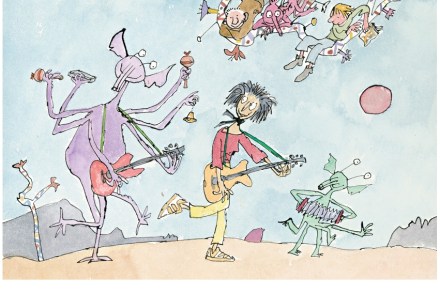
‘It’s like acting,’ says the illustrator Quentin Blake about his latest project. ‘You imagine yourself there, in that situation. You imagine you are that person.’ The first-ever children’s laureate has been taking his acute eye for gesture, for character, into hospitals, as part of the Nightingale Project. His funny, colourful, bursting-with-life paintings are now decorating the walls of a mental health ward at Northwick Park, the Vincent Square Clinic and a maternity hospital in France, and are being celebrated in an exhibition at the Foundling Museum (40 Brunswick Square, London WC1). They reflect so accurately the experience of illness, parenting, age and infirmity that Blake has been asked, ‘How do you know that?

Listen up!

From our UK edition

Life-changing moments are not always as dramatic as Saint Paul’s Damascene experience. Often they emerge from conversations that begin with mundane exchanges about last night’s Masterchef, the film you saw last week, the last time there was a drought. Then gradually the talk moves on to other, deeper matters. Something is said, some connection is made which opens up a shaft of light on a problem, a question, a source of confusion that’s been troubling you for years. You might not realise for a while that the conversation marks a change, but looking back on what was said leads you to recognise how from that moment your life has taken a different (though not necessarily dramatically different) tack.

Overdoing the drama

From our UK edition

What took them so long? For weeks and weeks he’d been limping into the farmhouse whining about how cold he is, how tired, how he’s had enough of Tom gadding about Borsetshire selling his gruesome-sounding pork meatballs while he’s stuck on the farm trimming leeks and getting up at the crack of dawn to do the milking. The clues were so obvious even Sergeant Lewis would have guessed that something bad must be waiting in the cowshed for Tony Archer. Perhaps it was intentional, the scriptwriters of The Archers (Radio 4) calling our bluff to prove that they’re in charge, and carefully manipulating our fears and premonitions to ensure that we keep on tuning in day-by-day. You might think you’ve second-guessed what’s in the script for Tony. But we know best.

Archive treasures

From our UK edition

It’s a bit of a surprise to discover that my young nephews are huge fans of radio. Since Radio 4 abandoned programmes designed for children, and CBeebies disappeared from the airwaves, radio has become a kids-free zone. What on earth do they find to listen to? Why, of course, Radio 4 Extra, and especially the comedy classics, The Navy Lark, Beyond Our Ken and The Men from the Ministry. Kids are getting the listening bug from programmes that were created more than 50 years ago. Brilliant. To them, these treasures from the archives sound as weird and fantastical as Harry Potter. As Mary Kalemkerian, Radio 4 Extra’s director of programming, has proved so pertinently in these straitened times, who needs vast amounts of money to be creative?

New world order | 25 February 2012

From our UK edition

Not much fuss has been made about it. We might not have realised it was happening if news of the leaving bash with its tales of uninvited guests (former staff members) had not been gossiped about in the press. But from March the BBC World Service will no longer be broadcasting from Bush House, that once very grand but now rather shabby crescent-shaped building at the heart of the Aldwych in central London. Instead, all 27 of the specialist radio teams broadcasting in Arabic, Persian, Swahili, Russian, Urdu, Brazilian Portuguese, Mandarin, Tamil and Nepalese...will be moving in to swanky new studios in Portland Place, just north of Oxford Circus, as part of the transformation of Broadcasting House. It’s hard to imagine the BBC, let alone the World Service, without Bush House.

Character building | 18 February 2012

From our UK edition

He writes about the stuff you’d rather not know, prefer not to think about, pretend to ignore. But it lives on with you in the mind. It won’t let you go. By his words, the sharp, brittle, spot-on dialogue, he forces you to recognise the limitations of your experience, your understanding. Roy Williams’s new trilogy of plays for Radio 4, The Interrogation, takes three predictable situations — a Premier League footballer rapes an underage girl, a white woman batters her racist husband to death with a brick, a black kid joins a gang and shoots dead a young mother — and fills in the details behind those black-and-white headlines. It’s not the story outline that matters, but the characterisation, the way the people speak, the language they use.

The making of the modern metropolis

From our UK edition

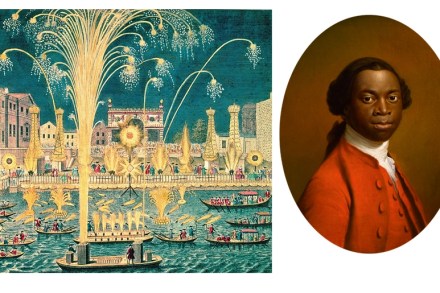
Why in 1737 did Dr Johnson choose to leave his home in Lichfield in the Midlands and travel to London to make a fresh start as a writer, asks Jerry White in his encyclopaedic portrait of the 18th-century capital. It’s a good question. London was dangerous, it was dirty, you could die of ague in a matter of hours, be robbed, crushed to death by the mob, thrown into jail for unpaid debts, and, no matter whether you were rich, poor or of the middling sort, suffer the scourge of bed bugs through every waking hour. To live comfortably (without domestic cares) you needed to earn enough money to employ at least three manservants and four women, reckons White, which would have set you back some 75 guineas a year.

Leave well alone | 11 February 2012

From our UK edition

Maybe he was asking for it. Maybe his article in the New Statesman was a subconscious attempt to undermine his brother’s authority. But what was the point of grilling David Miliband about his relationship with his brother Ed on the Today programme (Radio 4) on Monday morning? What we wanted to know was whether Miliband senior had any fresh ideas about how to tackle the grievous problems of our economy, and especially how to remedy our inability to ensure that there are enough jobs for our young people to find gainful employment. Who cares whether he’s still simmering with rage about his brother’s seizure of power? Why, then, did John Humphrys try to reignite a Westminster bonfire that actually went out 17 months ago when Ed won and David lost?

Audio gongs

From our UK edition

No red carpet was rolled out on Sunday night when the first ever Audio Drama Awards were presented to best actor (David Tennant), best actress (Rosie Cavaliero), best drama (The Year My Mother Went Missing)...in a Hollywood-Lite ceremony at Broadcasting House. No tears were shed as the winners sought desperately to find the right words — not too smug, neither too self-immolating. There were no cheesy jokes from a rancid comedian as compère (David Tennant took on the role formerly reserved for Ricky Gervais). But at last, after 89 years of plays on the BBC, the extraordinary fact that at least once a day it’s possible to have a front-row seat in the most intimate of theatres-in-the-round and be taken out of your life and dumped in another is being grandly celebrated.

Only connect | 28 January 2012

From our UK edition

It was uncanny, discomfiting, even a little bit alarming. He seemed to be reading my mind, as if my thoughts were being hurled back at me through the ether. Why are we so tired? Why does it feel as though time itself is speeding up, making midlife so much more nerve-wracking an experience than it might otherwise be? Why do you never hear a middle-aged person talking about being bored? Toby Longworth was reading from Marcus Berkmann’s new book, A Shed of One’s Own: Midlife Without the Crisis, for Book of the Week on Radio 4 on Monday morning. A man, according to Berkmann, who usually writes about music and for this magazine, must have a shed.

Breaking records

From our UK edition

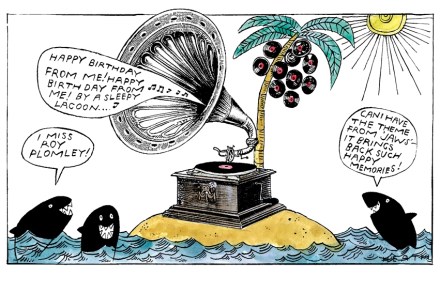
As the 70th anniversary of Desert Island Discs approaches, Kate Chisholm charts its enduring success Ed Miliband should be worried. He’s not as yet been invited to choose eight ‘favourite’ pieces of music for that staple of the Radio 4 diet, Desert Island Discs (or DID to those in the know). Nick Clegg, David Cameron and even Alex Salmond have all been cast away, but not Miliband. Perhaps he’s not being taken seriously enough as the leader of the Labour party? Perhaps he’s not yet ready to reveal his Top Eight records?

Communal listening

From our UK edition

Where mostly do you listen to the radio? In the kitchen, on the M25 or M62, under the duvet, soaking in a bathtub? We’ve got used to moving around with the wireless, often listening with just half an ear, not really connecting at all, and with no opportunity to share the experience with anyone else. In the Dark, a band of radio enthusiasts who’ve got together to produce unusual audio documentaries, is trying to take us back to the sensation shared by those first listeners to radio, when families, friends, neighbours joined up to listen and laugh along to The Goon Show or Children’s Hour. They organise communal listening events in unusual venues, usually with the lights out, but with an unconventional twist.

…and on the air

From our UK edition

The trouble with Dickens is that there’s just far too much plot. How do you make sense of his incredibly complex stories in just three hours as the BBC tried to do at Christmas with its TV version of Great Expectations? It looked fabulous but the storyline made no sense because there was no depth to any of the characters. The melodrama was laughably inept, the plot so confusing you needed to have read the book to understand what was happening. Over on Radio 4, the writer Ayeesha Menon has also been given just three hours to retell one of Dickens’s least popular novels in a three-part edition of the Classic Serial (Sunday afternoons, repeated Saturdays).

Swapping stations

From our UK edition

‘Do you feel like crying?’ asked Shaun Keaveny on his 6 Music breakfast show this week, before replying, ‘Text us your tears.’ It was Tuesday, the first day back at work for many listeners. And Keaveny was trying to cheer us up. Then he played ‘Grey Day’ by Madness. Keaveny’s lucky. 6 Music reckons that its listeners, being creative types, don’t have to get up so early to leave for work. Their alarms will be set for later, and Keaveny doesn’t have to be in the studio for his three-hour show until 7 a.m. By which time, over on 5 Live, Phil Williams and Rachel Burden have already been up and chatting for an hour with their version of the Today programme — a little less news, a lot more football.

Highlighting the goodies

From our UK edition

Since the Home Service was relaunched as Radio 4 in September 1967, the station has established itself almost as the ‘heartbeat’ of the BBC. The chance to direct, shape and enhance such a treasure-house of programmes — ranging from Farming Today to ElvenQuest via Something Understood,  Classic Serial and The World Tonight — must be endlessly fascinating. But therein lies the challenge. Radio 4 does sparkle with its intellectual brilliance, its flashes of humour, its ability to make sense of the moment through its reporters, interviewers and the editorial wizards who pull the news together in seconds.

Twelve crackers

From our UK edition

It might cheer the spirits of our over-stressed EU leaders this weekend if they were allowed time out from their delicate financial machinations to listen to the Day of Christmas Music broadcast on Radio 3 on Sunday and in the other 55 countries of the European Broadcasting Union (set up in 1950 as a cultural balance to the economic community). This annual flit round the countries of the union is always a refreshing antidote to the festive frazzle; an upmarket Eurovision with snatches of announcements in exotic languages as a reminder of the spirit of co-operation.

Wild wastes of forgetfulness

From our UK edition

Too much dark, not enough light, often leads us inwards, into those dark regions of the mind where memory resides. Between the Ears (Radio 3, Saturday evening) echoed the mood of the month by taking us on a journey back into that hinterland of darkness where names begin to disappear, places can no longer be recognised, the fridge becomes the oven, and words become jumbled so that the Radio 3 announcer no longer makes sense. What happens to us when the memory begins to go? Is it just a loss of self, of personality? After all, most of us have no memory at all of those first three years of life, when everything is astoundingly new and fresh and challenging? Should we instead embrace amnesia as a way of extending the boundaries of self, as a way of becoming?

Dark time

From our UK edition

Keep awake, urges the Gospel messenger in the readings for the beginning of the Christian festival of Advent. That’s not easy in late November when by lunchtime the sun is already fast dropping to the horizon. The propensity to nap, to switch off, can be overwhelming. In Finland it must be so much worse. For two months, from mid-November to mid-January, the sun never rises at all. Everything has to be accomplished in total twilight. The Light in Darkness, a 20-minute short on Radio 3 (Thursday evening), took us inside the ‘dark time’, with an eerie impression of the northern winter that was so sharply evoked you could almost hear the air freezing on your breath, crackle, crunch.

Limited menu

From our UK edition

The changes to the Radio 4 schedule have been in operation for a couple of weeks. Have they made any difference? The extra 15 minutes added to the lunchtime news programme, The World At One, has had the knock-on effect of squeezing the afternoon. Do we need another 15 minutes of current affairs analysis? After all, we already have three hours first thing in the morning, 45 minutes last thing at night after the ten o’clock news, with another hour in the middle at five. The problem with extending news programmes at a time of budget cuts is that the only way you can fill the extra minutes is to add extra interviews. Anything else would cost too much money. There are just too few resources for in-depth coverage of world events.