Kate Andrews

Kate Andrews

Kate Andrews is deputy editor of The Spectator’s World edition.

Donald Trump has got a point about the NHS

From our UK edition

Donald Trump has found himself in the midst of another international spat, fuelled this time by his attack on the UK’s national religion. In an attempt to verbally jab the opposition in his own country, the President has managed to rile up many thousands, if not millions, of people who have deep reverence for Britain’s National Health Service: https://twitter.com/realDonaldTrump/status/960486144818450432?ref_src=twsrc%5Etfw I’m rarely on the side of Trump’s Twitter provocations, but this one, I’ll admit, isn’t half bad. While Trump is wrong about the protestors’ motivations (giving the tweet ‘top troll’ status), he is right that they march in the wake of a ‘broke’ system.

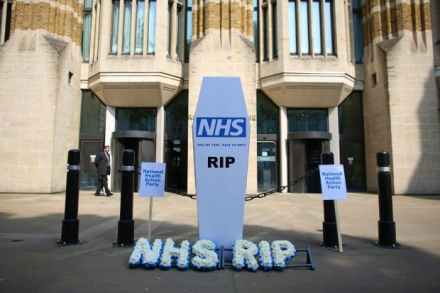
It’s time to stop burying hard truths about the NHS

From our UK edition

The philosophy of the National Health Service, as stated on its website, is that 'good healthcare should be available to all, regardless of wealth'. This is why, in theory, Britain’s health service 'covers everything'. Not this month. Last night, NHS hospitals were made to cancel all non-emergency surgeries until February in order to divert resources to this year’s flu epidemic, which is causing mass overcrowding. As a result, outpatient clinics will be shut down for weeks, and 50,000 appointments have been cut from the schedule. 50,000. Even in today’s world, where statistics are everywhere that number cannot pass by fleetingly.

The gender pay gap is largely a myth

From our UK edition

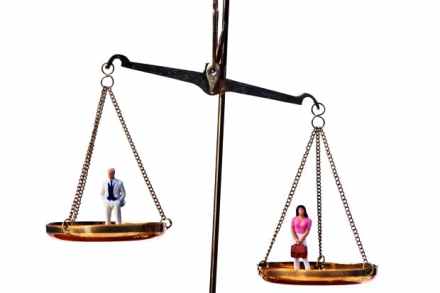
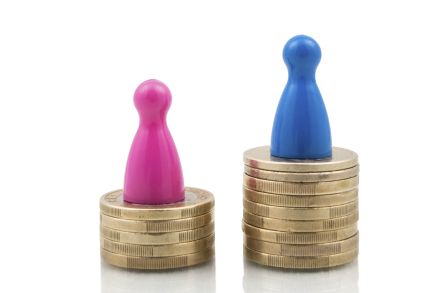
The Fawcett Society would have you believe, as part of its Equal Pay Day campaign, that today is the day “women effectively stop earning relative to men”, highlighting the gender pay gap, which they place at 14.1 per cent for full-time workers. If that number seems high to you, or not reflective of your working environment, that is because this 14.1 per cent can only be achieved by including outlier salaries that skew the figure towards high earners. Rather than using the Office for National Statistic’s official figure of 9.1 per cent (calculated using the median hourly earnings of full-time workers), Fawcett uses the ONS’s mean calculation instead, to achieve a figure five percentage points higher than the preferred figure.

The NHS is one year older, yet none the wiser

From our UK edition

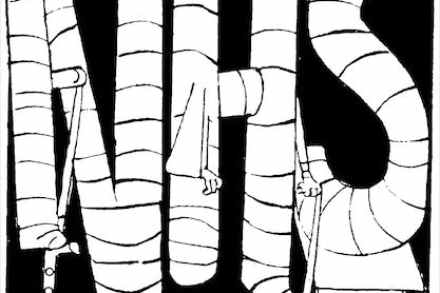
The NHS is one year older, yet none the wiser. Having spiralled into perpetual crisis years ago, no one can pretend the gargantuan system is looking great for its age. Its fragile condition has all of us worried – not least because of the millions of lives that are forced to depend on our monopoly health service. The NHS’s woes are thought by some to be the result of some evil right-wing push towards privatisation – and by no means a reason to hold back oodles of praise for the healthcare system. If anything, the health service's troubles have served as a call-to-arms to defend the status quo.

International Women’s Day isn’t the time to be pushing faulty pay gap statistics

From our UK edition

International Women’s Day is a time to celebrate the vast achievements of women worldwide, while acknowledging the real struggles and oppression millions of women and girls continue to face, including violence, inequality under the law and limited access to education. It is not a time to push faulty pay gap statistics. Yet that is exactly what happened yesterday. Ahead of International Women’s Day, Robert Half - a specialised recruitment agency – calculated that women in the UK will earn roughly £300,000 less than their male counterparts throughout their career, putting their estimated pay gap figure between men and women at 24%.

Why the gender pay gap is a myth

From our UK edition

Today the Prime Minister has set out to 'end the gender pay gap in a generation'. It would be an ambitious goal, if a wage gap actually existed. According to the latest ONS figures, women between the ages of 22 – 29 earn 1.1 per cent more on average than their male counterparts and women between the ages of 30-39 are also earning more. And it doesn’t stop there. There's evidence that when men and women follow the same career path in the UK, women tend to out-earn and out-perform men. There is growing evidence that if you control for similar backgrounds, women actually tend to get more aggressively promoted than men by their employers. This alleged gap that the Prime Minister refers to is actually indicative of personal lifestyle decisions, not employer discrimination.