Kate Andrews

Kate Andrews

Kate Andrews is deputy editor of The Spectator’s World edition.

Was the government’s free meals U-turn inevitable?

From our UK edition

15 min listen

After the highly publicised campaign by the footballer Marcus Rashford, the government has U-turned on the question of free school meals in the summer. Was it inevitable, and what does this move mean for public spending? Katy Balls talks to James Forsyth and Kate Andrews about this as well as the Foreign Office merger and the Oxford drug breakthrough.

Are Britain’s employment figures too good to be true?

From our UK edition

Lining up graphs of the UK’s growth figures last week and its employment figures this week, you would struggle to believe the data was from the same decade, let alone the same month. Despite the economy contracting by a quarter in March and April, unemployment figures haven’t budged: 3.9 per cent ending the month of April, unmoved from the quarter before, and more remarkably only up 0.1 per cent from the previous year.  The employment rate remains surprisingly high too: 76.4 per cent, down 0.1 per cent on the previous quarter. Despite the shuttering of the economy, employment and unemployment continue to hover at record highs and lows, like they did before the crisis began.

Audio Read: Douglas Murray, Matthew Parris, and Kate Andrews

From our UK edition

29 min listen

Douglas Murray reads his cover piece in which he argues that liberalism is under threat; Matthew Parris rejoices in the toppling of Bristol’s Edward Colston statue, calling it a thrilling act of history; and Kate Andres explains the problems of policing back in her home country of America.

How fast can Britain recover from its economic free-fall?

From our UK edition

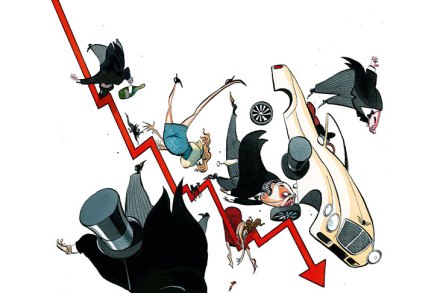
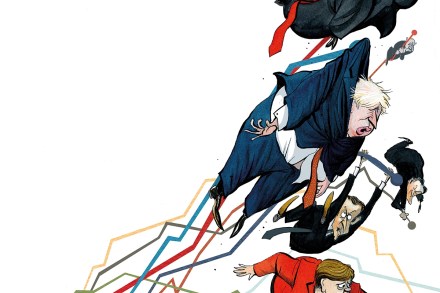
Putting the UK into lockdown was only going to send growth in one direction: down. While today’s figures from the Office for National Statistics were expected, they nevertheless confirm that the UK has experienced its largest monthly economic contraction on record. The UK economy shrank 20.4 per cent in April. Combined with March’s GDP drop (now the second largest fall since records began), the British economy is a quarter smaller than it was in February. Putting these figures alongside other monthly slumps makes for stark comparison. Hits taken for additional bank holidays and for the pain experienced during the financial crash barely compare to what’s happened in light of the shutdown of Britain’s economy.

In defence of liberalism: resisting a new era of intolerance

From our UK edition

45 min listen

Are we witnessing the death of the liberal ideal? (01:02) Next, what's behind the government U-turn on primary schools and what effect could it have on the poorest students? (20:14) And finally, Britain's ash trees are facing a pandemic of their own, with so-called ash dieback sweeping the nation. Can Britain's ash trees be saved? (30:12)With Douglas Murray; The Spectator's economics editor Kate Andrews; Coffee House contributor Melanie McDonagh; political editor James Forsyth; associate editor of the Evening Standard Julian Glover; and professor at the Laboratory of Tree-Ring Research at the University of Arizona Valerie Trouet. Presented by Katy Balls.Produced by Gus Carter and Matthew Taylor.

The truth about America’s police culture

From our UK edition

America can often look, to outsiders, like a country of two warring tribes: the Trumpish anti-PC brigade vs the woke Twitterati. Such divisions certainly exist. Our broadcasters are party political and partisanship is deeply entrenched in America’s two-party system. It’s tempting to see the scenes in recent weeks as the continuation of tribal warfare by other means —but the truth is far more complicated. America has the most militarised and aggressive police force in the western world. The country’s legacy of rapid expansion, combined with vast geography and open landscapes, engendered a sense of lawlessness early on — and a need to be protected from it.

Is Britain set to be the sick man of Europe?

From our UK edition

The global lockdown has seen economies shrink and unemployment soar across the world, pushing governments to borrow at rates never seen in peacetime. On Wednesday, the OECD published country-by-country estimates for the economic hit – and its projections for the UK are some of the worst. Under the scenario of no second wave (that is, assuming countries won’t need to lockdown again this year), Britain’s economic downturn is forecast to be the worst in the G7, and fourth-worst in the OECD, with an 11 per cent fall in annual GDP. In the case of a second wave, prospects still aren’t great: in the G7, Britain’s 14 per cent downturn is on par with Italy and France, and the country retains a dismal place in the OECD line-up.

How the pandemic is contributing to social unrest

From our UK edition

51 min listen

In this week's episode, the Coronomics panel discuss Brazil’s unknown death toll, Sweden’s cautious optimism for employment, the UK’s crawl out of lockdown restrictions, and the double standards uncovered in America’s lockdown rules. Kate Andrews is joined by Fredrik Erixon in Sweden, Nick Gillespie in New York City, and Mauricio Savarese in Brazil.

Can America’s 2.5 million jobs miracle be replicated in Britain?

From our UK edition

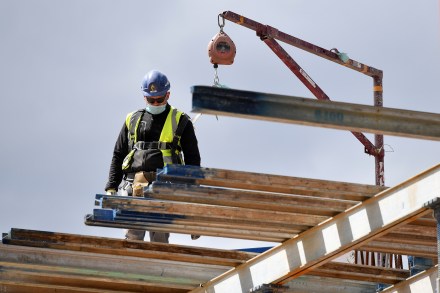
The US economy created 2.5 million jobs last month – the biggest monthly jobs gain since records began a century ago, albeit only a partial recovery from the 22 million jobs lost during lockdown. These figures have blown expectations out of the water. Economists were predicting yet more unemployment: the consensus was unemployment reaching 8.3 million, or 20 per cent in May, up from 14.7 per cent in April. Defying the odds, unemployment actually fell to 13 per cent, signalling an unexpectedly early start in the rebounding of the American economy. The biggest winners were workers in hospitality, who made up almost half of the new jobs, followed by construction.

Our duty to Hong Kong: time to grant citizenship

From our UK edition

40 min listen

As China looks to push through its national security law, is it time to offer Hong Kongers a way out? (01:00) And with the Black Lives Matter protests continuing to rage in America, can they unseat Donald Trump? (15:30) And last, do animals have culture?

Can the government deliver apprenticeship guarantees?

From our UK edition

What exactly is an apprenticeship guarantee? That’s the major question to come out of Wednesday night's Covid press conference after Boris Johnson committed to offering an apprenticeship to all young people:   I think it is going to be vital that we guarantee apprenticeships for young people. We will have to look after people across the board, but young people in particular, I think, should be guaranteed an apprenticeship. While the commitment was there, the detail was not. Is this really a guarantee for all young people? In the first quarter of this year, over 350,000 people aged 16 to 24 were unemployed (excluding those in full-time education); another 1.5 million aged 18 to 24-year-olds were registered as economically inactive.

The evidence on school re-openings is being ignored

From our UK edition

One of the benefits of the UK exiting lockdown so slowly is supposedly that evidence from other countries can help mould our decisions. If liberalising parts of society in other countries doesn’t cause a Covid-19 flare-up, the UK can proceed with cautious optimism. If lockdown easing leads to a spike in infection rates, the UK can row back its plans before its too late, or put off making changes for a while longer. Around 50 per cent of people polled oppose the partial re-opening Based on this logic, the return of Reception, Year 1 and Year 6 to school today should be warmly embraced, as reports from Denmark over the weekend (which reopened daycare and schools for kids aged two to 12 in mid-April) confirmed that doing so has not led to an increase in infections.

How the furlough scheme will be rolled back

From our UK edition

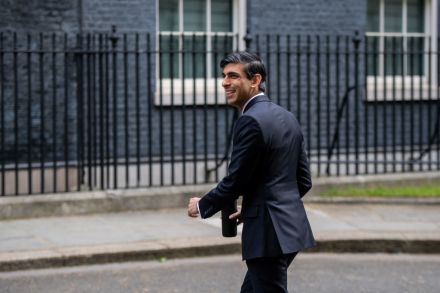
A dose of economic reality was administered to the public on Friday evening when Chancellor Rishi Sunak announced how the furlough scheme will be rolled back. But far from a short or sharp shock, Sunak unveiled a plan that scales the scheme back gradually over the next five months, as the government continues to pay 80 per cent of furloughed staff salaries, capped at £2,500, over June and July. Come August, however, employers will be asked to pay National Insurance and pension contributions, 5 per cent of total employment costs. In September, employer contributions will increase to 10 per cent of their employees’ salaries which will then rise to 20 per cent in October, before the scheme comes to a close at the end of the month.

Keir Starmer is wrong about the equal pay ‘right to know’

From our UK edition

Fifty years on from the Equal Pay Act, the world looks very different for women now than it did then. Women run their own small businesses, lead corporate firms, and last December a woman wrote herself a cheque for £341m, the highest corporate executive pay pack in UK history. A gender pay gap that was once ingrained in British working culture because of gender discrimination has diminished. Women in their twenties right through to their forties earn roughly the same as men. Women in part-time work earn, on average, more than men. By no means is the world equal yet. Women in many developing countries are denied basic freedoms. Even in the UK, a glance at sexual or domestic abuse figures show we still have a long way to go.

Boris Johnson’s political gamble over Cummings

From our UK edition

11 min listen

Boris Johnson gave an unambiguous defence of Dominic Cummings at today's press conference. In so doing, the government is gambling that this is a storm they can weather. On the podcast, Kate Andrews discusses their thinking with Katy Balls and James Forsyth.

Boris’s NHS immigrant surcharge shake-up doesn’t go far enough

From our UK edition

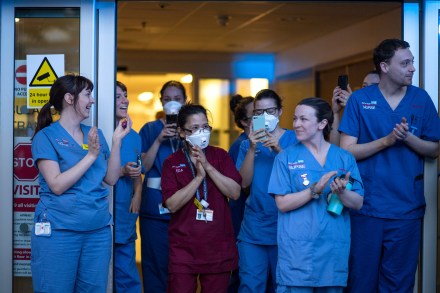
The Prime Minister has asked the Home Office to remove NHS workers and social care workers from the immigration health surcharge as soon as possible. As Katy Balls reported earlier today, frustrations were growing within the Tory party that healthcare workers could be clobbered with this fee as they work tirelessly to help British patients get through the Covid crisis. It seems Boris Johnson has listened to his backbenchers and u-turned. The fee will be waived for a range of health staff, from doctors and nurses to technicians and cleaners. This exemption is good news for workers in the healthcare sector, but it shouldn’t be the end of the policy review. This update for health workers creates an opportunity to assess the fairness of the surcharge overall.

No place but home: how Covid will change the property market

From our UK edition

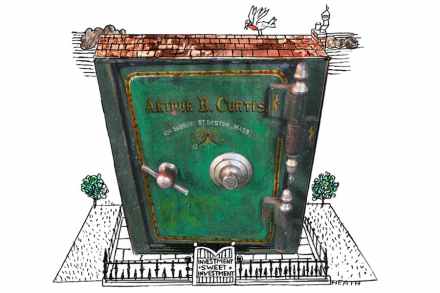
It took a trip to the Land of Oz to make Dorothy value her home. For the rest of us, it took a global pandemic. During the past two months, our residence — whether that be a mortgage-free house or shared rental flat — has become our entire world: office, restaurant, cinema, gym and shelter, all rolled into one. If we didn’t know the ins and outs of our quarters before, we do now. Many people have developed a more personal understanding of a market that has played a vital role in shaping the British economy for decades. Housing costs in Britain are some of the highest in the world, more than quadrupling since the 1970s.

Could negative gilt yields be Boris Johnson’s magic money tree?

From our UK edition

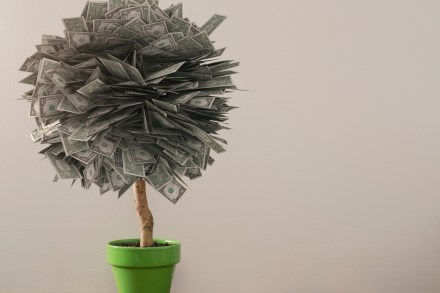
A few months ago, Boris Johnson fought a general election saying that there was no 'magic money tree' and accusing Jeremy Corbyn of naively believing otherwise. This morning, something strange sprouted from the economic undergrowth, looking very much like a magic money tree. Britain sold its first long term bonds with negative yields: ie, sold at an average of -0.003 per cent. This dip below zero means investors are knowingly making a loss – paying more overall for the bonds than what their investment will return.  The yield may be only a fraction below zero, but its cross into negative territory marks a difficult moment for the prevailing economic narrative: that markets will punish the Government through the bond market if it overspends.