Kate Andrews

Kate Andrews

Kate Andrews is deputy editor of The Spectator’s World edition.

The Prime Minister’s plan for ‘significant normality’

From our UK edition

Normally Fridays are spent thinking about how to unwind from work. Today though Boris Johnson announced changes to government guidance to get the public back to work, and more specifically, their place of work. From 1 August, the guidance will be changed to give employers more discretion to decide whether their employees should keep working from home or head back to the office. Public transport guidance will be updated as well to encourage people to use it to travel to work – an overdue change, as the guidance has been at odds with other policies for weeks now, and only open for essential journeys despite pubs, restaurants and shops opening back up.
What are the lessons learnt from the global pandemic?

From our UK edition

46 min listen

The Coronomics series has come to an end after starting in mid-April, at a time when Hong Kong, Britain, the US, and Italy were at much more serious points of the pandemic. On this final episode, Kate Andrews talks to Nick Gillespie, Silvia Sciorilli Borrelli, and Jennifer Creery about what their respective governments have learnt during the crisis, and where they went wrong.

Should we abandon hopes of a V-shaped recovery?

From our UK edition

It is an uptick so small that it could almost be comic, but the UK economy started to grow in May: by 1.8 per cent following a 20 per cent slump in April. Office for National Statistics figures out today show that, even in lockdown, surging online retail sales - coupled with signs of a recovery in construction - show a small increase in GDP. The big question is what shape we can now see: a L, a Nike swoosh or a sharp V? Reopening the economy can only go so far: tackling people’s fear of Covid-19 is key for a V-shaped recovery Today’s increase suggests growth is  - every so slightly - on the up, easing doomsday concerns about an L-shape (that is, no recovery at all).

Boris Johnson changes ‘work from home’ advice

From our UK edition

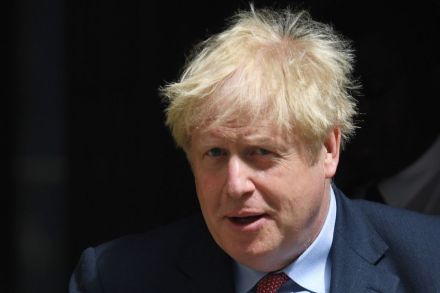
Has government policy on going back to work just shifted? Today at his "People’s PMQs", the Prime Minister was asked about support for universities and the social distancing measures that will be needed to make it safe for students and faculty to return. But Boris Johnson applied his response further than the university sector, turning the formal guidance - 'working from home where possible' - on its head: ‘I want people to go back to work as carefully as possible – it’s very important that people should be going back to work if they can, now. I think everybody’s taken the ‘stay at home if you can’. I think now we should say ‘go back to work if you can’.

Magic money: what can possibly go wrong?

From our UK edition

39 min listen

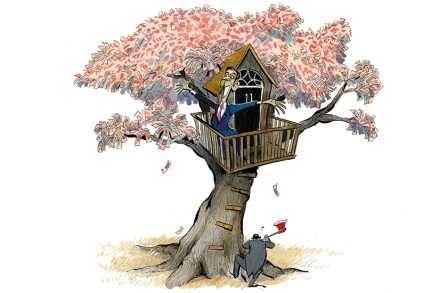
We've been told for years that the magic money tree doesn't exist - but has the Chancellor just found it? (00:55) Now that Hong Kong has come into closer orbit with Beijing, is Taiwan next? (21:15) And finally, we find out a little about the weird and wonderful world of hotel carpets - see them here! (32:35)With The Spectator's Economics Correspondent Kate Andrews; Miatta Fahnbulleh from the New Economics Foundation; security expert Alessio Patalano; Taiwan expert Shelley Rigger; pilot and carpet connoisseur Bill Young; and journalist Sophie Haigney.Presented by Cindy Yu.

The magic money tree – what can possibly go wrong?

From our UK edition

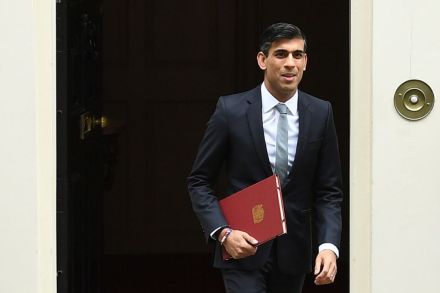
After every Budget, big or small, Tory backbenchers usually meet with the Chancellor. But on the evening of Rishi Sunak’s mini-Budget this week, they had already scheduled in a meeting with Andrew Bailey, the new governor of the Bank of England. This was extraordinary. Since when does the governor talk to MPs? Or risk upstaging the Chancellor? Worse still, the Treasury had not been told about the governor’s new gig. When the news was broken (by Katy Balls on The Spectator’s website), phone calls were made and the Bailey address was rescheduled. Natural order was restored — for the time being, at least. But had the governor appeared, the Tories would have had plenty to ask.

Can Rishi Sunak’s jobs pledge keep unemployment down?

From our UK edition

15 min listen

The Chancellor has given his mini-Budget in a statement to the Commons today, and among a raft of stimulus measures from a VAT cut to stamp duty reduction, he has announced measures designed to keep down unemployment. But the government is clearly braced for a wave of unemployment when furlough ends, so are his pledges enough? Katy Balls talks to Kate Andrews and James Forsyth.

Can Rishi Sunak’s jobs pledge keep unemployment down?

From our UK edition

Everything we heard from the Chancellor today suggests the Treasury is extremely worried about unemployment surging. The measures he's brought in (detailed below) are designed to keep unemployment figures as low as possible. That's why jobs were at the forefront of the Chancellor’s summer statement this afternoon: supporting them, creating them and protecting them. But can Rishi Sunak pull off an economic miracle and deliver on his vow to never 'accept unemployment as an unavoidable outcome'? Among the major announcements today was a Job Retention Bonus – a move along from the furlough scheme – which will grant every employer who brings back a furloughed employee (until January at least) £1,000 for doing so.

Has the virus damaged faith in politics?

From our UK edition

25 min listen

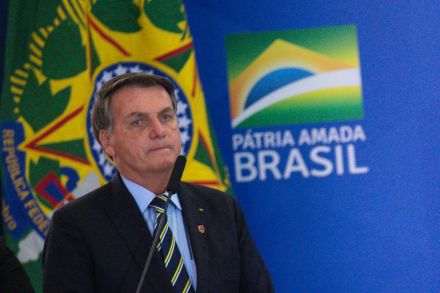
In this episode, Mauricio Savarese reports on the latest from Brazil where the battle between the President Jair Bolsonaro and the media heats up. Kate Andrews updates on Britain's Covid situation with a report from the Times on an estimate for excess cancer deaths in 2021, and Cindy Yu reports on how Beijing's cluster infection has further damaged business and consumer confidence.

Why the government’s arts bailout was so generous

From our UK edition

13 min listen

Rishi Sunak has announced a £1.6 billion bailout for the arts industry, which was more generous than many were expecting. On the podcast, Katy Balls talks to Kate Andrews and James Forsyth about why this is. They also discuss Pret's troubles and the coming Huawei u-turn.

This NHS clap is not for its carers

From our UK edition

At 5pm, we are being encouraged to head to our windows and doors to clap for the National Health Service on its 72nd birthday – the idea is that we’d be doing, once again, what we did in lockdown. Except we wouldn’t. The original gesture was to show thanks to the many healthcare staff (and a broader scope of key workers) who were putting their lives on the line to help others, treating our sick at the peak of the virus in the UK. These are brave people at the best of times, but especially so in the early months of the pandemic, when we were still in the dark as to how contagious it was, who was most likely to suffer from it, and just how deadly it would become. But this evening’s round of applause for the NHS isn’t like the others.

How countries suffered from ‘the lost months’ of Covid

From our UK edition

43 min listen

Reporter at Canada's Globe and Mail, Robyn Doolittle, joins the panel this week to discuss what went wrong in Canada. Speaking to a series of infectious-disease experts, health officials and politicians, Robyn and her team pieced together an image of the 'lost months' - a period between January and March when more should have been done to prevent the pandemic. Also on the podcast: Kate Andrews gives an update on the latest in Leicester; Jennifer Creery reports on Hong Kong's latest worry - an influx of migrant workers; and Fredrik Erixon reflects back on Sweden's laissez-faire approach.

Does Boris’s ‘new deal’ offer anything new?

From our UK edition

Today Boris Johnson launched his ‘new deal’ for Britain – billed as an economic recovery plan to follow the Covid recession.  It sounds positively Rooseveltian. It sounds like a new deal. All I can say is that if so, then that is how it is meant to sound and to be, because that is what the times demand – a government that is powerful and determined and that puts its arms around people at a time of crisis. What has changed is the PM’s political positioning, away from the market economy and towards state intervention But were the announcements really a 'new deal’ – or a new anything? The vast majority of the announcements were not new but manifesto promises from the 2019 election.

What’s so new in Boris’s ‘New Deal’?

From our UK edition

15 min listen

The country is facing a post-pandemic recession that will leave millions unemployed and businesses bankrupted, so despite all the noise, is Boris's 'New Deal' tackling the right problems? Our Economics Correspondent Kate Andrews joins the podcast today, and tells James Forsyth and Katy Balls why she thinks today's announcement was little more than rehashing of the Conservatives' pre-coronavirus manifesto.

Is nuclear power the answer to climate change?

From our UK edition

35 min listen

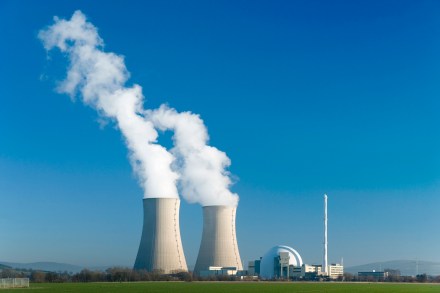
Fans of nuclear energy say that it is efficient, reliable, and greener than fossil fuels. The government's Net Zero carbon emissions by 2050 target may not be achievable without a helping hand from nuclear. But its critics say that it's costly for the taxpayer, prone to delays, and damaging for local ecosystems. What's more, Hinkley Point demonstrated the risk of foreign investment in key infrastructure. Is Britain going to need more nuclear power plants, or is there a better way? Kate Andrews speaks to a panel of guests to discuss this and more:Bim Afolami, Conservative MP for Hitchin and HarpendenProfessor Simon Taylor, author of The Fall and Rise of Nuclear Power in BritainJulia Pyke, Nuclear Development Director at EDF EnergyThis podcast is sponsored by EDF Energy.

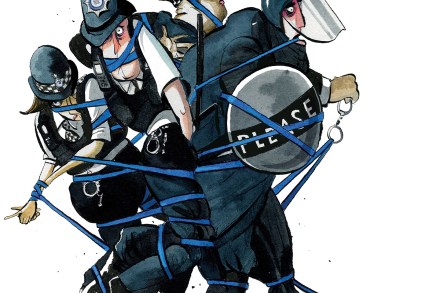
The thin blue line: why are relations between police and black youths just so bad?

From our UK edition

45 min listen

On the podcast this week, a former police officer gives his take on why black youths loathe the police (01:05); we discuss why Downing Street would prefer Joe Biden to win (17:25); and will anything really change after the pandemic? (30:50).With former Surrey Police and Crime Commissioner Kevin Hurley; campaigner Katrina Ffrench; the Spectator's Political Editor James Forsyth; the Spectator's Economics Correspondent Kate Andrews; and our columnists Matthew Parris and Rory Sutherland.Presented by Cindy Yu.

Is reopening possible without a tracing app?

From our UK edition

40 min listen

Germany has launched its contact tracing app, but is it the only way to get out of lockdown? Kate Andrews talks to a panel of international guests and hears about the situation from Italy, where concerns over tourism and getting their cities back are conflicting the residents of Venice and Rome; from Germany, where uptake on the new app has been good; and from America, on how even 'science' is becoming partisan.With Silvia Sciorilli Borrelli from Rome, Nick Gillespie from New York, and Constantin Eckner from Berlin.Presented by Kate Andrews.

The coronavirus app was always doomed to fail

From our UK edition

For months now, the British public has been told there’s only one way to resume normal life: a successful virus-tracing scheme. Early on in the pandemic, the UK decided to go its own way in this area, rejecting Apple and Google’s established, decentralised app model by trying to launch its own one. NHSX would create a centralised app that funnels contact details to public health officials once somebody reported their symptoms via their phone. Bad for privacy, good for knowing exactly where infection rates were spiking in something close to real-time. Hailed as a soon-to-be ‘world beating’ app by the Prime Minister, it was launched on the Isle of Wight in early May and touted as a necessary part of the UK’s lockdown easing.

How businesses are navigating their way out of the pandemic

From our UK edition

43 min listen

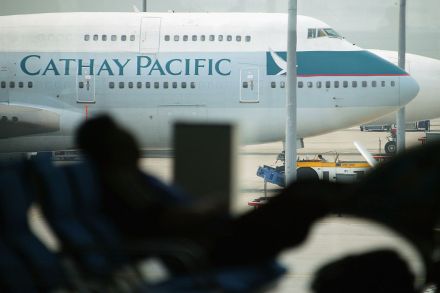
With post-Covid life a bit closer for some countries around the world than others, this week's panel takes a look at how businesses are navigating their way out of the pandemic. Jennifer Creery, Managing Editor of the Hong Kong Free Press, takes a look at the government bailout to Cathay Pacific, Hong Kong's airline; Peter Griffin, a science and tech journalist based in New Zealand, talks about balancing contact tracing with the demands of reopening businesses; while Cindy Yu, the Spectator's Broadcast Editor, kicks off the episode by taking a look at China's candidates in the vaccine race.