Kate Andrews

Kate Andrews

Kate Andrews is deputy editor of The Spectator’s World edition.

Hugging gets the green light

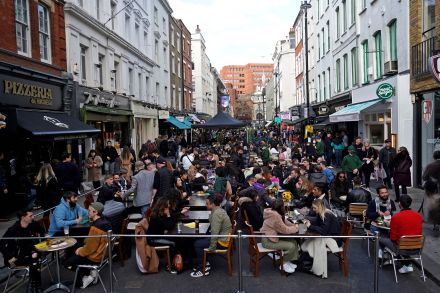
The next stage of the roadmap is set to go ahead. At tonight’s No. 10 press conference, Boris Johnson announced from next Monday, 17 May, groups of up to six (or two households) can meet indoors, while up to 30 people will be able to meet up outside. Face coverings in school classrooms will be scrapped, and there will no longer be a cap on the number of people attending a funeral. Indoor hospitality can reopen, including restaurants and pubs, while hotels, cinemas and theatres can also open their doors, albeit with social distancing still in place.

Does the UK’s ‘green list’ for travel make sense?

International travel is back on the menu, in theory. From 17 May the ‘stay in the UK’ restrictions are lifting and residents can legally leave the country once again. But the number of destinations where you won't have to quarantine on return is limited, and travelling anywhere will require jumping through several hoops. At today’s No. 10 press conference, Grant Shapps revealed the first 12 countries that will be placed on the 'green list', which includes Portugal, Iceland and Israel. It’s a return to the traffic light system and most countries are ranked ‘amber’, which will require a ten day quarantine at home upon return. ‘Red’ countries will still require hotel quarantine, paid for by the traveller.

Brexit Britain: the opportunities and pitfalls for British healthcare

31 min listen

If it hadn't been for the pandemic, the past year would have likely been dominated by a familiar topic - Brexit. The decision to leave, we're told, presents the UK with endless opportunity in a variety of sectors, including healthcare and life sciences. But it hasn't been the easiest year, with supply chains and the Northern Ireland Protocol already under strain. So what are the opportunities to boost Britain's healthcare now that it has left the EU, and where are the pitfalls?Kate Andrews is joined by Antonis Papasolomontos, Director of External Affairs at Abbvie, Sarah Neville, Global Health Editor at the FT, and Jeremy Hunt, Chair of the Health Select Committee.Sponsored by Abbvie.

Will Britain’s economic recovery break records?

It’s been a good week for seeing the vaccine factor at work. We’ve had multiple real-world updates on the Pfizer vaccine’s effectiveness against new variants of Covid-19 (this bodes well for the UK, which was the first country in the world to use the vaccine to protect its most vulnerable residents). And today we’ve had a revised economic forecast from the Bank of England, suggesting the UK’s impressive vaccine rollout could translate into the strongest growth since records began in 1949. The Bank of England now predicts that the economy will expand by more than 7 per cent in 2021, up from its forecast of 5 per cent in February.

The new care home scandal

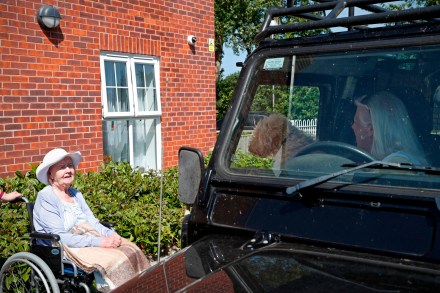
Care homes have been at the centre of controversy and mishandling throughout the Covid-19 crisis. Decisions taken last spring to move patients out of hospital, without so much as a Covid-19 test, contributed to a surge of cases in facilities designed to look after Britain's most vulnerable. Failure to tackle early on the problem of asymptomatic transmission meant that workers weren’t isolated. They unknowingly brought the virus in, sometimes to multiple homes. Zero detection – until it was too late – resulted in tragedy. It's estimated that over 29,000 excess deaths have occurred in care homes since last March. Now there is another care home scandal brewing, the details of which are just coming to light.

Why we should worry about the post-Covid exodus of older workers

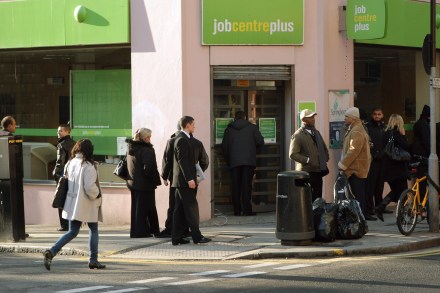
Concerns around unemployment during the pandemic have, understandably, been focused on younger people. Last year it was under-24 year olds most likely to be furloughed and then subsequently made unemployed when coming off the government’s scheme. For millions, the fate of their jobs remains on the line, as unemployment is expected to rise over the course of the year (albeit far less than originally predicted), even as the economy rebounds when lockdown restrictions lift. But today the Office for National Statistics flags another concern; one that could potentially have a bigger impact on the labour market’s recovery post-pandemic. While the youngest have experienced a substantial economic hit from the virus, so have those at the other end of the working-age spectrum.

A house for life: building towns for the future

31 min listen

Covid has put a spotlight on housing in Britain - the inequalities, the challenges, but also the opportunities. As what we want out of our homes, offices, and even the high street, changes, public policy will have to follow suit. So how do we create sustainable towns and cities that ensure quality and access for all?Kate Andrews is joined by Christopher Pincher, Minister for Housing, Iqbal Hamiduddin, Associate Professor at the Bartlett School of Planning at the UCL, and Kath Fontana, President of the Royal Institute of Chartered Surveyors (RICS).Sponsored by RICS.

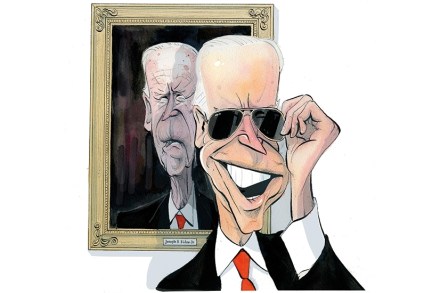
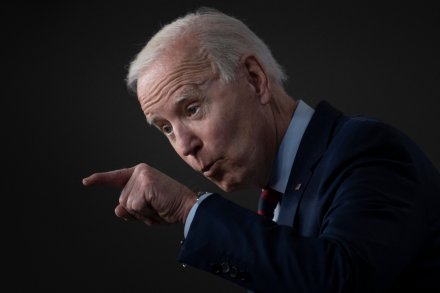
One hundred days in, is Biden getting a vaccine boost?

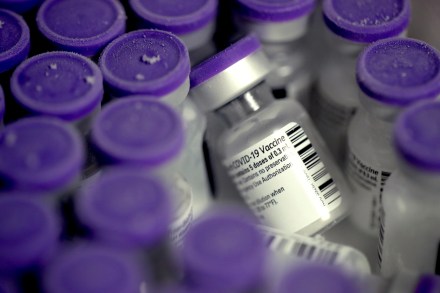
Boris Johnson is set for a vaccine boost next week when local election results start rolling in. As James Forsyth explains in this week’s magazine, the vaccine rollout is forefront in voters' minds, with seven out of ten now inoculated or even fully jabbed up. For all the chaos raging around Johnson, with accusations from his former allies and long-term opponents coming in thick and fast, the PM looks set to retain his support where it matters: at the polling station.  Can the same be said for Joe Biden? Across the pond, America is experiencing an equally successful vaccine rollout, as both the US and the UK hover around the top five countries worldwide for their rates of vaccination.

Vaccine passports for mass events might be the worst of all worlds

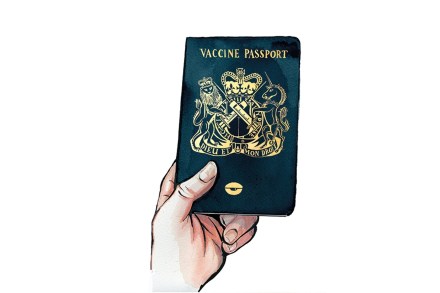
Are vaccine passports in our future? The ‘Covid-status certification’ review is underway, carved out of the Prime Minister’s roadmap and handed to Michael Gove in the Cabinet Office to assess and very possibly implement the scheme after Britain has been declared ‘free’. Since the first review update was published — clear on intention but vague on the details — there’s been plenty of speculation as to what kinds of events or establishments might require a passport to access them. Today we got some hints.

Have we reached herd immunity?

When the Office for National Statistics released the last antibody survey a fortnight ago, the results were underwhelming. After watching prevalence in the population shoot upwards for months, the figure had plateaued at 55 per cent. There were several reasons suggested for the stall, including the move to giving second doses and difficulties detecting fading antibodies (which the ONS is quick to point out does not necessarily mean a person no longer has immunity). But, regardless, it raised concerns that it might take longer to reach high antibody prevalence rates than previously hoped. Thankfully, today’s update has provided plenty of cheer. In the two weeks following the last update (taking us up to the week ending 11 April), antibody prevalence has risen across the UK.

Are plans to abandon the office premature?

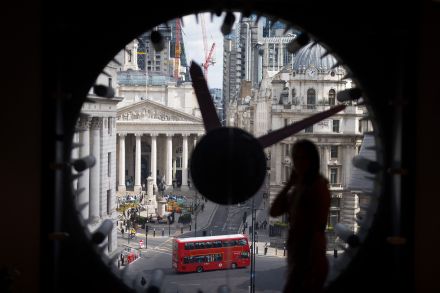
To what extent will our pandemic lifestyles stick? With ‘work from home’ guidance in place for the best part of a year now, it’s has been assumed that trends towards flexible working are accelerating. Until the guidance formally shifts and employees have complete freedom to return to work, no one is quite sure what the demand to return — or stay home — will be. But the City of London is already preparing, as today the caretakers of the Square Mile announced their plans to convert empty offices into residences with the aim of creating an additional 1,500 homes by 2030. This is a sizable increase given there are only estimated to be roughly 7,850 in the City.

When will vaccines begin boosting the economy?

Britain may be about to go from one economic extreme to another. This winter the OECD calculated Britain suffered one of the highest levels of economic damage in the developed world, compared with the year before, due to its stringent lockdown. Fast forward to spring and the UK’s trajectory for economic recovery is now being revised, with forecasts only moving in one direction: up. Today alone, two heavy hitters boosted their predictions. This morning EY Item Club revised its 2021 growth forecast from 5 per cent to 6.8 per cent – which, if accurate, would see the UK grow at its fastest rate on record, recovering to pre-pandemic levels months earlier than originally anticipated.

Should we give vaccines to India?

Last spring, scenes in Lombardy, Italy, caused panic in Whitehall: buckling healthcare systems and tents pitched outside emergency centres played a large role in the government’s decision to implement a nationwide lockdown. It was thought that the British public could tolerate many of the consequences of Covid-19, but not the idea that the NHS would be unable to cater to those who needed it.  As it happened, the UK’s worst nightmares were never realised. The Nightingale hospitals built to increase capacity were barely used. But what the British government feared most is now taking place elsewhere. India is suffering an exponential growth in infections, with more than 349,000 cases reported yesterday, as well as nearly 3,000 deaths.

Boris’s vaccine propaganda film jumps the gun

Westminster’s much anticipated summer blockbuster dropped last night: ‘A Beacon of Hope: The UK Vaccine Story’ was released on 10 Downing Street’s Twitter and YouTube accounts just after 6pm. The video was teased on Twitter on 10 March, featuring a dramatic score and a tagline ‘coming soon’, raising questions as to how ‘soon’ it would appear, what its contents might be, and whether releasing a victory video in the middle of the UK’s vaccine rollout was slightly premature. https://www.youtube.com/watch?v=xiCq-SkiYAY Now we have some of those answers.

Is Biden really going to squeeze the rich?

17 min listen

The Biden administration has announced that it will hike the highest rate of income tax and almost double capital gains tax to pay for its enormous spending plans. But will they stop there, or are more taxes on the less well off coming down the line? Freddy Gray speaks to Kate Andrews.

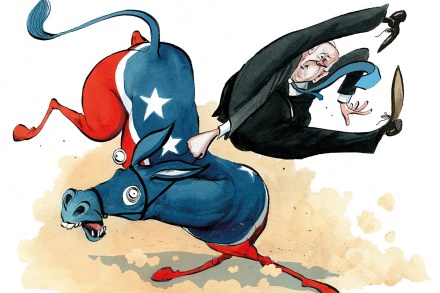
Biden’s Rodeo: How were his first 100 days?

30 min listen

Joe Biden is approaching his first 100 days in office. How has he fared, and has he delivered on his promise to bring about a return to normalcy? (1:15) Plus, the proposed European Super League wasn’t super after all. The six English teams invited to join the league pulled out earlier this week, and the plans have now been shelved. But will it still happen eventually? (10:30) And finally, what’s it really like to live in a listed building? (19:30)With the Spectator's US editor Freddy Gray; our economics correspondent Kate Andrews; journalist Damian Reilly; veteran football reporter Julie Welch; Spectator contributor Hamish Scott; and Liz Fuller, a buildings at risk officer for Save Britain’s Heritage. Presented by Lara Prendergast.Produced by Max Jeffery and Sam Russell.

How should I spend Joe Biden’s money?

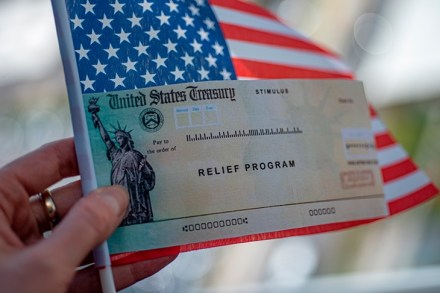
I’ve spent nearly my entire adult life working in Britain, but Uncle Sam never forgets about Americans abroad. We can vote in elections. We still file tax returns. And we also, it seems, benefit from Joe Biden’s spending binges. His latest instalment slipped through my letterbox last week: a cheque for $1,400. It’s a stimulus; intended, of course, to rebuild the US economy, but in practice a giveaway for the world. When the first cheque arrived at the start of this year, I thought it must be a rare glitch in the system: why would the US Treasury want to boost the restaurants of south London? Maybe it was a fake. Donald Trump’s name was stamped at the bottom, which made it resemble Monopoly money.

Derek Chauvin’s trial highlights the need for police reform

A trial in the District Court of Minnesota is set to change America. Derek Chauvin has been found guilty of murdering George Floyd last summer, when the police officer shoved his knee into the civilian’s neck for nearly ten minutes, after Floyd was suspected to be using a forged $20 note. Over 40 witnesses gave evidence during the 15 day trial but the jury was swift and unanimous in their decision: Chauvin was declared guilty on all three counts: second-degree manslaughter, second-degree and third-degree murder. George Floyd’s death sparked worldwide outrage: the video – filmed by 17-year-old Darnella Frazier – showed the most brutal, and ultimately fatal, tactics being used on a man who said in the footage 27 times he was struggling to breathe.

Have unemployment fears subsided?

Over the past few months, each labour market update from the Office for National Statistics has suggested forecasts predicting mass unemployment were wide of the mark. In the three months leading up to February, unemployment was estimated to hover at 4.9 per cent, 0.9 per cent higher than the previous year but down 0.1 per cent from the previous month. Where credit is due is debated – and likely shared. The jobs retention scheme continues to shield five million workers, who cannot yet return to their jobs, from unemployed status. That GDP has not taken anywhere near the same tumble this winter as it did last spring speaks to innovative businesses that have managed to adapt to extremely strict lockdown conditions.