Kate Andrews

Kate Andrews

Kate Andrews is deputy editor of The Spectator’s World edition.

Truss says no to spending cuts. Here’s the caveat

From our UK edition

The mini-Budget was a spending spree. The ‘medium-term fiscal plan’ was meant to explain the funding. But what exactly is going to be in it?  Liz Truss and Kwasi Kwarteng were thought to have (finally) come to terms with the need to address the need for some restraint, after their mini-Budget led to market chaos which is yet to settle. Their fiscal statement – in other words, how they would fund their tax cuts – was moved forward by almost a month, to 31 October. Its contents were thought to include some major spending cuts, in a bid to convince markets that fiscal discipline still guides the Tory party.

Britain’s shrinking economy adds to market jitters

From our UK edition

Liz Truss and Rishi Sunak spent the summer fighting it out in the Tory leadership contest, debating how they would make the economy grow. It turns out that, while that discussion raged on, the economy was contracting: GDP fell in August by 0.3 per cent, according to figures from the Office for National Statistics. This is an unexpected dip which is only likely to increase market jitters. September is likely to be a bad month too Production output fell by 1.8 per cent, while services dipped by 0.1 per cent overall: of this, arts, entertainment and recreation activities plunged by 5 per cent in total, making it one of the ‘largest contributors’ to the overall fall in services.


The Bank of England’s governor issues a stark warning

From our UK edition

Speculation has been growing that the Bank of England might announce an extension of its emergency gilt-buying programme which is set to end on Friday. Despite the Treasury moving forward its ‘medium-term fiscal plan’ announcements from November to the end of this month, gilt yields have been rising yet again this week in the lead-up to the end of the scheme. It seemed likely that the Bank’s gilt-buying programme might be extended for another two weeks as a result, in order to buy time before the Chancellor Kwasi Kwarteng’s announcement on 31 October. But tonight Andrew Bailey put that speculation to bed.

What is the way out for Kwasi?

From our UK edition

14 min listen

Parliament is back today and Kwasi Kwarteng is facing questions from the opposition as well as from those within his party. How much pressure is he under?Also on the podcast, looking ahead to another fiscal event at the end of the month, are we heading for a series of departmental spending cuts? What would our political team announce if they were Chancellor on October 31st?Katy Balls speaks to James Forsyth and Kate Andrews.Produced by Oscar Edmondson.

What’s causing the surge in borrowing costs?

From our UK edition

When Kwasi Kwarteng stood up to deliver his mini-Budget last month, the assumption by the government was that the markets would jump for joy over its growth strategy. Less than three weeks later, the Bank of England is staging its third intervention to keep the UK’s bond market afloat, warning this morning of ‘material risk’ to the UK’s financial stability if markets don’t calm down soon.

Will Kwarteng’s fiscal plan calm the markets?

From our UK edition

Chancellor Kwasi Kwarteng has written to the Treasury select committee this morning, announcing that the date of his medium-term fiscal plan is moving forward by almost a month: from 23 November to 31 October. Mel Stride, the committee’s chair, tweeted the letter in full, adding that he ‘strongly welcome[s]’ the move (which, he says, he had ‘pressed so hard on’) in the hope that an earlier update will help mitigate rising borrowing costs. https://twitter.com/MelJStride/status/1579396328349585408?ref_src=twsrc%5Etfw It’s a rather unsurprising announcement from the Chancellor. Despite doubling down on his original November date at the Conservative party conference, no one realistically thought that timeline would last.

Kate Andrews, Anthony Whitehead and Michael Simmons

From our UK edition

16 min listen

This week: Kate Andrews laments how Truss is hurting the free-market cause (00:51), Anthony Whitehead explains the 'arrogance' of the latest environmental activist movement the Tyre Extinguishers (06:42) and Michael Simmons reads his notes on barcodes (12:54).Produced and presented by Oscar Edmondson.

Will Truss’s growth target gamble pay off?

From our UK edition

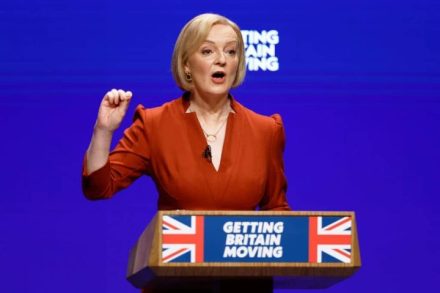
Liz Truss has bet the house on growth. The Prime Minister and Chancellor formally gave themselves the target of a 2.5 per cent growth rate in last month’s mini-Budget. But at the Conservative party conference this week, Truss used her speech to frame her premiership around growth, singling out as her enemies anyone she deems part of the ‘anti-growth coalition’. Anything the government does now needs to be approached with caution rather than revolutionary zeal As I say in today’s Telegraph, this was perhaps Truss’s most savvy political move to date. If the Prime Minister has had any success so far, it’s been to completely refocus the national narrative towards growth.

Will the free-market cause ever recover from Liz Truss?

From our UK edition

In theory, I should be delighted about the Liz Truss project. She is saying the things I’ve been arguing for years: talking not just about lower taxes but about basic liberty and how it relates to everyday life. She’s passionate about these ideas – and sincere. I remember watching her deliver a rallying cry, a salute to the ‘Airbnb-ing, Deliveroo-eating, Uber-riding freedom fighters’. This was just over three years ago when she was a Treasury minister. Her speeches were getting punchier and her one-liners becoming newsworthy and memorable. She was turning into one of the most recognisable faces of classical liberalism in Britain – a development which clearly delighted her. Truss asked for this job.

What did Kwarteng say to the free market think tanks?

From our UK edition

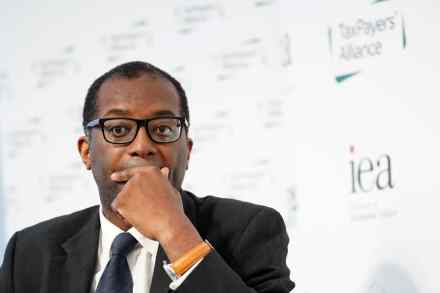
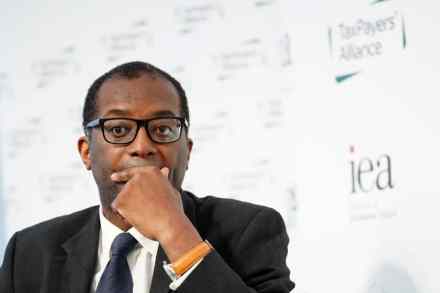
When Liz Truss and Kwasi Kwarteng entered Downing Street, laser focus was not only applied to them, but also to the free market think tanks they had worked with over the years. This evening, Kwarteng paid a visit to two of them, as the Institute of Economic Affairs and The Taxpayers’ Alliance hosted the Chancellor at Conservative party conference for one-on-one conversations. Similar to his speech yesterday, Kwarteng used the opportunity to try to take some heat out of his mini-Budget. When asked if market reaction was part of the Treasury orthodoxy he and Truss had been taking aim against for weeks, he shook his head and pointed to the ‘global context’ instead.

Suella Braverman blasts Tory MPs over tax cut U-turn

From our UK edition

Are we heading for a U-turn on the U-turn over the scrapping of the 45p tax rate? Liz Truss has said she would still like the top rate on high earners to come down, despite reversing on the policy just yesterday. Members of her cabinet agree she should bring it back: Suella Braverman has blasted Tory MPs for forcing the PM to ditch the tax cut. The Home Secretary said:  'I'm very disappointed that members of our own parliamentary party staged a coup effectively and undermined the authority of the Prime Minister.'  Could the 45p tax cut really make a comeback? Levelling-up secretary Simon Clarke endorsed Braverman’s comments on Twitter, commenting that ‘Suella speaks a lot of good sense, as usual.

Are the Tories in the business of managing decline?

From our UK edition

11 min listen

Kwasi Kwarteng has just spoken at the Conservative Party Conference in Birmingham defending his mini-Budget, despite having u-turned on the cut to the 45p tax rate this morning. Will his speech have calmed his fellow Tories and, more importantly, the markets? Katy Balls speaks with James Forsyth, Kate Andrews and Isabel Hardman. Produced by Max Jeffery and Oscar Edmondson.

Everything’s under control, says Kwasi

From our UK edition

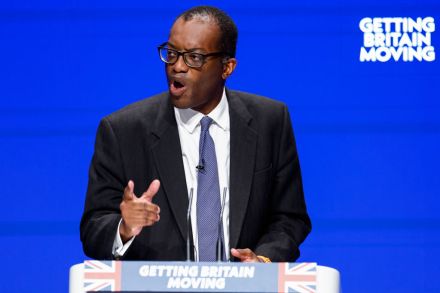
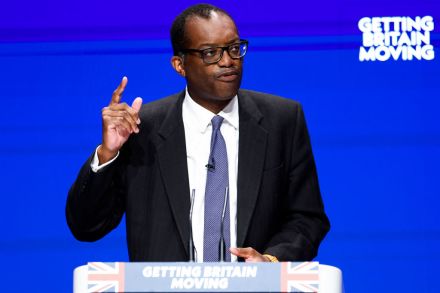
You could tell Kwasi Kwarteng was aware of his words and tone as he delivered his Conservative party conference speech to a hall full of Tory members this afternoon. It was a delicate set of circumstances, with him having had to U-turn on his plan to abolish the 45p tax rate only this morning. But perhaps more importantly he learned a lesson after the mini-Budget: his words can move markets. And he’d be loathe to push them into freefall again. Kwarteng worked hard to compensate for the total lack of lip-service he had paid to fiscal discipline in his mini-Budget. He praised the UK’s status of having the ‘second lowest debt-to-GDP ratio in the G7.

Can Liz Truss regain market confidence?

From our UK edition

When the Liz Truss camp floated the idea of side-lining the Office for Budget Responsibility for her government’s first fiscal statement, the argument went that the announcements would be targeted at the energy crisis – and they couldn’t wait. As anticipation around the fiscal event grew, and it became clear that it would include much more than an energy update, MPs started to suspect foul play – that this was an overtly political attempt to avoid scrutiny of Kwasi Kwarteng’s growth plans and spending splurge.

Podcast special: Britain in the global fight against Covid

From our UK edition

39 min listen

The UK was the first country in the world to begin its formal vaccine rollout, starting with the 91 year old Margaret Keenan. In the years since, the pandemic has been almost entirely routed in this country (though its impact on the economy, on healthcare, on the criminal justice system, continue to be suffered). But the British vaccine – developed by Oxford University and AstraZeneca – was a key part of the global fight against the pandemic. What was it like to be on the inside during those crucial first months? The Spectator has brought together politicians, advisors and scientists who played key roles during that time, to reveal a picture of dealing with unprecedented crisis in smart ways.

Liz Truss’s mea culpa moment

From our UK edition

The fallout from last Friday’s mini-Budget has been bigger and more volatile than almost anyone expected, with sterling hitting an all-time low against the dollar; runaway gilt yields; a U-turn from the Bank of England on its plans to start quantitative tightening. And that was all by Wednesday lunchtime. Will things be looking up anytime soon? The pound has recovered to pre-mini-Budget levels, hovering around $1.11, a point the Prime Minister’s supporters are keen to emphasise. But the pound has always been a secondary part of this story: with soaring borrowing costs the primary indication of the market’s confidence (or lack thereof) in the government’s tax cut-and-spend strategy.

What crisis?

From our UK edition

41 min listen

On this week's podcast: For the cover of the magazine Kate Andrews assesses the politics of panic, and the fallout of last week's so-called fiscal event. She is joined by Robert Colvile, director of the Centre for Policy Studies think tank to discuss where the Conservatives go from here (00:57).Also this week:Does the future belong to Sinn Fein in Northern Ireland?This is the claim that Jenny McCartney makes in this week's Spectator. We speak with journalist Melanie McDonagh and politician Mairia Cahill about what this could mean for Irish reunification (15:58).And finally:Are red kites magnificent or a menace?Paul Sargeanton says in his article for The Spectator that red kites should have never been reintroduced back into the UK.

What crisis? A tough week for Trussonomics

From our UK edition

What’s the sign of a successful Budget? Chris Philp, the new chief secretary to the Treasury, gave his answer moments after Chancellor Kwasi Kwarteng’s statement last Friday: a strong pound. ‘Great to see sterling strengthening on the back of the new UK growth plan,’ he tweeted out. A (temporary) rising pound made sense to Truss supporters, who argued that markets would support their transition to a lower-tax, higher-growth economy. This was, they thought, their vindicating moment. The moment didn’t last. Within minutes, the pound had entered a steep descent and UK borrowing costs surged. But Kwarteng is not a politician who panics.

Why is the Bank of England buying gilts?

From our UK edition

18 min listen

The Bank of England has today announced a major intervention into gilts to prevent a 'material risk' to financial stability as a result of government policy. How unprecedented is this move? Will Liz Truss and Kwasi Kwarteng break their silence? Are we heading for another leadership election?Kate Andrews speaks with Fraser Nelson and James Forsyth.Produced by Oscar Edmondson.

Will Liz Truss take on the IMF?

From our UK edition

Tonight the International Monetary Fund has weighed in on the UK’s mini-Budget, offering a direct rebuke of Liz Truss and Kwasi Kwarteng’s tax cuts. ‘We are closely monitoring recent economic developments in the UK and are engaged with the authorities,’ its spokesperson said, in reference to the fluctuating pound and rising borrowing costs. ‘Given elevated inflation pressures in many countries, including the UK, we do not recommend large and untargeted fiscal packages at this juncture' – suggesting some concern that the measures could be inflationary.