Kate Andrews

Kate Andrews

Kate Andrews is deputy editor of The Spectator’s World edition.

Talk of a housing ‘crash’ isn’t quite what it seems

From our UK edition

House prices dropped more than was expected this month, falling 5.3 per cent compared to August last year. The value of the average home in Britain has, on average, fallen by £14,600. This marks the biggest annual decline on record since the financial (and housing) crash of 2008/9. So, is a housing crash imminent? Could we be seeing one right now? There are a few reasons to be cautious about the data. Nationwide’s metrics are based on mortgage approvals (cash purchases are not included), which have dropped significantly – by about 20 per cent this year, compared to 2019. Higher interest rates have meant that fewer people want to sell right now, and fewer people are in a position to buy.

Why won’t my British friends see a GP?

From our UK edition

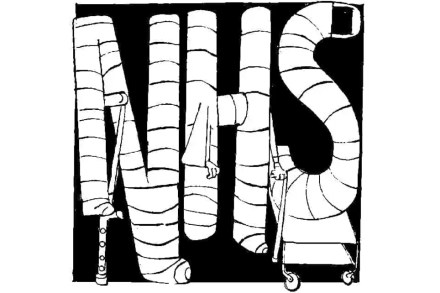
Having lived in the United Kingdom for almost my whole adult life, I like to think I’m well assimilated. I stopped trying to make pleasantries with strangers a long time ago. I skip dinner to stand outside the pub in the dark. Apart from my accent (though Americans tell me that’s changed, too) I think I can just about pass as British. But never for long. At some point, someone starts talking about a health worry or new ailment, and I tell them to see the doctor. Suddenly, the jig is up, and I’m an outsider again. I’m now very familiar with the British aversion to seeking medical care. Still, it horrifies me. I sound like a broken record around friends and colleagues, as I repeatedly tell them to go and get their problems checked out.

Does Nadine Dorries have a point?

From our UK edition

17 min listen

Nadine Dorries resigned from Parliament over the weekend, writing in a letter to Rishi Sunak that the Conservatives have been ‘corrupted’, and accusing the Prime Minister of ‘opening the gates to whip up a public frenzy against one of his own MPs’. Is Dorries, at least in part, right? James Heale speaks to Fraser Nelson and Kate Andrews.

Would Starmer’s government have any cash to spend?

From our UK edition

16 min listen

If Labour wins the next election, will Keir Starmer have any money to spend on his programme of government? In a piece for the Times yesterday, journalist Philip Collins says it won't, and he thinks Labour is suffering because of this constraint. How can Labour be intellectually interesting if the government purse strings are so tight? Fraser Nelson disagrees. He says that, thanks to the Tories taking tax levels to record highs, Starmer will have plenty of cash to work with. Kate Andrews speaks to Philip and Fraser. Produced by Natasha Feroze and Max Jeffery.

Jeremy Hunt’s big spending pledges are coming home to roost

From our UK edition

The Office for National Statistics reports this morning that public sector net borrowing in July came in at £4.3 billion. This is the fifth-highest July borrowing month since records began, with an additional £3.4 billion being spent to fund the government’s spending pledges compared to July last year. Still, there is fast talk of room for manoeuvre for Chancellor Jeremy Hunt to spend more or cut tax, as cumulative government borrowing continues to undershoot the Office for Budget Responsibility's (OBR) latest forecast for the fiscal year. In July, borrowing reached £56.6 billion, £11.3 billion less than had been expected by this point.

Britain could lose five years of economic growth

From our UK edition

It’s no great secret that the events of the past few years have delivered a serious economic blow to the UK. But just how many years has the country been set back? This morning the National Institute of Economic and Social Research has published its updated 'Economic Outlook’ which digs into some of these figures, erring on the pessimistic side of the forecast spectrum. According to the NIESR’s new report, the UK economy is still a year off reaching its pre-pandemic levels. In the last quarterly update, the country’s GDP still sat 0.5 per cent below its level in the last quarter of 2019 – a figure that the Bank of England thinks will finally make a full recovery by the end of 2023.

Will Brits feel richer if inflation halves?

From our UK edition

The government’s objective to ‘halve inflation’ by the end of the year seems to be back on track – for now. Last week’s interest rate hike was delivered with an updated inflation forecast from the Bank of England, showing the rate slowing to 4.7 per cent by the end of the year, just below Rishi Sunak’s target. The better-than-expected fall in the headline rate last month has forecasters thinking things are finally moving in the right direction. As Ross Clark reports on Coffee House, Capital Economics is expecting another major fall in the rate next week – down to 6.9 per cent on the year – when July’s figures are released.

Can the Tories come up with a tax offer in time?

From our UK edition

Last summer, all the Tory party could talk about was tax. It was at the heart of the leadership contest and the dividing line between Liz Truss and Rishi Sunak. The then foreign secretary promised to move fast and bring in deficit-financed tax cuts; the former chancellor said this would end in tears and instead pledged fully funded cuts over six years. Neither plan saw the light of day. All talk of tax cuts was suspended after Truss’s mini-Budget, when the premise of her borrow-and-spend agenda was tested to destruction. Since then, tax has become a difficult topic to bring up. Even within Tory circles, calls to cut tax are usually met with a pointed question: did you forget what happened last time?

Inheritance tax has become yet another stealth tax

From our UK edition

Most people will not see their estates subject to inheritance tax. Still, most people oppose the principle of the tax altogether. New polling from Ipsos confirms, once again, how loathed the death tax is: 23 per cent of people perceive the tax as ‘fair’ (tied for the lowest ranking, alongside stamp duty). Meanwhile 43 per cent of people see the tax as ‘unfair’ (the highest ranking, even more hated than income tax paid by the lowest earners). It won’t go down well, then, that almost 50,000 additional households are expected to be dragged in to paying inheritance tax, nearly four times the expected increase according to HMRC forecasts seen by the Daily Telegraph.

Sadiq’s Ulez expansion gets the green light

From our UK edition

9 min listen

The High Court has ruled that Sadiq Khan can expand the Ultra Low Emission Zone, after five Tory councils challenged the proposed policy. Will Keir Starmer be happy that a Labour mayor has won the day? Natasha Feroze speaks to Katy Balls and Kate Andrews.

The US economy is bouncing back – unlike Europe’s

From our UK edition

Every country that imposed a lockdown during the pandemic accepted that there would be an economic price to pay. But governments hoped that, on this measure, their own nation would fare better than others. The objective here was simple: don’t be the ugliest country of the bunch. Now, with some distance between those lockdowns and life today, we’re returning to a more established form of economic competition. Rather than focusing on whose economy looks particularly bad, the emphasis has returned to who is looking good. And on this metric, the United States is putting Europe – and Britain – to shame. The US government reports that its economy grew by 2.4 per cent on an annualised basis in the second quarter of the year, from April to June.

NatWest boss Alison Rose resigns. Why now?

From our UK edition

12 min listen

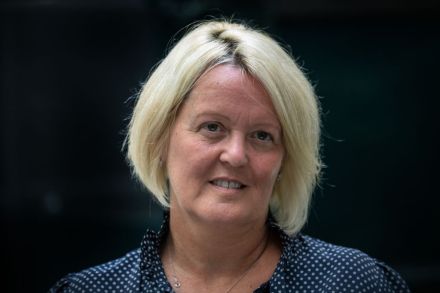
Natasha Feroze speaks to Kate Andrews and Fraser Nelson about the sudden decision for the NatWest boss Alison Rose to hand in her resignation. Prompted by the Nigel Farage Coutts bank account scandal, the bank's CEO faced mounting pressure to resign after late last night No.10 said they had serious concerns over the bank's actions. But why does the government play a role in this decision? And will there be more resignations to come?

Will the NatWest debacle end the ‘debanking’ scandal?

From our UK edition

The NatWest saga is fast becoming a textbook example of what some consider to be an ‘establishment’ attack on minority (and often right-leaning) viewpoints. The fast U-turn from the NatWest board which now sees Dame Alison Rose out of a job (Mr Steerpike has the details here) confirms that this was not a nuanced or two-sided debate that the bank originally tried to make it out to be. It’s no surprise, then, that the government has been fairly robust in its growing condemnation of NatWest’s actions. No. 10 insisted last night that it had serious concerns about the bank's actions, and ministers have been saying it was ‘right’ for Rose to go.

Rishi Sunak is caught in a debt trap

From our UK edition

Two by-election defeats have made it a miserable morning for the Tories, even if they did manage to cling on in Uxbridge. But they’ve had better-than-expected news on another front. This morning’s update from the Office for National Statistics (ONS) reveals that public sector net borrowing has come in lower than what was forecast at the March Budget: £18.5 billion in June, compared to the Office for Budget Responsibility’s (OBR) prediction of £21.1 billion. Borrowing last month was £0.4 billion less than the year before, while interest payments on government debt saw a huge drop: from £20 billion last June down to £12.5 billion this June.

Who is Susan Hall?

From our UK edition

15 min listen

Katy Balls speaks to Kate Andrews and James Heale about today's inflation figures and the latest news about the Conservative Mayoral candidate for London – Susan Hall.

Sunak still has his work cut out to halve inflation

From our UK edition

The rate of inflation has fallen again. CPI rose 7.9 per cent on the year in June, down from 8.7 per cent on the year in May. This takes the headline rate back to its lowest level since March last year – although it remains the highest across major economies.  A drop in motor fuel prices was the biggest contributor to the dip in the headline rate, bringing down transport costs. We are starting to see some movement in food prices too, which continued to rise on the year to June by a painful 17.3 per cent, ‘but by less than in June 2022, also leading to an easing in the rates’. Today’s update is being reported as a good news story – indeed the first one on inflation for some time. Is it a good news story though?

Why Starmer is choosing fiscal discipline, above all else

From our UK edition

It’s been more than two days since Keir Starmer told the BBC’s Laura Kuenssberg that Labour would keep the two-child benefit cap, yet the party seems no closer to finding resolution on the issue. The pushback within the party has been intense, with plenty of people (including, reportedly, members of the shadow cabinet) asking how the opposition leader can keep a benefits cap that he once railed against. But Starmer isn’t budging. Speaking on a conference stage with former prime minister Tony Blair this evening, Starmer insisted this wasn’t an issue of changing hearts, but rather a changing set of circumstances. Speaking about spending commitments more generally, Starmer noted that: We keep saying collectively as a party we’ve got to take tough decisions.

How do we fix Britain’s stagnant economy?

From our UK edition

21 min listen

Advanced economies are not seeing the economic growth that they once did, and none more so than the UK where there has been little productivity or real wage growth since 2008. What factors have contributed to this? Which industries will be at the forefront as we chart a path towards a high-growth British future? Kate Andrews speaks to American economist Tyler Cowen, at Civic Future's Great Stagnation Summit in Cambridge.  Produced by Oscar Edmondson.

Is the public sector pay offer all it seems?

From our UK edition

13 min listen

It looks like the summer could be about to get a whole lot easier after the government announced that millions of public sector workers will get a pay rise between 5 and 7 per cent. In a press conference this afternoon, Rishi said this was the governments 'final offer' and the result of consultation independent pay review bodies. So far, the four teachers unions have announced that they will put the offer to their members, but will the junior doctors follow suit? How are the government planning to pay for this?  Oscar Edmondson speaks to Katy Balls and Kate Andrews.  Produced by Oscar Edmondson.

Rishi’s pledge to grow the economy isn’t going well

From our UK edition

The economy contracted by 0.1 per cent in May – down by 0.4 per cent compared to May 2022. But this dip is largely being attributed to the extra bank holiday for the King’s Coronation. This morning’s update from the Office for National Statistics shows some changes in behaviour due to this one-off occasion, including a fall in production of 0.6 per cent (the biggest contributor to the overall dip in GDP) but a 1.8 rise in arts, entertainment and recreation. Other events can be spotted in the data. Health and social work activities saw the biggest bounce back from April – a rise of 1.1 per cent – as the junior doctors strikes didn’t take place in May.