Kate Andrews

Kate Andrews

Kate Andrews is deputy editor of The Spectator’s World edition.

Did the UK leave its recession behind in 2023?

From our UK edition

The economy grew by 0.1 per cent in February: not much to celebrate on its own but the small uptick in GDP all but confirms that the UK is leaving its recession in 2023. February wasn’t a booming month: services output only grew by 0.1 per cent, with transportation and storage services contributing the most to the sector’s growth (the former seeing its biggest boost since June 2020). The construction sector decreased by 1.9 per cent in volume terms, as the ‘fourth wettest February on record in England’ delayed projects. But a bounceback in production – the ‘largest contributor to the growth in GDP’ that month – provided some balance: overall production output grew by 1.1 per cent in February, recovering from a 0.3 per cent fall the previous month.
Has Rishi Sunak failed on the NHS?

From our UK edition

13 min listen

One of Prime Minister Rishi Sunak's five promises is to cut NHS waiting lists. However, even he's admitted progress is slow, with new data showing key targets on waiting lists have been missed. Can Sunak ever solve the NHS problem?  Elsewhere, Lee Anderson has been telling us about the price of friendship, revealing he won't be campaigning in certain constituencies where his old Conservative pals are running...  Katy Balls speaks to Isabel Hardman and Kate Andrews. Produced by Megan McElroy.

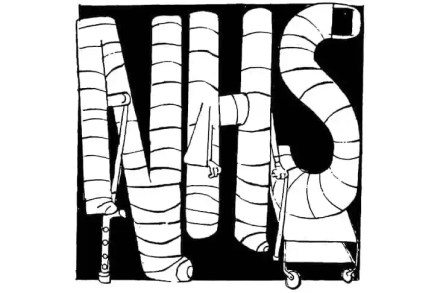
Why no one is celebrating a small fall in NHS waiting lists

From our UK edition

The NHS England waiting list has fallen for a fifth month in a row: to 7.54 million in February, down from 7.58 million in January. Since September last year, the overall waiting list has fallen by nearly 200,000 treatments, the ‘biggest five-month fall…in over ten years outside of the pandemic’ according to the Department of Health. So why is no one celebrating? The problem for the government is not the trajectory of the waitlist, but the total number of appointments on it. While the NHS waitlist appears to have peaked last autumn, there are still hundreds of thousands more appointments on the list compared to when Rishi Sunak promised, at the start of 2023, to make the waitlist one of his five key priorities.

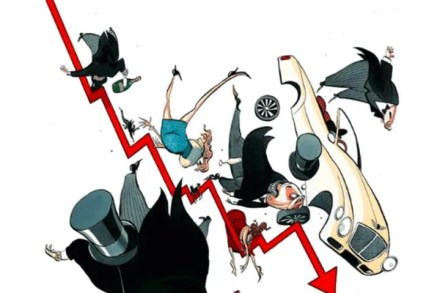
The UK’s economic problems are far bigger than a ‘recession’

From our UK edition

It was extremely optimistic to think the UK could revise its way out of recession. After the Office for National Statistics (ONS) reported GDP figures for Q4 last year showing a 0.3 per cent economic contraction between October and December, a recession seemed set in stone. Today the ONS reports no revisions to the figures. But even a small revision upwards would not have been enough to shake off the label of a recession. This remains a ‘technical recession’. Britain's economy fell – just – on the wrong side of the line last year. Had the Q3 figures not been revised downwards in December last year – from no growth to a contraction of 0.1 per cent – the UK would have dodged the definition of recession (two consecutive quarters of negative growth).

Britain is falling out of love with the NHS

From our UK edition

Rishi Sunak doesn’t speak much about his five priorities these days, apart from inflation, which ‘halved’ as promised. On NHS waiting lists, small boats, the economy and the public finances, the news hasn’t been nearly as positive – and people have noticed. Satisfaction with the National Health Service has hit its lowest point since records began, according to this morning’s British Social Attitudes survey, which reveals that fewer than one in four respondents were happy with their experience of accessing and receiving healthcare. The main gripe is those sky-high waitlists that the government promised would be falling by now: 71 per cent cited the struggle to get both GP and hospital appointments as their main reason for plummeting opinions of the health service.

What is Labour’s economic plan?

From our UK edition

30 min listen

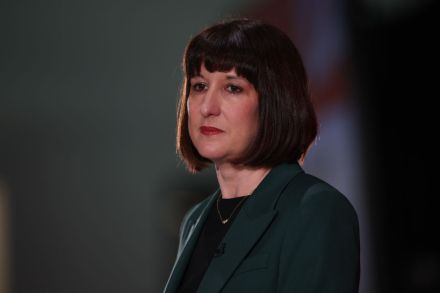
In her Mais lecture in the City of London this week, Rachel Reeves set out her plan for Britain’s economy: securonomics. What does securonomics mean? Can it deliver wealth? Will it work in a high-immigration economy? Freddy Gray speaks to Kate Andrews and the author and journalist Paul Mason.

Richard Madeley, Kate Andrews, Lloyd Evans, Sam McPhail and Graeme Thomson

From our UK edition

35 min listen

This week: Richard Madeley reads his diary (01:06), Kate Andrews describes how Kate-gate gripped America (06:18), Lloyd Evans warns against meddling with Shakespeare (11:38), Sam McPhail details how Cruyff changed modern football (18:17), and Graeme Thomson reads his interview with Roxy Music's Phil Manzanera (25:23).  Produced and presented by Oscar Edmondson.

The Bank of England is edging closer to an interest rate cut

From our UK edition

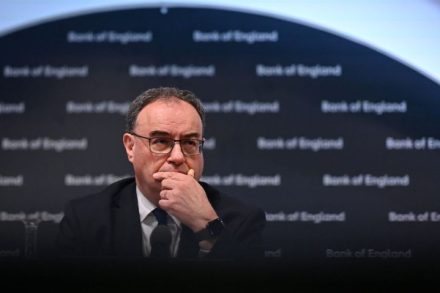
The Bank of England has voted to keep rates at 5.25 per cent – but there are signs that a rate cut may not be far off. The Monetary Policy Committee (MPC) voted 8-1 to hold the base rate. Yet there was a dovish shift in direction compared to the last meeting. In February, the MPC voted 6-3 to maintain rates, with two members voting to raise rates by 0.25 percentage points. Today, no one voted to raise rates – the first time this has happened since 2021. Instead, eight members voted to hold the base rate, while one member voted to reduce rates by 0.25 percentage points. It was widely expected that the Bank would vote to hold the rate. News earlier this week that inflation slowed again in February, to 3.

Britain just can’t stop spending

From our UK edition

Will Jeremy Hunt have scope to deliver more tax cuts before the next election? Tory MPs certainly hope so, as cuts to employee National Insurance in last year’s Autumn Statement and this month’s Budget have yet to move the polls. Something like an income tax cut, they think, would be preferable. But this morning’s update from the Office for National Statistics is an uncomfortable reminder that those kinds of tax cuts are hard to deliver: for as much as the government insists it wants to bring down the tax burden, it likes to spend money too. Public sector net borrowing in February was £8.4 billion – significantly higher than the consensus of £5.8 billion. While some costs came in lower than the year before – debt servicing payments were £1.

America’s obsession with Kate-gate

From our UK edition

Has Kate Middleton united America? For the past few days, we have been one nation under her spell. The Princess of Wales has dominated Google searches in the United States ever since Kensington Palace released that now-notorious doctored photo of her with her children for Mother’s Day. Her name search beat that of both ‘Donald Trump’ and ‘Joe Biden’ over the past week. To say she has broken the internet would be only the start of it: rumours of her well-being are making their way into every newsroom, dive bar and church fellowship hour across America. Left-liberal pals now just want to know when I last walked by Buckingham Palace My friends from all over the country text and call me to ask the same question: what’s happened to Kate?

Did Jeremy Hunt reduce inflation?

From our UK edition

12 min listen

Inflation has fallen to 3.4 per cent, it was announced this morning. Jeremy Hunt said it was a sign that the government’s economic plan is working. Is he right? Max Jeffery speaks to Katy Balls and Kate Andrews.

Inflation drops to its lowest level in two years

From our UK edition

Inflation has slowed once again, to 3.4 per cent in the 12 months to February, down from 4 per cent in January. This takes the inflation rate to its lowest level in two and a half years, and keeps inflation on track for the Bank’s target of 2 per cent this spring. The fall in the headline rate was slightly bigger than expected – economists had forecast 3.5 per cent – driven by a fall in food prices, which slowed from 7 per cent on the year to January to 5 per cent in February. Restaurant and cafe prices also contributed to the falling rate: down to 6 per cent in February, compared to 7.1 per cent the month before.

How big will Rachel Reeves’s state be?

From our UK edition

Every year the Mais lecture, hosted by Bayes Business School, gives its speaker a chance to lay out their vision for the economy. It’s how we knew Rishi Sunak would prioritise fiscal prudence over tax cuts long before he entered Number 10. Last night it was Rachel Reeves’s turn.  The message seemed to be: build up the state to get it out of the way As expected, there were no big policy announcements about what Labour might do in power. But that wasn't the point of the speech. Reeves formally committed to keeping Jeremy Hunt’s fiscal rule, to get debt falling as a percentage of GDP in a rolling five-year forecast.

Sunak says the economy is doing better. Is he right?

From our UK edition

Is Britain’s economy ‘turning a corner’? Rishi Sunak thinks so, but convincing his fellow MPs and the public is going to be difficult. At the ‘SME Connect’ conference in Warwickshire this morning, the Prime Minister spoke about the ‘tough couple of years’ the country has been through, insisting the UK economy is now heading ‘in the right direction.’ Perhaps there is more to come in the way of tax cuts On several metrics, Sunak is right. January’s growth figures, coming in at 0.2 per cent, suggest the UK is likely to consign its technical recession to the end of last year.

William Moore, Sean Thomas, Matt Ridley, Lionel Shriver and Kate Andrews

From our UK edition

41 min listen

On this week’s Spectator Out Loud: William Moore questions if the Church of England is about the apologise for Christianity (1:19); Sean Thomas recounts his experience taking ayahuasca in Colombia (8:13); Matt Ridley argues that private landowners make better conservationists (16:40); Lionel Shriver warns against pathological niceness in the debate about immigration (28:37); and, Kate Andrews reviews a play at the Olivier about Nye Bevan (36:57). Presented by Patrick Gibbons.

Nigel Farage on Reform, the Red Wall and 14 years of Tory failure

From our UK edition

30 min listen

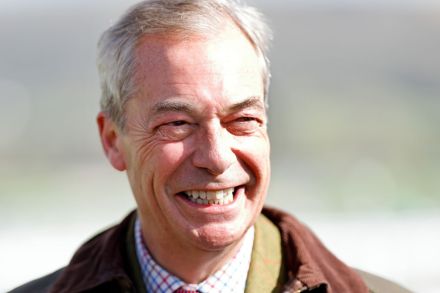
On this special edition of Coffee House Shots, Kate Andrews interviews broadcaster, and honorary president of the Reform Party, Nigel Farage. They discuss Lee Anderson's defection to the Reform party, how Nigel won the Red Wall for Boris Johnson, and whether he will return to front line politics. This was taken from The Week in 60 minutes on SpectatorTV. For the full episode, and more, click here.

Sinister panto about the formation of the NHS: Nye, at the Olivier Theatre, reviewed

From our UK edition

A Judy Garland rendition, dancing nurses, a star lead: no spectacle is spared in Tim Price’s new play Nye, which tells the story of Aneurin (Nye) Bevan, the architect of the National Health Service. The drama opens with Bevan being cared for on an NHS ward, slipping in and out of consciousness, on the brink of death. For the nearly three hours that follow, his sickness and his morphine drip plunge him into his ‘deepest memories’, portrayed as a ‘Welsh fantasia’ that tells the story of his life and his creation. Welsh heavyweight Michael Sheen takes on one of the most notable Welsh politicians in modern British history.

Britain’s recession looks like it’s over

From our UK edition

Is the UK already out of recession? It’s a question that won’t be confirmed for months, but this morning’s update from the Office for National Statistics offers a positive hint that Britain’s economic contraction will be confined to 2023. According to the ONS, the economy grew by 0.2 per cent in January – thanks largely to improved services output, which rose by 0.2 per cent, and a bounceback in wholesale and retail trade. Construction output also turned a corner, growing by 1.1 per cent after three consecutive months of contractions. Is this the spectacular economic turnaround that Britain has been waiting for? GDP still fell 0.

What does Boris want?

From our UK edition

11 min listen

Newspapers today reported that Boris Johnson is going to campaign for the Conservatives in Red Wall seats. Responding, Nadine Dorries wrote on Twitter: ‘There’s no thawing of relations, no plans to campaign. Sunak not spoken to Johnson for over a year.’ So are the stories true? What does Boris want? Max Jeffery speaks to Kate Andrews and Isabel Hardman.

Trump II: Back with a Vengeance

From our UK edition

47 min listen

On the podcast: what would Trump’s second term look like?  Vengeance is a lifelong theme of Donald Trump’s, writes Freddy Gray in this week’s cover story – and this year’s presidential election could provide his most delectable payback of all. Meanwhile, Kate Andrews writes that Nikki Haley’s campaign is over – and with it went the hopes of the Never Trump movement. Where did it all go wrong? They both join the podcast to discuss what to expect from Trump’s second coming. (03:11) Then: Will and Gus take us through some of their favourite pieces from the magazine, including Michael Hann’s Pop review and Cosmo Landesman’s City Life column. (16:38) Next: Flora Watkins writes in The Spectator about on private schools.