Kate Andrews

Kate Andrews

Kate Andrews is deputy editor of The Spectator’s World edition.

The smoking ban won’t go away

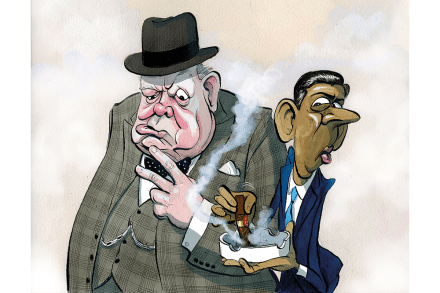
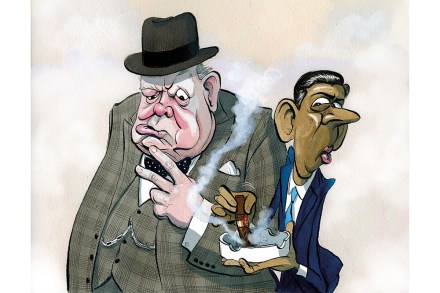
Has Rishi Sunak’s surprise summer election spared Britain some nanny state interventions? At first glance it seemed so, as it was revealed yesterday that the Prime Minister’s legacy legislation – the Tobacco and Vapes Bill – did not make it into the pile of ‘wash-up’ legislation that Parliament will try to pass before its dissolution next week. The Tories abandoned the defence of liberty a long time ago Speaking to the BBC yesterday, Sunak expressed his ‘disappointment’ that he was ‘not able to get that through by the end of the session’ but still cited his crackdown on flavoured vapes and a proposed ban on tobacco sales for anyone born after January 2009 as ‘evidence of the bold action’ he is willing to take as prime minister.
How net zero will divide Labour and the Tories

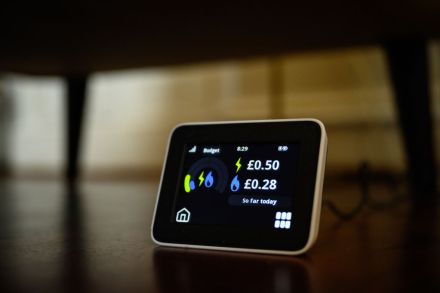
This morning, Ofgem announced another reduction in the energy price cap from July. The new cap on the unit price of energy should see costs fall by another 7 per cent, taking £122 off the average household bill. And it didn’t take long for both the Tories and Labour to try to swing the news in their electoral favour. Only two days into an election campaign, the government will want to claim credit for today’s news: an opportunity to remind voters what successive Conservative prime ministers did to protect people from higher energy costs (of course, the Energy Price Guarantee was a large part of the reason markets rebelled against Liz Truss’s mini-Budget, but that’s another story) and to flag that energy costs are now falling.

The general election has ruined prospects of an early rate cut

Would waiting another few months to call a general election have improved the Conservatives’ prospects? Rishi Sunak didn’t touch upon this in his speech today, announcing a general election for 4 July, but it seems likely that their broad assessment was no.  One of the big reasons for waiting until the autumn was the possibility of another fiscal statement. Jeremy Hunt’s March Budget left plenty to be desired by many Tory MPs, who wanted income tax cuts and changes to inheritance tax. The hope was that the public finances would improve in the spring and summer, offering up another chance to craft a tax-cutting narrative – and to give more time for the employee National Insurance tax cuts already implemented to be felt by the public.

Inflation falls close to target, but could interest rate cuts be delayed?

The UK inflation rate has slowed to 2.3 per cent on the year to April, down from 3.2 per cent in March. This marks the lowest headline inflation rate in almost three years, before the unwinding of lockdowns and release of pent-up demand sent prices spiralling. The Spectator's Data Hub outlines the inflation saga below: April’s slowdown is largely thanks to Ofgem’s reduction to the energy price cap, as higher energy costs fell out of the data. The lower cap saw bills reduce by around 12 per cent: a reduction of £238 from the average household’s yearly bill. According to the Office for National Statistics, the ‘prices of electricity, gas and other fuels fell by 27.1 per cent in the year to April 2024, the largest fall on record, with figures available back to 1989.

Is there finally good news for the government?

11 min listen

The IMF has upgraded the 2024 economic forecast for the UK. What does this mean for the Government and could more good news follow this week? And, with speeches on tax, benefit crackdowns and tackling anti-semitism, what should we make of all this political activity? Will we see the return of 'the hot lectern guy'? Kate Andrews and James Heale join Katy Balls to discuss.

UK growth is creeping up – but tough decisions still lie ahead

Today the International Monetary Fund has upgraded its growth forecasts for the UK: from 0.5 per cent this year to 0.7 per cent, followed by a 1.5 per cent rise in 2025 (unchanged from its previous update). These forecasts still sit slightly below the Office for Budget Responsibility's most recent predictions – but only just. The IMF’s latest forecasts come less than two weeks after the UK economy defied predictions and grew by 0.6 per cent in the first quarter of the year, exceeding practically all expectations and confirming that recession ended back in 2023. As I noted earlier in the month, when the provisional GDP figures were announced, the government must be careful about how it sells good news.

The UK leaves recession – but is it too late for the Tories?

10 min listen

The Office for National Statistics (ONS) confirmed this morning that the UK confined its technical recession to 2023. The economy grew by 0.6 per cent in the first three months of the year, thanks in large part to stronger-than-expected growth in March, which reached 0.4 per cent. But is the plan really working?  Also on the podcast, Keir Starmer gave a speech in Dover this morning on Labour's plans to stop the boats. He also took the opportunity to unveil new Labour MP Natalie Elphicke. Is there any clear blue water between Labour and the Tories when it comes to migration?  Oscar Edmondson speaks to Kate Andrews and James Heale.  Produced by Oscar Edmondson.

The UK leaves recession – but is it too late for the Tories?

The Office for National Statistics (ONS) confirmed this morning that the UK confined its technical recession to 2023. The economy grew by 0.6 per cent in the first three months of the year, thanks in large part to stronger-than-expected growth in March, which reached 0.4 per cent. Both numbers were larger than expected (the consensus was for 0.4 per cent and 0.1 per cent respectively), as growth figures for February were also revised upwards, from 0.1 per cent to 0.2 per cent. Services output was the ‘largest contributor’ to the economic bounceback, growing at 0.7 per cent in the first three months of the year. Transportation and storage were the ‘largest positive contributor’ to the rises of services – growing at 3.

Andrew Bailey paves the way for a summer interest rate cut

The Bank of England’s Monetary Policy Committee has voted to hold interest rates for the sixth time in a row. Members of the MPC voted 7 - 2 to maintain the base rate at 5.25 per cent – with two members voting to cut rates by 0.25 percentage points. This decision will come as no surprise to the markets, which had already factored in a rate hold. The Bank made clear in March that key indicators – including the state of the UK labour market and the risk of inflation rising again – would influence its decision, none of which dramatically changed in the last seven weeks. The Committee repeats from previous reports that monetary policy must ‘remain restrictive for sufficiently long to return inflation to the 2 per cent target sustainably in the medium term’.

Can Labour or the Tories fix the economy?

It’s all but certain that the UK’s exit from recession will be confirmed at the end of this week. Preliminary Q1 data, released on Friday, is expected to how slow and steady growth in the first three months of the year. It is also very likely that inflation will return to the government target of 2 per cent this month, due to Ofgem’s changes to the energy price cap last month and higher energy costs falling out of the data. The return to target may not last – which is one of the reasons hopes for a spring rate cut have been dashed. But all this will help cushion what is expected to be another decision by the Bank of England to hold rates at 5.25 per cent on Thursday. Threadneedle Street may be erring on the hawkish side, but a rate cut is still expected – possibly this summer.

Will Britain ever escape the low growth trap?

The Organisation for Economic Cooperation and Development’s (OECD) latest report, published this morning, downgrades Britain's growth prospects this year: from 0.7 per cent (forecast in November last year) to 0.4 per cent. Based on the OECD’s Economic Outlook, Britain and Germany risk experiencing the least growth amongst advanced economies, with Germany coming last this year (with 0.2 per cent growth) and the UK coming last next year (with 1 per cent growth). In response to this morning’s downgrade, Chancellor Jeremy Hunt has said that the ‘forecast is not particularly surprising given our priority for the last year has been to tackle inflation with higher interest rates'.

Joseph Stiglitz: ‘We know where fascism led last time’

When Joseph Stiglitz talks, the left listens. The Nobel laureate has advised multiple Democratic presidents and the World Bank, where he worked as chief economist and senior vice president. He’s long been a leading critic of the liberal leanings that have dominated the West’s economic policy for four decades. So when we meet in The Spectator’s office, I ask him if the Labour party has sought his advice. It wouldn’t be unthinkable. ‘I just met with, in a TV show, one of the Labour shadow ministers. We had a good discussion,’ he says, smiling. But the New Keynesian economist is in the UK for four days, and his new book, The Road to Freedom, is keeping him busy. No summits on ‘securonomics’ this time.

Labour’s plan to renationalise the railways doesn’t add up

Labour’s plan to renationalise the railways is not much of a plan at all. Rather, it is a list of goals: to eliminate ‘fragmentation, waste, bureaucracy’, to ‘bring down costs for taxpayers’ and to ‘drive-up standards for passengers’. All lofty ambitions, all lacking a strategy. What little detail we do have points to significantly more bureaucracy. The party plans to set up two more quangos – Great British Railways and the Passenger Standards Authority – which are unlikely to do much to create the more ‘efficient’ system Labour is promising passengers. Still, the announcement has been popular.

Sunak’s Rwanda Bill finally passes parliament

13 min listen

After eight hours of debate on the Rwanda Bill, peers finally threw in the towel shortly after midnight. And with that, the Rwanda Bill became law, pending Royal Assent from the King. The two chambers have been engaged in a mammoth game of ping-pong for the past week, culminating in yesterday’s showdown on two final amendments. What comes next?  Kate Andrews speaks to James Heale and Katy Balls.  Produced by Oscar Edmondson.

Will Sunak’s sick note crackdown get Brits back to work?

Alongside the Prime Minister’s speech on welfare today, the Department for Work and Pensions quietly released updated forecasts. The numbers are stark: DWP expects there to be 3.96 million working-age claimants by 2028-29, a rise from 2.8 million in 2023-24. Meanwhile the number of working-age people receiving disability benefits is forecast to rise to 1.16 million – that’s 160,000 more claimants than was expected just six months ago. These are the numbers Rishi Sunak must grapple with as he sets out his welfare reform agenda.  Back in 2020, then chancellor Rishi Sunak had days to design the furlough scheme.

The dangers of political prosecution

31 min listen

This week: the usual targets First: Trump is on trial again – and America is bored rather than scandalised. This is his 91st criminal charge and his supporters see this as politicised prosecution. As an American, Kate Andrews has seen how the law can be used as a political weapon – so why, she asks, is Britain importing the same system? In less than 18 months, the police have been sent to investigate Rishi Sunak for his seat-belt, Nicola Sturgeon for campaign funds, and Angela Rayner over her electoral registry: each time, the complainant is political and the process is the punishment. Kate joins the podcast alongside The Spectator’s editor Fraser Nelson to discuss. (01:34) Then: Confessions of a defecting Starmtrooper.

The dangers of political prosecution

At the start of January, Donald Trump offered up a cheery new year message for Americans. ‘If I don’t get immunity, then Crooked Joe Biden doesn’t get immunity,’ the former president declared on his social media platform Truth Social. With this, he touched on a looming question about 2024: will the presidential race be decided by lawyers and jurors, rather than voters? Trump showed up in court for the first criminal lawsuit against him this week, a case which could in theory result in a decades-long jail sentence. He’s accused of paying hush money to the former porn star Stormy Daniels, then falsifying business records to conceal the information from voters during the 2016 presidential campaign. (He denies the charges.

Liberty is dying under the Tories

It seems political consensus isn’t dead. It’s simply been hibernating, waiting for a kind of crackdown on personal liberty that is so popular that it brings everyone together. That moment came this evening, when MPs voted on the second reading of the government’s Tobacco and Vapes Bill, which will not only ban whatever flavoured vapes ministers deem too fun, but will also ban anyone born after January 2009 from ever legally buying cigarettes and other tobacco-based products in the UK.  How did the Tory party find itself leading this charge against personal freedom? A total of 383 voted in favour of the Bill, with 67 voting against. (The Spectator has the full list here).

How many MPs will reject Sunak’s smoking ban?

14 min listen

It’s not just Britain that has a growth problem. Today’s release of the IMF’s April 2024 World Economic Outlook report argues that the global economy is following the lacklustre trend. Within this bleak picture, how does the UK look compared to its counterparts? Also on the podcast, MPs are set to vote this evening on the government's generational smoking ban. Is Rishi Sunak a 'finger wagging control freak' as Liz Truss claims? How many could rebel?  James Heale speaks Katy Balls and Kate Andrews.  Produced by Patrick Gibbons and Oscar Edmondson.

Britain needs more than tinkering to get growth going

It’s not just Britain that has a growth problem. Today’s release of the IMF’s April 2024 World Economic Outlook report argues that the global economy is following the lacklustre trend. Global growth is expected to sit at 3.1 per cent by 2029: ‘at its lowest in decades’. Global growth is forecast to move at the same pace this year as it did last year, growing at 3.2 per cent in 2024 and 2025. This year’s forecast is a small, 0.1 percentage point uplift from the IMF’s January prediction, yet the forecaster warns that higher interest rates, weak productivity, and ongoing international insecurity will all continue to combine to suppress growth. Within this bleak picture, how does the UK look compared to its counterparts?