Kate Andrews

Kate Andrews

Kate Andrews is deputy editor of The Spectator’s World edition.

Today, we’re all MAGA

From our UK edition

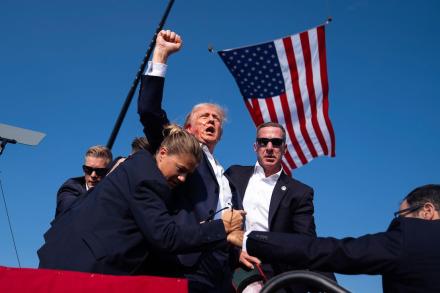
When Ronald Reagan was shot on 30 March 1981, his wound was not immediately noticed. It wasn’t until he started bleeding from the mouth that the car was diverted from the White House to the hospital. The story goes that upon arrival, the president said to the surgeons, ‘I just hope you’re Republicans.’ A doctor is said to have replied: ‘Today, Mr. President, we’re all Republicans.’ Americans have become increasingly fearful of political violence Let’s hope this anecdote is never debunked. It’s too good a story: about Americans who did not hesitate to put their country before the politics that so often plagues it. The attack on Reagan was the last (known) assassination attempt on a president – until a few hours ago.
The growing economy is good news for Labour

From our UK edition

The economy is picking up pace. After a dreary April, which saw no growth, the UK economy grew by 0.4 per cent in May. It’s the strongest three-month growth rate since January 2022, with the UK economy expanding by 0.9 per cent leading up to May, compared to the three months leading up to February.  A GDP boost in May was expected, as April’s wet weather put a damper on growth. Still, today’s update from the Office for National Statistics was better than expected, as economists had forecast a 0.2 per cent uptick. While the 1.

How radical will Wes Streeting’s NHS reforms be?

From our UK edition

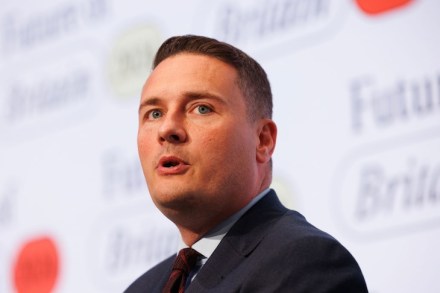
Wes Streeting has spent years talking about NHS reform – but he’s always had a red line on ‘free at the point of use’. At the start of the year the Health Secretary suggested he’d rather ‘die in a ditch’ before giving up on this principle. But is something about to give? What’s interesting about Streeting’s comments is the reframing of ‘free at the point of use’ as a matter of affordability Asked today at the Tony Blair Institute’s conference if the UK needed to keep ‘free at the point of use throughout the NHS’ – or if some kind of top-up system could be considered for those who can afford it – Streeting did not give his usual, straightforward answer. Instead, he seemed to create a new definition for the concept.

Can Labour deliver economic growth?

From our UK edition

13 min listen

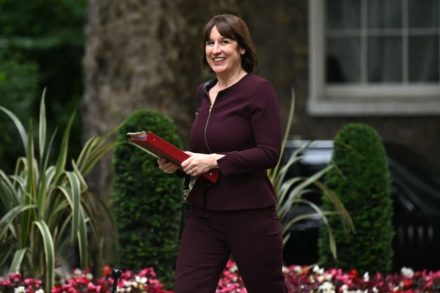
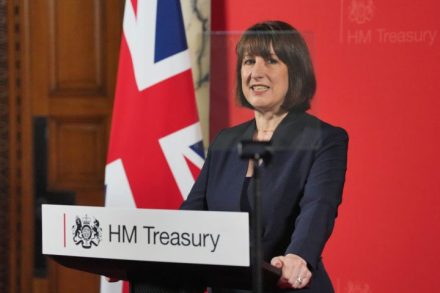
This morning, Rachel Reeves made her first speech as chancellor. She announced mandatory housing targets, promising 1.5 million homes over the next five years, as well as an end to the onshore wind ban. What else does she have in store, and can Labour deliver the growth the country needs? James Heale discusses with Katy Balls and Kate Andrews.

Rachel Reeves goes for growth on house-building

From our UK edition

No one can accuse the new government of moving slowly. Over the weekend Labour gave strong indication that both NHS reform and prison reform are going to be at the top of their agenda. But the staple offer of the new government remains what was promised throughout the election campaign: a sustained campaign to bring meaningful economic growth back to the UK. This morning, Chancellor Rachel Reeves starts to lay out those plans. Speaking to business leaders at the Treasury this morning, Reeves will reiterate that boosting GDP is a ‘national mission’ and the ‘only route’ that will improve ‘the prosperity of our country and the living standards of working people.

Labour passes its first test with the markets

From our UK edition

Markets don’t like surprises. And the election results, while explosive, are not a surprise – or at least the winner isn’t. Labour has secured a substantial majority, as markets had been expecting the party to do from the start of the election. No surprise this morning means no immediate jitters, as the result was already priced in. Sterling is slightly up, by 0.1 per cent, hovering around $1.28. The FTSE 100 is up 0.4 per cent since markets opened this morning. Most notably, housebuilding stocks are on the up. The strong speculation that Labour will use its first days in power to announce a planning overhaul has given the market quiet confidence that more homes might get built.

Voters never forgave Liz Truss for her mini-Budget

From our UK edition

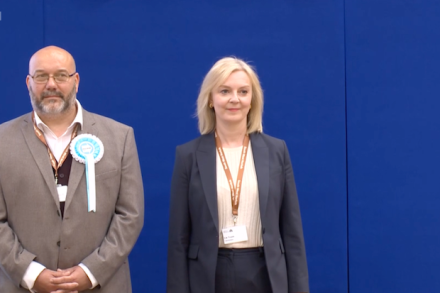
Tonight was the first time since Liz Truss’s 49-day premiership that voters got to have their say on exactly what happened back in 2022, and what’s happened since. The verdict is in: Truss has suffered a devastating defeat in South West Norfolk, going from a 25,000 seat majority in 2019 (one of the safest Tory seats in the country) to losing to Labour candidate Terry Jermy, with a difference of just over 600 votes. The 26 per cent voter swing from Tories to Labour made Truss the first former prime minister to lose their seat in almost 90 years. Were this any other MP, it would be easy to chalk up the result to the insurgence of Reform, which secured 9,958 votes – not far off Truss’s 11,217. But this is not a normal case.

Exit poll predicts Labour landslide

From our UK edition

12 min listen

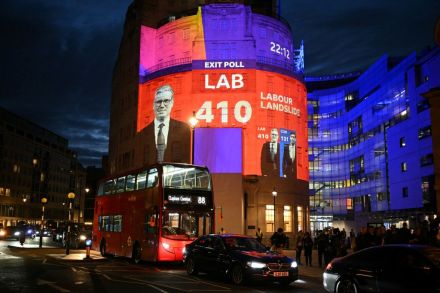
The polls have closed and the exit poll is in. The BBC exit poll projects that Labour will win a landslide of 410 MPs and the Conservatives will be left with 131 seats. Meanwhile the Liberal Democrats will win 61 seats, the SNP ten seats and Reform 13 seats. This would mean a Labour majority of 170 – and would be the Tories’ worst ever result. Megan McElroy speaks to Katy Balls and Kate Andrews.

The reckoning: it’s payback time for voters

From our UK edition

39 min listen

This week: the reckoning. Our cover piece brings together the political turmoil facing the West this week: Rishi Sunak, Emmanuel Macron, and Joe Biden all face tough tests with their voters. But what’s driving this instability? The Spectator’s economics editor Kate Andrews argues it is less to do with left and right, and more a problem of incumbency, but how did this situation arise? Kate joined the podcast to discuss her argument, alongside former Cambridge Professor, John Keiger, who writes in the magazine about the consequences that France’s election could have on geopolitics (2:32).  Next: what role does faith play in politics?

It’s payback time for voters

From our UK edition

It won’t be much comfort to Rishi Sunak, but he’s not the only world leader being put to the electoral sword. Joe Biden will be lucky to survive the summer as the Democrats’ presidential nominee after his disastrous debate performance. Almost every opinion poll says he’s losing to Donald Trump. In France, Emmanuel Macron bet on a snap election, daring his country to vote for Marine Le Pen’s National Rally. Voters accepted that bet and are making the French President pay. This weekend we could see Jordan Bardella, 28, asked to become the next prime minister. Justin Trudeau looks doomed as Prime Minister of Canada. Around the world, leaders are facing a reckoning. Not so long ago, the reverse was true.

Coffee House Shots live: election special

From our UK edition

58 min listen

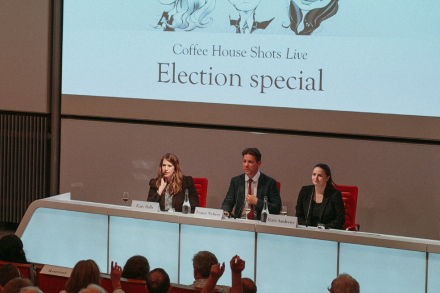
Join Fraser Nelson, Katy Balls and Kate Andrews for this special edition of Coffee House Shots, recorded live ahead of the general election. As election day draws closer, Fraser talks through some myth-busting statistics and the team answer questions from the audience. Could this election increase support for proportional representation? What policy does the panel think has been the most interesting? And was there ever a probable path to victory for Rishi Sunak? Produced by Natasha Feroze and Patrick Gibbons. Check out The Spectator's data hub for more graphs and statistics, updated daily.

Paul Johnson: Tory and Labour attacks are ‘broadly fictional’

From our UK edition

We’re five weeks into the election campaign – and just days away from polling day – and voters have plenty of parties, and numbers, to consider. Labour will raise everyone’s tax bill by £2,000, claim the Conservatives. Mortgages will rise by £4,800 under another Tory government, insist Labour. Is any of it true? ‘I would suggest that voters entirely ignore all of those sorts of numbers and calculations’, says Paul Johnson, director of the Institute for Fiscal Studies, in The Spectator’s office. ‘I think they’re broadly fictional.’ They are impossible claims to make, partly because ‘we don't know what would happen under these different governments, because they really haven’t told us.

Biden’s legacy has been left in tatters

From our UK edition

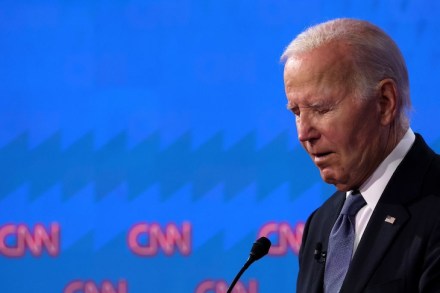
Joe Biden did not simply alter his chances at winning a second term last night. He altered his legacy. It will remain forever changed, regardless of the outcome in November. In 2020 Biden was chosen to be president – first by his party, then by the public – to take some toxicity and radicalism out of the debate. This centre-left Democrat (or centre-left compared to the rest of his party, at least) had a decades-long history of working with his Republican counterparts. He had the once common, now miraculous, ability to get along with (and even on occasion praise) politicians outside of his own party.  This was a dereliction of duty, a danger to the democratic process Voters liked it.

The problem with Starmer calling Sunak a ‘liar’

From our UK edition

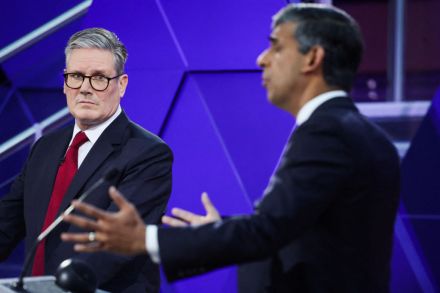
Is Rishi Sunak a ‘liar’? That was the powerful and rather incredible word used by Keir Starmer multiple times in Wednesday night’s debate – with Starmer interrupting the prime minister’s closing statement, no less – after Sunak used the Tory calculation that Labour would raise the average tax bill by £2,000.  ‘Lies, liar’ Starmer pressed. It sounded like something being picked up on a hot mic off stage. But it was the Labour leader, who was visibly furious at the start of his closing statement. 'That was a lie, and he's been told not to repeat that lie, and he's just done it,’ was how Starmer’s remarks started, before he went into his pitch.

Labour already know what public finance horrors await them

From our UK edition

Over the weekend, a leaked document revealed by the Guardian outlined different tax hikes the Labour party could impose, including changes to capital gains tax and inheritance tax. It’s evidence of what has long been suspected: that what’s been left out of the party’s manifesto (almost every tax) remains on the table. How might Labour justify not being more upfront about this ahead of the election? As I have noted on Coffee House before, Labour has gone to great lengths to insist all its plans are costed by tax increases that have already been announced. The lack of specificity in the manifesto, we’ve been told, is evidence that the party isn’t planning to go much further.

Britain can’t keep pushing its borrowing limits

From our UK edition

Rishi Sunak tends to avoid taking aim at his predecessor. But in last night’s BBC Question Time election special, as he was quizzed by the audience about the Conservative party’s record, he delivered a surprisingly punchy answer. When asked about the Tory party's record, he talked about how he stood up to Liz Truss’s borrow-and-spend plans during the leadership election in 2022. ‘I was right’, he replied simply, before adding: ‘What Keir Starmer is promising you is the same fantasy that Liz Truss did.’ It gained him his only applause of the evening. Last night’s audience was acutely aware of the fiscal pressure the UK is under.

Sunak’s campaign derailed by betting claims — again

From our UK edition

12 min listen

Another allegation over betting with insider knowledge has transpired today, this time involving the Conservative candidate Laura Sanders, who is married to the party's director of campaigns, Tony Lee. Lee has now taken a leave of absence as the Gambling Commission carries out an investigation. On the episode, Cindy Yu talks to Kate Andrews and James Heale about how this derails an already wobbly campaign. Produced by Cindy Yu.

Why the Bank of England isn’t lowering rates yet

From our UK edition

The Bank of England has, unsurprisingly, held interest rates at 5.25 per cent for the seventh time in a row. Markets downgraded their expectations for a June rate cut some time ago. Once Rishi Sunak called a general election in late May, the prospect of an early summer rate cut became even more unrealistic. The Monetary Policy Committee notes in its minutes that ‘the timing of the general election on 4 July was not relevant to its decision at this meeting’. Instead, its decision was based solely on ‘what was judged necessary to achieve the 2 per cent inflation target sustainably in the medium term’. Central banks never want to be accused of playing politics, especially so close to an election.

What does Keir Starmer think a ‘working person’ is?

From our UK edition

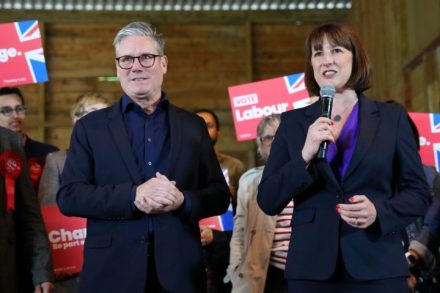
Keir Starmer has promised not to raise taxes on ‘working people’. But who, exactly, is a working person? The definition, it turns out, is not so simple. Or rather, Starmer has particular characteristics in mind that might not line up with how others would interpret that phrase. Speaking on LBC yesterday, Starmer laid out his definition of a working person he would shield from tax rises: ‘people who earn their living,’ he said, who ‘rely on our [public] services and don’t really have the ability to write a cheque when they get into trouble.’  It’s the kind of answer that leads to more questions.

Why Sunak will struggle to win the credit for falling inflation

From our UK edition

After a three-year saga, inflation has finally returned to the Bank of England’s target. The Office for National Statistics reports this morning that the inflation rate slowed to 2 per cent in the 12 months to May 2024: its lowest point since July 2021. The greatest contribution came from another slowdown in food and non-alcoholic beverages: having once peaked at a staggering 19.1 per cent in 2023, prices have now slowed to 1.7 per cent in the year to May, down from 2.9 per cent in the year to April. It's a painful reminder of what triggered an early election in the first place Clothing and footwear also played a role, slowing to 3 per cent in the year to May, down from 3.7 per cent in April.