Julie Burchill

Julie Burchill

Julie Burchill is a writer living in Brighton. Her Substack is julieburchill.substack.com.

Nope, I’m not nostalgic for the NME

From our UK edition

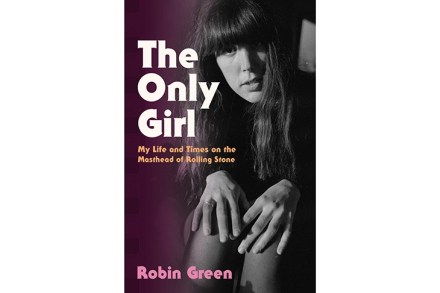
It’s no secret that my career isn’t quite what it was (lucky I’m rich!) so imagine my feeling of glee when I opened up my email account last Wednesday to find messages galore from all over the mainstream media. TV news programmes, radio shows, newspapers - even the Guardian! - were keen to have my views on…the end of the print edition of the New Musical Express. What a cheek! I started work there in 1976 when I was 17; I left when I was 19 as, hilariously, I thought that people in their twenties who still wrote about music were ‘sad old men'. Since then I’ve had number one best-selling novels, won an Emmy and been condemned in the House of Commons for tranny-baiting.

Bring back our bitchy celebs!

You would have to be quite odd not to approve of the sudden surge of solidarity amongst Hollywood stars of the female persuasion. (Though I did wonder, when Frances McDormand called so movingly during her Oscar-winner speech ‘Meryl, if you do it everyone else will!’ whether she meant 'Suck up to Weinstein for years' or 'Give Polanski a standing ovation’ - because Streep certainly led the liberal sheep in those fields.) But still - Ancient Mariner on the oceans of objectionability that I am - I do miss the days when ‘actress’ was shorthand not for ‘whore’ but for ‘bitch.’ These days, female actors want to be seen to be building each other up rather than tearing each other down.

Hollywood stars have lost their shine

Reading the lip-smacking reports of the latest troubled celebrity relationships  (Jennifer Aniston and Justin Theroux definitely high and dry, Cheryl Cole and Liam Payne allegedly on the rocks) I couldn’t help musing that stars - and more specifically, the place they occupy in our mass psychological landscape - have very much changed since the first mass-market celebrities emerged. The film stars of the fledgling Hollywood truly were worshipped as higher beings; a tribe of Pathan Indians opened fire on a cinema when they were denied entry to a Greta Garbo film while women committed suicide when Valentino died. Their marriages were regarded as heavenly unions; their romantic sunderings as tragedies.

In defence of Katie Price

From our UK edition

What do we talk about when we talk about Jordan? Not the country, or the river, or the cultural commentator Jordan Peterson but – as is my Philistine wont – the glamour model and businesswoman Katie ‘Jordan’ Price.  Last week, Katie Price addressed Parliament on the subject of social media trolling – which her 15-year-son is particularly affected by, due to his weight, ethnicity and handicaps. She is calling for online abuse to be made a criminal offence. Coming from the sticks-and-stones school of thought, I don’t agree.

The Saki of sex

From our UK edition

How I love short stories! Long before the internet realised that we can’t sit still long enough to commit to the three-volume novels of yore, these little beauties were hitting the sweet spot repeatedly. I especially love female short story writers — Shena Mackay, Lorrie Moore, Grace Paley — as they often read quite gossipy and friendly-like, as opposed to men who have to go out and shoot something to make some depressing point, or at least try to prove they’re the strong and silent type. Strong and silent writers should be true to themselves and simply shut up.

Feminists should agree to disagree

From our UK edition

Today is the centennial of that happy day when British women finally won the vote. Women over the age of 30, that is, who owned property – only ten years later would we be granted the vote on the same terms as men. A century on, and the most common current phrase used about feminism by its enemies (apart from the flagrantly insane claim that it’s ‘gone too far’) is that ‘X has set feminism back 100 years!’ This can be anything from Kim Kardashian showing off her bum to women having the nerve to complain about unappetising male colleagues taking joyless liberties with them in the workplace; both of these, for some reason I have yet to comprehend, makes both Kim and the complainers ‘traitors to feminism’. How so?

Welcome to the era of unnovation

From our UK edition

For the past few years, another seasonal story has joined the traditional tales of woe about this mysterious, random thing called Winter causing chaos - always at the same time of year, it seems - on the railways of this fair land and of roadworks unexpectedly coinciding with the peak time for people taking long car journeys to visit loved ones (and even their families) thereby adding misery to the mistletoe on motorways across the country. This new glitch concerns a nation of Tiny Tims and Tiny Tears going without the Christmas gifts intended for them simply because the theoretical givers ordered them online rather than go to the bother of fetching them on their own two feet.

#MeToo is the gift that keeps on giving

From our UK edition

‘What would happen if one woman told the truth about her life? The world would split open,’ wrote the American poet and activist Muriel Rukeyser in 1968. It took just short of half a century, but 2017 was the year in which #MeToo made this prophecy a reality. The phrase was coined in 2006 by the black American activist Tarana Burke, who was inspired to use it after finding herself without words when a 13-year-old girl confided in her that she had been sexually assaulted, later wishing she had just said ‘Me too’.

Meghan Markle has rescued her prince

From our UK edition

Of all the interesting combinations which sexual geopolitics has come up with, that of the American girl and the English man is one of the most enduring, giving a saucy spin to the phrase ‘Special Relationship.’ It started with cold hard economics when the second half of the 19th century saw the creation of the American billionaire - Vanderbilt and his railways, Carnegie and his steel, Singer and his sewing machines. The daughters of such men became known as The Dollar Princesses; girls who came to cold old England bringing million-dollar dowries to reboot ruined stately homes in exchange for the one thing money couldn’t buy them in the brave New World - a title.

Is Prince Charles so fond of Islam because he distrusts Jews?

From our UK edition

It has long been my belief that whereas the quality of gentiles drawn to Judaism is very high (Marilyn Monroe, Elizabeth Taylor, myself), the dregs are drawn to Islam. And leaving aside the dozy broads who gravitate to it for kinky reasons after watching one too many Turkish Delight ads (Vanessa Redgrave, Lauren Booth), there is something about this religion which attracts the very weakest of Western men. We think of those often half-witted types who learn to build a bomb online. Then there are the imam-huggers of the left who never met a wife-beating mad mullah they didn’t like. A lot of the reason left-wing men seem to have so much time for Islamism is to do with suppressed feelings of resentment towards the march of feminism, which they could never in a million years admit to.

The clown prince

From our UK edition

It has long been my belief that whereas the quality of gentiles drawn to Judaism is very high (Marilyn Monroe, Elizabeth Taylor, myself), the dregs are drawn to Islam. And leaving aside the dozy broads who gravitate to it for kinky reasons after watching one too many Turkish Delight ads (Vanessa Redgrave, Lauren Booth), there is something about this religion which attracts the very weakest of Western men. We think of those often half-witted types who learn to build a bomb online. Then there are the imam-huggers of the left who never met a wife-beating mad mullah they didn’t like. A lot of the reason left-wing men seem to have so much time for Islamism is to do with suppressed feelings of resentment towards the march of feminism, which they could never in a million years admit to.

Gathering moss

From our UK edition

Many moons ago, I worked at the New Musical Express magazine, which transformed me from virgin schoolgirl to the fabulous creature I’ve been for the past four decades. It’s hard to describe how influential the NME was at its 1970s peak. I’ve met people who waited in exquisite teenage agonies for two-week-old copies to arrive in the Antipodes, while my colleagues were regularly flown to the USA and supplied with groupies and cocaine as if they themselves were rock stars. And then punk came along and rocked the gravy boat — and the internet finished the job. Last time I saw a copy, it was lying wanly in a bin marked FREE — PLEASE TAKE ONE.

The Queen is not ‘one of us’

From our UK edition

When Republicans like myself mouth off against the Windsors, we always add the caveat ‘But the Queen's different!’ What we mean is that among a menagerie of malingerers – her mother left behind £7million in debts when she died; her sister, a sottish snob who crippled herself during a miscalculation with boiling bath water; her husband a mouthy bounder; her sons a hopeless shower – she alone seems to understand that the price a modern monarchy must pay is not to appear to be layabouts who believe that life – and the public purse – owes them a high standard of living.

The return of Lady Muck

From our UK edition

My sainted mum was of untarnished working-class blood — she worked, variously, as a cleaner, factory hand and shop assistant — and like most women of her kind who grew up before the 1960s, she never swore. Not a ‘bitch’, ‘slut’ or ‘slag’ ever passed her lips, though she certainly loathed a lot of women and always had at least two feuds on the go. In her eyes, using words like that would have made her just as bad as the targets of her disapproval. No, her ultimate diss for females she disliked was ‘Lady Muck’.

Kill your friendships

From our UK edition

I am not a bad friend. I enjoy my mates, and I am generous, showering them with fun, money and sympathy. But I do not crave their company when I am without it, for whatever length of time, and should we lose touch, I do not miss them. In fact, I find there’s a profound pleasure in parting with a chum, whether by their hand or by yours. We should all have the courage to admit it when a friendship has become more work than play, more duty than beauty. Maybe my origins led me to feel this way. I was an only child who, at an early age, became extremely fond of my own company. Some of my earliest memories are of lurking in my bedroom and begging my mother to get rid of young schoolmates who had come calling for me to play.

The right is now more colourblind than the left

From our UK edition

As a tot growing up in a provincial proletarian Communist household in the 1960s, I’d been led to believe that socialism was colour-blind. But when I moved to That London in the 1970s, I quickly became aware that the non-working-class Left operated what was best described as Paint-Chart Politics – the further from white, the more likely you were to be right. This began in a small way, with reggae bands who believed stuff about women that would have had them condemned as fascist Neanderthals had they been white playing under the Rock Against Racism flag; in recent years, it has seen the Left support similar Islamist stone-agers just because they're the right (Left) side of beige.

The joy of sex

From our UK edition

Your typical Trollope-loving, Brahms-bothering Spectator reader probably won’t be aware that the most recent winner of Big Brother was a girl called Isabelle Warburton, but her victory was a joy to behold — and a lesson to be learned. The unemployed 21-year-old had a tan so orange it made Oompa-Loompas look pale and interesting, and on her first night in the house she was already wisecracking about how she’d caught an STD in Ibiza from a fellow contestant. Everyone presumed she was an air-headed bimbo, but she went on to display the most extraordinary decency — the only word for it — with her honesty, self-sacrifice and boldness. She took on and saw off the strutting alpha male of the house and volunteered herself for eviction to save a rival.

Diana the diva

From our UK edition

Twenty years in August since Diana died. The anniversary is sad for me on many levels — she was definitely the final famous person I’ll have a pash on, and it reminds me that I haven’t yet earned back the whopping advance I was given for my book about her. To be fair, the book was an absolute stinker, written through a haze of gin, tears and avarice, containing such clodhopping clangers as ‘with blue skies in her eyes and the future in her smile’ and ‘affection swooshed out of her like a firework from a bottle’. Nurse, the screens! But there was good stuff in it, too. Namely, the way I served it to the Prince’s Party who continue to curdle Diana’s memory much as they tried to ruin her reputation during her lifetime.

A cacophony of complaint

From our UK edition

What sort of monster gives a bad review to a book by someone who was gang raped as a 12-year-old and subsequently goes on to eat herself to over 40 stone? Probably the sort of monster who’s never read a book about fatness as a feminist issue which she found convincing. Here we go again: ‘This is what most girls are taught — we should be slender and small. We should not take up space. And most women know this — that we are supposed to disappear.’ This ignores the fact that plump women were a benchmark of beauty in the past — when women had no rights whatsoever — and still are in cultures where, again, women have very few rights.

Amsterdam Notebook

From our UK edition

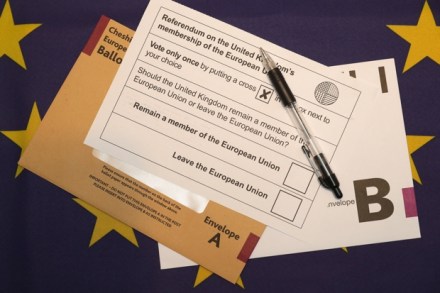
When my husband and I arrived in our adored Amsterdam on a sun-drenched schoolday afternoon — less than an hour in the air, first row on the plane, merry but not messy — we seemed all set for a brilliant time. We’re both Brexiteers and ever since Freedom Day we’ve been especially keen on European city breaks, such visits now having the pleasing feeling of a romance whose days are numbered, and from which one would be wise to squeeze the sweetness while one may. After checking in to the hallucinogenically gorgeous W Hotel, I was struck by one of the most enchanting of emotions the non-needy can experience; of strolling out on a summer evening in a place where no one knows you. Including, as it turned out, myself.