Julie Bindel

Julie Bindel

Julie Bindel is a feminist campaigner against sexual violence. She is the host of The Lesbian Project podcast, with Kathleen Stock.

Amnesty travesty

An open letter signed by major Irish NGOs — including Amnesty International (AI) and the National Women’s Council (NWC) has called for the removal of media and political representation for women who won’t capitulate to the demands of extreme trans activists. ‘We call on media, and politicians to no longer provide legitimate representation for those that share bigoted beliefs, that are aligned with far right ideologies and seek nothing but harm and division,’ reads the letter. ‘These fringe internet accounts stand against affirmative medical care of transgender people, and they stand against the right to self-identification of transgender people in this country... they stand against trans, women’s and gay rights by aligning themselves with far-right tropes and stances.

amnesty

Why are women treated so badly when it comes to murder?

From our UK edition

The case of Anthony Williams, convicted of the manslaughter of his wife Ruth and sentenced to just five years in prison, reminded me of the early days of Justice for Women – a feminist law reform campaign I co-founded in 1991. Two days after domestic abuse victim Sara Thornton lost her appeal against her murder conviction for killing her violent husband, another defendant, Joseph McGrail, walked free from court. McGrail had kicked his wife Marion to death while she lay unconscious but was found guilty of the lesser offence of manslaughter on the grounds of ‘provocation’. While listening to McGrail’s tales of woe, the judge sympathised and said, ‘This lady would have tried the patience of a saint.’ That was 30 years ago.

Why are trans activists and a bookstore trying to cancel me?

From our UK edition

Imagine my surprise to wake up this morning to be told that Readings book store in Melbourne had posted an abject apology on its blog yesterday about hosting an event with me back in 2018: ‘Readings prides itself on ensuring everyone in our community feels safe, respected and considered. We apologise for any hurt caused by highlighting the work of an author whose current stance is to divide our community. To that end, Readings regrets programming Julie Bindel in 2018 and thank our community for opening the dialogue with us. Readings is committed to considering the work of all authors to ensure our future program of events, reviews and discussions remain relevant and diverse.

Why feminists should watch serial killer dramas

From our UK edition

I connect to Netflix for yet another evening of no-choice entertainment. Well, I suppose I could take a turn around the room, mulling over the local gossip before playing a few notes on a musical instrument. But wait, there is NO gossip under this relentless lockdown, and I don’t have a musical instrument. So, as someone who is proud of my prolific TV habit I scroll through the crime section, and can’t help but notice the saturation of serial killer themed documentaries and dramas on offer. Night Stalker, Serial Killer with Piers Morgan, Confessions of a Serial Killer, Inside the Criminal mind, Mrs Serial Killer, Psychopath, Mindhunter, Evil Genius, Killer Women.

Let’s end the criminal record trap for sex trade survivors

From our UK edition

Today the High Court in London hears a landmark legal challenge. It relates to the policy for criminal records for prostitution to be held on file until those convicted are 100 years old. Currently, women who have escaped the sex trade and have convictions for street soliciting will have to live with this record for ever. And it’s not only the police that can access these records – so too can bodies including the Royal Mail, trading standards and credit checking organisations. This is not just a gross violation of human rights, but also deeply unjust.  As I have discovered during the vast amount of in-depth research on the global sex trade I have conducted over the past three decades, women find it difficult if not impossible to exit prostitution.

When did everyone become ‘queer’?

Is anybody straight these days? When I came out as a lesbian in the 1970s the guesstimates for numbers of those of us that shop around the corner veered between 5 and 10 percent. Later, both within the US and UK those figures were disputed as ‘too high’. In the US National Survey of Men estimated that only 2.3 percent said that they had not been exclusively heterosexual, while only 1.1 percent said they had been exclusively homosexual. Now, everywhere I look people that wish to be seen as edgy are identifying as ‘Queer’. The problem is, ‘Queer’ means absolutely nothing, or rather, anything anyone wishes it to be. And according to a recent piece in the Washington Post on how Trump lost and Biden won, the Queers did it.

queer

Keira Bell’s landmark victory against hormone blockers for children

From our UK edition

Keira Bell has won her legal case against the NHS’s only gender identity development service (GIDS) for under-18s, after the High Court found that children are unlikely to be able to give informed consent for taking puberty-blocking drugs. As a teenager, Keira began to suffer from gender dysphoria and was referred to GIDS for treatment. She was prescribed puberty blockers aged 16 followed by testosterone at 17. Keira underwent a double mastectomy aged 20, because what else do you do when testosterone gives you an Adam’s apple, facial hair and a deep voice? Keira has since regretted her transition and no longer identifies as a man, which is why she decided to try to prevent gender clinics steering other vulnerable young women towards irreversible and damaging interventions.

Aftermath: when will the country truly recover from the virus?

From our UK edition

31 min listen

The vaccine might be just around the corner, but can the country truly recover? (01:00) How can the Labour party win back the working class? (11:15) And finally, should we celebrate the new statue of Mary Wollstonecraft? (23:10)With The Spectator's political editor James Forsyth, chair of the Health Select Committee Jeremy Hunt, firefighter and writer Paul Embery, Times Radio presenter and former Labour MP Gloria de Piero, The Spectator's radio critic Kate Chisholm, and Spectator contributor and feminist writer Julie Bindel. Presented by Lara Prendergast.Produced by Cindy Yu, Max Jeffery, Matt Taylor and Sam Russell.

Meet the women caught in the joint enterprise trap

From our UK edition

Sarah, a 15-year-old victim of sexual exploitation by grooming gangs is pimped out and degraded by scores of men every week, beaten by her exploiters, and alienated from her friends and family. After a year of hell, Sarah is given an option: recruit two more girls for the gang and she can go free. Out of absolute desperation she agrees. But when the gang is finally caught, rather than treated as a victim, Sarah is charged with procurement of girls into prostitution and convicted by a jury. Amy, a vulnerable young woman is trapped in a relationship with an abusive man who controls her every move. Amy is scared of him and has learned to do what he demands to avoid punishment and violence. This man is a criminal and asks her to hide a weapon he has just used to kill a drug dealer rival.

Have we confronted the truth of what fuelled Peter Sutcliffe’s crimes?

From our UK edition

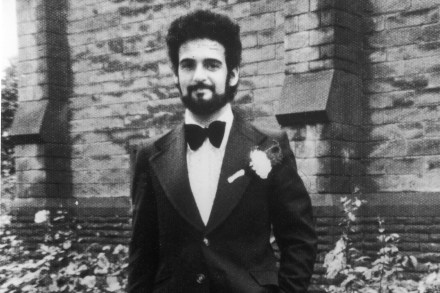
Peter Sutcliffe, the ‘Yorkshire ripper’, is dead. What is his legacy? He of course leaves behind the countless relatives and loved ones of his victims, whose lives have been torn apart and exist in a fog of pain and torment. The women Sutcliffe killed had no dignity except in the minds of those that knew them. And thanks to the press reporting of the case, their last moments and the horrific, intimate details of their murders and defilement became embedded in true crime popular culture. One thing that has changed since the 1970s is that Sutcliffe would not be able to get away with 13 murders now. CCTV and DNA evidence would hopefully have prevented him running rampage over long periods of time.

We need to stand up for Rosie Duffield

From our UK edition

Rosie Duffield, the Labour MP for Canterbury, should be seen as a feminist hero. When she stood up in the House of Commons last year during a debate on the domestic abuse bill, Duffield moved several colleagues to tears as she recounted the hell she had endured at the hands of a violent male partner. Duffield is courageous and principled. Despite having seen the punishment inflicted on women like me who speak out about our sex-based rights, Duffield nevertheless braved the shark-infested waters this summer by daring to agree with Piers Morgan on Twitter that only women have cervixes. Had anyone told me a decade ago it would be seen as either risky or brave to point out the realities of female biology I would have laughed.

It’s time to ban puberty blockers for children

From our UK edition

A ground-breaking case in the High Court will decide this week whether the UK’s only gender identity development service (GIDS) for under-18s will be allowed to continue to prescribe puberty blockers for children as young as 10-years-old. The case against the Tavistock and Portman NHS trust, which runs GIDs, is currently conducting its own internal review as a response to the growing controversy surrounding its practice. Keira Bell, now 23, was prescribed puberty blockers by GIDS when she was 16. Keira went on to use testosterone, before having a double mastectomy when she was 20. She now regrets transitioning, but may well be infertile as a side effect of the drugs she has taken. Keira is hoping that her case will prevent further medical experimentation on children.

The truth about Pornhub

From our UK edition

You have probably never heard of MindGeek, the huge tech company that owns Pornhub: the world's most popular porn site. Pornhub, which has 42 billion visits per year, is currently under fire for its apparent lack of safeguarding checks. Six million videos a year are posted on the site; some, according to anti-porn campaigners, depicting rape and sexual abuse. The Internet Watch Foundation (IWF) has found more than 100 cases of child abuse on the site between 2017 and 2019. Inspired by the Traffickinghub petition which recently hit two million signatures, campaigners are taking the fight against pornography directly to MindGeek's doorstep.

What young feminists can learn from Ruth Bader Ginsburg

From our UK edition

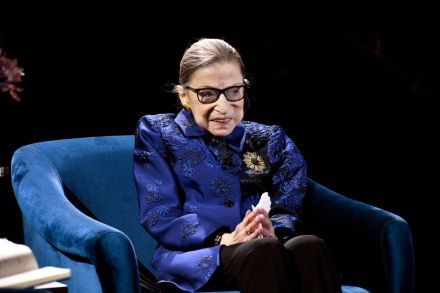
So Ruth Bader Ginsburg is gone. What do I hope is her legacy? That younger feminists take a leaf out of her book and fight for real, material change instead of targeting older feminists as ‘bigots’ and ‘irrelevant’. An old-school, early second wave feminist, Ginsburg was nevertheless loved and admired by legions of young women. In an era where the efforts of older feminists are often derided, ignored or taken in bad faith by younger women it was heart-warming to see Ginsburg attain rock star status in later years, and nicknamed the Notorious RBG, in honour of fellow Brooklynite, the rapper Biggie Smalls. Mugs, t shirts, and facemasks bearing Ginsburg’s image are available to buy, and many young women in Brooklyn even bear RGB tattoos.

Trans activists risk falling for misogyny

From our UK edition

Watching the BBC drama Mrs America about the 1970s fight for the Equal Rights Amendment is a reminder that progress is rarely permanent and that feminist battles for women's liberation always attract backlash, as well as open hatred and disdain. In the show, the right-wing Republican and anti-feminist Phyllis Schlafly does battle with second-wave feminists such as Gloria Steinem, Shirley Chisholm and Betty Friedan. Whatever your views on feminism, I would implore you to watch it. It is incredible television. But something occurred to me right in the middle of the first episode. The Schlafly character reminded me of some of the so-called feminists of today.

Non-fatal strangulation needs to be a more serious offence

From our UK edition

Imagine this: you are a victim of domestic violence, and your partner regularly strangles you to the point of unconsciousness. During each attack you think you are about to die. You lose control of your bladder during these attacks, and afterwards find it hard to speak, feeling like you have swallowed broken glass. You suffer from flashbacks and live in fear of the next attack, imagining that this time you will never regain consciousness. Being strangled during a domestic violence attack is as common as it is terrifying. Police routinely fail to recognise its seriousness.

There’s nothing ’empowering’ about the sex work on OnlyFans

From our UK edition

OnlyFans.com (OF) is the latest kid on the block to be billed as a safe, consequence-free way of selling sex and home-grown porn that empowers women. The social media site is similar to Instagram, but users pay to subscribe to creators’ feeds. The top earners on OF are women whose subscribers are male. These men pay between £5 to £20 a month to view images considered too pornographic for Instagram. Subscribers can also direct message women and pay tips to get personalised videos or photos, ‘depending on his individual sexual tastes.’ OF is a huge money machine and is doing extremely well during the Covid-19 lockdown. It now has around 17.

The latest gender studies literature is indistinguishable from satire

From our UK edition

Reading the back cover of the soon to be released Me Not You: The trouble with mainstream feminism, I assumed Titania McGrath had churned out a new book. But on further inspection I realised it is in fact the latest from Alison Phipps, Professor of Gender Studies at Sussex University – a disciple of the ‘sex work is work’ and ‘trans women are women’ faux-feminism cult. This book has clearly been written for the hard-of-thinking. ‘Privileged white women use their traumatic experiences to create media outrage,’ reads the blurb, ‘and rely on state power and bureaucracy to purge “bad men” from elite institutions with little concern for where they might appear next.

Why a trans woman thinks self-ID is a mistake

From our UK edition

Scotland is planning to change the way in which people can legally change sex, and is currently holding a consultation (which closes next week) on whether trans people should be able to ‘self identify’ as their preferred sex. But some trans people fear that the move toward ‘self-ID’ might be a mistake. Claudia is a proud Glaswegian living in London, and a trans-woman in her early 60s who underwent sex change surgery in the 1980s. She has serious concerns about the campaign to introduce self-ID for those wishing to legally identify as the opposite sex without going through a more thorough and longer medical process.

Meet the thug who was spared jail for being transgender

From our UK edition

In today's episode of 'You Couldn't Make It up', I bring you Leila Le Fey, also known as Layla Le Fey, Adam Hodgson and Marcus Smith. Le Fey had pleaded guilty to common assault and possession of an offensive weapon after trying to steal wine from a Budgens in Brighton. When confronted by the shopkeeper, Le Fey threatened him with a claw hammer. Le Fey, who has previously been convicted of possessing a knife in public, was definitely looking at a spell in clink. Judge Stephen Mooney originally sentenced Le Fey to six months in prison, telling Le Fey at Lewes Crown Court that there was “no excuse” for such behaviour. 'When you took out the claw hammer it must have been terrifying,' he said.