Julie Bindel

Julie Bindel

Julie Bindel is a feminist campaigner against sexual violence. She is the host of The Lesbian Project podcast, with Kathleen Stock.

The worrying rise of ‘rent-a-womb’

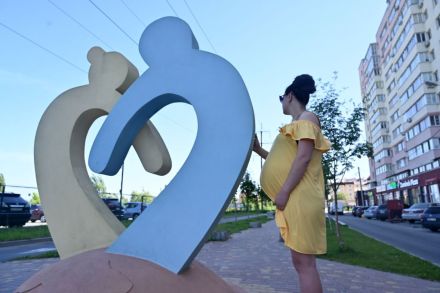
In April 2020, at the start of the COVID-19 crisis, New York governor Andrew Cuomo approved a much needed state budget. Buried in this 400-page document was a provision to legalize commercial surrogacy. Passed without the opportunity for legislative hearings or public debates, the law came into effect in February 2021. Critics claim that Cuomo is unleashing an exploitative multi-billion-dollar industry that preys on the vulnerabilities of women. While surrogates are usually from poorer backgrounds and, in many states, are more likely to be of color and in particular black, the implanted eggs are selected from mainly white women up to the age of 25, usually highly educated and screened for any hereditary illness.
surrogacy

The new campus harassment

One of the great successes of modern feminism is the public awareness campaigns to recognize sexual harassment in the workplace. Universities have encouraged whistleblowing and anonymous complaints procedures so that women can safely report such targeting. But when women in academia are subject to vile slurs such as ‘TERF’, all bets are off; it is considered reasonable to publicly hound and humiliate those women. Interestingly, the vicious, censorious mob tend not to target the handful of male academics who speak out against the sort of extreme transgender ideology that results in the removal of women’s hard-won sex-based rights. Holly Lawford-Smith is associate professor in Political Philosophy at the University of Melbourne (UM), Australia.

woke campus harassment feminism terf

Disabled men don’t have a ‘right’ to buy sex

From our UK edition

In the latest episode of ‘You couldn’t make it up’, a court has ruled that it is lawful for carers in particular circumstances to assist their clients in paying for sex. The case was brought on behalf of a 27-year-old mentally disabled man who was described as wishing to ‘fulfil a natural desire.’ Since when was paying for access to the inside of a person’s body for one-sided sexual gratification a ‘natural desire’? The ruling, unless successfully challenged, will have major implications not only for carers but for society at large. Government ministers have been granted permission to appeal the decision because it clashes with its aim to eradicate prostitution by way of criminalising the demand for sexual services.

Nostalgia for seedy nightclubs reeking of sex and poppers

From our UK edition

Gay bar, how I miss you. Barely any lesbian joints have survived the online dating scene, and Grindr has replaced the cruising bars. Why get dressed up and brave the buses when all you have to do to get a date is access an app? I was keen to indulge in some nostalgia when I picked up Jeremy Atherton Lin’s Gay Bar: Why We Went Out. I would now prefer dinner with friends to seedy nightclubs reeking of sex and poppers, but as a youngster I loved a gay disco. Taking us through a personal, historical and political view of the gay bars of London, San Francisco and Los Angeles, Lin skilfully recreates the throb of disco, invoking the stench of beer and sweating men. ‘It’s starting to smell like penis in here,’ is a memorable opening line for any book.

Reddit, Aimee Challenor and a disturbing insight into the trans debate

From our UK edition

Aimee Knight, previously known as Aimee Challenor, has been sacked by Reddit. But while Challenor has now gone, her reappearance in the headlines — and the way in which Reddit mishandled this story — is a revealing and disturbing insight into the transgender debate. It all began with an article I wrote for these pages on Green party gender madness in which I briefly mentioned Challenor’s suspension from the party in 2018. It was a scandal that Challenor did not wish to see dragged up. When a moderator of the popular UK politics community on Reddit shared that article, mentioning Challenor by name, the post was removed and the moderator banned. Had Challenor persuaded the powers that be at Reddit to prevent users from discussing her past?

Europe’s panic: what’s behind their vaccine meltdown?

From our UK edition

39 min listen

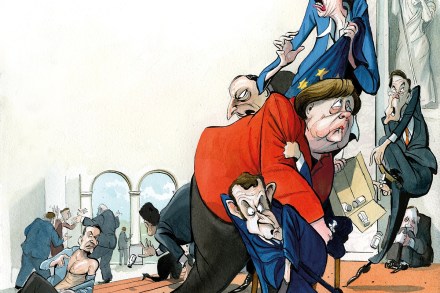
As the EU threatens a vaccine export ban, is their blind panic a sign of incoming crisis? (1:15) Plus, will a new Instagram account for teenage girls to report sexual assault restart a battle of the sexes? (18:05) And finally, what is it like to be one of the last British babies born under the Raj? (28:30)With Labour peer Andrew Adonis; Spectator contributors Matthew Lynn, Julie Bindel, Melanie McDonagh and Brigid Keenan; and historian Alex von Tunzelmann.Presented by Lara Prendergast.Produced by Cindy Yu, Max Jeffery and Sam Russell.

The case for a domestic abuse register

From our UK edition

In the 12 months since the first lockdown, at least 112 women in the UK have been killed by men. Killers such as Anthony Williams are often treated sympathetically by the courts because the men claim to have been adversely affected by the pandemic, meaning that judges and jurors go soft on them in the same way they take it easy on men who say they only killed their partners because she nagged or cheated. Many of these men who commit fatal acts of violence have put women through hell for years, if not decades, before killing. But as the survivors of domestic abuse know, a woman unlucky enough to be trapped with an abusive man will often face the worst of it if she manages to escape.

Inside the warped world of the Incel movement

From our UK edition

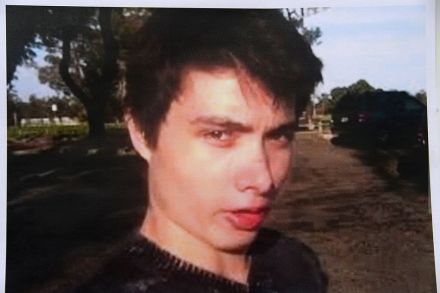
How do men become misogynists? I recall the boys at my sink school in the north east of England – many of them were vile bullies that relentlessly targeted girls with sexual harassment and bullying. They learned it from older boys, fathers, and pornography. How much worse it is today, despite decades of feminist campaigning. Today, nothing paints as clear a picture of how much some men hate women as the Incel movement. The Incel (Involuntary Celibates) community was popularised when Elliot Rodger killed six people in California in what became known as the Isla Vista massacre. Rodger shot himself in the head and died. A video titled ‘Elliot Rodger's Retribution’ was later discovered in which he outlined his motives for the well-planned attack.

Why are London police telling women to stay at home?

From our UK edition

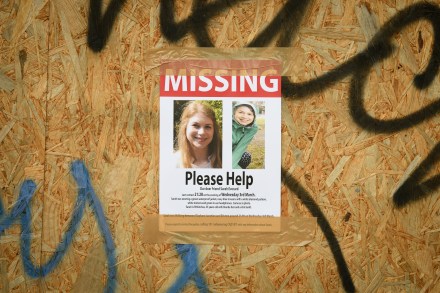
The disappearance of Sarah Everard in south London has once again led to women being advised by police to stay at home and be extra vigilant, according to a report in the Sun. Such warnings perpetuate damaging myths about danger, for example that only men can protect women and, ergo, women can’t protect themselves; that women are somehow complicit if they are outside and alone at night; and that night-time is dangerous and not the men responsible. Regardless of what happened to Ms Everard, and like all those following this story I’m hoping that she is found safe and as soon as possible, there is a troubling theme in the police’s response.

The Green party’s woman problem

From our UK edition

At the Green party spring conference this weekend, a motion which sought to introduce a party policy on women’s sex-based rights was defeated. A whopping 289 delegates (out of 521) voted to not include biological females in the party’s list of oppressed groups. All the motion aimed to do was simply add a paragraph to the Green party’s ‘Our Rights and Responsibilities Policy’.

Amnesty travesty

An open letter signed by major Irish NGOs — including Amnesty International (AI) and the National Women’s Council (NWC) has called for the removal of media and political representation for women who won’t capitulate to the demands of extreme trans activists. ‘We call on media, and politicians to no longer provide legitimate representation for those that share bigoted beliefs, that are aligned with far right ideologies and seek nothing but harm and division,’ reads the letter. ‘These fringe internet accounts stand against affirmative medical care of transgender people, and they stand against the right to self-identification of transgender people in this country... they stand against trans, women’s and gay rights by aligning themselves with far-right tropes and stances.

amnesty

Why are women treated so badly when it comes to murder?

From our UK edition

The case of Anthony Williams, convicted of the manslaughter of his wife Ruth and sentenced to just five years in prison, reminded me of the early days of Justice for Women – a feminist law reform campaign I co-founded in 1991. Two days after domestic abuse victim Sara Thornton lost her appeal against her murder conviction for killing her violent husband, another defendant, Joseph McGrail, walked free from court. McGrail had kicked his wife Marion to death while she lay unconscious but was found guilty of the lesser offence of manslaughter on the grounds of ‘provocation’. While listening to McGrail’s tales of woe, the judge sympathised and said, ‘This lady would have tried the patience of a saint.’ That was 30 years ago.

Why are trans activists and a bookstore trying to cancel me?

From our UK edition

Imagine my surprise to wake up this morning to be told that Readings book store in Melbourne had posted an abject apology on its blog yesterday about hosting an event with me back in 2018: ‘Readings prides itself on ensuring everyone in our community feels safe, respected and considered. We apologise for any hurt caused by highlighting the work of an author whose current stance is to divide our community. To that end, Readings regrets programming Julie Bindel in 2018 and thank our community for opening the dialogue with us. Readings is committed to considering the work of all authors to ensure our future program of events, reviews and discussions remain relevant and diverse.

Why feminists should watch serial killer dramas

From our UK edition

I connect to Netflix for yet another evening of no-choice entertainment. Well, I suppose I could take a turn around the room, mulling over the local gossip before playing a few notes on a musical instrument. But wait, there is NO gossip under this relentless lockdown, and I don’t have a musical instrument. So, as someone who is proud of my prolific TV habit I scroll through the crime section, and can’t help but notice the saturation of serial killer themed documentaries and dramas on offer. Night Stalker, Serial Killer with Piers Morgan, Confessions of a Serial Killer, Inside the Criminal mind, Mrs Serial Killer, Psychopath, Mindhunter, Evil Genius, Killer Women.

Let’s end the criminal record trap for sex trade survivors

From our UK edition

Today the High Court in London hears a landmark legal challenge. It relates to the policy for criminal records for prostitution to be held on file until those convicted are 100 years old. Currently, women who have escaped the sex trade and have convictions for street soliciting will have to live with this record for ever. And it’s not only the police that can access these records – so too can bodies including the Royal Mail, trading standards and credit checking organisations. This is not just a gross violation of human rights, but also deeply unjust.  As I have discovered during the vast amount of in-depth research on the global sex trade I have conducted over the past three decades, women find it difficult if not impossible to exit prostitution.

When did everyone become ‘queer’?

Is anybody straight these days? When I came out as a lesbian in the 1970s the guesstimates for numbers of those of us that shop around the corner veered between 5 and 10 percent. Later, both within the US and UK those figures were disputed as ‘too high’. In the US National Survey of Men estimated that only 2.3 percent said that they had not been exclusively heterosexual, while only 1.1 percent said they had been exclusively homosexual. Now, everywhere I look people that wish to be seen as edgy are identifying as ‘Queer’. The problem is, ‘Queer’ means absolutely nothing, or rather, anything anyone wishes it to be. And according to a recent piece in the Washington Post on how Trump lost and Biden won, the Queers did it.

queer

Keira Bell’s landmark victory against hormone blockers for children

From our UK edition

Keira Bell has won her legal case against the NHS’s only gender identity development service (GIDS) for under-18s, after the High Court found that children are unlikely to be able to give informed consent for taking puberty-blocking drugs. As a teenager, Keira began to suffer from gender dysphoria and was referred to GIDS for treatment. She was prescribed puberty blockers aged 16 followed by testosterone at 17. Keira underwent a double mastectomy aged 20, because what else do you do when testosterone gives you an Adam’s apple, facial hair and a deep voice? Keira has since regretted her transition and no longer identifies as a man, which is why she decided to try to prevent gender clinics steering other vulnerable young women towards irreversible and damaging interventions.

Aftermath: when will the country truly recover from the virus?

From our UK edition

31 min listen

The vaccine might be just around the corner, but can the country truly recover? (01:00) How can the Labour party win back the working class? (11:15) And finally, should we celebrate the new statue of Mary Wollstonecraft? (23:10)With The Spectator's political editor James Forsyth, chair of the Health Select Committee Jeremy Hunt, firefighter and writer Paul Embery, Times Radio presenter and former Labour MP Gloria de Piero, The Spectator's radio critic Kate Chisholm, and Spectator contributor and feminist writer Julie Bindel. Presented by Lara Prendergast.Produced by Cindy Yu, Max Jeffery, Matt Taylor and Sam Russell.

Meet the women caught in the joint enterprise trap

From our UK edition

Sarah, a 15-year-old victim of sexual exploitation by grooming gangs is pimped out and degraded by scores of men every week, beaten by her exploiters, and alienated from her friends and family. After a year of hell, Sarah is given an option: recruit two more girls for the gang and she can go free. Out of absolute desperation she agrees. But when the gang is finally caught, rather than treated as a victim, Sarah is charged with procurement of girls into prostitution and convicted by a jury. Amy, a vulnerable young woman is trapped in a relationship with an abusive man who controls her every move. Amy is scared of him and has learned to do what he demands to avoid punishment and violence. This man is a criminal and asks her to hide a weapon he has just used to kill a drug dealer rival.

Have we confronted the truth of what fuelled Peter Sutcliffe’s crimes?

From our UK edition

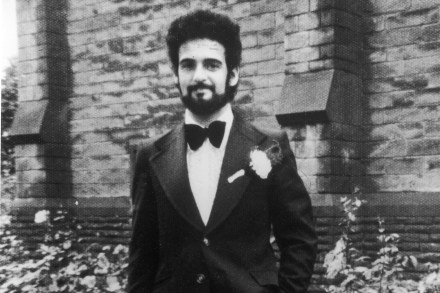
Peter Sutcliffe, the ‘Yorkshire ripper’, is dead. What is his legacy? He of course leaves behind the countless relatives and loved ones of his victims, whose lives have been torn apart and exist in a fog of pain and torment. The women Sutcliffe killed had no dignity except in the minds of those that knew them. And thanks to the press reporting of the case, their last moments and the horrific, intimate details of their murders and defilement became embedded in true crime popular culture. One thing that has changed since the 1970s is that Sutcliffe would not be able to get away with 13 murders now. CCTV and DNA evidence would hopefully have prevented him running rampage over long periods of time.