Juan P. Villasmil

China has quietly taken over America’s food supply

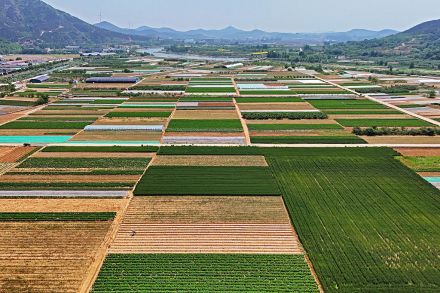
For all the talk about artificial intelligence and quantum supremacy, the fate of civilizations still depends on breakfast. ChatGPT can’t grow corn. Empires rise on stomachs as much as on silicon. And America’s food system – long dismissed as safe and self-sufficient – has quietly become a front line in the US-China rivalry. We act as if lunch is inevitable, but Beijing knows that food is power. A new report from the America First Policy Institute should wake us up. Washington long treated agriculture as a post-political space where globalization could do no harm, and was therefore happy to let much of the nation ship its growth to China. As Ambassador Kip Tom and Royce Hood argue, China has thus taken over critical pieces of the US agricultural system and food supply.
china america food supply

Machado deserves the Nobel

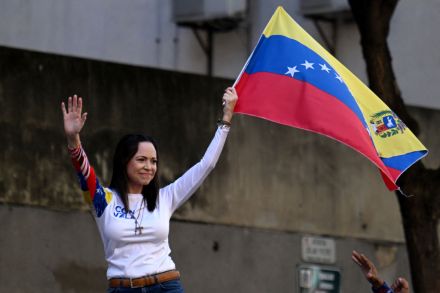
I was fourteen when I clambered onto a boulder along Caracas’s Francisco Fajardo highway – what people called Piedra de la Libertad, the Liberty Rock – and spoke out about a government that had just ignored a referendum. “Tyranny” was more than a buzzword. To my astonishment, a woman I didn’t yet know – María Corina – helped me climb it. With her megaphone, I spoke of unifying, as a sea of flags from rival parties fluttered before me.Many dismissed her then. A woman who once called Chávez a “thief” to his face – too brash, too ideological, too direct for the choreography of Venezuelan politics. The old hands said she could never reach the people; she lacked the soothing tones, the feigned humility, the convenient ambiguity that defined our politicians.

Maria Corina Machado

What Trump really wants from Venezuela

When the headlines scream “narco-wars” and pundits wag their fingers about “fentanyl,” it is tempting to reduce Donald Trump’s Venezuela policy to one issue: drugs. A convenient shorthand – but also a red herring. Read closely and a very different logic emerges.  Drugs matter, and the effort is to some degree about exactly that. Yet so does immigration. Venezuela’s hydrocarbons also matter – and they matter even more in a world where OPEC has been deliberately constraining supply to keep oil prices high.   Deploying narcotics as a public justification is smart politics.

Why Venezuelan F-16s buzzing US warships prove Trump right

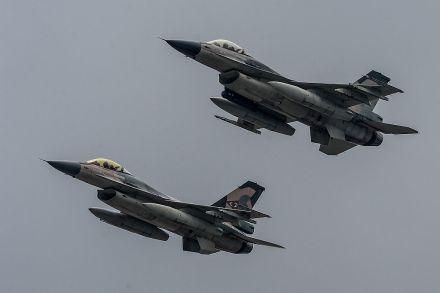
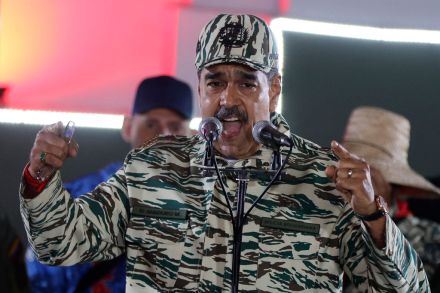
First the boat, then the buzz. On Tuesday, an American strike in the Caribbean shredded a vessel ferrying narcotics out of Venezuela, killing eleven alleged members of the Tren de Aragua gang – which Caracas, strategically, dismissed as an AI hallucination. Two days later, Nicolás Maduro tried his own spectacle, dispatching a pair of F-16s to roar over the USS Jason Dunham, one of the U.S. destroyers recently sent on a counter-narcotics patrol off Venezuela’s coast. The maneuvers – and the steady drumbeat of pressure that preceded them – have regime-changers daydreaming about intervention and restrainers losing sleep. But before mistaking the noise for reality, it’s worth asking: what is Washington trying to achieve?

F-16

Is Bukele a tyrant or a triumph?

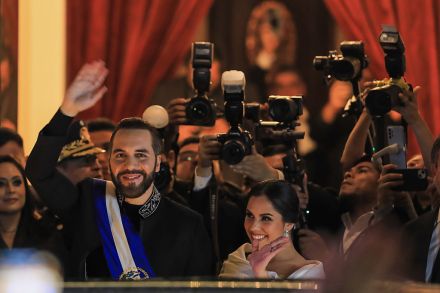
El Salvador’s young and telegenic president, Nayib Bukele, has rewritten the rules. Term limits? Scrapped. Presidential terms? Extended. Runoff elections? Abolished. If all goes according to the script – penned and passed by his party in the legislature – Bukele will remain in power well into the 2030s, if not beyond. A decade ago, such a move might have sparked bipartisan alarm in Washington. Today, reactions are mixed – with many in the growing MAGA wing cheering El Salvador’s constitutional shake-up as a win of their own. This shift is a window into a deeper realignment in conservative foreign policy: one that moves closer to the unapologetic defense of national interest and drifts further from the spread-democracy-everywhere consensus.

Nayib Bukele (Getty)

Trump drains Foggy Bottom

In the pantheon of American bureaucracies, none have guarded their prerogatives more jealously – or become more allergic to reform – than the State Department. And so, predictably, when the Trump administration moved in recent weeks to cut the agency’s workforce by 15 percent, Washington’s political and media class protested in unison. But strip away the histrionics, and something else emerges: a much-needed effort to realign the State Department with the America it’s supposed to represent. No one celebrates the pain of sudden job loss. Many of the terminated employees were sincere public servants (some of whom I count as personal acquaintances).

Why Washington should make Latin America a priority

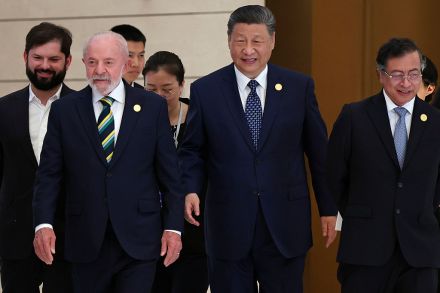
As American eyes remain fixed on the Middle East — understandably so — China has been rolling out the red carpet for Latin America, and we have barely noticed. While Xi Jinping welcomes Colombia, one of Washington’s historically reliable allies, into the controversial Belt and Road Initiative, he’s also introducing visa-free entry for South America’s largest economies and greeting regional leaders in Beijing with billion-dollar credit lines and lavish, all-expenses-paid political junkets. Washington, meanwhile, was… busy. If this sounds familiar, it’s because it is. The US has been snoozing through Latin America’s strategic realignment for years, occasionally waking up to mutter something about narcos or illegal migration, then hitting the snooze button.

washington

Why Greenland’s election might not have been so bad for Trump

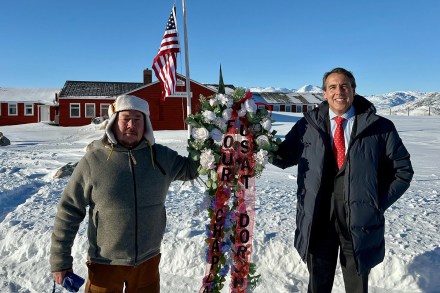
“We strongly support your right to determine your own future. And if you choose, we welcome you into the United States of America,” President Donald Trump told Greenlanders from a joint session of Congress earlier this month. And determine their future they did, as Greenland voted in a parliamentary election Tuesday. The results might not be as bad for Trump as NBC’s headlines imply. That's the takeaway of Tom Dans, a man Greenlandic media calls Trump’s sande mand — true man — in the island-nation.  Dans, who is in Washington, DC after spending weeks traveling across the icy Danish protectorate, previously served in Trump’s first administration’s Arctic Research Commission and the Treasury Department. He currently heads American Daybreak, a nonprofit organization.

greenland

Trump on Mexican cartels: ‘You know what the only solution is’

Donald Trump’s second term has been revolutionary in many ways, particularly in his administration’s approach to foreign affairs. From the get-go, the nomination of Marco Rubio as his top diplomat and Chris Landau as Rubio’s deputy signaled a break from orthodoxy. In picking Rubio, previously the most vocal senator on hemispheric affairs, and Landau, Trump’s ambassador to Mexico in his first term, the message was clear: our neighborhood is a top priority.  In his first exclusive magazine interview of his second term, Trump met with The Spectator’s Ben Domenech in the Oval Office, where a large portion of the conversation delved into Latin-American affairs.

Trump’s $5 million immigration ‘Gold Cards’ could split his party

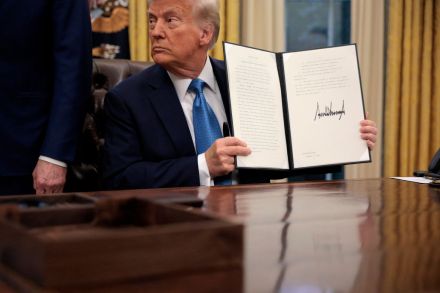
President Trump announced Tuesday that his administration is planning to unveil a program that lets foreigners acquire a path to citizenship for a one-time $5 million fee. Unlike the existing EB-5 visa program, which grants green cards to wealthy investors for about one-fifth of the cost, Trump’s “gold card” initiative aims to attract greater capital while using the revenue to help reduce national debt. “We’re going to be selling a gold card,” Trump said from the Oval Office during an Executive Order signing on price transparency in the hospital system.  “You have a green card. This is a gold card.

gold card

Bolsonaro indicted in alleged coup plot

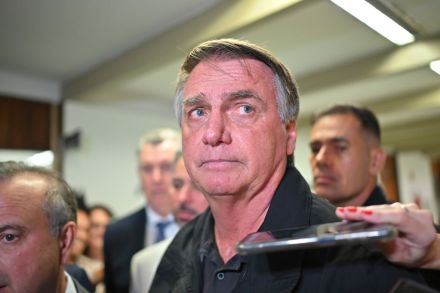
Brazilian former president Jair Bolsonaro was charged Tuesday for allegedly orchestrating a plan to overturn his 2022 election defeat through a coup. The indictment further complicates his prospects for a political resurgence, as Prosecutor General Paulo Gonet accuses Bolsonaro and his former vice presidential candidate, General Walter Braga Netto, of leading a “criminal organization” with the objective of undermining Brazil’s democracy. Thirty-four individuals, including prominent military figures, have been named in the charges. Among them are Bolsonaro’s former national security advisor, retired general Augusto Heleno, and former navy commander Almir Garnier Santos.

brazil bolsonaro

How Trump’s Mexico and Canada tariffs could change trade history

President Donald Trump has set Saturday as the deadline to impose 25 percent tariffs on Canadian and Mexican imports. From the Oval Office earlier this week, Trump explained that the move aims to push the US’s neighbors to take swift action to curtail illegal immigration and fentanyl, as well as to address growing trade deficits. The tariffs may or may not include oil, with Trump saying Thursday that determinations were still being made. Following Trump’s tariff feud with Colombian president Gustavo Petro Sunday, with the Trump forcing his Colombian counterpart to welcome deportees, his latest move signifies an expansion of his revamped “FAFO” foreign policy.

Get ready for Trump’s ‘FAFO’ foreign policy

President Donald Trump posted an AI-picture of a gangster version of himself on Instagram at around 3 p.m. Sunday. Behind the fedora-clad figure, the text “FAFO” — short for “fuck around and find out” — appears alongside a smiling face.  What happened earlier that Sunday, and the machine-made picture that followed, tells us a lot about how Trump 2.0. will deal with the world.  After two planes carrying Colombian illegal aliens departed the United States this weekend, self-proclaimed humanist and former guerrilla fighter Gustavo Petro, Colombia’s president, refused to allow the plane to land. “I deny the entry of American planes carrying Colombian migrants into our territory,” Petro said on X.

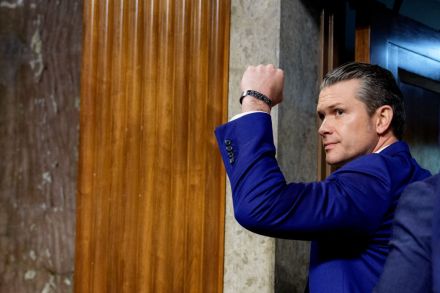
Hegseth one step closer to heading the Pentagon

With a 51-49 vote, the debate on Pete Hegseth’s nomination to be defense secretary ended Thursday afternoon. The vote mostly fell on party lines, with the exception of two Republican senators: Lisa Murkowski of Alaska and Susan Collins of Maine.  "After thorough evaluation, I must conclude that I cannot in good conscience support his nomination for secretary of defense," Murkowski said in a post on X. "I did not make this decision lightly; I take my constitutional responsibility to provide advice and consent with the utmost seriousness." “Although he has recently revised his statements on women in combat since being nominated, I remain concerned about the message that confirming Mr. Hegseth sends to women currently serving and those aspiring to join,” Murkowski followed.

hegseth

Trump’s inauguration ball was a night to remember

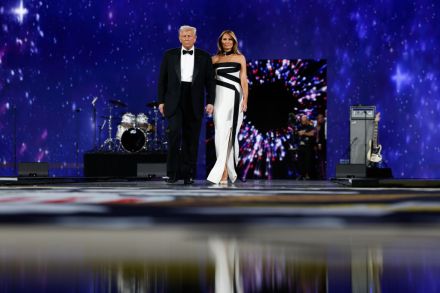
After a packed first day in office, starting with an indoors swearing-in ceremony followed by a celebration at Capitol One Arena — where Trump signed executive orders to the cheers of thousands — the most involved in MAGA world tidied up for a first dance. With the doors of the Walter E. Washington Convention Center opening at 5:30 p.m., ecstatic supporters of the president filled the surrounding icy sidewalks in their fanciest attire. At around 4:30 p.m., after I delivered a tux to a friend stuck at the Marriott Marquis, I witnessed a parade of trucks playing “Macho Man” followed by a moped-riding man in a full Elmo costume. It was shaping up to be a memorable night.

Husted and Moody to replace Vance and Rubio in the Senate

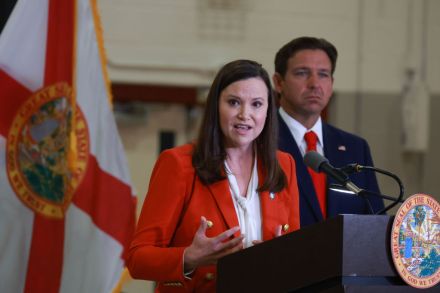
Lieutenant Governor Jon Husted of Ohio will replace Vice President-elect J.D. Vance in the Senate, with Florida attorney general Ashley Moody set to take Marco Rubio's place. The imminent departures of Vance and Rubio from the Senate had led to a lot of speculation about their potential replacements. Theories included that Florida governor Ron DeSantis would appoint himself — or his wife — for Rubio’s role, with some suggesting that he was negotiating with President-elect Donald Trump to leave the governorship open for one of Trump’s family members in exchange for a cabinet role. While the theories were imaginative, reality proved duller.

moody

Bessent, Burgum, Turner and Zeldin face confirmation hearings

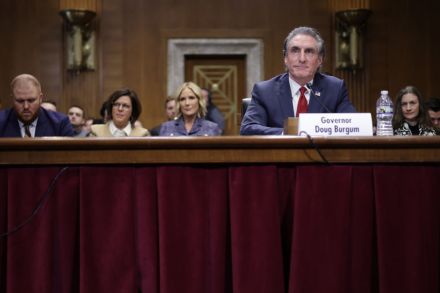
Four days away from inauguration, the Senate is moving quickly with confirmation hearings for President-elect Donald Trump’s cabinet. The saga began with defense secretary nominee Pete Hegseth’s contentious hearing Tuesday and quickly moved to half-a-dozen other hearings the next day, including that of secretary of state nominee, Senator Marco Rubio.  This morning, Congress continued with more hearings for top Trump nominees, including one with treasury secretary pick Scott Bessent, as well as with former representative Lee Zeldin, former governor Doug Burgum and former NFL player Scott Turner — who were nominated to lead the Environmental Protection Agency, the Department of Interior and the Department of Housing and Urban Development, respectively.

hearings

Pete Hegseth’s confirmation hearing is just the first episode

President-elect Donald Trump’s pick to lead the Pentagon, military veteran and former Fox News personality Pete Hegseth, had his first hearing in front of the Senate Armed Services Committee Tuesday. In his opening remarks, the author of The War on Warriors admitted that he is an unorthodox pick. “It is true that I don’t have a similar biography to defense secretaries of the last thirty years. But, as President Trump also told me, we’ve repeatedly placed people atop the Pentagon with supposedly ‘the right credentials’  — whether they are retired generals, academics or defense contractor executives — and where has it gotten us?” his opening statement read. “It’s time to give someone with dust on his boots the helm.

dei hegseth

Venezuela prepares for clashing inaugurations

A new presidential term is set to begin officially in Venezuela on January 10. Despite the electoral commission’s failure to release the results of the July 28 election, Nicolás Maduro’s swearing-in appears inevitable. Opposition leader Edmundo González Urrutia, however, says he’ll be inaugurated as the country’s new leader. Will he return to Caracas? That’s the question Venezuelans keep asking, with González Urrutia having promised exactly that. “I am going to return to Venezuela to take the responsibility that 8 million citizens gave me,” he told Infobae five days ago after meeting with Argentinian president Javier Milei. This week he also met with President Biden, Uruguayan president Lacalle Pou and Panamanian president José Raúl Mulino.

I was censored from talking about Chinese influence in Latin America

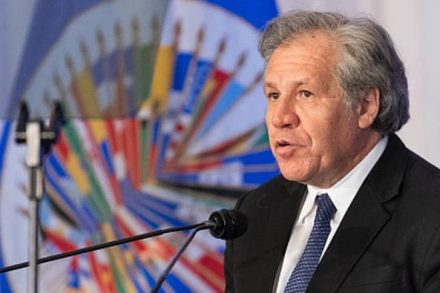
I represented the United States at the sixth Youth and Democracy in the Americas Summit at the Organization of American States, or OAS, last month. Most Latin Americans know this organization well, though most here in the US don’t. It is the premier regional political forum, the region’s European Union, a sort of mini-UN. When tyrants steal elections and jail journalists, the OAS becomes the center of the spectacle.  It has a reputation for defending liberty. But when it comes to China, matters get murky. So much so that the organization is willing to censor American voices that tell the truth about China’s regional ambitions. The appointment of Florida senator Marco Rubio as secretary of state may augur a new era of US focus on its hemispheric neighbors.

China