Jonathan Sumption

Jonathan Sumption is an author, medieval historian and former Supreme Court judge

Nothing left to lose

From our UK edition

In chess, the king is never taken. When defeat is inevitable, the losing player resigns. And so it is in war. Defeated leaders sue for terms. Or they are toppled and replaced by fresh leaders who sue for terms, like Napoleon in 1814 and 1815, Reynaud in 1940 and Mussolini in 1943. ‘Wars are finally decided’, Adolf Hitler told his military commanders in December 1944, ‘by the recognition on one side or the other that the war can’t be won any more.’ Yet Hitler himself was to be virtually the only exception to the rule, unless we count Saddam Hussein. At the time that he uttered these words Hitler was facing enemies on two fronts, each disposing of immeasurably greater forces than he could muster on all fronts combined.

The problems of PR

From our UK edition

Two centuries ago, Edmund Burke famously mocked the intellectuals of revolutionary France for trying to devise a perfectly rational constitution for their country. The Abbé Sieyès, he wrote, had whole nests of pigeon-holes full of constitutions, ready made, ticketed, sorted and numbered, suited to every season and every fancy . . . so that no constitution-fancier may go unsuited from his shop. The Abbé Sieyès has had his imitators in England lately. The last government devoted much intellectual energy and parliamentary time to producing a theoretical separation of the judiciary from the legislature and the executive, when a practical separation had existed for years.

Setting the world to rights

From our UK edition

Wicked Company is the collective biography of a group of men with little in common, apart from a generalised dissatisfaction with the state of the world around them. Perhaps that is true of most intellectual coteries. The kings of the Parisian Enlightenment of the 18th century were the mathematician Jean d’Alembert and the playwright and journalist Denis Diderot, joint editors of the great Encyclopédie.

Design for living

From our UK edition

The first thing to be said about this remarkable book is that it has nothing to do with animal rights. The title is borrowed from the archaic Greek poet Archilochus, who is known mainly for a single aphorism: ‘The fox knows many things, but the hedgehog knows one big thing.’ Isaiah Berlin borrowed this gnomic utterance for the title of his essay on Tolstoy, using it to illustrate his idea that great thinkers can be divided into two categories, the more focussed spirits who bring insights to a single great idea and the versatile universal men who skate over the whole surface of human knowledge. Ronald Dworkin is a self-proclaimed hedgehog.

On the silver trail

From our UK edition

The Spanish empire was the first of Europe’s great overseas empires, and for many years the richest and most powerful. The Spanish empire was the first of Europe’s great overseas empires, and for many years the richest and most powerful. It was also unusual in being an empire of colonists. The Portuguese, and later the Dutch, created coastal forts and settlements which served as trading posts for high-value commodities, chiefly spices. But the Spanish extended their power into the vast spaces of the South American interior, populating the towns with native Spaniards and their half-caste cousins, and lording it over the indigenous inhabitants who worked the great agricultural estates and ranches.

Thynges very memorable

From our UK edition

John Leland, who died in 1552, lived less than 50 years and was mad for the last five of them. Today he is one of the forgotten worthies of 16th-century England. An enormous edition of his major prose work may therefore seem an eccentric publishing choice. Yet there are many reasons why we should remember this gentle, melancholy and rather obsessive scholar from another age. Leland lived at a time when England was changing faster than it had ever done before. Henry VIII had broken with Rome. An aggressive protestantism had achieved a growing influence, and was soon to take possession of the English Church.

Mawkish charades

From our UK edition

This book is an engaging rant against the folly, claptrap, self-indulgence and hypocrisy of mankind, written in the brisk and trenchant style which readers of the author’s Spectator articles will recognise. This book is an engaging rant against the folly, claptrap, self-indulgence and hypocrisy of mankind, written in the brisk and trenchant style which readers of the author’s Spectator articles will recognise. Theodore Dalrymple has chosen a large target, which yields plenty of choice material. The more revered the individual and the more widespread the sentiment, the more acerbic the language in which Dalrymple mocks and reviles it. Not since Christopher Hitchens launched his assault on Mother Teresa have so many sacred cows been publicly slaughtered in one short volume.

All eyes and ears

From our UK edition

Both of these books aim, in their different ways, to cater for Britain’s long-standing obsession with espionage and other forms of political and military intelligence. Both of these books aim, in their different ways, to cater for Britain’s long-standing obsession with espion- age and other forms of political and military intelligence. But they have virtually nothing else in common. Sinclair McKay’s The Secret Life of Bletchley Park is about daily life at the famous wartime headquarters of the Government Code and Cipher School. There is very little new material to be mined about the work done at Bletchley Park.

Might and wrong

From our UK edition

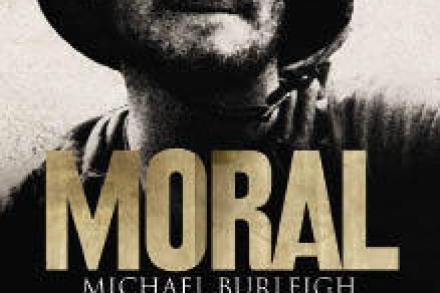
‘Was all this the realisation of our war aims?’, Malcolm Muggeridge asked as he surveyed the desolation of Berlin in May 1945. ‘Was all this the realisation of our war aims?’, Malcolm Muggeridge asked as he surveyed the desolation of Berlin in May 1945. ‘Did it really represent the triumph of good over evil?’ All wars pose moral dilemmas for those who fight them, and the Second World War more acutely than most. How many allied lives was it legitimate to risk in pursuit of victory, even over an enemy of unspeakable wickedness? How many enemies was it legitimate to kill? Is the question even worth asking?

Unholy warriors

From our UK edition

Taming the Gods is an extended essay about the secular state, something which would until recently have been regarded as a non-issue by English-speaking readers. The separation of Church and State is taken so much for granted in the West, that one can easily forget how recent and local its origins are. Religious beliefs, wrote Edward Gibbon, are ‘considered by the people as equally true; by the philosopher as equally false; and by the magistrate as equally useful’. As usual, Gibbon was fathering on the Romans the instincts of enlightened Englishmen of his own day. For the secular state was born in 18th-century England, and adopted by Revolutionary France.

Not as bad as the French

From our UK edition

This is a long book, but its argument can be shortly stated. Anthony Julius believes that anti-Semitism is a persistent and influential theme in English history, which is all the more dangerous for being unacknowledged by most anti-Semites and concealed behind a facade of complex, subtle and hypocritical social convention. He sustains the argument over nearly 600 pages of densely annotated text, in a book which is in equal measure wonderful and infuriating. It is immensely learned. It is thorough. Its patient accumulation of detail challenges conventional English images of their own society. Much of the analysis is observant and shrewd. But much of it is also laboured, sanctimonious and lacking in any real sense of proportion.

Weighed in the balance

From our UK edition

We sanctify some expressions, and in the process empty them of meaning. ‘Democracy’, ‘freedom’ or ‘equality’ are all used in ways that beg more questions than they answer. As Orwell pointed out, those who reject the concepts have a habit of appropriating the words. And so it is with the ‘rule of law’. At a time when the arbitrary power of the state has rapidly increased in most western countries, the ‘rule of law’ is invoked more than ever. Is it any more than another august slogan? Tom Bingham, one of the greatest English judges of the past century, presided over the Judicial Committee of the House of Lords for eight years until his retirement in 2008.

Tensions in the European Union

From our UK edition

Perry Anderson was an editor of the New Left Review in the days when there was a New Left, and a pro-European Marxist at a time when this seemed a contradiction in terms. Since then, the opinions of this characteristically English rebel have been softened by years passed in the sociology departments of American universities. He has learned to love the values of American liberal capitalism, albeit with large qualifications. Disappointed idealism has soured his former adulation of French intellectual elites. But some things have not changed. Anderson’s contempt for the English political and intellectual tradition is as sharp as ever, and peppers the pages of this book.

Poisonous relations

From our UK edition

‘The Axis powers and France,’ declared Marshall Pétain and Hitler at Montoire in October 1940, ‘have a common interest in the defeat of England as soon as possible.’ Why this should have been so is one of the many interesting questions to which this book offers no satisfactory answer. ‘The Axis powers and France,’ declared Marshall Pétain and Hitler at Montoire in October 1940, ‘have a common interest in the defeat of England as soon as possible.’ Why this should have been so is one of the many interesting questions to which this book offers no satisfactory answer. France capitulated in June 1940 on terms which assumed that Britain would follow her example and that the war would shortly end.

The peace to end all peace

From our UK edition

The first world war was the last major conflict to be brought to an end in the traditional fashion, with a formal treaty of peace. Or, rather, several treaties of peace, one for each of the defeated belligerents. They were all negotiated in Paris, but named after the various royal palaces in which the signing ceremonies were held: Versailles, the Trianon, Saint-Germain-en-Laye, Neuilly, Sèvres. These great buildings, arranged like pearls in a necklace around Paris across the hunting grounds of the former kings, were built to impress. But the treaties signed in them were arguably the most prodigious acts of folly in the history of European diplomacy. The process began on a note of high morality, with President Wilson’s Fourteen Points.

Concentrating on sideshows

From our UK edition

It is becoming difficult to say anything new about Churchill as a war leader. The basic facts about the conduct of allied strategy have been known for many years. Diaries and memoirs, and the occasional loose anecdote, still dribble into the public domain, adding spice but nothing fundamental to our knowledge. What remains is analysis and opinion, and even that is a crowded field. Max Hastings’ Churchill as Warlord, 1940-45 covers, within a narrower chronological frame, the same ground as Carlo d’Este’s recent book, Warlord: Churchill at War, 1874-1945. Hastings’ views are a good deal more balanced than d’Este’s, as well as being better researched and argued. But the essential point made by both authors is the same.

The human element

From our UK edition

Writing in 1792, in the aftermath of the French revolution, Jeremy Bentham famously dismissed all talk of the rights of man as mere rhetoric. Justice, he said, was concerned with rights and duties, and they were the creatures of law. There could be no rights without law to express them, he said, no justice without courts to enforce it. Yet generations of political philosophers have speculated about rights in terms which have very little to do with law. The mathematician and economist Amartya Sen is contemptuous of Bentham’s dictum. He is concerned with the ethical claims which men may be said to have against one another, claims which are thought to have some moral basis, but need not necessarily have a legal one. What place should personal liberty have in a just society?

Pointless but necessary

From our UK edition

For 20 years after the war, the Resistance was the presiding myth of French society. No one would say that now. A generation that never experienced occupation and respected no icons, began to ask awkward questions. The claim of the résistants to have made a serious contribution to the military balance was the first thing to go. The early demonstrations, minor explosions and assassinations of prominent Germans were mere fleabites on an enormous elephant. Only when it was clear that Germany would lose did the Resistance become a more significant force. Even then its achievements were modest: a handful of sabotage operations against war production facilities and a useful but minor contribution to the disruption of German communications during the D-Day landings.

Doomed to despotism

From our UK edition

Khomeini’s Ghost, by Con Coughlin The Life and Death of the Shah, by Gholam Reza Afkhami The fall of the Shah of Iran at the beginning of 1979 took the world by surprise. A self-confident autocrat, supported by a large, American trained and equipped army and a ubiquitous and powerful security service, he was driven from power in less than six months by a motley alliance of middle-class liberals, clerical fanatics and student demonstrators, without a blow being struck in his defence. The impression of sudden cataclysm was accentuated by the character of the Shah’s successor: a bearded Islamic ideologue, who flew in from Paris after 15 years in exile. All the signs are that the diplomatic and intelligence services of the West were as unprepared as every one else.

A slow decline

From our UK edition

The Inheritance of Rome: A History of Europe from 400 to 1000, by Chris Wickham This outstanding book covers what used to be called the ‘dark ages’. Publishers rarely speak of the dark ages now. It does not sell copies. But the title still encapsulates the conventional view of the period: a civilised empire destroyed by barbarians and replaced by a world of anarchy and superstition, a universal monarchy superseded by a mosaic of statelets ruled by men with unpronounceable names, long hair and uncouth habits, an age of grim ignorance with few literary or administrative sources and those reflecting the enclosed prejudices of monks and priests. Geoffrey of Monmouth and Edward Burne-Jones are the only people who ever injected a touch of romance into this bleak picture.