Jonathan Saxty

Britain’s military problem needs an economic solution

From our UK edition

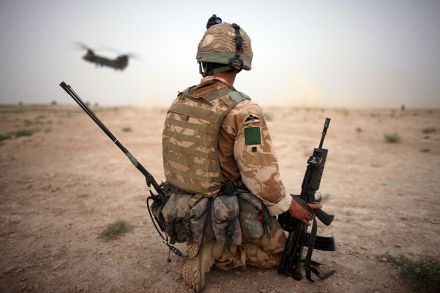
Britain’s decline is relative, and is influenced by the fact that within living memory the UK was the world’s hyperpower. Decline though did not relegate the UK to the ranks of some ex-colonial powers like Turkey, but into the league of France, Germany and Japan (hardly disrespectable company). For almost all the post-war period – a few bumpy years notwithstanding – the UK never dipped below number five in the world economy rankings (where it is today). Moreover, it remains (alongside China, France, Russia and the US) one of five permanent UN Security Council members and recognised states with nuclear weapons.

The danger of the work from home revolution

From our UK edition

The work-from-home (WFH) revolution has clearly won hearts and minds. According to KPMG and the Financial Services Skills Commission, half of UK finance workers want to WFH after Covid-19, with around one-quarter wishing to make the switch full-time. Unilever CEO Alan Jope said his workers will not return to their desks five days a week. Morgan Stanley predicts 30 per cent of American workers will continue to work from home. Facebook CEO Mark Zuckerberg estimates half of staff will permanently embrace remote work, with the company ‘aggressively opening up remote hiring’. But without mitigating strategies in place, the shock therapy of the work-from-home revolution could end up destroying any hope of a great British economic comeback.

What Brexit Britain can really expect from Biden

From our UK edition

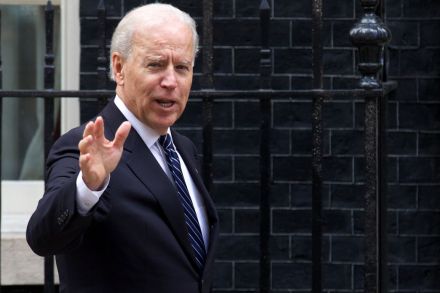
Joe Biden is both an exceptionally lucky and unlucky politician. It would have been easy to write off the former vice president a few years ago. Yet here he is, the oldest person to assume the office, albeit becoming president at perhaps the country’s (and entire planet’s) darkest hour since World War II. So what can we really expect from him? And is his arrival really bad news for Brexit Britain? Unlike Trump, Biden is less keen to talk up the 'special relationship' with Britain. But this might not be all bad news for Britain after Brexit. Biden has said little about Britain's departure from the EU, but he has been clear in warning the UK about the prospect of a hard border between Ireland and Northern Ireland:  'We worked too hard to get Ireland worked out.

Was the EU ever going to offer Britain a good deal?

From our UK edition

The announcement that Brexit negotiations are set to continue will no doubt alarm Brexiteers who fear compromise, sell-out and fudge. In fairness to Brussels however, they set out their stall early on and stuck to the script. The EU is unwilling – as they see it – to let Britain have its cake and eat it, by having large access to the EU’s market while not being a member or leaving the club and not ‘paying a price’. This might explain what could otherwise be seen as an unduly recalcitrant attitude. It also explains why any deal which the EU agrees to is likely to be on its terms. The level playing field has proved a major source of disagreement.

Germany holds the key to a Brexit deal

From our UK edition

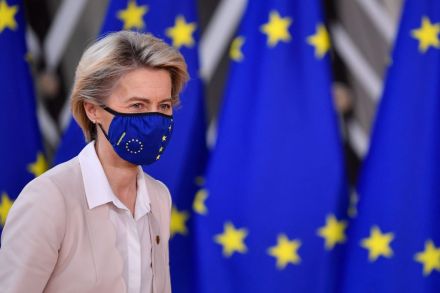
Boris Johnson failed to break the Brexit negotiations deadlock over dinner with European Commission president Ursula von der Leyen last night. But while the continuation of talks suggest that neither side favours no deal, something needs to give if a deal is to be reached. It's here that Germany holds the key. France appears to be the major obstacle to a deal, particularly over fisheries, but also over the level-playing field. France and the UK have similar-sized and structured economies; both are major military powers and maritime nations. Paris is more likely than Frankfurt to threaten London’s crown.  But Germany – the ever-pragmatic manufacturing titan of the EU – will be the final arbiter of any decision.

The EU’s east-west divide spells trouble for Brussels

From our UK edition

As Brexit negotiations enter a critical stage, the EU’s eyes may again have been diverted after Hungary and Poland plunged the bloc into yet another crisis. The Visegrád Group allies have vetoed the EU’s €1.8 trillion (£1.6 trillion) budget and recovery package, responding to plans to make cash conditional on adherence to the ‘rule of law’. The move is likely to exacerbate tensions not just between central and eastern European member states and those in the West, but among Western European member states themselves. Heated debate earlier this year saw ‘coronabonds’ shelved and financial agreement reached only after concessions to the so-called ‘Frugal Four’.

The limits of a ‘free-market Brexit’

From our UK edition

The UK must not be frightened of harnessing the power of the state as the country negotiates life after Brexit. Many people who remember the 1970s – a time when the British state seemed incapable of doing anything productive while the country suffered the indignity of going cap-in-hand to the IMF – often balk at such a suggestion. Many of the same people came of age in the 1980s, and associate the private sector with growth and opportunity, while the public sector was forever tainted with the stench of poor productivity, unemployment and power cuts. Yet this Anglo-centric view misses what was going on in the rest of the world at the time.