Jonathan Miller

Jonathan Miller

The late Jonathan Miller, who lived near Montpellier, was the author of Shock of the News: Confessions of a Troublemaker, Gibson Square.

Michel Barnier’s doomed presidential bid

From our UK edition

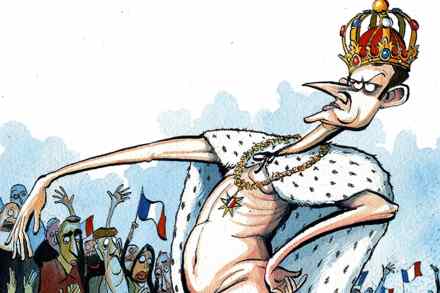
The French President Emmanuel Macron has, it is revealed, forbidden all talk at the Elysée of the forthcoming presidential election and has refused to discuss even whether he will be a candidate. His entire attention is focused on France and the French, he claims. Of course this is entirely the opposite of the truth as his entire attention is focused on being re-elected. Nevertheless, he was likely to have been opening a bottle of something sparkling in which to dip his croissant this morning with the announcement that Michel Barnier, yet another no-hoper, has thrown his beret into the ring to oppose him. Divide and conquer seems to be Macron’s strategy.
Jonathan Miller, Matthew Lynn and Melissa Kite

From our UK edition

19 min listen

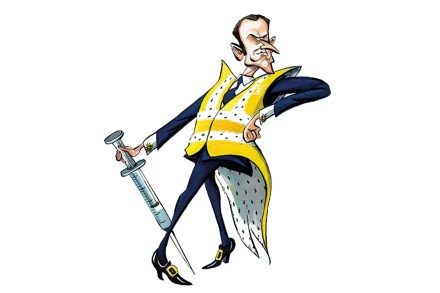
On this week's episode, Jonathan Miller, author of France, a Nation on the Verge of a Nervous Breakdown talks about the French 'vaccine passport' protests; Financial columnist Matthew Lynn reflects on 50 years without the gold standard; and Melissa Kite tells us about her own ways of treating Covid.

Liberté, égalité, vacciné: France’s Covid passport revolt is just beginning

From our UK edition

Montpellier Three weeks ago, 100,000 demonstrators turned out on the streets of France to protest President Emmanuel Macron’s hastily passed law to require vaccination passports to get on a train, eat at a restaurant or visit a shopping centre. A week later, the number had more than doubled. Last Saturday, it doubled again. One police union estimated that close to 500,000 had turned out, although as usual the Interior Ministry claimed a much lower number. Enormous demonstrations were staged not just in Paris but in more than 150 cities and towns across France, as well as in the overseas territories of Guadeloupe and Réunion. All this in the middle of the sacred summer holiday season. On the current trajectory, one million could be on the streets by September.

No vax, no vote? Macron’s vaccine passport plan sparks fury

From our UK edition

Will it be necessary to produce a passe sanitaire (vaccination passport) to be allowed to vote in France? With 221 days until the first round of the next presidential election, the mere rumour of such a sinister measure is provoking near hysteria. ‘Fake news’ shrieked the media aligned with president Emmanuel Macron (frankly, most of it) tonight. Perhaps. It’s true that the government’s vaccination passport law currently being rushed through the National Assembly does not specifically mandate proof of vaccination to vote. More than 175 demonstrations against the passe sanitaire are scheduled this weekend But neither does it specifically exclude it.

Macron’s Covid crackdown is a risky bet

From our UK edition

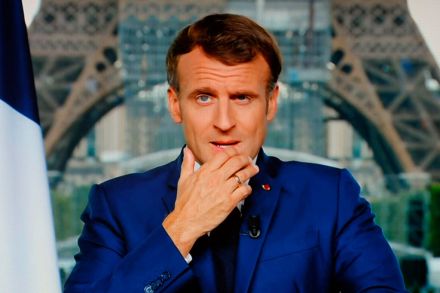
Will the French accept compulsory vaccination against Covid? Health passports to get on a plane or train? Children of 12 jabbed, whether their parents wish it or not? As fears are stoked of yet another wave of infection, we may be about to find out. In recent days, France has seemed rather normal with restaurants open, summer holidays in full swing, tourists returning, shops open. But we’re told that none of this will last. ‘We must vaccinate all of France,’ president Macron announced last night in his fifth Covid television address so far. It was a striking elocution. Macron ditched his habitual black undertaker outfit for a smart blue suit, and his office in the Elysée for the dome of the Grand Palais, framing the Eiffel Tower.

The electoral humiliation of Macron and Le Pen

From our UK edition

Five years ago, Emmanuel Macron was ‘en marche’ to his improbable ascent to the presidency of France. Last night, having united France against him, the certitude that he will be re-elected in 270 days has evaporated. Results of the second round of regional elections can only be described as a disaster for the President. His bespoke political party, La République en Marche, has collapsed. And worse, his preferred presidential opponent, Marine Le Pen, lost any remaining credibility as a serious alternative. That could leave him facing a traditional conservative next year – one who might not be eliminated in advance, as François Fillon was last time, by a convenient criminal investigation. The message is loud and clear.

France’s silent majority has rejected Macron – and Le Pen

From our UK edition

I popped down to the Salle du Peuple on Sunday to see how the voting was going in the departmental and regional elections. Although I’m no longer a municipal councillor – à cause de Brexit – and am no longer required to help invigilate the polling, I thought I’d take the temperature. Which was frosty. The French have a reputation for strong participation in elections, but not this time. By the time the votes were tallied, the winner was clear. Abstention won by a landslide. Two-thirds of my commune’s voters stayed at home, reflecting the national turnout. It was the lowest participation in at least 25 years and a vivid illustration of the rejection of voter confidence in every single candidate and party.

A belated check from President Biden

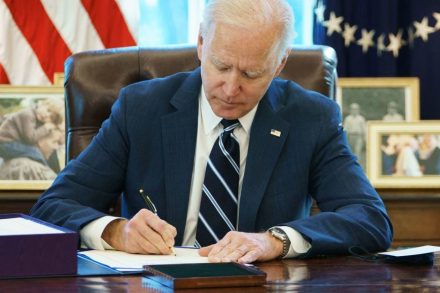
Montpellier, France I got a letter from Joe Biden, which doesn’t happen every day. In the envelope was a check, made out to me, for $1,400. The letter is headed THE WHITE HOUSE WASHINGTON and dated April 22 although it has taken some time to drop into the boîte aux lettres due to the President experiencing confusion over my address. ‘My fellow American,’ he began. Although I am not one I did once work there and paid Social Security contributions, apparently qualifying me for the President’s generosity. ‘I am pleased to inform you,’ he continued, ‘that because of the American rescue plan, a direct payment was issued to you.’ Having attracted attention, Joe, my new best friend, continues. ‘This has been a hard time...brighter days are ahead...

check

Why Boris is loved by the French

From our UK edition

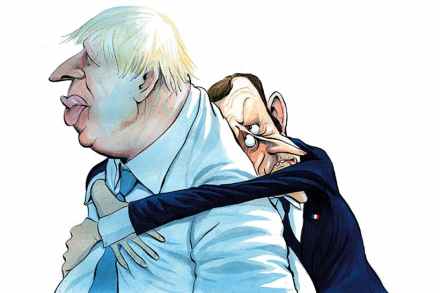
Boris Johnson is more popular in France than Emmanuel Macron, which might not be a high hurdle to overcome, since Macron is rather generally unloved. Except Johnson is not just marginally more popular, but massively so. Indeed, the French seem to like him even more than the British. And he’s popular right across the French political spectrum, from the extreme right to the extreme left. Chouette! According to a study in the news magazine Le Point, 51 per cent of French voters have a favourable opinion of the Prime Minister, at least 10 points clear of recent polls assessing the popularity of the President.

Why food in Britain is so much better than France

From our UK edition

Fifty years ago, the food in Britain was comically terrible. The Wimpy Bar was the place for a date, fish and chips was the limit of takeaway and if you were lucky you might get a packet of crisps at the pub. Everything French was better. French bread. French cheese. French wine. French restaurants, bistros, cafés. Today the positions are reversed. Britain is the land of foodie innovation, with every cuisine in the world represented, deconstructed, reinvented. Reopening after the lockdowns, even after a number of casualties, Britain will return to a cornucopia of diversity and plenty of quality.

Boring Barnier won’t be the next French president

From our UK edition

Let me go out on a limb here and predict that Michel Barnier, who is trying to rekindle his modest and largely forgotten political career on the back of his notoriety as the EU’s chief Brexit negotiator, is not going to be the next president of France. Barnier is currently famous (but only, I suspect, for 15 minutes) for demanding a three to five year suspension of immigration into France. Bad news for Swedes seeking a retirement chateaux in the Dordogne. But seriously, this is all he’s got? The nightly riots and attacks on police in France, provoking excited talk of civil war, seem to originate with people who are already here. And how does he propose to keep the immigrants out?

What the Formula E ‘catastrophe’ teaches us about electric cars

From our UK edition

I didn’t make it down to Valencia, Spain, for the weekend Formula E electric car grand prix. Long trips are more or less out of the question now in my Kona electric car, since Hyundai crippled the range of the battery pack to stop the car from bursting into flames. Not that I missed much. On the first day five teams were disqualified for having consumed too much energy, three cars came to a stop on the track, and others limped to the finish as best they could. Formula E superstar Jean-Éric Vergne completed the last lap at an average speed of just under 20 mph. Slower than my horse. On Sunday, the Grande Finale, most of those who had finally qualified ran out of battery charge without finishing.

France wakes up to Woke

One crisis can conceal another. While France has been distracted by COVID, a new menace is lurking. The specter haunting the republic is le Wokisme, the mutating ideology of race and identity that has found unexpectedly fertile ground here. French elites are unsettled. Those who assumed the French possessed herd immunity against such barbaric American ideas are having their complacency tested. Superficially a modern country, with iPhones, Amazon and electric cars, France is still often introspective and late to understand what’s happening in the wider — especially Anglophone — world, which is how wokeness has somewhat taken it by surprise. Woke had been happening in America for many years before the French noticed.

woke

Why I regret buying an electric car

From our UK edition

I bought an electric car and wish I hadn’t. It seemed a good idea at the time, albeit a costly way of proclaiming my environmental virtuousness. The car cost €44,000, less a €6,000 subsidy courtesy of French taxpayers, the overwhelming majority poorer than me. Fellow villagers are driving those 20-year-old diesel vans that look like garden sheds on wheels. I order the car in May 2018. It’s promised in April 2019. ‘No later,’ promises the salesman at the local Hyundai dealer. April comes and goes. No car. I phone the dealership. No explanation. The car finally arrives two months late, with no effort by Hyundai to apologise. But I Iove it. It’s quiet, quick and with the back seats down, practical with plenty of room for the dogs.

The real problem with Macron’s elite school

From our UK edition

President Emmanuel Macron announced today the closure of the notorious École Nationale d’Administration, the elite finishing school for the senior civil servants and politicians who have wrecked France. Perhaps nothing could serve France better than burning down its Strasbourg campus and salting the earth, but there’s less to this than meets the eye. This is the third time he’s announced this. Statism is the religion of ENA, which explains why its brilliant graduates have conspicuously failed to create a single Google, Amazon, Facebook or Apple.

Macron’s latest lockdown fiasco

From our UK edition

On New Year’s Eve, Emmanuel Macron promised France an economic revival by the Spring. Cancel that. Instead, as the intensive care units are saturated by a third wave of Covid, we have a new lockdown light and a new message from the president: ‘Don’t panic.’ More than a year after Macron the general took personal command of the war on the new coronavirus, the vaccination program has still to get into high gear, the doctors are threatening to triage patients, abandoning those with little hope, yet there was no hint of contrition from the president. Instead, he announced that we are to be subjected to yet another baffling set of rules which together comprise a sort of ‘confinement,’ although Macron never used the word.

The provocative writer who could be the next French president

From our UK edition

Montpellier The French ‘grand’ journalist Éric Zemmour is among the most watched, provocative and frequently prosecuted writers in the country. He is now contemplating a piratical presidential challenge that could blow open next year’s presidential election. A poll last month conducted for the news magazine Valeurs Actuelles says that Zemmour could win 13 per cent of the votes in the first round of the French presidential election. That’s more impressive than it seems. In the cavalry charge of a first round, when a dozen or more candidates are possible, 13 per cent is more than enough to unsettle not just the re-election campaign of President Emmanuel Macron.

Nicolas Sarkozy and a very French corruption scandal

From our UK edition

Nicolas Sarkozy, 66, President of France from 2007 to 2012, currently a valued member of Emmanuel Macron’s informal council of advisors, was today sentenced to a year in prison for bribery and corruption in a case with roots in his murky relationship with the late Muammar Gaddafi, the not much missed brotherly leader of Libya. This scandal is a tangled web, even by French standards. For those who have spent years attempting to get to the bottom of it, it offers the tantalising prospect that Sarkozy could become the first former French President ever to be thrown in the Paris prison called La Santé – although it doesn’t have a reputation for being good for the health.

Vaccine wars: the global battle for a precious resource

From our UK edition

39 min listen

Why has the vaccine rollout turned nasty? (00:45) What's the sex abuse scandal rocking France's elite? (16:55) Have artists run out of new ideas? (28:35)With Daily Telegraph columnist Matthew Lynn; science journalist and author of Pale Rider: The Spanish Flu of 1918 Laura Spinney; Spectator contributor Jonathan Miller; journalist Anne-Elisabeth Moutet; Dean Kissick, New York editor of Spike Art Magazine; and Eddy Frankel, visual art editor of Time Out magazine.Presented by Lara Prendergast.Produced by Max Jeffery, Alexa Rendell and Matt Taylor.

#MeTooInceste: has France’s code of silence finally been broken?

From our UK edition

Montpellier Accusations of child abuse against Olivier Duhamel, now 70, ex-vice-president of Sciences Po university and of the secretive Siècle (Century) club of Parisian movers and shakers, have cast a dark shadow on the legacy of the soixante-huitards, the baby boomers who occupied the Sorbonne in 1968 and went on to rule (and ruin) France. Duhamel’s disgrace is long delayed. Only now has his stepdaughter, Camille Kouchner, published a book accusing him of sexually abusing her twin brother 30 years ago — and doing so within a culture in which his fashionable friends knew about the abuse but kept quiet. It’s an accusation Duhamel characterises as a ‘personal attack’ but has not denied. A criminal complaint has now been made by his stepson.