Jonathan Jones

Lib-Lab bonding over legal aid

From our UK edition

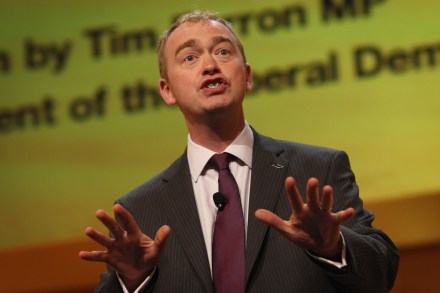
The Legal Aid Bill limps back to the Commons this afternoon, having had a rough ride through the upper chamber where the Lords inflicted 11 defeats on the government. And it looks like its next stint in the lower chamber might not be much smoother. As Paul Waugh reports, a group of MPs have tabled a new amendment to the Bill (actually, an amendment to an amendment tabled by the government on Friday) to continue to provide legal aid advice (but not representation) for reviews and appeals of benefit cases. What’s significant is that the amendment is signed by seven Lib Dem MPs, including party president Tim Farron, and four of Labour’s frontbench Justice spokespeople, including shadow justice secretary Sadiq Khan.
No ‘poll shock’, but some interesting findings nonetheless

From our UK edition

Despite the Times’s headline (‘Poll shock as new U-turn looms’), there’s nothing particularly surprising in the toplines of today’s Populus poll. It merely confirms the trends already exposed by other pollsters: a widening Labour lead (Populus has it at nine points, up from four last month) and increasing discontent with the coalition (Populus has the government’s net approval rating at minus 24, down from minus 3 in September). Beneath the toplines though, there are some interesting details.

America’s version of the ‘tax the rich’ debate

From our UK edition

While the battle continues to rage over the government's plan to cap tax relief, on the other side of the Atlantic the US bill that inspired it has been killed. The ‘Paying a Fair Share Act 2012’ — more commonly known as the ‘Buffett Rule’ after billionaire Warren Buffett — failed to get the votes it needed to be debated in the Senate. It was backed by a majority of senators, with 51 voting ‘Yea’ to 45 ‘Nay’s, but fell short of the 60 votes needed to break a filibuster.

Cameron meets Aung San Suu Kyi

From our UK edition

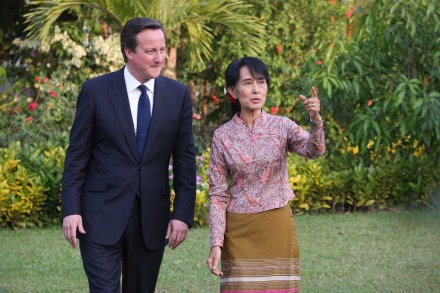
There aren't many countries where meeting the leader of the opposition would rank above meeting the head of government — certainly this country isn't one of them. But Burma is, because the leader of the opposition is pro-democracy campaigner and Nobel Peace Prize winner Aung San Suu Kyi, who spent 15 years under house arrest between 1989 and November 2010. And Suu Kyi's stature is now higher than ever, with her National League of Democracy party having won 43 of the 44 seats they contested in the by-elections a fortnight ago. As Clarissa reported then, there's even speculation that she may be offered a position in President Thein Sein's new Cabinet.

Romney’s pivot to the centre will be tough

From our UK edition

https://www.youtube.com/watch?v=LSh7G48_wOI As Freddy reported on Tuesday night, Rick Santorum has dropped out of the race for this year's Republican nomination, making Mitt Romney virtually certain to be the nominee. Sure, Newt Gingrich and Ron Paul are still hanging in there — just as Mike Huckabee and, erm, Ron Paul did in 2008. Back then, as he continued campaigning even once John McCain was the clear winner, Huckabee said: ‘I know the pundits and I know what they say: well the math doesn't work out. Folks, I didn't major in math; I majored in miracles, and I still believe in those too.’ But the miracle didn't come for Huckabee four years ago, and it's not going to come for Gingrich or Paul this time round.

Planet London

From our UK edition

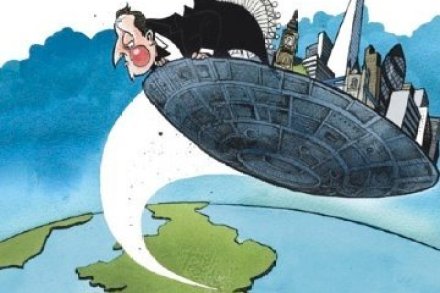
In his cover piece for this week's magazine, Neil O'Brien describes the great divide between London and the rest of the UK. One of the main differences he highlights is in their economies. He says: 'In inner west London, economic output per head is £110,000 a year. In an important sense, these people are not living in the same country as the inhabitants of Gwent or the Wirral, whose output is just a tenth of this.' In fact, London is set apart not just from those two poorest areas, but every other area in the country. You see, the second richest area — Edinburgh — has an output per head of £35,000 — just a third of inner west London's. And the third richest area? Inner east London.

Hints of a U-turn on the ‘charity tax’

From our UK edition

The pressure is ramping up on the government to reverse its decision to cap tax reliefs on charitable donations. The Times is against it — their leader this morning calls the move a 'blunder'. And the Telegraph doesn't like it either, saying that 'Even from a distance of 8,000 miles, it must be apparent to David Cameron that the Government made a mistake in the Budget by capping tax relief on charitable giving'. Even Tory MPs are speaking out against the measure, including Mark Pritchard, Conor Burns and, in a piece on ConservativeHome, Chris White. And Number 10 does seem to be preparing the ground for a U-turn — or a compromise at least — with David Cameron saying yesterday that 'We will look very sympathetically at these concerns'.

A welcome attempt to fix the broken energy market

From our UK edition

Back in October, Ofgem produced a report exposing the failure of the UK's energy market. It showed that the supplier's profit margin on the average fuel bill had shot up from £15 to £125 in just four months. As I said at the time, ‘This wouldn't be possible in a market that was working correctly. If customers were shopping around for the best deal, suppliers would have to undercut each other – and there's plenty of room for them to reduce prices while still turning a profit (£125 of room, in fact). But Ofgem's figures show this isn't happening.’ And why isn't it happening? Because, in Ofgem's words, ‘Many consumers see the energy market as complex and hard to navigate.

What today’s Abu Hamza ruling means

From our UK edition

The European Court of Human Rights has ruled that five terror suspects, including notorious Islamist cleric Abu Hamza, can be deported to the United States — a decision welcomed by both David Cameron and Theresa May. Last year, Hamza and three of the other men appealed to the ECtHR against extradition to the US on a whole host of grounds — including that they might face the death penalty and that their trials would be prejudiced.

Cameron pushes back on snooping powers

From our UK edition

It seems David Cameron's found a neat way of needling his coalition partners over their resistance to the so-called 'snooper's charter'. Last week, Nick Clegg insisted on proper pre-legislative scrutiny before any expansion of surveillance powers goes ahead, while a group of Lib Dem MPs wrote a letter in the Guardian declaring that: 'It continues to be essential that our civil liberties are safeguarded, and that the state is not given the powers to snoop on its citizens at will.' And Lib Dem president Tim Farron told the BBC that his party is 'prepared to kill' the proposals 'if it comes down to it'. 'If we think this is a threat to a free and liberal society,' he said, 'then there would be no question of unpicking them or compromising'. So now Cameron's pushing back.

Motorman returns

From our UK edition

  Guido Fawkes has caused a stir this morning by releasing a section of the Operation Motorman files, naming those News International journalists thought to have paid for private information. But so far, Guido's splash tells us little that we didn't already know: he has lots of information, but has only released the names of News International journalists. Back in July, Peter Oborne wrote a cover piece on the extent of all this for The Spectator entitled 'What the papers won't say', in which he said: 'The truth is that very few newspapers can declare themselves entirely innocent of buying illegal information from private detectives.

Osborne’s tax avoidance clampdown

From our UK edition

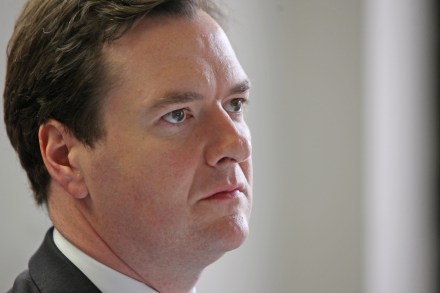
So, George Osborne has taken a look at the tax arrangements of some of the UK’s wealthiest people. And his reaction? ‘Shocked’, apparently — or so he’s told the Telegraph: ‘I was shocked to see that some of the very wealthiest people in the country have organised their tax affairs, and to be fair it’s within the tax laws, so that they were regularly paying virtually no income tax. And I don’t think that’s right. I’m talking about people right at the top. I’m talking about people with incomes of many millions of pounds a year. The general principle is that people should pay income tax and that includes people with the highest incomes.

How much tax do the mayoral candidates pay?

From our UK edition

So, Ken has now released his tax details. He hasn't gone as far as Lib Dem candidate Brian Paddick, who's published his full tax returns for the past three years. And there are also questions about what income Ken might not have included in his release. It's also not clear whether or not he's including National Insurance contributions, as the other two candidates are. But, based just on the figures each candidate has declared, here are the effective tax rates they've been paying: UPDATE: It seems Ken's campaign is trying to use our chart as proof that he isn't avoiding tax. But our figures for Ken are simply the amount he's declared he pays in tax divided by his declared personal income. It's what he claims his effective tax rate is, not what we claim it is.

Balls goes on the attack over tax credits

From our UK edition

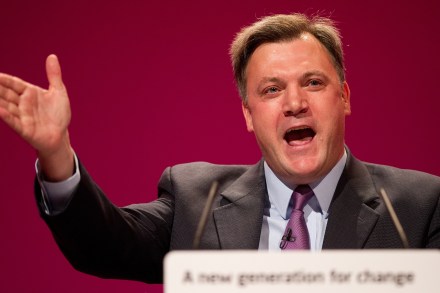
After all the commotion about various policies in last month’s Budget, the focus this morning has shifted to measures announced back in 2010. Why? Because they take effect tomorrow. So Ed Balls is taking the opportunity to hit the government hard on what he calls its ‘tax credit bombshell’ for those on middle and low incomes. Labour are pointing to figures from the IFS, which show that changes to child and working tax credits will outweigh the rise in the £630 personal allowance. In their Budget briefing a fortnight ago, the IFS calculated that the net effect of all the changes coming into force tomorrow would be an average loss of £511 for households with children.

Who’ll be Romney’s running mate?

From our UK edition

As I said earlier, it now looks almost certain that Mitt Romney will clinch the nomination. The primaries may not quite be over yet, but it's never too early to speculate about who he'll pick to be his Vice Presidential candidate. Indeed, 2008 Republican nominee John McCain weighed in this morning. ‘I think it should be Sarah Palin,’ he chuckled. ‘We have a wealth of talent out there and I’m sure that Mitt will make the right choice,’ he added more seriously, before breaking into laughter again as he said ’Obviously, it’s a tough decision’. The favourite for the job is still Florida Senator Marco Rubio.

Moving on from the Republican primaries

From our UK edition

So, it looks like we can finally say that Mitt Romney will be the Republican nominee to take on Barack Obama in November. Last night, he swept the three primaries in Wisconsin, Maryland and the District of Columbia, adding 85 delegates to his count. Romney now has now amassed around 650 of the 1,144 delegates he needs to clinch the nomination. That may make it seem like he’s got a lot more work to do, but in fact it means he needs to claim just 42 per cent of the remaining delegates to reach the winning line. Considering he’s won 58 per cent of the ones up for grabs so far, that doesn’t seem too tough a goal. His campaign’s also been bolstered in the last few days by endorsements from big name Republicans like Jeb Bush, Paul Ryan and Marco Rubio.

More poll woes for the coalition

From our UK edition

You certainly don’t need polls to tell you that it’s been a bad couple of weeks for the coalition – but we’ve got them anyway. Pete noted on Sunday that the government’s approval rating was at its lowest since the start of this Parliament, and it’s actually dropped another three points since. Today’s YouGov poll finds just 21 per cent giving the coalition the thumbs up, against 64 per cent who disapprove. That’s almost identical to the 20-64 split YouGov found for Gordon Brown’s Labour government back in January 2010. The below graph shows how public opinion has turned against the coalition over the past two years: Today’s poll also updates another important indicator: whom the public blames for the cuts we face.

Web surveillance plan divides the coalition

From our UK edition

The government’s under fire from members of both coalition parties over its plans to extend the state’s investigatory powers to cover new means of communication. Currently, under section 22 of the Regulation of Investigatory Powers Act 2000 (RIPA), public bodies can obtain communications data without the need of a warrant or any external authorisation. This gives them access to a wide array of information including the location, time, date and duration of a phone call or the IP address from which an email was sent.

Now Cameron and Osborne take flak from their own side

From our UK edition

The bad headlines continue for Downing Street this morning, with the Telegraph front page declaring ‘Tory MPs round on Cameron and Osborne’. Of course, Tory backbenchers griping about their leadership is nothing new and, usually, ‘concern that Government policies are being poorly explained to voters’ or a suggestion that ‘a senior MP should be appointed as full-time Conservative Party chairman’ wouldn’t make the front page. But after the two week onslaught Downing Street has just suffered — from granny tax to cash for access to petrol panic to pasties — the disgruntled chattering reverberates that bit louder.

Pasty wars

From our UK edition

David Cameron earlier: https://www.youtube.com/watch?v=mCovGqMiZyA And Labour's response: https://www.youtube.com/watch?