Jonathan Jones

The challenges for Obama and Romney in the final 3 weeks of campaigning

From our UK edition

Ahead of the second presidential debate tonight, it's worth taking stock of the task facing each candidate in the last three weeks of the campaign. It is clear that Mitt Romney has received a sizeable bounce since the first debate, closing the gap to Barack Obama by probably around 4 points nationally. Nevertheless, it looks like he still remains about one point adrift of the President, and Nate Silver's Fivethirtyeight forecast makes Obama the clear favourite, with the odds against his victory at about 1/2. Before the debates, talk of swing states and the electoral college seemed superfluous. Obama looked likely to win the popular vote by around four points, a margin which would guarantee him the 270 electoral votes he needs.
Inflation falls to 2.2%

From our UK edition

Inflation in the year (on the Consumer Prices Index) to September was 2.2 per cent, down from 2.5 per cent in August. On the Retail Prices Index, it was 2.6 per cent in September, down from 2.9 per cent. This puts inflation at its lowest level since the end of 2009, and close to the Bank of England's target of 2 per cent for CPI inflation. It continues the downwards trend since CPI inflation peaked at 5.2 per cent last September, although that included January 2011's VAT rise from 17.5 per cent to 20 per cent. Stripping that (and the effects of other indirect taxes) out still reveals a marked decline in the rate of inflation, though, from 3.7 per cent last year to 2.1 per cent now. The main reason for this month's 0.

Polls suggest Boris as leader could be worth an extra 50 Tory MPs

From our UK edition

In their first poll conducted fully after all the party conferences, YouGov once again tested what difference replacing David Cameron with Boris Johnson would have on the Conservatives' poll rating. As in their previous two attempts in September, YouGov's numbers show Boris narrowing the gap to Labour by seven points: with Cameron as leader, the Tories trail by nine (33-42); with Boris, they're just two behind (38-40). Interestingly, Boris doesn't do any better among 2010 Tory voters than Dave — both retain 65 per cent of them. What the Mayor of London does is attract more 2010 Labour voters (6 per cent of them, to Cameron's 3) and Lib Dem voters (18 per cent, to Cameron's 10) than the Prime Minister.

David Cameron reverses Ed Miliband’s conference bounce

From our UK edition

Just as Ed Miliband seemed to get a poll bounce from his conference speech last week, so David Cameron seems to have got one from his on Wednesday. On YouGov's question of who would make the best Prime Minister, Cameron has extended his lead to 14 points. That more than reverses the bump Miliband got on that question from his conference (he had closed the gap from 12 points before the conferences to just four last week). In fact, it's the best result for Cameron on that crucial question since the Budget in March. On voting intention, the Tories' conference does seem to have helped them close the gap to Labour a little. YouGov's latest poll has Labour's lead at seven points (42-35), down from 14 points (45-31) last week.

Romney narrows the gap, but Obama remains the favourite

From our UK edition

The question after last week's presidential debate was not who had won — there was a clear consensus that Mitt Romney had got the better of Barack Obama — but how much difference it would make to the race. Going into the debate on Wednesday night, Obama was the clear favourite to win re-election, with a five-point lead in the polls. Nate Silver's Fivethirtyeight forecast gave him an 86 per cent chance of victory. But, thanks to his strong debate performance and the President's uncharacteristically weak one, Romney has narrowed that gap. Different polls paint different pictures of exactly what effect the debate had on the race, though most show it moving towards Romney initially before going back slightly in Obama's direction.

IMF: Anatomy of a downgrade

From our UK edition

Growth forecast downgrades should come as no surprise these days, but when they come from the IMF they naturally command a fair bit of attention. In fact, the IMF's downgrades for annual GDP change — to -0.4 per cent in 2012 (from +0.2) and +1.1 per cent in 2013 (from +1.4) — simply bring them into line with the consensus. The below graph shows how the average of independent forecasts for 2012 growth has changed over the last few  months: Given that the ONS shows the economy having contracted by 0.7 per cent in the first half of this year, the IMF's forecast of a 0.4 per cent contraction for the whole of 2012 implies slight growth of about 0.2 per cent in the second half. And, as always, growth downgrades have a nasty knock-on effect for George Osborne's deficit plans.

Labour conference: Ed Miliband’s speech boosts his ratings

From our UK edition

Labour leave Manchester today with a 14-point poll lead over the Conservatives, according to YouGov. That's their biggest lead in a YouGov poll since June, although one last week showed them 13 points ahead, so we shouldn't rush into declaring a big conference bounce for them. It does seem, though, that Ed Miliband himself did get a decent boost out of his hour-long speech on Tuesday. 10 per cent of people say they watched or listened to the whole thing, and a further 49 per cent say they've seen or heard reports about it. And it seems Ed did manage to change at least a few of their minds about him. 31 per cent now say he 'would be up to the job of Prime Minister' — still not a great number, but an improvement on the 25 per cent who said so last week.

Why wasn’t Barack Obama more focused in the debate?

From our UK edition

OK, cards on the table: I'm a big Obama fan. I desperately hope he wins next month, and I'm reasonably confident he will. But even to my biased eye, he clearly put in the weaker performance of last night's debate. He knew his stuff, and had plenty of good points, but threw them out in such a way that none of them really stuck. ‘Is the reason that Governor Romney is keeping all these plans to replace secret because they're too good?’ would have been a great line had it not been smuggled out at the end of an overlong response. The President's answers were just too waffling to make an impact. It's very rare that I watch Obama speak and think ‘I could've said something better’. In fact, I don't think it's ever happened before. But it did a few times last night.

‘Are you better off?’ won’t be a winning debate line for Mitt Romney

From our UK edition

‘Are you better off than you were four years ago?’ That was the question Ronald Reagan told Americans to ask themselves when choosing their President in 1980, and it's a line Mitt Romney's campaign has been hoping would work for them this time around. ‘The president can say a lot of things, but he can’t tell you you are better off,’ Paul Ryan told a crowd in North Carolina last month. And it might be one of the ‘zingers’ Romney throws out in tonight’s debate. But the attack isn't looking nearly as potent against Obama as it did against Jimmy Carter. For one thing, Ryan's claim might not actually be true. Sure, the unemployment rate in August (8.1 per cent) was still slightly higher than it was when Obama took office in January 2009 (7.

Labour conference: Great (Harvard) minds think alike

From our UK edition

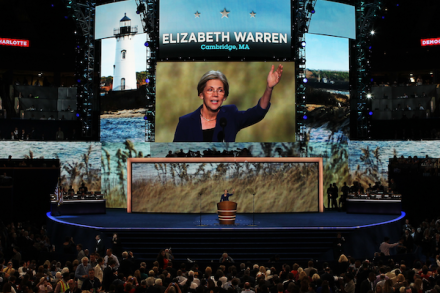
Listening to Ed Miliband's conference speech, I was stuck by the similarity of one section of it to that of another speech given by someone else who's taught at Harvard: law professor Elizabeth Warren. Today, in Manchester, Miliband spoke of ‘the system’ not working in much the same way as Warren — now running for the United States Senate — spoke of ‘the system’ being rigged in her speech at the Democratic National Convention last month.

Borrowing figures are good and bad news for the government

From our UK edition

Today's public finance statistics are another case of good news/bad news for the government. First, the good news: the ONS revised down its estimate for government borrowing in the last fiscal year (2011/12) from £125 billion to £119.3 billion. That's £6.7 billion below the OBR's estimate in March this year, and means that the coalition succeeded in cutting the deficit by 25 per cent in its first two years (29 per cent in real terms). But the bad news comes when you look at the current fiscal year. The ONS estimates government borrowing for August at £14.41 billion — roughly the same as August 2011 (£14.37 billion). These estimates do tend to end up being revised heavily — by an average of £1.

What are the key states for Obama vs Romney?

From our UK edition

It's becoming clear which will be the battleground states of the 2012 US Presidential election. With less than seven weeks to go, just nine states look competitive: Colorado and Nevada in the Southwest; Iowa, Ohio and Wisconsin in the Midwest; Florida, North Carolina and Virginia in the South; and New Hampshire in the Northeast. Of the safe states, Barack Obama can count on 18 (plus DC), against Mitt Romney's 23. Romney's path to victory looks very tough for two main reasons. First, as the below map (which I produced at 270towin.com) shows, the safe states give Obama 237 electoral votes to Romney's 191. That means Obama needs just 33 of the 110 electoral votes available in the nine competitive states to give him the 270 he needs for victory.

Polls show big leads for Labour, but bad ratings for Ed Miliband

From our UK edition

Over the past two days, we've had polls from four different pollsters, and all of them show big leads for Labour. Yesterday, Populus gave Ed Miliband's party a 15-point lead — the largest lead the pollster has ever shown for Labour. Today, Ipsos MORI shows Labour ahead by 11 points and TNS BMRB have them up by 12. The latest YouGov tracker gives Labour a nine-point lead, although averaging their polls over the last week makes it more like ten points. The precise margins may be different, but all of these results would — if replicated in a general election — result in a large Labour majority and hand Ed Miliband the keys to 10 Downing Street. But while voters say they would vote for Miliband's party, they still don't seem enthusiastic about making him Prime Minister.

Democrats pull ahead in key US Senate races

From our UK edition

When I looked at the battle for the United States Senate back in July, I said it'd be tough for the Democrats to retain control. But since then — and particularly since the party conventions — things have begun to look up for their candidates in a number of key races. In Missouri, where incumbent Democrat Claire McCaskill is vulnerable, the Republicans nominated their least electable option from a close three-way primary. Congressman Todd Akin is firmly on the Tea Party wing of the GOP, and didn't help himself with his comments about 'legitimate rape'.

Increased support for more spending, but also for benefit cuts

From our UK edition

'Support for an increase in public spending rises.' That's the headline generated by the latest British Social Attitudes survey results, out today. They show that the proportion of the population saying that the government should 'increase taxes and spend more' rose from 31 per cent in 2010 to 36 per cent in 2011 — the first such rise since 2002. Meanwhile, the proportion backing tax and spending cuts fell from 9 per cent to 6 per cent. Notably, the survey doesn't give the option of reducing taxes and spending more (ruling out, for example, Ed Balls' proposed combination of a VAT cut and increased infrastructure spending), nor of increasing taxes and spending less (as the coalition's deficit reduction programme actually entails).

Why George Osborne will miss his debt target

From our UK edition

Much is being made today of reports that George Osborne will drop his fiscal target in his autumn statement on 5 December. Isabel reported earlier that, faced with breaking his own rule, Osborne will abandon it rather than implement more cuts to meet it. All the fuss seems to stem from a note by Citi Reasearch last Friday. You can read the whole thing here, but here’s a summary. Like Gordon Brown, Osborne has two fiscal rules. Neither says anything about eliminating the deficit, or even halving it. The first — called the 'fiscal mandate' — is 'to balance the cyclically-adjusted current budget by the end of a rolling, five-year period'. It’s a moving target, simply requiring that at any time the government plans to eliminate the structural deficit within five years.

Employment returns to pre-crash levels

From our UK edition

Employment has almost entirely recovered to its pre-recession peak, according to today's new figures. Total employment for May to July stood at 29.56 million — up 236,000 on the previous three months and just 12,000 shy of the 29.57 million peak of April 2008. This recovery is thanks to the expansion of the private sector, which has added over a million new jobs in the last two years, and now employs 381,000 more people than it did before the crash. Public sector employment, meanwhile, has been cut by 628,000 since the coalition took over, and is now at its lowest level since 2001.

Alok Sharma’s big challenge: wooing ethnic minority voters

From our UK edition

Alok Sharma has been appointed Tory vice chairman and charged with improving the party's standing among ethnic minority voters. He certainly has a big task ahead of him. According to the Ethnic Minority British Election Study, the Conservatives received just 16 per cent of the ethnic minority vote in 2010, to Labour's 68 per cent. The Tory vote share among Black voters was actually in the single figures: Lord Ashcroft has suggested that this weakness prevented the Tories from picking up the extra seats they needed for a majority, noting that: 'The average non-white population of the constituencies the Tories gained from Labour in 2010 was 6 per cent.

Obama wins the convention season

From our UK edition

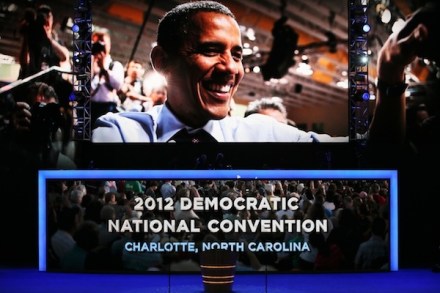
In America, the convention duel is over and there can now be little doubt that Barack Obama won it. Whereas Mitt Romney saw only a very modest boost in his polling numbers during the Republican convention, Obama has received a much bigger bounce, not only wiping out any advantage Romney gained the previous week, but actually leaving him with a bigger lead than he'd enjoyed before. On both Gallup and Rasmussen's national tracking polls, he now enjoys a commanding five-point lead. And that could well continue to grow: the Gallup number still includes responses from before the Democratic convention even began. Nate Silver's forecasting model  now gives Obama an 80.7 per cent chance of securing re-election — his highest of the campaign. And how did Obama achieve this?

Democrats mull the 2016 race to succeed Barack Obama

From our UK edition

US party conventions aren't just about that year's elections. Sure, the biggest speeches are from the Presidential nominees, their spouses and their running mates — but plenty of others take to the podiums as well. And while the content of their remarks may be all about beating the other guys in November, a fair few will have an eye on grabbing the nomination themselves next time around. If you doubt the power of a big convention speech, just look back to Obama's keynote address in 2004, which catapulted the then-state senator into national stardom and towards the presidency. Indeed, perhaps the most significant feature of last week's Republican convention was that Marco Rubio put in a stronger performance than potential 2016 rivals Chris Christie and Paul Ryan.