Jonathan Jones

America’s new political battles begin

From our UK edition

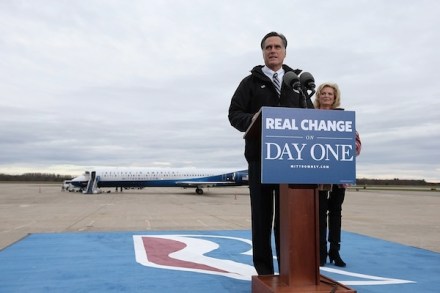
It may be less than a fortnight since the 2012 US elections, but it's never too early to start speculating about what might happen in the next ones. So here's a quick first look: 2013: New Jersey and Virginia (and Massachusetts?) It may be an off-year, but there'll be at least two — and possibly three — exciting high-profile races to look forward to. Republican Chris Christie will likely run for a second term as Governor of New Jersey. He has strong approval ratings and has been praised for his response to Hurricane Sandy, but will likely face tough opposition in a state that Obama carried by 17 points. One potential Democratic challenger is Newark Mayor Cory Booker (who rescued his neighbour from a fire in April).

Employment has recovered from the recession, but wages haven’t

From our UK edition

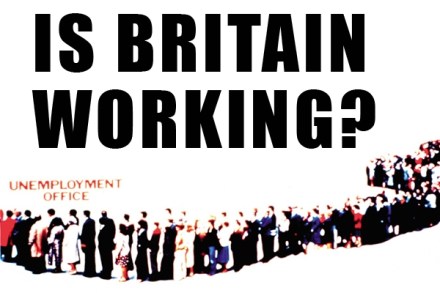
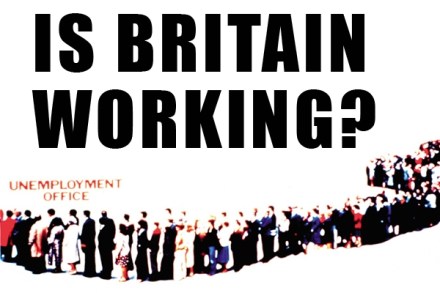
Today's employment figures don't contain much new to shout about. The number of people in work — although it rose by 100,000 on the previous quarter — is actually down very slightly from last month's record high (but still above the pre-recession peak, just). Unemployment fell by 49,000 from Q2 to Q3, although that's well within the Labour Force Survey's margin of error (so we can't be certain that it fell at all). The best news in today's figures — from the government's point of view — is probably that the headline unemployment rate is now 7.8 per cent, very slightly below the 7.9 per cent rate when the coalition took office (though again, it's worth remembering that the margin of error on that figure is +/– 0.3 percentage points).

The energy sector’s Libor-style scandal

From our UK edition

As David reported earlier, today's Guardian carries allegations of price-fixing in the energy markets. The paper has an account by Seth Freedman, who worked as a price reporter at ICIS Heren, detailing how he observed suspicious trades that looked like attempts to manipulate the daily index price. Based on Freedman's account, the alleged manipulation looks very much like that employed by City traders in the recently-exposed Libor scandal. Ironic, then, that the 'suspicious' trades Freedman observed came on the same day as Martin Wheatley published his review of Libor for the Treasury: Friday 28 September.

Tuition fees push inflation back up to 2.7%

From our UK edition

After falling to 2.2 per cent in September, inflation — as measured by the Consumer Prices Index — rose to 2.7 per cent in October. On the Retail Prices Index, inflation rose from 2.6 per cent to 3.2 per cent. The main cause of the rise is the government's changes to university tuition fees, which put the maximum annual fee up to £9,000. Today's figures are the first to include the effects of the policy — with the education index 19.7 per cent higher than last year. But food prices were up too — by 0.5 per cent on last month and 3.3 per cent on last year. The good news — unusually — comes from energy bills. Gas prices in October were unchanged from September, and 1 per cent lower than in October last year. Electricity prices fell by 0.

Briefing: Another fuel duty freeze?

From our UK edition

It looks like George Osborne will put the planned fuel duty rise on hold again, in order to avoid another Tory rebellion and potential government defeat in the Commons. This battle has its origins in a Labour Budget: that of 2009, in which Alistair Darling introduced a fuel duty escalator whereby fuel duty would increase by inflation-plus-a-penny every April from 2010 to 2013. In his 2011 Budget, Osborne announced that he was abolishing the escalator and instead cutting fuel duty by 1p per litre. From January 2012 onwards, the escalator was to be replaced by a 'fair fuel stabiliser', under which the duty rises by inflation-plus-a-penny when oil prices are low for a sustained period, but only by inflation (as measured by the Retail Prices Index) when they are high.

Briefing: The US fiscal cliff

From our UK edition

With the elections over and Barack Obama returned to the White House for four more years, the attention of US politicians has turned to the so-called ‘fiscal cliff’ — a collection of tax hikes and spending cuts that threaten to send the country back into recession. But what exactly is going on, and why? The Bush tax cuts George W Bush passed two major tax cut packages during the first term of his Presidency: the Economic Growth and Tax Relief Reconciliation Act of 2001 and the Jobs and Growth Tax Relief Reconciliation Act of 2003. Together, they lowered federal tax rates on income (for example, the top rate fell from 39.6 to 35 per cent, and the bottom rate from 15 to 10 per cent), capital gains and dividends.

The Democrats won more than just the Presidency on Tuesday night

From our UK edition

The focus, of course, is on President Barack Obama's resounding re-election — but there are plenty of other reasons why Democrats are celebrating Tuesday night's results. In the summer, it looked like Obama's party would struggle to maintain their Senate majority. Instead, they have extended it. Embattled incumbents held on in tight races in Missouri, Montana and Ohio. The Democrats also retained vulnerable seats in New Mexico, North Dakota, Virginia and Wisconsin despite the incumbents having retired. And they took seats off the Republicans in Indiana and Massachusetts, to take their total up to 54 Senators — and it could rise to 55 if newly-elected independent Angus King decides to caucus with them. The Democrats also beat expectations in House elections.

Sorry, but Barack Obama’s clearly ahead

From our UK edition

Four years ago, on the weekend before the 2008 presidential election, political commentator John McLaughlin asked the four panellists on his show The McLaughlin Group to predict the winner. As Nate Silver says in his excellent book The Signal and the Noise, 'That one ought not to have required very much thought.' The polls indicated that Barack Obama was the strong favourite to beat John McCain. For McCain to win, the polls would've had to be heavily biased towards Obama — something for which there was no evidence. But of the four panellists, only one — Eleanor Clift — predicted what was clearly the most likely outcome.

Mitt Romney’s narrow paths to the White House

From our UK edition

Can Mitt Romney win the presidential election on Tuesday? The answer is yes, he can — but it'll be tough. Although the national polls taken in isolation suggest the race is roughly tied, the state-level polling points to a much bigger lead for Barack Obama. It seems that either the national polls are underestimating Obama's strength or the state polls are overestimating it, or both. Nate Silver's Fivethirtyeight model  assumes it's both, so adjusts the national polling slightly towards Obama and the state polls slightly away from him, so they meet in the middle. And that leads it to forecast a win for Obama of slightly more than two points. That sort of margin would more or less guarantee the President re-election.

US Elections: Will everything just stay the same?

From our UK edition

We're now just a week away from election day in the United States. And after all the campaign rallies, all the debates, all the billions of dollars spent, it looks quite possible that things will be left pretty much the same as they are now — as far as control of the federal government goes, anyway. The most likely outcome of the Presidential election? Barack Obama re-elected. The most likely outcome of the Senate elections? 51 Democrats, 47 Republicans and two independents who caucus with the Democrats — just as there are now. And the most likely outcome of the House of Representatives elections? Well, the expert team at the Cook Political Report predicts that the Democrats will gain between zero and ten seats — at best reducing the Republican majority from 49 to 29.

US Elections: The Democrats’ Senate majority looks safe

From our UK edition

With a week and a day to go until the US elections, here's a quick run-down of the 33 Senate races. Currently, the Democrats have 53 seats (including two Independents who caucus with them) to the Republicans' 47, so the GOP would need a net gain of four seats to take control. Back in the summer that looked pretty likely, but most of the races have since moved towards the Democrats. In fact, the Democrats are now more likely to extend their Senate majority than to lose it. The races are ranked from the most likely to change parties to the least likely. 1. Massachusetts (currently Republican) Ever since Scott Brown won the 2010 special election following Ted Kennedy's death, he was always going to be the most vulnerable Republican incumbent in 2012.

Ed Balls tells porkies about the deficit

From our UK edition

Ed Balls has just been given a thorough grilling by Andrew Neil on the Daily Politics — particularly on his past assertions that Labour were not running a structural deficit in the years leading up to the financial crisis.

GDP is up 1% – give or take 0.7%

From our UK edition

So it's official: the UK economy grew by 1 per cent in the third quarter of 2012, according to the ONS's preliminary estimate. That's significantly better than the consensus forecasts. As all the politicking and pontificating begins, there are a few caveats worth keeping in mind:- 1. It's just an estimate. As I showed yesterday, the margin of error in the ONS's preliminary estimates is +/– 0.7 percentage points. That means Q3 growth could really turn out to have been anything from 0.3 per cent to 1.7 per cent. Still, we can be confident that the economy did return to growth in the quarter, ending the double-dip recession — though this may have been thanks to some one-off factors, which brings us to… 2. The Diamond Jubilee.

Why British GDP figures are almost ALWAYS wrong.

From our UK edition

Will it be 0.5 per cent? 0.8 per cent? 1 per cent? Whatever figure the ONS tells us GDP grew by in the third quarter of 2012, there's one thing you can be pretty sure of: it won't be the actual amount GDP grew by in Q3. In the past 51 years, just 12 of the ONS's 205 first stabs at quarterly growth have survived later revisions. To be fair, the ONS recognises this, and cautiously labels tomorrow's figure a ‘preliminary estimate’. But just how wrong is it likely to be? If tomorrow's figure is +0.5 per cent, does that mean we can be pretty confident that growth was between, say, 0.3 per cent and 0.7 per cent — bad but not disastrous? It turns out we can't. In fact, a preliminary estimate of +0.5 per cent really means somewhere between +1.2 per cent and –0.

The illusion of economic recovery

From our UK edition

GDP per head is still 7 per cent below its pre-recession peak. That's one of the sober reminders of the weakness of our recovery in a new ONS report, released as part of its National Well-being project. In fact, GDP per head fell by 7 per cent from 2008 Q1 to the recession's trough in 2009 Q2 — and has recovered by 0.0 per cent since. That is, the 2.4 per cent recovery in GDP up to 2012 Q2 (which still leaves us 4.1 per cent below our pre-recession level) has not been enough to outweigh population growth. The GDP index has risen, but only thanks to Britain's ever-rising headcount. When it comes to GDP per capita, there has literally been no recovery at all.

Austerity latest: borrowing STILL higher

From our UK edition

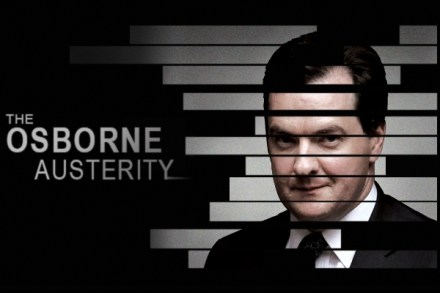
Today's borrowing figures show that the government has borrowed £2.6 billion more so far this fiscal year than it did in the same six months last year*, allowing Labour to continue to claim that the deficit is rising. This is, of course, embarrassing to a Chancellor who defines himself by deficit reduction — but, all things considered, it's probably better news than Team Osborne were expecting. Last month's figures showed that borrowing in April to August 2012 was £10.6 billion higher than in the same period of 2011*, so this month's release is in fact a marked improvement. It shows that September borrowing was £0.7 billion lower this year than last, and the ONS has also revised down its estimate of borrowing in April to August by £6.7 billion.

Sorry, Alex, but Scots are going off the idea of independence

From our UK edition

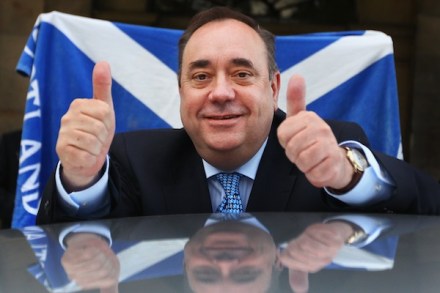
With two years to go, Alex Salmond's campaign for a 'Yes' vote in the Scottish independence referendum is facing a big challenge to turn around public opinion. Ipsos MORI have a new poll out today, showing almost two-to-one opposition to independence, and support for Salmond's cause has been declining all year. This matches the findings of two other pollsters. YouGov found the split going from 33 'yes'/53 'no' in January to 27-60 in August. And TNS-BMRB have it going from 35-44 in January to 28-53 this month. So the SNP has its work cut out — it needs to change plenty of Scottish minds if its even going to make the 2014 vote close. They seem to be testing out messages to achieve this, having commissioned a YouGov poll last week.

The Olympic effect on jobs

From our UK edition

It seems today's good jobs figures — employment at a record high and the unemployment rate back below 8 per cent — are at least partly thanks to the Olympic Games. While the UK added 212,000 net jobs in June-August, London alone added 101,000 — accounting for 47 per cent of the total rise. And — as Citi's Michael Saunders observes  — the six boroughs that hosted the Games (Hackney, Newham, Barking and Dagenham, Waltham Forest, Tower Hamlets and Greenwich) have seen their proportion of residents claiming Jobseeker's Allowance fall by an average of 0.48 percentage points, compared to 0.25 points for the other 27 London boroughs and 0.1 points for the country as a whole.

Jobs figures show a move in the right direction

From our UK edition

Recently, we've been used to the economic figures being either bad news or mixed news. So today's employment stats come as a welcome surprise: it's almost all good news. They show that total employment rose by 212,000 from March-May to June-August, and now stands at 29.59 million — a record high, 18,000 above the pre-recession peak of April 2008. Since the election, a net of 616,000 jobs have been created. And unemployment is down too — by 50,000 on the previous three months, defying expectations. That means the unemployment rate has dropped to 7.9 per cent, the first time it's been below 8 per cent in over a year.