Jonathan Jones

Obama’s budget: faster, but not further, than Osborne’s

From our UK edition

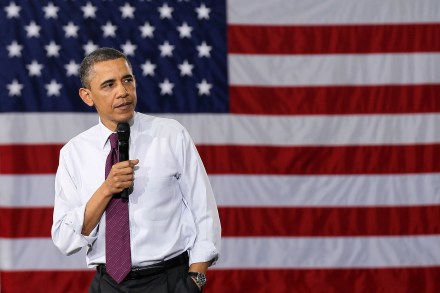
Barack Obama's budget plan has become a political debating point on this side of the Atlantic. Ed Balls set the ball a-rolling in an article for the Guardian this morning, which effectively claimed that the President isn't planning to cut the deficit as quickly as George Osborne is. "The truth is that it is Osborne himself who is isolated," is how he pugnaciously put it. But the Tories' Matthew Hancock has since responded — on Coffee House, as it happens — arguing that, actually, the Obama Plan is simpatico with what Osborne is doing. By way of hovering above the red-on-blue scrap, we thought we'd put together a comparison of Osborne's and Obama's budgets for the benefit of CoffeeHousers.
From the archives: Nigel Lawson on the Euro

From our UK edition

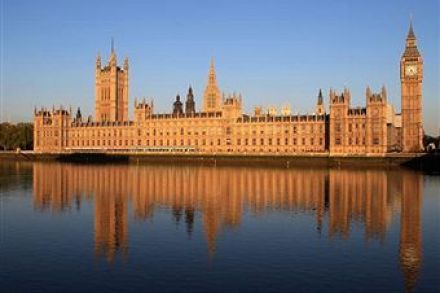
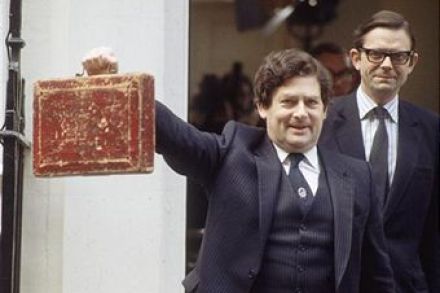
13 years ago, The Spectator carried an interview with Nigel Lawson in which he gave his views on the EU’s Economic and Monetary Union – views that seem especially prophetic today. ‘It’s going to be very nasty’, Christopher Fildes, The Spectator 2 May 1998 The Nigel Lawson Diet now seems to suit its inventor. Gone are the days when I had to defend him as chancellor against his girthist critics. Then he fell out with Margaret Thatcher – at first, over Europe. He wanted to put the pound into the exchange rate mechanism: she would not hear of it. Now I catch up with him at the House of Lords, in one of its fine rooms that the Lord Chancellor has not yet collared, looking out across the river. Europe is still on our minds.

Grammar schools aren’t an answer to the social mobility problem

From our UK edition

With all the talk about social mobility, it was inevitable that those who believe grammar schools were the doorway to opportunity would wade into the debate. The most prominent of these interventions came yesterday from David Davis, who said: “The hard data shows that the post-war improvement in social mobility, and its subsequent decline, coincided exactly with the arrival, and then the destruction, of the grammar school system. This is the clearest example of the unintended consequence of a purportedly egalitarian policy we have seen in modern times.” The “hard data” Davis refers to is this 2005 study by Jo Blanden, Paul Gregg and Stephen Machin for the LSE and the Sutton Trust.

From the archives: fleeing nuclear catastrophe

From our UK edition

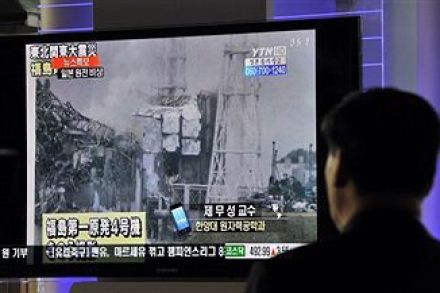
As the severity of the Fukushima nuclear disaster is upgraded and thousands of people are evacuated from Japan, here’s Samuel Phipps’ account of his own evacuation from Minsk following the 1986 Chernobyl explosion. A Sudden Evacuee, Samuel Phipps, The Spectator 10 May 1986 ‘You’ll be national heroes when you get back to England,’ said one of our Russian friends in Minsk, as we sat outside the hostel, waiting in the evening sunshine for our fates to be determined. Sure enough, pictures on Friday lunchtime television showed a relieved mother pouring champagne over her relieved Sloane Ranger daughter at Heathrow.

Will cuts kill the little platoons?

From our UK edition

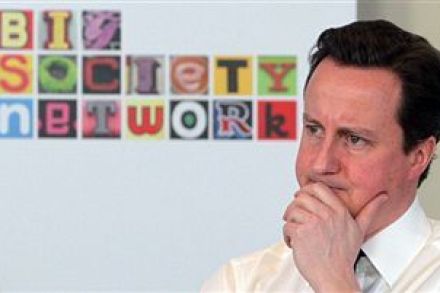
David Cameron is clear that his Big Society is about more than just volunteering. Yet during the recent spat on the matter, one of the strongest, most frequent criticisms voiced against it was that cutting state spending will lead to fewer volunteers. Dame Elisabeth Hoodless, executive director of Community Service Volunteers, claimed that the coalition’s spending cuts risk “destroying the volunteer army”. Johann Hari was also among those making this attack. In the 10 O’Clock Live debate that Fraser blogged last week, he claimed that international evidence tells us that volunteering is highest where public spending is highest.

From the archives: parliament versus the ECHR

From our UK edition

Yesterday, parliament asserted its supremacy before the European Court of Human Rights. As Ross Clark explains, it has been a long time coming. The Final Indignity, 10th November 2001 by Ross Clark It wasn't so long ago that the very mention of the words 'European Convention on Human Rights' in conservative circles was enough to provoke frothing at the mouth. Of all the horrors to emanate from the Continent, here was the final humiliation: British ministers ordered around by the bigwigs of European justice. No longer would we be able to beat our children or tell them that they can't wear earrings and Motorhead T-shirts to their Latin lessons. Murderers, rapists and all would be let loose on the streets, their incarceration ruled illegal on some technicality.

Clash of the wonks

From our UK edition

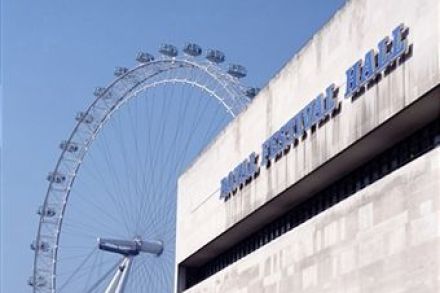
Last night the Southbank Centre hosted its second “Think Tank Clash”.  As last year, it was a sell out event, and saw representatives of six of the country’s top think tanks take each other on in three debates.  These debates were ably and wittily compared by writer John O’Farrell and the winners determined by audience vote.  The winners of each “clash” then competed in a three-way discussion to determine the overall top tank. Round 1: “Revenge” – Res Publica v Demos Res Publica founder and director Phillip Blond commenced by making the case for breaking up the banks. He argued that the current system does not distribute capital, but rather concentrates it, thereby “strangling real business”.

From the archives: the fall of President Sadat

From our UK edition

With protesters in Egypt trying to force President Mubarak to resign, here is the piece that Roger Cooper wrote for The Spectator on the event that propelled him to power: the assassination of Anwar Sadat in 1981: The legacy of Sadat, Roger Cooper, The Spectator, 10 Oct 1981   Rarely has a political assassination set off such divergent reactions as that of Egyptian President Anwar Sadat on Tuesday.  President Reagan called it ‘outrageous and tragic’, the Pope praised him for ‘his noble vision of reconciliation’, and the Israeli prime minister, Menachem Begin, expressed deep regret at the death of ‘a great leader’.

Ten things you need to know about the NHS reforms

From our UK edition

At last we have it: a defence of the coalition's NHS reforms that is worthy of the name. It came courtesy of David Cameron, speaking on BBC Breakfast earlier, and you can watch it in the video above. Suffice to say, the Prime Minister dwelt on the endemic waste and excessive bureaucracy of the current system, yet he also found room to explain why choice matters, and why it won't leave patients stranded. But, even then, the performance wasn't perfect. Cameron may have thought he was being disarmingly honest by admitting that his brother-in-law's fellow hospital consultants have qualms about the proposals, but one suspects it has served only to arm his opponents. Downing Street spokesmen have since put out hurried explanations that the PM was trying to "humanise" the issue.

From the archives: Christopher Hitchens on the Challenger shuttle disaster

From our UK edition

It is 25 years, to the day, since the Challenger shuttle tragically disintegrated over Cape Canaveral. Here is the deeply poignant piece that Christopher Hitchens wrote for The Spectator at the time: The Shuttle Disaster, Christopher Hitchens, The Spectator 1 Feb 1986 Cape Canaveral was the scene of so many non-lethal disasters in the early Sixties that it gratefully accepted a change of name to Cape Kennedy – even though the very change itself involved a memorial to a trauma. Few now remember the process by which the launching pad of the space programme reverted quietly to its earlier and (until Tuesday morning) more placid title. But nobody who saw the flame fill the screen and then dissolve into anarchic debris will ever forget Canaveral.