Jonathan Jones

Eastleigh by-election: Four points from Ashcroft’s exit poll

From our UK edition

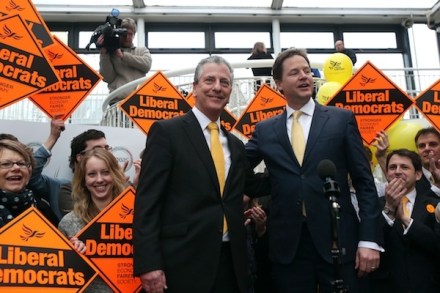
The result might be in, but that doesn't mean there's nothing useful polls can tell us about the Eastleigh by-election. What swayed the voters? Why did they vote as they did? And — perhaps of most interest — how might they vote next time? Yesterday, Lord Ashcroft's polling operation phoned 760 Eastleigh residents, 654 of whom had voted in the by-election. All sorts of warning labels need slapping across the figures: they aren't weighted, so are subject to a much higher risk of selection bias than other polls, and even if the sample were representative and random, the margin of error would be 3.5 points (and higher for subsets of those 760 respondents). But here are a few interesting nuggets from the data: 1. The Lib Dems won the ground game.
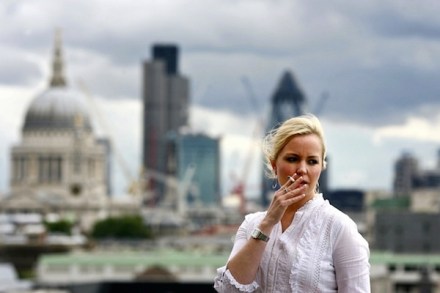
Fag break Britain: four answers to Britain’s productivity puzzle

From our UK edition

Jobs are being created in Britain, but the economy isn't growing. In the last year, the number of people in work rose by 2 per cent, but economic output rose by just 0.3 per cent. As the below graph shows, employment is now 0.7 per cent above its pre-recession peak, whereas GDP is still 3 per cent below it. This adds up to a big drop in productivity. Output per worker is now 3.8 per cent below its 2008 Q1 level, and 13.3 per cent lower than it would be if the pre-recession trend had continued. In a piece for this week's issue, The Spectator's business editor Martin Vander Weyer points out that this slump is 'the equivalent of an extra five-minute fag break outside the fire exit for every employee, every hour'. (On the latest figures, it's more like an eight-minute break.

Italian elections: ‘The worst possible outcome’

From our UK edition

Forget Moody's. If you want to see market panic, just look at Italy. As Isabel reported this morning, the unexpectedly strong performance of Beppe Grillo's anti-establishment party, the Five Star Movement, has produced an extremely close election result, and no clear winner. While the electoral system guarantees a majority in the Chamber of Deputies for the group with the largest vote share (Pier Luigi Bersani's centre-left group), it does not do so for the Senate. With no group securing a majority in the upper house, Italy now faces coalition negotiations and likely another election.

Markets shrug off Britain’s downgrade

From our UK edition

It seems that Moody's downgrade of UK government bonds on Friday night has — so far — had more effect on the headlines than the markets. After the news on Friday night, the pound fell by about a cent against the dollar, from $1.525 to $1.515. And against the euro it fell from €1.157 to €1.147 (it's fallen a little further this morning, to €1.144). But that's no bigger than the drop on Wednesday on the news that Mervyn King and two other members of the Bank of England's Monetary Policy Committee had voted in favour of more quantitative easing. And it doesn't seem to have raised the cost of borrowing much. The yield on ten-year government bonds did rise slightly from 2.11 per cent at close on Friday to 2.

Tinkering with tax isn’t enough

From our UK edition

Should the 10p tax rate be brought back? Should the top rate be higher, or lower? Can the personal allowance be raised further? Is a mansion tax a good idea? Should the fuel duty rise be scrapped? These are the questions that are rearing their heads again — as they do every six months or so, in the run up to a budget or autumn statement. The problem is that they are all considered — in so far as they're considered at all — in isolation. We focus on one aspect of the tax system, fiddle with it a little, then move on to another.

Deficit latest: Still £5 billion higher than last year

From our UK edition

Today's borrowing figures show that the government had a surplus of £11.4 billion in January. But before we get too excited, a bit of context is in order. There's (almost) always a surplus in January, thanks mainly to self assessment and capital gains tax receipts. And today's figure includes £3.8 billion transferred from the Bank of England's Asset Purchase Facility to the Treasury. Stripping that out gives a £7.6 billion surplus — an improvement on the £6.4 billion surplus in January 2012, but not enough to make up for higher borrowing in the rest of the year. Total borrowing in the ten months of the year so far is £97.6 billion (excluding the Royal Mail pension and APF transfers) — £5.3 billion higher than in the same period last year.

Good news on employment, but don’t expect it to keep coming

From our UK edition

Today's jobs figures are pretty unambiguously good news. The number of people in work rose by 154,000 in the last three months of 2012 to a new record high of 29.73 million — surpassing pre-recession peak by 158,000. And unlike other recent rounds of employment growth, this wasn't driven by a rise in part-time workers (their number actually fell by 43,000). But there are still a couple of reasons cause to greet this good news with caution. Rising employment at a time of economic stagnation has come at the expense of earnings. Adjusted for CPI inflation, average weekly earnings have fallen by 7 per cent in the last five years, back to 2004 levels. And the Office for Budget Responsibility doesn't expect them to start rising again until late-2014.

Disappointing 4G auction income is bad news for Osborne’s deficit plans

From our UK edition

Oh dear. George Osborne's claim in December's Autumn Statement that 'the deficit is coming down this year, and every year of this Parliament' was already looking hubristic, even before today's news that the 4G mobile spectrum auction raised just £2.3 billion, rather than the £3.5 billion that the Office for Budget Responsibility had forecast. As Fraser blogged in November, there were hopes that Britain would — like Ireland — raise even more than expected from the auction. At the Autumn Statement, the OBR predicted that borrowing (once you strip out the effects of various one-off accounting changes, such as the transfer of Royal Mail pensions) would fall ever-so-slightly this year, from £121.4 billion in 2011-12 to £120.3 billion in 2012-13.

Why Ed Miliband’s Reagan-esque attack won’t work

From our UK edition

Ed Miliband has taken inspiration for his 2015 attack line from an unlikely source: Ronald Reagan. In 1980, a week before the election between himself and incumbent President Jimmy Carter, Reagan told voters to ask themselves: ‘Are you better off than you were four years ago?’ At PMQs today, Ed Miliband told the Prime Minister ‘In 2015, people will be asking “Am I better off now than I was five years ago?”’ His hope, clearly, is that voters will decide the answer is ‘no’ — and that they'll vote against the government as a result.

Briefing: What is the government doing to inheritance tax?

From our UK edition

The Death Tax has risen again. The government estimates that its proposals for social care funding will cost the Treasury £1 billion a year. That will be met through a combination of not compensating government departments for the higher National Insurance contributions they will have to pay under the new single-tier state pension and freezing the level at which inheritance tax kicks in at £325,000 until 2019 - the source of the 'death tax' accusations today. Freezing the inheritance tax threshold The inheritance tax threshold (or ‘nil-rate band’) is the amount of an estate that is not taxed. It rose in both cash- and real-terms throughout the Labour years, but in 2009 Alistair Darling decided to freeze it at £325,000 for 2010-11.

Briefing: Everything you need to know about Eastleigh

From our UK edition

After Chris Huhne's resignation, the by-election campaign in Eastleigh is already well underway. James explains the political significance of this Lib Dem-Tory battle in this week's Spectator, but here are some quick facts about the state of play in Eastleigh, including the first poll results: A brief history Eastleigh constituency started out as a Tory-Labour marginal in 1955. Conservative David Price was its first MP, elected with a majority of just 545. By the time he retired in 1992, it had become a fairly safe Tory seat and Stephen Milligan was elected to replace him with a majority of 17,702. But when Milligan died in 1994, the Liberal Democrat by-election machine swept in to action and David Chidgey was elected with a 9,239-vote majority.

Will the European court force churches to conduct gay weddings?

From our UK edition

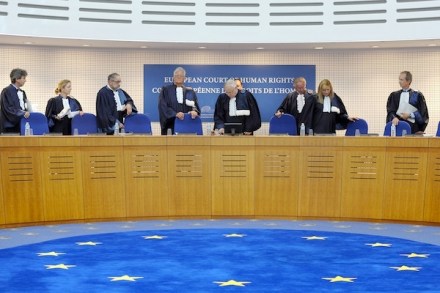
Would the European Court of Human Rights force churches to conduct same-sex marriages against their will? That’s the professed fear of some opponents of the Same Sex Marriage Bill being debated in the Commons today. The Church of England sent MPs a briefing paper saying 'We doubt the ability of the Government to make the legislation watertight against challenge in the European courts', and such fears have been invoked in today’s debate by Graham Brady and other Tory backbenchers. They present their opposition as a defence of religious freedom (even though maintaining the current law restricts the religious freedom of those churches who would like to perform same-sex marriages).

Cheat sheet: the new Spanish corruption scandal

From our UK edition

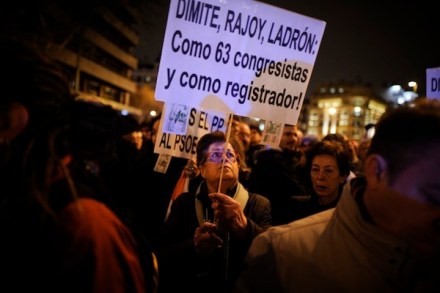
An unemployment rate of 26 per cent (and 56 per cent for young people); an economy that contracted by 0.7 per cent last quarter; tumbling approval ratings. Spanish Prime Minister Mariano Rajoy had enough problems, even before claims that he received about €280,000 (£240,000) in payments from ‘secret’ accounts managed by the treasurers of his People's Party (the PP). Protestors took to the streets of Madrid last night calling for his resignation. El País (Spain's biggest newspaper) published hand-written accounts that it claims were kept by PP treasurers Luis Bárcenas and Álvaro Lapuerta between 1990 and 2009.

Briefing: Immigration from Bulgaria and Romania

From our UK edition

What's changing? Bulgaria and Romania joined the European Union on 1 January 2007. This gave their citizens the freedom to travel unrestricted within the EU, but countries were allowed to impose transitional controls on their freedom to work for up to seven years. In 2004, when eight other east European countries (the 'A8') joined the EU, the Labour government decided not to impose such restrictions, but this time they did. Those controls must be lifted by 1 January 2014. What are the transitional controls?

Obama’s left-wing inaugural address

From our UK edition

Obama's second inaugural address was probably one of the most left-wing speeches he has made since the Democratic primaries in 2008. It hit all the liberal notes, from women's equality to climate change and gun control to welfare. But thanks to the President's trademark combination of poetry and weight, it didn't come off divisive or aggressive. That's because Obama pegged the political positions to principles that cut across partisan divide: chief amongst them, the second sentence of the Declaration of Independence: 'We hold these truths to be self-evident, that all men are created equal, that they are endowed by their Creator with certain unalienable Rights, that among these are Life, Liberty and the pursuit of Happiness.

Briefing: Obama and gun control

From our UK edition

'We can’t tolerate this anymore. These tragedies must end. And to end them, we must change. We will be told that the causes of such violence are complex, and that is true. No single law, no set of laws can eliminate evil from the world, or prevent every senseless act of violence in our society. But that can’t be an excuse for inaction. Surely, we can do better than this. If there is even one step we can take to save another child, or another parent, or another town from the grief that has visited Tucson and Aurora and Oak Creek and Newtown and communities from Columbine to Blacksburg before that, then surely we have an obligation to try.

Mervyn King vs. Goldman Sachs

From our UK edition

What did the Governor of the Bank of England think of Goldman Sachs' plan to wait until the 50p rate is cut in April to pay bonuses? At this morning's Treasury Select Committee, Mervyn King declined Teresa Pearce's invitation to label it 'morally repugnant' but did declare it 'depressing', 'clumsy' and 'lacking in care and attention to how other people might react'. According to the BBC, Goldman Sachs has since decided not to press ahead with the plan — perhaps they heeded King's warning that 'in the long-run financial institutions, like all large institutions, do depend on goodwill from the rest of society'.

Briefing: Simplifying the state pension

From our UK edition

There certainly seems to be something to be said for keeping an effective minister in the same post. After two years and eight months in the job, Steve Webb is by far the longest-serving Pensions Minister since the post was created in 1998. And, as last week's mid-term review showed, pensions is one area where the coalition has much to boast about: the 'triple lock', the Hutton review, raising the pension age, ending default retirement and compulsory annuitisation, and introducing automatic enrolment. And today, Webb has announced the government's new 'single tier' state pension. At the moment, the state pension system is fiendishly complex: there's the basic state pension (currently £107.45 a week), the Guarantee Credit (which tops up income to £142.

The coalition’s half-time score

From our UK edition

Yesterday, the coalition released its mid-term self-assessment, comparing the commitments made in its Programme for Government back in May 2010 to the policies it has actually implemented to date. Sadly, it does not allow for a simple tick/cross exercise as to whether each commitment has been kept, as there is a lot of grey area. Some of the promises were too vague, some may be being stuck to but haven't been delivered yet, and on others it depends how charitable you're willing to be to the government. I've therefore given each commitment a tick (delivered), a cross (not delivered at all) or a question mark (those you might give a tick if you're being kind to the coalition, or might give a cross if not).

Ed Balls reverses over his own progress on fiscal responsibility

From our UK edition

The battle-lines over the Welfare Benefits Up-rating Bill — which faces its second reading in the Commons this afternoon — have been drawn. Labour has tied its opposition to the Resolution Foundation's analysis showing that the bulk of the policy will hit working families. As Ed Balls put it last week, 'Two-thirds of people who will be hit by David Cameron and George Osborne’s real terms cuts to tax credits and benefits are in work.' They've labelled the move a 'strivers' tax', a continuation of the divisive rhetoric from both them and the Conservatives that seeks to pit 'hardworking families' against 'people who won't work' (as a recent Tory ad put it).