Jonathan Jones

The rising cost of Christmas dinner

From our UK edition

While we're talking Christmas, how about this release from the Office for National Statistics today? It reveals how the cost of certain ‘Christmas shopping basket’ items has risen over the past year. We've put them into a table below — but let's just say, you might want to start stocking up on carrots.

Christmas by numbers

From our UK edition

Keen-sighted Spectator readers may have noticed that there was no ‘Barometer’ column in our Christmas double issue. The weekly column, which features topical, little observations and statistics, had to be pulled because of space restrictions. But no such restrictions on the Internet, of course — so we thought CoffeeHousers might care to see some of the festive factoids we had poised to print. Among them were the poll findings shown in the chart above: only 12 per cent of people regard the religious significance of Christmas as its most important component. And here are more for you to mull over, collected from various YouGov surveys: This Christmas, 31 per cent of people will leave a stocking out on Christmas Eve.

A sliver of Christmas comfort for George Osborne

From our UK edition

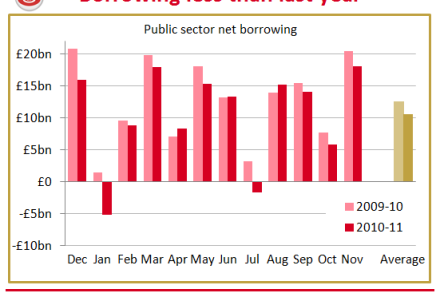
There's some rare good news for the government in today's public finance statistics. Public sector net borrowing in November is estimated at £18.1 billion, down from £20.4 billion last year. This means that total borrowing for the first eight months of this financial year is £88.3 billion, down 11 per cent on last year. That's lower than expected, and puts us on target to undershoot the OBR's forecast of £127 billion in 2011-12. That'd be a relief for the coalition, after Labour hit them hard when the OBR upped their borrowing forecasts last month. But this deficit reduction cannot be put down to spending restraint in Whitehall. In fact, central government is spending around £1 billion a month more than it did last year.

Ron Paul now favourite to win in Iowa

From our UK edition

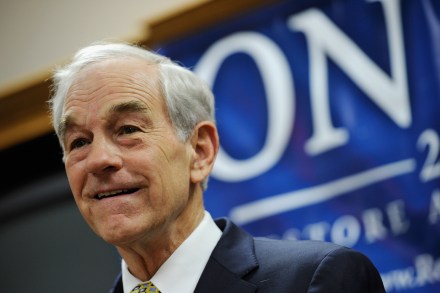
Hardly anyone would've predicted it just a few weeks ago, but libertarian congressman Ron Paul now looks most likely to win the Iowa caucuses, with just a fortnight to go. Two new polls show Paul leading Mitt Romney, as Newt Gingrich collapses to third – or even fourth – place. According to Nate Silver's projections (based on the polls and historical results), Paul now has a 52 per cent chance of winning, compared to Romney's 28 per cent chance, Gingrich's 8 per cent and Rick Perry's 7 per cent. Paul has taken the lead largely thanks to a sharp decline in Gingrich's poll numbers. Nationally, his lead over Romney has dropped from 14 points to just 2 in less than two weeks, according to Gallup.

Romney stretches his lead in endorsements

From our UK edition

He may be trailing Newt Gingrich in the national polls, but there's one metric by which Mitt Romney is dominating the 2012 Republican field: endorsements. He's already bagged the two biggest ones announced so far: Chris Christie and Tim Pawlenty. He also has the backing of several key Republicans in New Hampshire, including current Senator Kelly Ayotte and two former Governors. And yesterday he added another big name from another early state to his list: South Carolina Governor Nikki Haley. Haley's support for Romney is not wholly unexpected: she backed him in 2008 and he endorsed her early in her campaign for Governor last year.

Clegg tries to rebuild EU bridges

From our UK edition

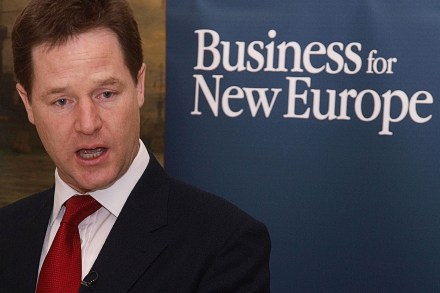
What are the Lib Dems up to? On Tuesday, Clegg, Cable, Alexander, Huhne and Laws met with 'Business for New Europe', a group of pro-European business leaders, in what the FT describes as as 'a very public display of engagement with business over Europe' and the front page of today's Mail calls 'plotting to rally business chiefs against Cameron over Europe'. It is, of course, not surprising to see senior Liberal Democrats talking to pro-EU business people and advocating more engagement with Europe. But it does highlight what will be a key goal of the Lib Dem leadership over the next few months: building bridges with Europe, particularly to reconnect with traditional, europhile Lib Dem supporters following the PM's veto last week.

Who’s right on public v private employment?

From our UK edition

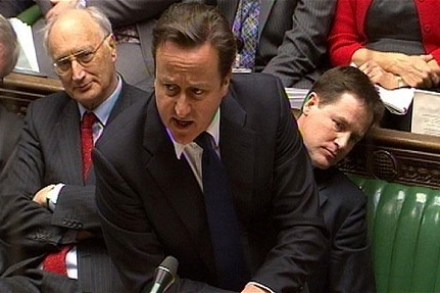
If you listened to PMQs yesterday, then you'll have heard two very different accounts of what's happening in the labour market right now. Had Ed Miliband been able to get anyone's attention, they'd have heard him say: 'over the last three months, for every job being created in the private sector, thirteen are being lost in the public sector.' Cameron's response: 'Since the election, in the private sector there have been 581,000 extra jobs. In the public sector, he's right, we have lost 336,000 jobs.' According to the Labour leader's figures, public sector losses are far greater than private sector growth. But according to Cameron's, the private sector is more than filling the gap. Why the difference? It comes down to the timescale you chose.

Romney’s $10,000 mistake

From our UK edition

video platformvideo managementvideo solutionsvideo player This was, by some margin, the most talked about moment of Saturday night's Republican debate. Accused by Rick Perry of changing a passage in his book advocating an individual health care mandate, Mitt Romney stretched out his hand to the Texas Governor and said 'I'll tell you what, ten thousand bucks? Ten thousand dollar bet?' For Romney's opponents, the bizarre challenge provided the perfect clip with which to attack him. It combines Romney's biggest negatives into one neat sound bite: his record on healthcare, his flip-flopping, and the idea that he's an out-of-touch Wall Street millionaire. And, just as when Perry got a rise out of him over immigration in October, it calls his temperament into question.

Good news from Brussels

From our UK edition

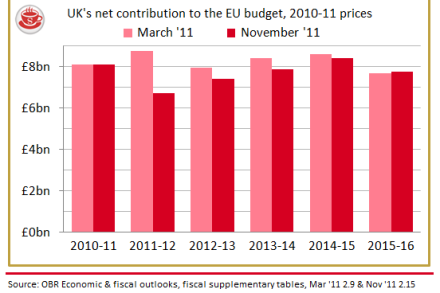
While the debate over Europe rumbles on, it's worth highlighting one bright spot in the OBR's recent document of doom which has largely slipped past Westminster's radar: by their forecasts, we will pay the EU £2 billion less this year than we were expecting to in March. Instead of the £9 billion 'net contribution to the EU budget' forecast for 2011-12 nine months ago, the OBR now estimates it'll be £6.9 billion. That represents a 17 per cent real terms cut on the £8.1 billion we paid last year, instead of an 8 per cent increase: Why the reduction? The OBR gives a few reasons:  By themselves, each of these factors means just a few hundred million less sent to the EU.

Four weeks to Iowa, and Newt’s looking strong

From our UK edition

It's less than a month until the Iowa caucuses, the first big vote of the presidential primaries. It could finish off some candidates who've been shuffled to the bottom of the pack, and give us a better idea of the chances of those at the top.   Right now, Newt Gingrich looks most likely to be celebrating on January 3rd. As Fraser suggested last weekend, he seems to be gaining most from Herman Cain's withdrawal, and now leads the field both nationally and in Iowa.

From the archives: The Great Communicator stumbles

From our UK edition

It's been 25 years since the Iran-Contra affair – the scandal about the US government selling arms to Iran and using the proceeds to fund the Nicaraguan rebels. It saw Ronald Reagan's approval rating drop from 67 per cent to 46 per cent, and fourteen memebers of his staff were indicted. In a piece that appeared in The Spectator exactly a quarter of a century ago, Christopher Hitchens explains how the Reagan administration was unable to contain the story. The end of the line, Christopher Hitchens, 29 November 1986 If you wish to understand the fire that has broken out in the Washington zoo, and penetrate beyond the mere lowing and baying of the trapped and wounded beasts, you must master three key concepts in the capital’s vernacular.

‘What’s that line again?’

From our UK edition

When Rick Perry made that horrible gaffe in a Republican debate last month, you might have expected to see it in one of his opponents' ads. Instead, it's Perry himself who's just put out a video poking fun at his mistake: https://www.youtube.com/watch?v=aiCRW5zGSG4 'If you want a slick debater, I'm obviously not your guy.' Indeed. We'll have to wait and see if this sort of thing helps Perry recover from just 4 per cent in the polls.

How happy is Britain? 7.4

From our UK edition

Remember General Well-Being – David Cameron's attempt to come up with a new set of statistics to encapsulate all the things that GDP doesn't? Well one aspect of it, the Office for National Statistics says, is 'subjective well-being'. That is, how do people rate their own well-being? It's not all there is to well-being, we're told – health, personal relationships, job satisfaction and economic security will need to be added to the mix too – but it is an important part. And so, the ONS has set about measuring it. Over the last few months, they've begun asking the public four questions: Overall, how satisfied are you with your life nowadays? Overall, to what extent do you feel the things you do in your life are worthwhile?

What did the public make of the Autumn Statement?

From our UK edition

The lack of growth in the economy has taken its toll on the government – and George Osborne – according to YouGov's post-Autumn Staement poll. After the Budget in March, 34 per cent said the Chancellor was doing a good job – now it's just 24 per cent. And the percentage saying he's doing a bad job has risen from from 40 to 49. Here's how the public's view of the economic performance of the coalition as a whole has declined since Osborne's first Budget: Despite this, Labour have failed to seize the initiative. Osborne still leads Ed Balls on the question of who'd make the better Chancellor, 30-24. Indeed, that just 61 per cent of Labour supporters pick Balls should be of deep concern to the Labour leadship.

Will the strikes exacerbate Cameron’s women problem?

From our UK edition

We've already heard a lot about Dave's problem with female voters. Melanie McDonagh wrote our cover piece on it in June, and in September there was that memo detailing Number 10's efforts to respond. But, judging by the polls, we may well be hearing even more about it after today's strikes. It seems that, while the government has men broadly on its side in the battle against the unions, women are far less supportive. 51 per cent of men told ComRes that public sector workers are wrong to strike today, but only 42 per cent of women agreed: TNS BMRB asked people whether they thought that the government was right to press ahead with the reforms, or that public sector workers were right to strike against them.

The Autumn Statement: What you need to know

From our UK edition

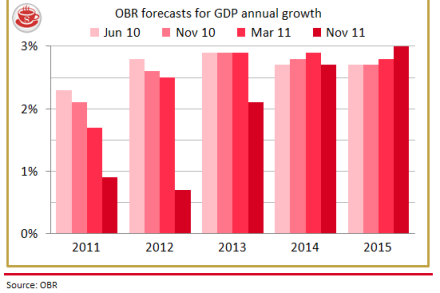
We've been posting some of these charts on Twitter, but here they are, collected, for CoffeeHousers. You can expect more as we mine deeper into the OBR's supplementary document. Do shout out, also, if you spot anything yourself. 1. Weaker growth — except for a very optimistic figure for 2015 2. Higher debt — both in real terms and as percentage of GDP   3. Osborne borrowing more than he'd hoped 4. More persistent — and deeper — ILO unemployment 5.

Breaking down those record immigration figures

From our UK edition

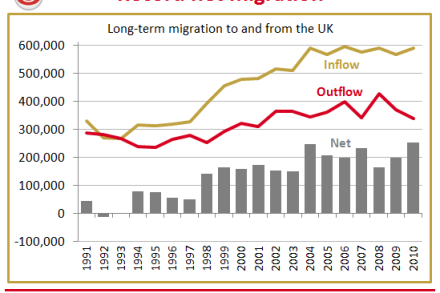
New immigration stats out today show that 2010 set a new record for net migration into the UK. The figure hit 252,000 – a 27 per cent increase on 2009 and 7,000 higher than the previous record in 2004:   As this graph shows, the number of immigrants moving to the UK has actually been fairly constant – at around 580,000 – since 2004 (when the 'accession eight' countries in eastern Europe joined the EU). But the number of people leaving the country has dropped off significantly in the past couple of years – from 427,000 in 2008 to 339,000 last year, hence the increase in net migration. So, as Gillian Duffy might ask, where are they flocking from? Here's where the 591,000 people who migrated to the UK last year came from: And why do they come?

From the archives: ‘Britain is no longer racist’

From our UK edition

In Brixton this morning, Nick Clegg delivered a speech on race equality. He said 'There is another front in the war on race inequality that is too often neglected: economic opportunity... It simply cannot be right that that we still live in a society where, if you are from an ethnic minority, you face unfair hurdles when you strive for success.' As a counterpoint to the Deputy Prime Minister's remarks, here is Samir Shah's Spectator cover piece from 2009: Race is not an issue in the UK anymore, Samir Shah, 7 October 2009 I first arrived in this country from Bombay in January 1960. Harold Macmillan had yet to make his Winds of Change blowing through Africa speech. Coronation Street hadn’t appeared on our television screens.