Jonathan Jones

Will Democrats decide the result of Michigan’s Republican primary?

From our UK edition

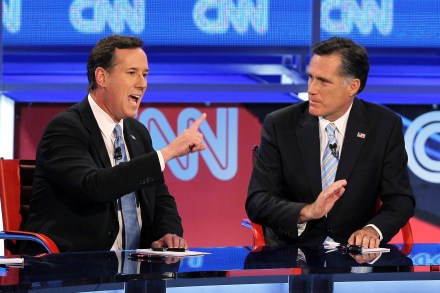
Tonight’s another very important night for the Republican presidential hopefuls, with primaries in Arizona and Michigan. Mitt Romney seems assured of a decent win in the former, where the latest two polls put him 16-17 points ahead of Rick Santorum. But Michigan is looking incredibly close — with the poll results of the last two days ranging from a four-point lead for Romney to a five-point lead for Santorum. It could go either way: Nate Silver’s model gives Romney a 55 per cent chance of victory to Santorum’s 45 per cent chance. With the polls this narrow, it will all come down to who’s best at getting their voters out — and even that is tough to predict here.
Romney’s little helper

From our UK edition

https://www.youtube.com/watch?v=cgNJBdTaKE8 The Republican primary is dragging on longer than Mitt Romney had hoped — and it’s hurting him. His poll ratings have begun to plummet, and his war chest is feeling the pain too. In January, he spent a whopping $18.8m while raising just $6.5m. His campaign still has $7.7m ‘cash on hand’, but you don’t have to be Rain Man to see that even that won’t last long at this rate. Of course, multi-millionaire Romney could easily self-finance his campaign (as he did in 2008), but that isn’t a story that would make his candidacy look strong.

Tim Farron wants competition dropped from the Health Bill

From our UK edition

Will there be further changes to the Health and Social Care Bill? Liberal Democrat President Tim Farron certainly wants some, as he told ITV’s Party People last night: ‘If the new competition introduced through this Bill is removed, then I think it’s better on the books than it is off it… What I want is for the Lords to propose changes that will remove the new competition elements from the Bill and I would like the Government to give way on those things. It's all to play for.’ Farron’s echoing the call made by fellow Lib Dem Shirley Williams last week and by a group of activists who have submitted an emergency motion for their party conference in two weeks.

Which tax cuts would be best for the economy?

From our UK edition

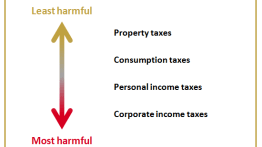
With all these tax cut suggestions kicking about — and with the British economy desperately in need of some oomph — it’s worth asking: which would help growth the most? It’s not of course the only consideration, but it is clearly an important one as we struggle to find our way out of recession.   Fortunately, the OECD is on hand with two recent reports to help answer our question. The first, ‘Tax Reform and Economic Growth’, divides taxes into four broad categories and ranks them on how harmful they are to growth: This suggests that the Centre for Policy Studies is right — on growth grounds at least — to focus on cutting corporation tax.

Transcript: Grayling on work experience

From our UK edition

On the Today Programme this morning, Employment Minister Chris Grayling defended the government's Work Experience programme in light of the recent controversies around it. Here's a full transcript of the interview: Evan Davis: Well how can work experience get such a bad name? A string of high profile companies have pulled out of one government scheme providing work experience for young people. The latest, retailer Poundland, has announced it is suspending its participation in the scheme although it’s not quite clear which scheme it is, because there are several government schemes for getting people, long-term unemployed or young, into work. Let’s see if we can clarify what is going on with the Employment Minister, Chris Grayling. Good morning to you.

Your guide to all those tax cut proposals

From our UK edition

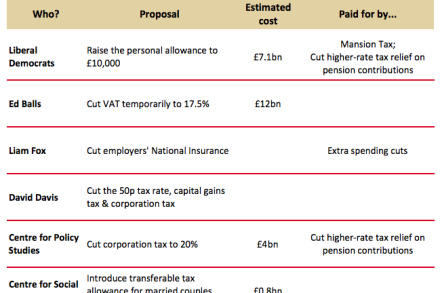
Nick Clegg, Ed Balls, Liam Fox, David Davis, the Centre for Policy Studies, the Centre for Social Justice and the Sun. It seems almost everyone thinks George Osborne should cut taxes in his Budget next month — the only disagreements are over how. Here’s a quick guide to the main proposals so far: There will doubtless be other suggestions before 21 March when we will finally learn which, if any, Osborne has chosen. UPDATE: The table originally gave the cost of the CPS' corporation tax cut as £8.5bn. This is their 'static' estimate of the cost, but a more realistic estimate, derived from the Treasury's ready reckoner, is £4bn.

The Lib Dems step up their push for £10,000

From our UK edition

Set your TiVos. At 6.55 tomorrow evening, BBC1 will air the Liberal Democrats’ latest party political broadcast. For those of you who can’t wait, here’s a sneak preview: In the video, Nick Clegg describes his proposed increase in the income tax personal allowance as ‘a £700 tax cut for ordinary working people — that’s an extra £60 in your wages every month’. I’ve remarked before on the similarities in both rhetoric and policies between the Lib Dems and Barack Obama, but Clegg’s ‘£60 a month’ pitch is as close as you get to the way Obama sells his payroll tax cut extension as ‘about $40 in every paycheck’.

Obama breaks clear

From our UK edition

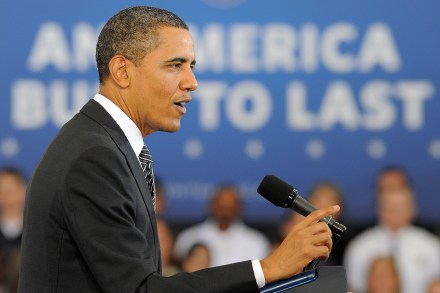
The rejuvenation of Barack Obama’s re-election hopes continues apace. He’s added seven points to his approval rating since November, improving it from the low 40s to around 50 per cent now. After months of polling neck-and-neck with Mitt Romney, he now boasts a six point lead. Just four months ago, the bookies thought he was more likely to lose the election than win it. Now Intrade gives him a 60 per cent chance of victory. Nate Silver has a great article on Obama’s chances in this week’s New York Times Magazine. He’s built a model to forecast the election results based on the three most important factors at this stage: Obama’s approval rating, his opponent’s ideology and economic growth.

The tax debate at the heart of the Budget

From our UK edition

The run-up to last year’s Budget was all about fuel duty. This year it’ll be all about direct taxes. The Lib Dems are determined to put their manifesto pledge of raising the income tax personal allowance to £10,000 front and centre. They already managed to turn this promise into government policy in the Coalition Agreement, and last year’s Budget announced that the threshold would rise to £8,105 in April this year. But Nick Clegg’s made clear that he wants to go ‘further and faster’ on this. The Conservative response at the Treasury – according to today’s Telegraph – is simple: ‘how are they going to pay for it?

Hague’s ‘Cold War’ warning

From our UK edition

William Hague has gazed into his Middle Eastern crystal ball and doesn't like what he sees. In an interview in today's Telegraph, he says of Iran: ‘It is a crisis coming down the tracks, because they are clearly continuing their nuclear weapons programme… If they obtain nuclear weapons capability, then I think other nations across the Middle East will want to develop nuclear weapons. And so, the most serious round of nuclear proliferation since nuclear weapons were invented would have begun with all the destabilising effects in the Middle East. And the threat of a new cold war in the Middle East without necessarily all the safety mechanisms… That would be a disaster in world affairs.

Gorby: Putin’s like Thatcher

From our UK edition

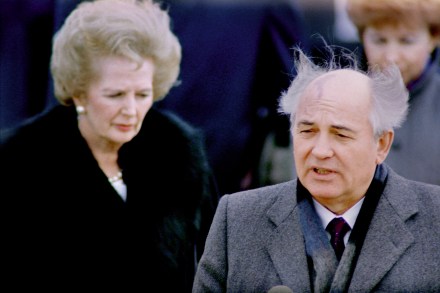
The Times has a fascinating interview (£) with former Soviet leader, Nobel Laureate and two-time Man of the Year Mikhail Gorbachev. He strikes an optimistic tone about the future of democracy in Russia, praising the ‘Moscow Spring’ protesters and saying ‘This is the right moment to start creating as part of this new situation a strong democratic party.’ But perhaps the most eye-catching comes when he compares Vladimir Putin with Margaret Thatcher: ‘Mr Gorbachev recalled Mrs Thatcher, Prime Minister at the time, telling him that she was leaving a summit in Paris early to deal with the challenge to her leadership from within the Conservative Party.

Rombo vs Santorum

From our UK edition

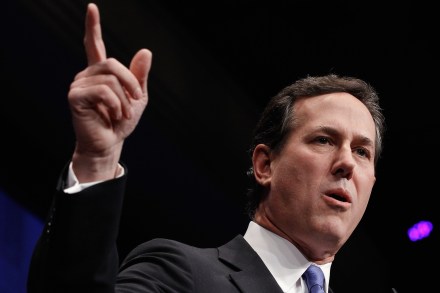
Having reclaimed the mantle of ‘Anti-Romney in Chief’, Rick Santorum is now surging in the polls. He’s moved into a narrow lead at the national level and – more importantly – looks likely to win two of the next big states on the primary calendar: Michigan and Ohio. Of course, that makes him the new target of Romney attack ads. Restore Our Future – the pro-Romney Super PAC – has already released a video slamming Santorum as a ‘big spender’ and ‘Washington insider’, which it will air in Michigan, Ohio and Arizona.

How can employment and unemployment go up at the same time?

From our UK edition

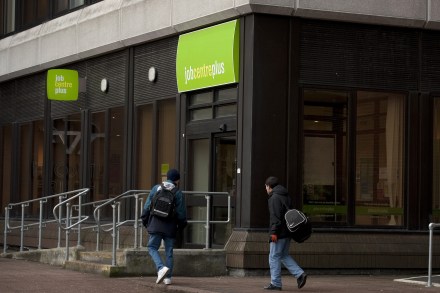
The employment level has risen since the election, according to today’s figures — albeit only slightly, from 29.0m to 29.1m. But unemployment’s up too: from 2.46m to 2.67m. So how come we’ve seen both more jobs and lengthening dole queues? Well, that’s because the ‘economically active’ population (people who are in work or ‘have been actively seeking work and are available to start work if a job is offered’) has grown faster than employment has. There are now 31.8m people in the UK who fit that description, an increase of 320,000 since the coalition came to power. But with only a 110,000 rise in employment, that means the number of folk unemployed has risen by 210,000.

How Obama’s new budget fits into the UK debate

From our UK edition

Yesterday, Barack Obama set out his budget for ‘Fiscal Year 2013’ – that is, for the year beginning October 2012 (in the US, the fiscal year runs from October to September, rather than April to March as it does here). Of course, the federal budget has to be passed by both houses of Congress before being signed off by the President, so the final version will look very different to this one. It is better thought of as a statement of Obama’s intent, and his starting point for the negotiations between Congress and the White House. Nevertheless, it throws up a few interesting points, not least in how it relates to our own economic debates in the UK: 1. Deficit reduction.

From the archives: Are you politically sound?

From our UK edition

This evening, we've dug out a fun piece from 2000, in which Matthew Parris gives an A-to-Z of the right-wing alternative to Political Correctness: Political Soundness. A lexicon of conservative cant, Matthew Parris, 19 February 2000 Are you politically sound?  Are you sound on field sports, sound on the countryside, sound on immigration? Are you sound on the Union, on buggers and on the Common Market? Are you sound on the monarchy? Are you sound on Diana? Are you sound on Enoch, Margaret, Jonathan and Neil?  Ever ready to laugh at others, we on the Right are in danger of losing our ability to laugh at ourselves. As we ridicule the po-faced puritans of the Left, we forget how ripe for ridicule are the sniffy certainties of our own creed.

The Republican race is taking its toll on Romney

From our UK edition

Rick Santorum’s surprise clean-sweep of three states on Tuesday certainly suggests that the battle for this year’s Republican nomination will go on a fair bit longer than looked likely after Mitt Romney’s win in Florida a week earlier. But it doesn’t change the fact that Romney will, most likely, emerge the winner. But where it once looked like he’d make a decent — if unexceptional — challenger to Obama in November, he’s starting to seem much less electable. Just look at the slide in his poll numbers. At the beginning of the year, a Washington Post poll found that 39 per cent of Americans had a positive view of Romney, against 34 per cent with a negative one — a net positive rating of 5 points.

Public opinion is split on Gove’s reforms

From our UK edition

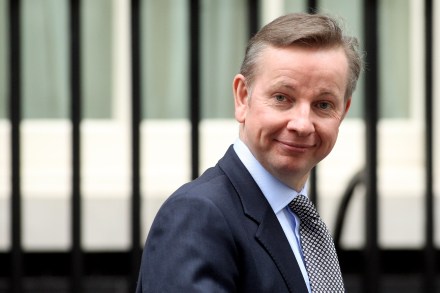
It seems most of the public agrees with the need to improve our schools. A YouGov poll out this morning shows that 53 per cent think education standards have deteriorated over the past 10 years, while only 12 per cent think they've got better. 48 per cent think exams are too easy; just 28 per cent say they’re ‘about right’ and a mere 3 per cent think they're too hard. And when it comes to discipline, the consensus of inadequacy is especially strong: 83 per cent say schools are ‘not strict enough’, while 0 per cent say they’re ‘too strict’. You don’t see 0 per cent in response to questions like this very often.

The other Miliband under attack

From our UK edition

By now, we’re all used to waking up to newspaper columns describing Ed Miliband’s flaws and proclaiming him unfit to lead the Labour party. But today, it’s David Miliband who’s under fire in two articles – one by Roy Hattersley in the Guardian and the other by Matthew Norman in the Telegraph. They’re both in response to the elder Miliband’s New Statesman article, the significance of which Pete wrote about on Thursday.

What difference the Scottish independence question makes

From our UK edition

A very useful contribution from Lord Ashcroft this morning, in the form of a poll he’s commissioned on Scottish independence. What sets Ashcroft’s poll apart from previous surveys is that he asks three different questions to three different sets of around 1,000 Scots.   The first is the question Alex Salmond wants on the ballot paper at the referendum: ‘Do you agree that Scotland should be an independent country?’ 41 per cent say ‘Yes’ and 59 per cent say ‘No’. The second alters the wording only slightly, to ‘Do you agree or disagree...’ and finds 39 per cent agreeing (i.e. supporting independence) and 61 per cent disagreeing.