Jonathan Jones

Jonathan Jones: Earthly Delights

From our UK edition

56 min listen

My guest in this week's Book Club podcast is the art critic Jonathan Jones. The term 'renaissance' is out of fashion among scholars these days, but in his new book Earthly Delights: A History of the Renaissance Jonathan argues that it points to something momentous in human history. On the podcast, Jonathan makes the case for what that something is – which is perhaps more heretical, and less Italian, than we might have remembered.


What you see is what you get | 25 April 2019

From our UK edition

There’s no avoiding the Britishness of British art. It hits me every time I walk outside and see dappled trees against a silver-grey cloud that looks like it was painted by Thomas Gainsborough, or look in the mirror and feel the same gooseflesh anxiety as I do when I see a portrait by Lucian Freud. It’s got something to do with the light — that pale, ever-changing clarity that is so kind to clouds and, when Freud has got his model naked under the skylight, so unkind to human flesh. The phrase the Englishness of English art was coined by Nikolaus Pevsner in the title of a classic art-history book — though he called it an essay on ‘the geography of art’ — based on his 1955 Reith Lectures.

No triple-dip: GDP up by 0.3%

From our UK edition

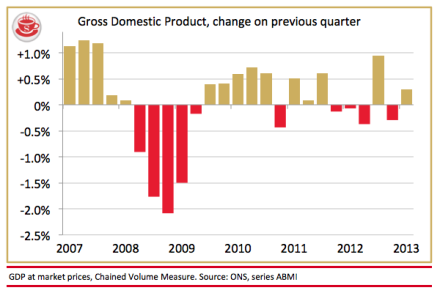
The UK seems to have avoided a triple-dip recession. According to today's estimate from the Office for National Statistics, the economy grew by 0.3 per cent in the first three months of 2013. But it is important to remember that this is just a first estimate, with a margin of error of ±0.7 points. So today's figure could still be revised down to show a triple-dip, or revised up to show stronger growth. This still leaves GDP 2.6 per cent below its pre-recession peak, five years after the downturn hit.

Nate Silver on predicting the 2015 general election

From our UK edition

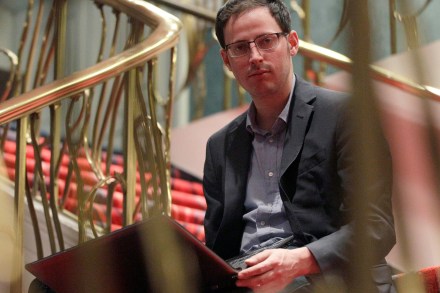
I've interviewed one of the heroes of last year's US elections — forecasting expect Nate Silver — for the books blog, but I thought CoffeeHousers might be interested in what he had to say about UK elections. Silver's attempt to predict the 2010 election didn't fare so well (his model significantly underestimated Labour and overestimated the Lib Dems) and he explained the difficulties facing those who try in 2015: the lack of constituency polls, the multi-party system and tactical voting. Here's what he told me: ‘I think you'll have a big increase in the number of poll-driven forecasts here. We need more polling here. If you don't know what's happening in individual constituencies that's a bit tricky.

Nate Silver interview: ‘Politics is uniquely full of bullshit’

From our UK edition

Nate Silver doesn't suffer fools gladly — especially fools who pass themselves off as experts. In the second chapter of his book, The Signal and the Noise: The Art and Science of Prediction, he describes just how bad most political pundits are. And in person, he goes even further. 'I think some of them are very skilled at the art of bullshit; I think some of them are just deluded; some of them aren't very smart; some of them are immoral; some of them are well-intentioned but wrong; some of them are behaving as party hacks. And there's not a lot of incentive for them to change that.' Most columnists are 'a waste of space', he says. 'A lot of them are nice people, but they're literally a waste of column inches.

Unemployment rises… or does it?

From our UK edition

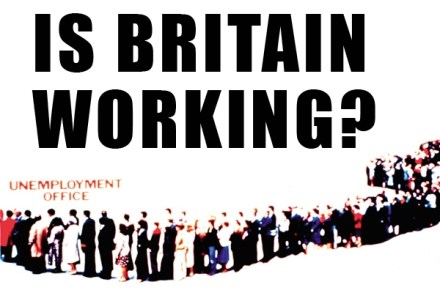
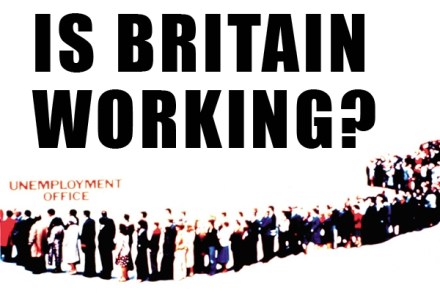
Today's job statistics are, as usual, mixed — and even a touch confusing. Last month, the headline was that the unemployment had risen to 2.56 million. This month, we're told that it's risen again — to 2.52 million. How can both be right? Because the point of comparison is not the previous month, but the previous quarter. Still, the fall in employment and rise in unemployment is really last month's news, not this month's. As ever, it's worth remembering the margin of error of all these estimates, which dwarfs the quarterly changes — so we don't actually know whether they rose, fell or stayed the same. But there are some trends that we can identify.

Is nice but dim such a bad thing for Labour?

From our UK edition

Labour's lead in the polls has been pretty steady at around 10 points for a little over a year now. So why does today's Guardian carry an article with the headline 'Outright election victory in 2015 looks a distant prospect, pollster tells Labour'? It's based on two YouGov polls — commissioned by Progress and actually conducted two months ago, but released today. The first asked voters to put each of the parties into one of four categories: 'nice and smart', 'nice but dim', 'mean but smart' and 'mean and dim'. Labour seems to come out best, in that it has the highest proportion choosing 'nice and smart' and the lowest choosing 'mean and dim'. But only 24 per cent say the party is 'smart', compared to 33 per cent for the Tories.

Nigel Farage shouldn’t get Ukip’s hopes up for a win in Portsmouth South

From our UK edition

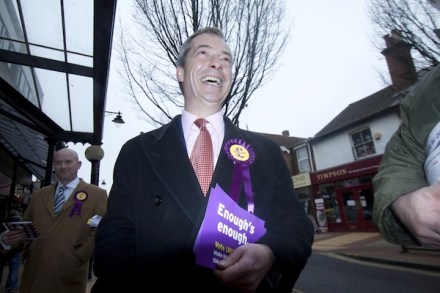
Talk of a by-election in Portsmouth South has been growing, fuelled by allegations against MP Mike Hancock. And, in a speech to the parliamentary press gallery lunch yesterday, Nigel Farage claimed Ukip could win it. The reasoning is simple: Ukip are on the up, and they came within 2,000 votes and 5 percentage points of a win in Eastleigh, so surely they can go over the top in another Hampshire by-election where the Lib Dem incumbent has had to step down amidst a scandal. Of course Ukip could win — but its chances may not be as high as that reasoning suggests. Indeed, Farage himself seems to think his party would be more likely than not to lose. He said 'I would think that the odds on Ukip winning it would be 2/1, 3/1 at Ladbrokes and elsewhere.

Deficit falls by 0.3%… maybe

From our UK edition

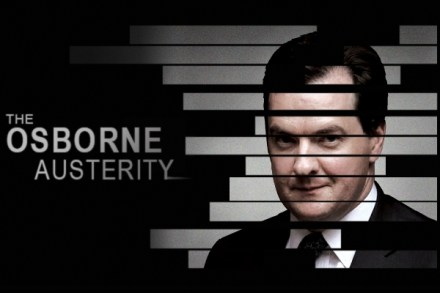
George Osborne will be breathing a sigh of relief this morning. The boast he made in his Autumn Statement in December — 'the deficit is coming down this year, and every year of this Parliament' — appears to have held up. But only just. The figures from the ONS today show that the government borrowed £120.9 billion in 2011-12 and £86.2 billion in 2012-13. But that 2012-13 figure is artificially lowered by £28 billion by the Royal Mail pension transfer, and by a further £6.4 billion by the cash transferred to the Treasury from the Bank of England's Asset Purchase Facility. Strip out those two effects and borrowing in 2012-13 was £120.6 billion — still lower than 2011-12, but only by £300 million, or 0.3 per cent.

Should the Public Affairs Act 1975 be repealed?

From our UK edition

9 per cent of Brits say the Public Affairs Act 1975 should be repealed, and 9 per cent say it shouldn't, according to a new poll by YouGov. If you're wondering 'What on Earth is the Public Affairs Act 1975?', that's probably because it doesn't exist. And yet 18 per cent were willing to offer an opinion on it (interestingly, men were twice as likely to do so than women). This is a recreation of an experiment conducted by researchers at the University of Cincinnati in the eighties, which also found that 'a substantial number of people will offer opinions on fictitious topics in the context of a survey interview'. YouGov used the controversial (or, rather, non-existent) Act to test how attaching a party's position would alter people's opinions on it.

Has the jobs recovery stalled?

From our UK edition

The number of people in work in December to February was 29.698 million — lower than last month's 29.732 million and representing a very slight 2,000 quarter-on-quarter fall — according to today's figures from the Office for National Statistics. Of course, 2,000 is just a 0.008 per cent drop, and since the margin of error for that change is ±139,000, the quarter could yet turn out to have been one of reasonable jobs growth. But in today's figures, the lack of employment growth, while the economically active population continued to expand, meant that the unemployment level rose by 70,000 — its biggest quarter-on-quarter rise since September to November 2011. The unemployment rate, which had fallen from 8.4 per cent in late-2011 to 7.

Margaret Thatcher in six graphs

From our UK edition

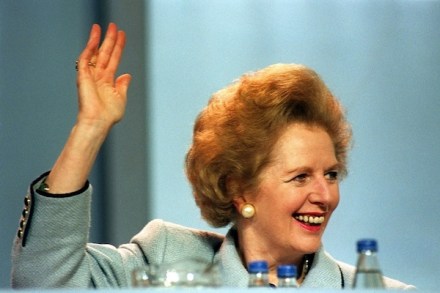
With the debate swirling about Margaret Thatcher's legacy and her government's record, it's worth taking a look at what the cold, hard economic data has to say about her time in office. Of course, growth rates and unemployment figures can't tell us everything about a period, but they can at least provide a bit of substance to mix with the well-worn rhetoric. 1. Average growth. Under Thatcher, GDP rose by 29.4 per cent — an average of 0.6 per cent growth per quarter. (That's the same as the average growth rate from 1955 to 2013.)   2. Manufacturing jobs lost, but more service jobs created. A net of 1.6 million jobs were created under Thatcher. The manufacturing industry lost 1.9 million, while the services sector grew by 3.6 million.   3.

Two versions of Osborne’s benefits speech

From our UK edition

The Times' Sam Coates picked up on a couple of discrepancies between the text of George Osborne's Morrisons speech sent out by CCHQ, and the one published by the Treasury. Here's the CCHQ text: 'In 2010 alone, payments to working age families cost £75 billion. That means about one in every seven pounds of tax that working people like you pay was going on working age benefits.' But the Treasury version reads: 'In 2010 alone, payments to working age families cost £90 billion. That means about one in every six pounds of tax that working people like you pay was going on working age benefits.' Osborne actually delivered the Treasury version, and that does seem to be the more accurate one.

Poll: Boris could save 50 Tory MPs

From our UK edition

YouGov have once again tested how a Boris-led Tory party would compare to a Cameron-led one in the polls. When they last did so in October, they found that Boris was worth a seven-point bump: with Cameron as leader, the Tories were nine points behind Labour; Boris narrowed the gap to just two. The results this time — reported by Joe Murphy in the Evening Standard — are very similar: the Tories do six points better under Boris than under Cameron. That's enough to eliminate Labour's lead entirely. With Cameron, it's Labour 37, Tories 31. With Boris, it's 37 all. As I said last time, switching to Boris probably would not be enough to give the Tories a majority.

Budget 2013: The public’s verdict

From our UK edition

We've got the first post-Budget polling from YouGov, and it brings mixed news for George Osborne. Certainly, this Budget doesn't seem (so far) to have dented the Chancellor's reputation the way last year's did — but nor has it yet enhanced it as his 2011 Budget seemed to. And on the question of which would make the better Chancellor, Osborne maintains the six-point lead over Ed Balls he has held since November 2011. And on the all-important criterion of 'fairness', Wednesday's Budget scores relatively well. 39 per cent think it's fair, while 31 per cent say it isn't. That's a big improvement on last year, when 32 per cent said the Budget was fair and 48 per cent declared it unfair.

Voters: It’s not Plan A, it’s Osborne

From our UK edition

A fascinating poll result from Ipsos MORI today. They ask, essentially, whether people agree with the government's 'Plan A' or Labour's 'Plan B'. Specifically, they ask: 'People have different ideas about the best way of dealing with Britain’s economic difficulties. Which of the following do you most agree with? A1: Britain has a debt problem, built up over many years, and we have got to deal with it. If we don’t, interest rates will soar. That’s why tackling the deficit and keeping interest rates low should be our top priority. OR B1: Without growth in our economy, we are not getting the deficit down and are borrowing more. We need more government spending on investment to kick-start our economy and a temporary cut in taxes to support growth.

Forget 50p — scrap the 60p tax rate

From our UK edition

Imagine if a Chancellor stood up and announced that those earning up to £100,000 would pay a 40p tax rate, those earning £100,000 to £112,950 will pay a 60p rate, and those earning above £112,950 will pay the 40p rate, and then the top earners will pay a 50p rate. That'd be crazy, right? But that's exactly what Alistair Darling announced in his 2009 Budget. So how did he get away with it? By delivering his announcement in code. Instead of talking about marginal tax rates, he described the move as withdrawing the personal allowance for those with incomes over £100,000. The language may be different — and may sound much more reasonable — but the effect is exactly the same.

Five things you need to know about the EU’s bonus cap

From our UK edition

1. The plan: To limit the bonuses that can be paid to bankers to the level of their salary. Any higher bonus would need the approval of shareholders (65 per cent of votes cast if a quorum of 50% of shareholders is reached; 75 per cent of votes cast otherwise) and a quarter of it would have to be deferred for five years — and even then the bonus could not exceed double the salary. 2. Where does the proposal come from? The European Parliament. MEPs insisted on the cap to be included in a package of banking reforms.

The truth about Ukip supporters

From our UK edition

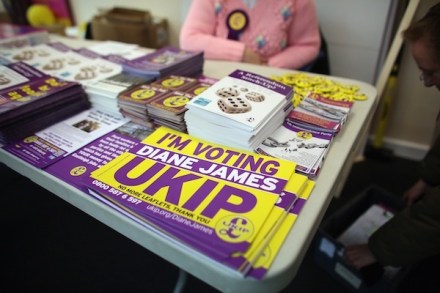
Who are all these folk jumping on Nigel Farage's bandwagon? Ukip — which received just 3 per cent of the vote in 2010 — is now averaging about 11 per cent in the polls. Its rise has fuelled all sorts of speculation about where its supporters are coming from and why they're turning to the party. Today, YouGov have thrown a bit of data into that speculation. They've combined the results of all their February polls, which sampled 28,944 people including 2,788 who said they'd vote Ukip. The results are a mixture of the expected and the surprising. First, the expected: most of them voted Tory in 2010 — 60 per cent of them, in fact. 15 per cent of them voted Liberal Democrat, 12 per cent Ukip and 7 per cent Labour.

What Works: The government’s NICE new idea

From our UK edition

This afternoon, Danny Alexander and Oliver Letwin launched something so sensible it's astonishing governments haven't been doing it before. They're actually going to use evidence to determine which policies work. The idea is that a number of different centres in a new 'What Works' network will examine how effective policies really are, identifying which represent value for money and which don't. That begs the question of what on earth is happening at the moment when it comes to scrutinising policy. There is plenty of high-quality evidence swirling around that rarely even gets a mention when a policy is up for debate. But when politicians do mention it, they often cherry-pick it, twist it, or, er, simply invent it to support a position.