John Sentamu

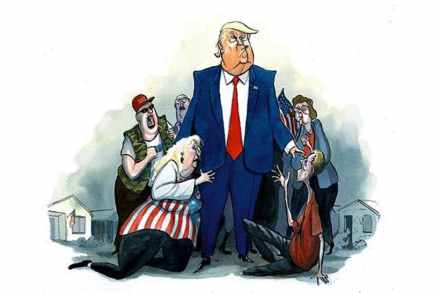
How did people end up believing in Trump?

From our UK edition

Jon Sopel, the BBC’s North America editor, has given us a pithy and perceptive account of today’s USA in his book If Only They Didn’t Speak English. He described the mood there in 2016 as ‘fearful, angry and impatient for change’. It was the year when Donald Trump was going to be elected to the world’s most powerful position. Could something similar also explain the unpredicted swings in European elections and across the world? If so, does it mean that people are so fed up with the status quo that they will opt for anything contrary? The oft-quoted aphorism from G.K. Chesterton comes to mind: ‘When men choose not to believe in God, they do not thereafter believe in nothing, they then become capable of believing in anything.
The tweeness of religion in America

From our UK edition

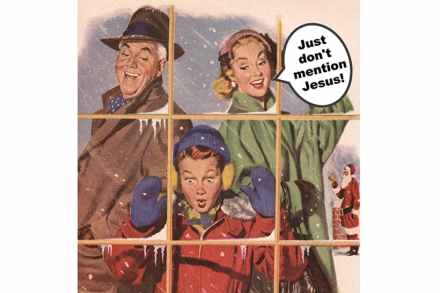
Today’s Americans are extraordinarily twee about religion. On the one hand they print ‘In God We Trust’ on banknotes, insist their leaders have a religious belief, and cite ‘the Creator’ as granting the rights of the Constitution — at least 50 per cent say religion is very important to them, compared with 17 per cent in the UK. On the other hand, when it comes to Christmas, they row back. ‘Happy Holidays’ is the only acceptable greeting. Anything more specific might be judged offensive, intrusive, coercive. Jon Sopel, himself of Jewish stock, spotted a banner in Dulles airport, reading: ‘We hope you like our holiday trees.’ They were Christmas trees.

The truth about the police’s ‘institutional racism’

From our UK edition

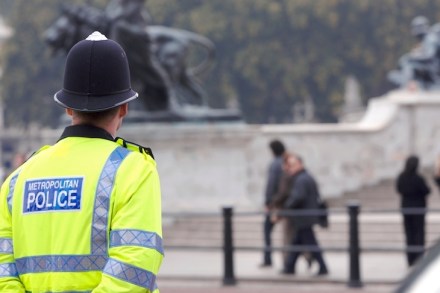
It is 25 years since Stephen Lawrence was murdered in a London suburb, solely because he was black. The subsequent Stephen Lawrence Inquiry, chaired by Sir William Macpherson of Cluny, which I helped to compile, uncovered in this particular case, ‘institutional racism’ in the Metropolitan Police. That carefully chosen wording has been misquoted ever since. We did not say that police were institutionally racist, as if it were official police policy to stigmatise black people. It was — and clearly still is — more subtle. Institutional racism is the product of unwitting prejudice, ignorance, carelessness, stereotyping and a reluctance to change. That aggregates to a festering prejudice. And it’s widespread. Try this Q&A test.

Archbishop’s Notebook

From our UK edition

I’m not surprised that black people are still eight times more likely than white people to be stopped and searched by the police, despite the less frequent use of those powers. It happened to me regularly in the 1990s. One rainy night I was driving through the City of London in one of the cars loaned to bishops for their work, when a constable flagged me down. It was winter and a scarf covered my dog collar. I asked him repeatedly why I had been stopped. He replied repeatedly and with increasing agitation, ‘Just open the boot.’ Then he asked me what I did. When I said, ‘I’m the Bishop for Stepney’, and I removed the scarf from around my neck and he saw my collar, he nervously gasped, ‘Whoops.