John R. MacArthur

John R. MacArthur is the publisher of Harper’s Magazine.

The right stuff | 17 May 2018

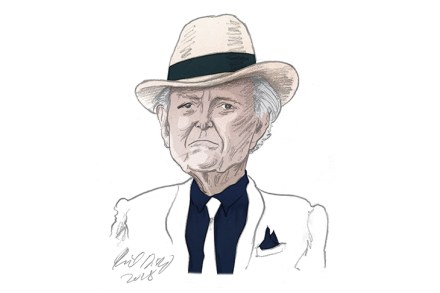
To some, Tom Wolfe’s death might seem a greater loss for readers on the right wing of American culture and politics, since he viewed himself as a conservative, very much in keeping with his upbringing in the Richmond, Virginia, of the 1930s and 1940s. His gentleman’s manners and soft-spoken demeanour recalled another era — a class-defined and racially segregated world of courtliness and formal collars. Wolfe famously picked on liberal targets throughout his remarkable career: his most savage satires addressed the pretensions of leftish icons from Leonard Bernstein to, most recently, Noam Chomsky.

Boxing not so clever

For Horace Hopper, the half-breed protagonist of Willy Vlautin’s bleak new novel, essential truths come slowly, and usually too late to do him any good. Abandoned by his Native American mother and Irish American father, he has exiled himself from the only people who love him, an elderly couple on a sheep ranch in deepest Nevada. His one idea for becoming ‘somebody’ is to transform himself into a world-champion lightweight boxer with a wholly fabricated Mexican identity. ‘Mexican boxers are the toughest... true warriors who never quit,’ he believes. Only well into the novel does it dawn on him that his self-inflicted loneliness is ‘a sort of disease’, not a manly test of character that will redeem his young life.

Divided they stand

From our UK edition

 New York As the malevolence and incoherence of the Trump administration continue to amaze, Democrats are taking heart from the popular revulsion against the Mad Hatter of Mar-a-Lago. The media class is chattering excitedly about anti-Trump momentum after special Congress elections in conservative Kansas and Georgia resulted in a narrow Republican victory in the former and a run-off in the latter. Last week, Paul Kane of the Washington Post cited this as proof ‘that Democrats have galvanised the anti-Trump activism of the past three months into votes at the ballot box’.

Yes, Trump is grotesque. But I would never have voted for Hillary

From our UK edition

We’re closing 2016 by republishing our ten most-read articles of the year. Here’s No. 10: John R. MacArthur on why spoiling his ballot paper was a better option than voting for Donald Trump - or Hillary Clinton  New York ‘Does this mean we have to vote for Hillary?’ asked my wife. It was early morning 16 March, and the queen consort of the Democratic party had seemingly sewn up the presidential nomination — a coronation promised years ago by her king but thus far denied by unruly subjects. As I scanned the headline in the New York Times, ‘Clinton and Trump Pile up the Delegates’, I felt sick at heart.

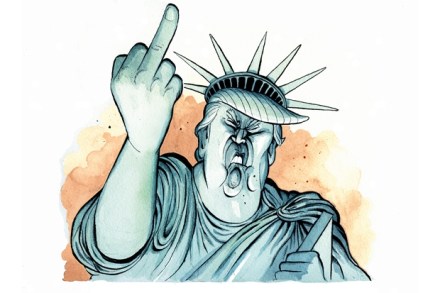
Donald Trump is creating a cabinet of grotesques

From our UK edition

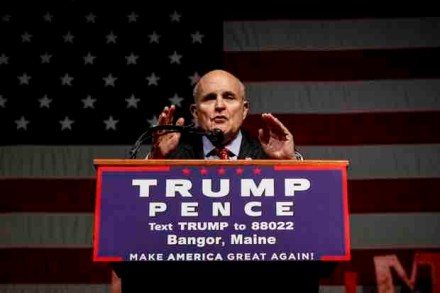
Around 10:30 on election night, I found myself denying the consequences of a political reality I've been hurling at indifferent liberals for more than twenty years. With the crucial swing states of Florida and North Carolina falling to Donald Trump, the Europe One radio host interviewing me wanted to know whether the furious working-class revolt against the Clintons and the Democratic Party was finally coming to fruition. Was Trump really going to win? So horrified was I by the prospect of the White House being occupied by a Mad Hatter dressed in full metal jacket that I momentarily went blind. I weakly replied, 'No, look at Virginia—Hillary's still in the lead.' She did wind up prevailing in that state, as well as in the popular vote, but Trump won what in the end was a referendum.

How Brexit Britain can save Greece

From our UK edition

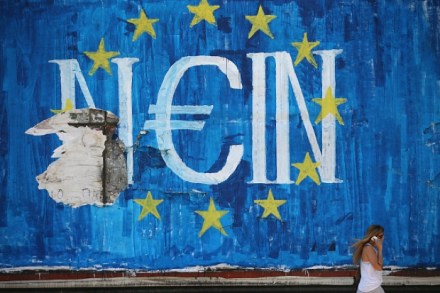
The cheerful, nattily dressed Englishman checking out at my hotel in Mykonos as I was checking in with my daughter looked shocked as he scrutinised his bill: 'What's the VAT? Twenty-four percent? How can that be?' I instantly violated my pledge to my daughter not to embarrass her by talking politics on vacation. 'You can thank Wolfgang Schäuble and the Germans,' I told the man. 'Austerity politics and all that.' My new acquaintance pondered what I was saying -- 'Is that so?' he said, or something to that effect -- then quickly changed the subject to the charm of cobblestone and the local nightlife. I didn't ask him how he had voted on Brexit, but I wish I had, for an incendiary political idea was beginning to form in my mind.

New York Notebook | 29 September 2016

From our UK edition

The first presidential debate was a disappointment. Half an hour into the big Trump-Clinton show on Long Island, many among the audience must have asked themselves why they weren’t watching The Real Housewives of Orange County instead. The strangest exchange concerned how to defeat Isis. Donald Trump said, ‘They’re beating us at our own game with the internet’ and Hillary Clinton agreed that winning requires ‘going after them online’. Hillary won by speaking in complete sentences, albeit brimming with bromides, while Trump lapsed into incoherence, apparently advised to sound calmer and more presidential. But Trump without his insults — of Mexicans, women and Muslims — just isn’t as much fun.

The power of the American oligarchs

From our UK edition

Talk about plutocracy and oligarchy has become commonplace in America, as the billionaire class grows ever richer and seemingly more arrogant. But do today’s super-rich constitute a threat to American democracy? Jane Mayer thinks they do, particularly when their money is employed by fanatics like Charles and David Koch and other like-minded tycoons to upend the social order. In Dark Money, Mayer describes a sophisticated right-wing political movement, largely operating through individual proxies and front groups, that seeks a kind of coup d’état, albeit one with libertarian objectives designed to reduce the power of the state as opposed to seizing it. So secretive and centrally organised is this reactionary cabal that it invites comparisons with the Marxist left.

Thanks to Brexit, New Yorkers discovered ‘the inequality thing’

From our UK edition

A few days before the vote on Brexit, a crowd of Democratic Party grandees gathered in one of Manhattan's toniest venues. Old friends and allies happily greeted one another, and as liquor unlocked emotions, one of them turned nostalgic about his stint in the Clinton Administration -- a happier time, when the party was unified around the cult of political pragmatism known as triangulation. 'Yes,' said a misty-eyed associate who also remembered those days fondly. 'We didn't have the inequality thing.... How did we miss it?' Propriety prevents me from identifying the participants, but the clueless arrogance about 'the inequality thing' largely sums up the reaction to Britain's Leave vote in America's capital of high finance and outsized intellectual pretentions.

The Clintons made Trump

From our UK edition

   New York ‘Does this mean we have to vote for Hillary?’ asked my wife. It was early morning 16 March, and the queen consort of the Democratic party had seemingly sewn up the presidential nomination — a coronation promised years ago by her king but thus far denied by unruly subjects. As I scanned the headline in the New York Times, ‘Clinton and Trump Pile up the Delegates’, I felt sick at heart. The Times has functioned throughout the campaign as court gazette for the Clintons, but there was no denying the basic accuracy of the story.

Dick at his trickiest

From our UK edition

In the more than 40 years since Richard Nixon resigned as president — disgraced as much by his inveterate lying as by his actual crimes related to Watergate — history has been relatively kind to him. Compared with Ronald Reagan, Bill Clinton and George W. Bush, Nixon in retrospect can seem statesmanlike, thoughtful and liberal-minded. He established diplomatic relations with communist China, took the US off the gold standard, negotiated the wind-down of the Vietnam war, and created the Environmental Protection Agency — accomplishments that generally prompt even Nixon-haters to pause before they condemn Tricky Dick to perdition. But now comes Joan Brady with a bracing reminder of what indeed was so hateful, so villainous about Nixon and his political ascent.

The man who wrecked New York

From our UK edition

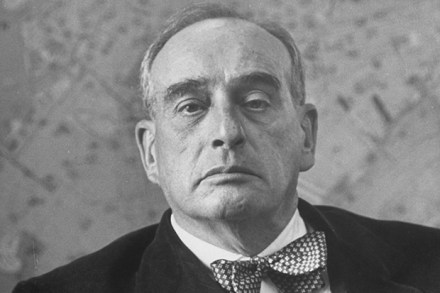
It is something of a mystery why the Bodley Head has decided to publish Robert Caro’s The Power Broker in Britain more than 40 years after the initial appearance in the US of this classic work — but better late than never. Caro’s remarkable portrait of New York City’s master planner Robert Moses merits publication in any language, at any moment in time. For its scope extends beyond Moses, fascinating though he was as a person, builder, wrecker, and manipulator of men and money. Caro’s ambition — in a journalistic sense equal to Moses’s ambition in architecture, park creation, and road and bridge construction — is greater than conventional biography.

The dark comedy of the Senate torture report

From our UK edition

Like many journalists, I’m a bit of a know-it-all — when information is touted as ‘new’, especially in government reports, it sometimes brings out in me the opposite of sincere curiosity so essential to my trade. Thus when my French publisher asked me to write a preface to Senator Dianne Feinstein’s report on the CIA’s torture programme, and come to Paris to promote a translated edition, I was reluctant. Hadn’t I already read everything about this? As much as I detest the CIA and love Paris, a book tour to discuss waterboarding and forced rectal feeding struck me as less than appealing. Nevertheless, civic duty spurred me and a lawyer colleague to write the preface.

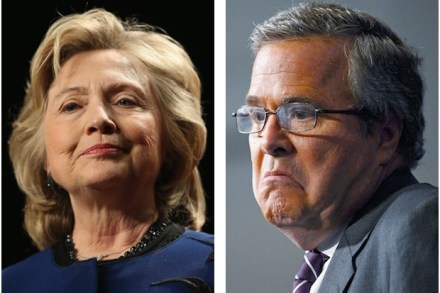
Clinton vs Bush — again

From our UK edition

[audioplayer src="http://traffic.libsyn.com/spectator/TheViewFrom22_24_April_2014_v4.mp3" title="John Rick MacArthur and Freddy Gray discuss Clinton vs Bush" startat=929] Listen [/audioplayer]America is much less threatened by right-wing extremists than by the oligarchic rule of the two major political parties. The mainstream right, however, is wedded to the absurd notion that the Democrats are a party of the ‘left’ that is in authentic ideological competition with ‘conservative’ Republicans. Meanwhile, the orthodox left clings to the equally absurd belief that Barack Obama really means to reform the United States and redeem it from the sins of slavery, genocide against the Native Americans, and God knows what other crimes against humankind and nature.

Why is Doris Kearns Goodwin raking up old muck?

From our UK edition

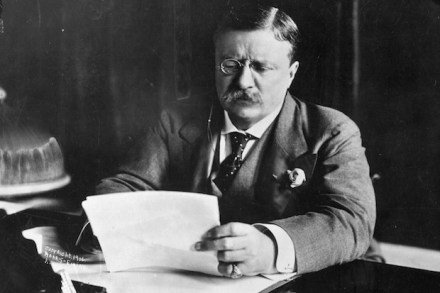
Theodore Roosevelt and the Progressive Era are well-worn subjects for both professional and amateur historians, so it’s pertinent to ask why Doris Kearns Goodwin devoted so many words —and her considerable reputation — to the writing of The Bully Pulpit. Kearns’s thesis seems clear enough: at the close of the 19th century, mythically egalitarian America was in reality teetering on the brink of genuine class warfare. Something urgently needed to be done to prevent an explosion between a furious, increasingly violent labour movement and a cohort of arrogant monopoly capitalists, whose collusion with corrupt politicians had made them virtually invulnerable. Economic strife had stretched the social fabric to breaking point.

Don’t believe the hype: the French still live better than Americans

From our UK edition

In recent months I’ve read at least ten articles about French malaise — all of it apparently due to some mysterious Gallic trait that makes the world’s luckiest people unable to make the best of things. Granted, unemployment is over 10 per cent, the Germans are again running Europe, and François Hollande’s ‘socialist’ government is coming apart at its hypocritical seams. But I don’t buy the thesis that the French are generally ‘miserable’, as Paris School of Economics professor Claudia Senik argued last month in the Financial Times. Indeed, I felt almost defiant as my wife and I boarded the Eurostar in London two weeks ago and headed off to Paris to celebrate our 25th wedding anniversary.

The friends Rushdie forgot

From our UK edition

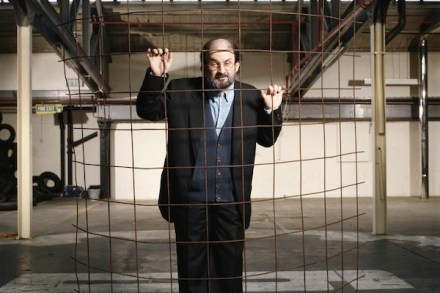
One hundred pages into his absorbing new memoir, written entirely in the third person, Salman Rushdie declares that ‘Friendship had always been of great importance to him,’ since so much of his life had been spent separated, physically and emotionally, from his own family. ‘Friends,’ writes Rushdie, ‘were the family one chose.’ The conceit of third person remove can be annoying, but I understand why the author chose it for Joseph Anton, the title of the book and Rushdie’s assumed name during his long period in hiding after the Ayatollah -Khomeini sentenced him to death.

His finest years

From our UK edition

Just after 8.50 on Tuesday morning, 26 November 1963, Lyndon Baines Johnson sat down behind the desk in the Oval Office for the first time as President, four days after the assassination of John F. Kennedy.  According to Robert Caro, the new chief executive of the United States, now the most powerful person in the world, did not then make a call to his Soviet counterpart Nikita Khrushchev; nor did he confer with aides, or have his secretary place calls to the leaders of Congress, or issue an executive order. Instead, Johnson’s initial action was to phone, himself, the offices of the US Senate and order the desk he used as Senate Majority Leader to be delivered to the White House to replace the government-issue model installed the night before.

Groupthink and doubletalk

From our UK edition

Soon after his historic victory over John McCain, Barack Obama was ushered into a Sensitive Compartmented Information Facility (SCIF) located deep inside the Federal building in Chicago to receive his first top-secret intelligence briefing as President-elect. According to Bob Woodward, the Watergate icon and Washington journalism grandee, the space was designed to prevent eavesdropping and thus ‘unusually small . . . windowless and confining, even claustrophobic’.

King and his killer

From our UK edition

In the late days of the Bush administration, it was fashionable among liberals to call George W. Bush the ‘worst’ president since the founding of the republic and to suggest that under his leadership America experienced its own version of the Dark Ages. In the late days of the Bush administration, it was fashionable among liberals to call George W. Bush the ‘worst’ president since the founding of the republic and to suggest that under his leadership America experienced its own version of the Dark Ages. Even allowing for Bush’s considerable ignorance and malevolent world view, those contemporary doomsayers had forgotten recent history.