John R. MacArthur

John R. MacArthur is the publisher of Harper’s Magazine.

The outrageous cynicism of the Democrats on Iran

From our US edition

Given my longstanding disgust with America’s lawlessly interventionist and self-destructive foreign policy, I should be outraged by Donald Trump’s cavalier remarks justifying – and weirdly minimizing – his surprise attack against Iran in collaboration with Israel. After all, a president stupid enough to mock the new Supreme Leader as “damaged” and only “alive in some form” – while simultaneously urging sitting-duck oil tanker captains to “show some guts” by running the Iranian blockade of the Strait of Hormuz – is someone who logically should be rebuked in the firmest possible terms. But this wildly unstable solipsist is very different from other politicians.

war powers

Why do journalists go easy on Sam Altman?

From our US edition

As legacy journalism continues its downward slide – in influence, quality and revenue – I have two possibly dubious temptations. One is to cut my fellow old-timers some slack. After all, they’ve been crippled by Google’s and Facebook’s massive robbery of everything we write and publish, and it’s hard enough to survive by practicing the traditional scribbling and reporting trade. Why criticize the work of the remaining few publications that are still trying to eke out an honest existence in the grand tradition of serious investigation and clear-sighted exposure of wrongdoing and corruption? So they’ve dumbed down the content a little, so the online reader is constantly interrupted by advertising, so what? My other temptation is to give in to the digital age.

Altman

Why Trumpism won’t fix Clintonomics

From our US edition

As a longtime critic of the Clinton administration’s “free trade” agreements, I’ve lately been mocked by liberal friends who suspect I’m sympathetic to the “plan” hatched by Donald Trump and his senior advisor on trade, Peter Navarro, to “ruin” the country with indiscriminate import tariffs. This sort of jokey ridicule goes with the territory when you jab at neoliberalism from the left. Bill Clinton still has legions of fans among the Democratic party establishment and its media acolytes, and it’s hard for them to face up to the fact that the former president’s economic policies have led directly to Trump’s election as president not just once, but twice.

trade

The federal-state collisions looming over New York

From our US edition

For New York liberals of a certain age, the term “states’ rights” has long been synonymous with segregation in the South. It’s personified by Alabama governor George Wallace’s “stand in the schoolhouse door,” in June 1963, to prevent desegregation of the state university. Wallace blocked two black students from entering the university auditorium, and the ensuing confrontation between the governor and the Kennedy administration signaled the beginning of the end of the Jim Crow system that followed the Civil War. The governor was partly acting on the not entirely fallacious contention that under the federal system, state prerogative should sometimes supersede federal government edicts, and even rulings by the US Supreme Court.

New York

True-blue New Yorkers are bracing themselves for Trump’s return

Fleeing the United States ahead of a 'fascist takeover' by Donald Trump on 20 January has been the talk of liberal circles, and nowhere more than in deep-blue New York City. A New York Times story revealing that tech billionaire and Democratic donor Reid Hoffman was 'weighing a move overseas' because he feared 'retribution' from the next president added fuel to already smouldering speculation ignited by the relocation of the anti-Trump TV celebrity Ellen DeGeneres and her wife to England. I tend to ridicule such quailing as absurd and unpatriotic, if not downright cowardly.  I was thrown off my leftist assumptions, however, when my plumber visited our family’s weekend house on the East End of Long Island, inside deep-red Suffolk County, New York.

Why Donald Trump won and the real reason Kamala Harris lost

33 min listen

Donald Trump has won the election and will be 47th President of the United States after winning the key battleground states of Pennsylvania, North Carolina and Georgia. ‘America has given us an unprecedented and powerful mandate,’ the Republican candidate told supporters. ‘This is a magnificent victory for the American people, that will allow us to make America great again,’ he said at the rally in Florida. It has been total victory, with the Republicans also winning Senate and the popular vote. Kate Andrews is joined by Sarah Elliott and Rick MacArthur to unpack a historic election night.

Is the last minute momentum really with Kamala Harris?

36 min listen

As the 2024 US election goes into the final day, a poll giving Kamala Harris a lead in the historically Republican state of Iowa has bolstered the Democrats. Is momentum really with her? And what appears to be the most important issue to voters - the economy, or abortion rights? Guest host Kate Andrews speaks to John Rick MacArthur, president and publisher of Harper's Magazine, about his views on America's election process from postal voting, trust in the system, and whether the electoral college needs reform. Produced by Patrick Gibbons.

The journalist’s journalist: the irrepressible Claud Cockburn

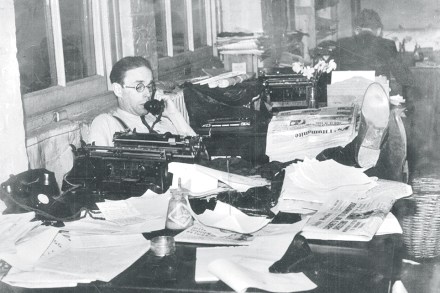
No one should be put off reading Patrick Cockburn’s remarkable biography of his father by its misleading subtitle. ‘Guerrilla journalism’ doesn’t do justice to its subject. The suggestion of irregular warfare from the left underrates Claud Cockburn’s great accomplishments in mainstream politics and journalism and doesn’t begin to embrace the romantic and daring complexity of his life and career. By late 1931, his eyewitness reporting at the start of the Great Depression convinced him that Marx was right Indeed, it is the journalist son’s signal achievement to have surmounted left-wing cliché and written a fascinating and subtle portrait of a paradoxical career.

press fake news media consultancy journalism

The age of consultancy journalism

From our US edition

In a presidential campaign notable for its lack of substantive debate, a serious citizen needs to look far and wide to pierce Donald Trump’s blather and Kamala Harris’s bromides — or to find anything that might resemble real political information. So I quickly reached for my wallet last week when I happened upon the New Yorker’s newsstand edition. The first cover line and subhead caught my eye: “The Democrats’ Left Flank: in the swing state of Michigan, antiwar voters want a commitment from Kamala Harris on Gaza. Are their tactics a gift to Trump?” The Israeli-Palestinian conflict has been top of mind in the campaign press corps all year.

How — and why — the Democrats ignored the will of the people… again

From our US edition

See the wheels come off the Democratic machine as the party leader (who is also the current US president) displays to all the world his verbal and cognitive breakdown. See the party barons’ absurd race to circle the wagons with rationalizations as implausible as their praise for their boss’s historic “accomplishments.” See the media scramble to hide its complicity in the long-term cover-up of the president’s faltering tenure.

democrats electoral college

Why do neoliberals get let off the Iraq War hook?

From our US edition

Given the worldwide climate of political intolerance, I often try to deflect hostility by prefacing my comments with the old saw that “reasonable people can disagree.” As a strong believer in intellectual freedom and Socratic dialogue, I do in fact feel duty-bound to listen to the other side, or sides, of an argument. Yet there’s one subject about which I’m as close-minded as the wokest opponent of liberal debate — a topic about which I won’t brook any disagreement because there simply isn’t any reasonable form it can take: that is, George W. Bush’s and British prime minister Tony Blair’s disastrous decision to invade Iraq in 2003 and its deadly, still hugely malignant consequences in the Middle East.

invasion

Our strangled language on Israel and Gaza

From our US edition

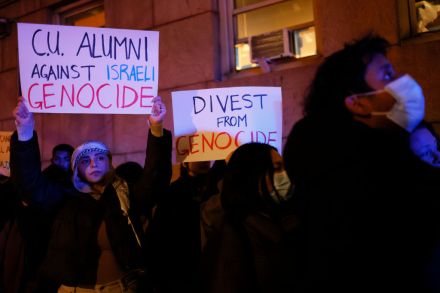
As a left-wing sympathizer to the Palestinian cause, I cringed when I heard reports that college students around the country, including at Columbia University, my alma mater, had expressed support for Hamas’s murder of Israeli civilians on October 7. My first thought was that “woke” students had lost their minds — confusing the perfectly legitimate defense of Palestinian rights with the usual laundry list of “resistance” clichés that pay little attention to history, morality or the subtleties of the English language.

What liberal America gets wrong about Trump supporters

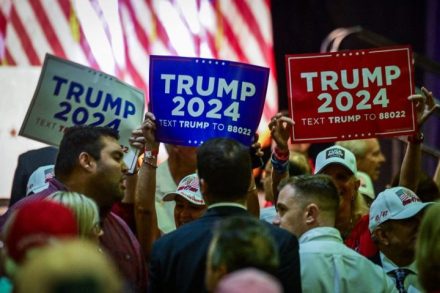
Hillary Clinton normally speaks in carefully crafted bromides, so when I read in the New York Post about her risqué suggestion during a televised interview with CNN that ‘maybe there needs to be a formal deprogramming of the cult members’ supporting Donald Trump, I took notice. Had the grimly platitudinous former secretary of state suddenly developed a sense of humour? Was she workshopping new material with a comedy coach? NAFTA really did win the White House for Trump, district by district, state be state When I watched her interview with CNN’s Christiane Amanpour, however, I detected no irony whatsoever in Clinton’s face.

Why ‘woke’ doesn’t have the moral high ground

From our US edition

The much-overused word “woke” — basically meaning to be at all moments of the day and night conscious of racial and sexual discrimination — has been remarkably resistant to criticism, reason and even ridicule. Ever since the initial exposure and denunciation of Harvey Weinstein in 2017 — a long-drawn-out prosecution and sentencing only recently concluded — the “wokes” have paraded their righteousness in every corner of society with very little pushback. Occasionally, a super baddie such as Bill Cosby gets released from prison on constitutional grounds, but super-wokes in the United States never let such minor reversals slow them down, since the public momentum and the arguments are overwhelmingly in their favor.

woke
lucien

Lucien, the best bar in New York for writers

From our US edition

When I search my memory for a favorite bar, I’m struck by thoughts about bars of legend that I can only fantasize about. My drinking life is a tale of three cities — Chicago, New York and Paris — but since I’ve spent most of my adulthood in New York, it’s hangouts in Manhattan, some long gone, that first come to mind. And establishments where writers and reporters liked to drink hold for me a privileged position. I wish that I could have bought a cocktail in the 1930s for the tragically brilliant novelist Dawn Powell at the now defunct Lafayette Hotel in Greenwich Village, or at the nearby Brevoort Hotel on Fifth Avenue and 8th Street.

Meet the aristocrat plotting Macron’s downfall

Vitry-le-François Can a modern revolution emanate from the political centre or, more unconventionally, from the heart and mind of an aristocrat who places republican values above factional allegiance? This was the question that propelled me more than a hundred miles east of Paris – while another day of mass demonstrations unfolded in the capital and across France – to the post-industrial town of Vitry-le-François to meet Charles de Courson, the French parliamentarian descended from Norman nobility who nearly succeeded in bringing down the government of President Emmanuel Macron with a no-confidence vote on 20 March.

America’s woke assault on English

Each time an American institution commits a new corruption of the English language in the name of ‘social justice,’ US wire services, assisted by the internet, circulate the latest absurdity to the four corners of the world. Nearly everyone I know has commented on the University of Southern California School of Social Work’s recent ban on the use of ‘the field’ when referring to the world outside the classroom because it might have ‘connotations for descendants of slavery or immigrant workers that are not benign.’ In my circle of friends we laughed, a bit ruefully, and increasingly so do a few mainstream publications such as the Week, which headlined its item ‘Only in America.

Randi Weingarten isn’t going anywhere

From our US edition

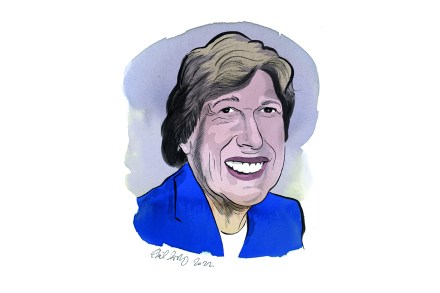
It was eerily warm in New York the day before the midterm elections, and the president of the American Federation of Teachers, Randi Weingarten — one of America’s most powerful union leaders and arguably the Democratic Party’s most influential non-elected power broker — was bracing for a confrontation that threatened to push the atmosphere past boiling point. We were standing in front of Public School 169, in Bay Terrace, a majority-white, upper-middle-class neighborhood in Queens, where Weingarten was attending a rally for three Democratic candidates for the House of Representatives. “You probably heard that the anti-vaxxers are going to show up,” she told me with a hint of exaggerated amusement.

Weingarten

Will Mélenchon upend the French political establishment?

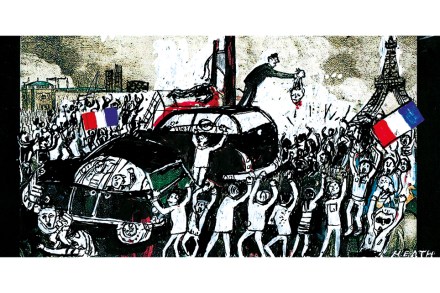
Paris In his memoirs, Charles de Gaulle famously wrote that he had always possessed ‘a certain idea of France’, a phrase that evoked a mystical past of grandeur and glory, as well as an ‘eminent and exceptional destiny’. In French it is a lovely expression, but it’s doubtful the great man had in mind the angry parents of state-school children revolting against incumbent politicians in the 14th arrondissement of Paris, where on Sunday night there was a kind of mini-insurrection by Nupes, the ungainly coalition of left-wing parties that threatens to upend the French political establishment and deny President Emmanuel Macron majority control of the National Assembly during his second five-year term.

Free speech folly at the New York Times

From our US edition

I suppose we should be grateful that the New York Times has finally come out in favor of free speech. After more than four years of hysterical denunciations of anyone who questioned the tactics, rhetoric or punishments employed by #MeToo, Black Lives Matter or transgender activists — some of which were inspired by the Times’s own reporting and editorials — America’s “paper of record” has apparently become woke to the problem of mob intimidation and its deleterious impact on what the mainstream media likes to refer to as “robust” democratic debate.

new york times