John Mills

What happens if the economy truly tanks?

From our UK edition

The government has taken steps to shore up most businesses. But it is becoming clear that the current plans may not be ambitious enough. Governments across the globe may need to be more radical if the commercial world is going to be able to handle the coronavirus crisis, while also ensuring tolerable income conditions for all workers, employees and the self-employed. If things get much worse, they may have to break out of their orthodoxies and start engaging with new, contrarian possibilities, such as more extensive public ownership and considerably higher taxes. These ideas will not, at first sight, be popular but maybe now is the time to debate and discuss these new solutions.
It’s vital we act now to fix the ticking time bomb under our economy

From our UK edition

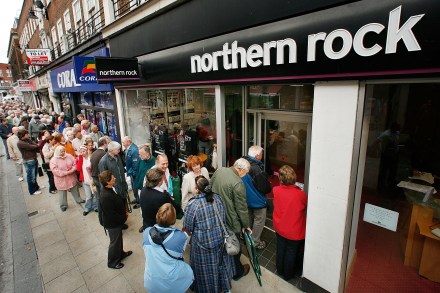
The UK economy is not in good shape. We invest a lower proportion of our GDP every year than almost anyone else, which is the main reason why our productivity is almost static. We have deindustrialised to a point where we do not have nearly enough to sell abroad to pay for our imports. We have a chronic balance of payments problem financed by selling assets and borrowing from abroad. As a result, both as individuals and as a nation we are getting deeper and deeper into debt. What growth we have is driven by consumption, financed by asset inflation rather than by exports and investment. On almost every measure, inequality is growing.

The Government is running an unfair referendum – and I’ve seen it all before

From our UK edition

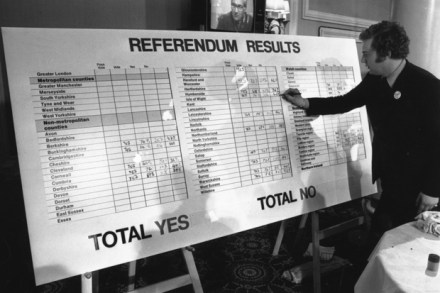
The Government spent over £9m on a pro-EU leaflet to be distributed to every household before the official campaign began, backed up by a major social media campaign. This is deeply unfair. But it’s no surprise to me. I’ve seen it all before, running up to the 1975 referendum, when I was the National Agent for the campaign for leaving what was then the Common Market. In 1975 there were three leaflets delivered to all households. One was from the National Referendum Campaign, who wanted the UK to come out. One was from Britain in Europe, who wanted us to stay in. The third was from the government, backing up the Britain in Europe case. This was deeply unfair. To be worthwhile, referendums have to be conducted equitably. This certainly was not what happened in 1975.

Labour needs to up its game on the EU renegotiation

From our UK edition

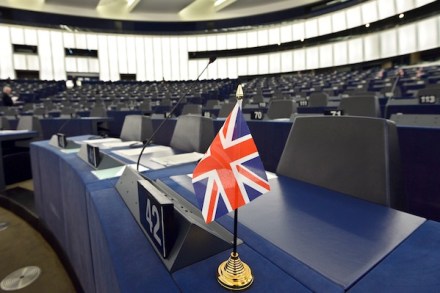
Most people in the Labour Party may want to stay in the EU, but few think there is no scope to improve the way the EU operates or our terms of membership. Why, then, does Labour appear to have no policy towards the renegotiation that is taking place? What would Labour like to change – given the opportunity to do so? Actually, there is quite a long agenda. Are we happy with net annual payments to the EU now running at about £15bn a year? Is it sensible to turn away Indian programmers and Chinese students while we acquiesce in having over 40,000 extra Bulgarians and Romanians moving to the UK each year? Are we happy with the way the EU is run?