John Keiger

John Keiger

John Keiger is a former Research Director at the University of Cambridge and author of the biography of French president Raymond Poincaré

John Keiger, Mary Wakefield and Sean Thomas

From our UK edition

21 min listen

On this week's episode, we’ll hear from John Keiger on Emmanuel Macron’s brand of performative diplomacy. (00:53)Next, Mary Wakefield on the few pros and many cons of the lady carriage. (10:30)And finally, Sean Thomas on how learning to work from home opens the door to working in paradise. (16:17)Produced and presented by Sam HolmesSubscribe to The Spectator today and get a £20 Amazon gift voucher.
Why does Macron keep meddling in international crises?

From our UK edition

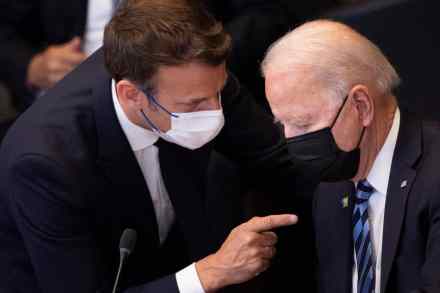
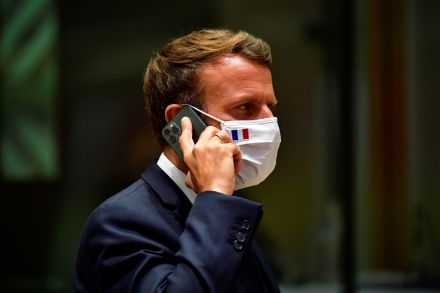
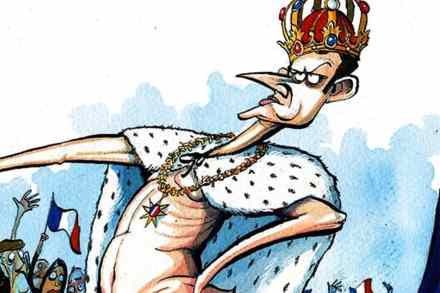
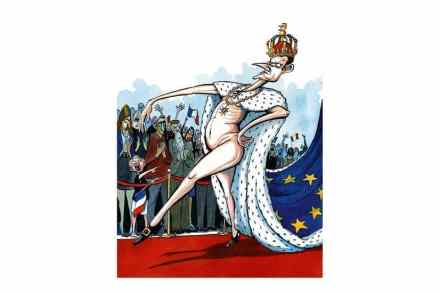
Just two months from the presidential elections, Emmanuel Macron’s self-belief and risk-taking — not to mention setbacks — seem to know few bounds. And no more so than in foreign affairs. Following the French President’s telephone conversation with Vladimir Putin over Ukraine on 20 February, the Elysée triumphantly announced that a Biden-Putin summit was agreed in principle, only for the Kremlin to pour cold water on the idea the next morning. Washington then followed suit, before Putin announced the recognition of the two breakaway Ukrainian republics of Donetsk and Luhansk.

Zemmour, Marion Maréchal and the union of the French right

From our UK edition

The news that the highly influential third-generation member of the Le Pen family, Marion Maréchal, will not be backing her aunt Marine for the French presidency is ‘brutal, violent and painful’, in Marine’s words. But beyond its emotional impact on the Le Pen family, for whom politics, betrayal and intrigue have always been of Shakespearean dimensions, this is potentially an earthquake in French politics. For the 32 year old intellectual branch of the family has hinted that she may join Éric Zemmour’s campaign.

Could Marine Le Pen be shut out of France’s election?

From our UK edition

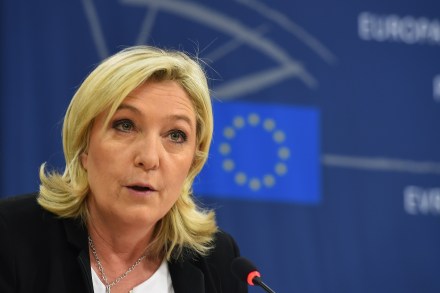
Could France's upcoming presidential election risk destabilising the country, whether or not Emmanuel Macron triumphs? So far, nearly 40 candidates have declared their intention to stand in April's poll. But to qualify, they face another hurdle: one which several key candidates, including Marine Le Pen, Éric Zemmour and Jean-Luc Mélenchon, are struggling to overcome. Together, Le Pen (16.5 per cent), Éric Zemmour (12.5 per cent) and Jean-Luc Mélenchon (ten per cent) enjoy the support of nearly four in ten French voters. But they might be shut out of the race. If so, a real democratic chasm would open up, undermining the whole election and the legitimacy of the winner.

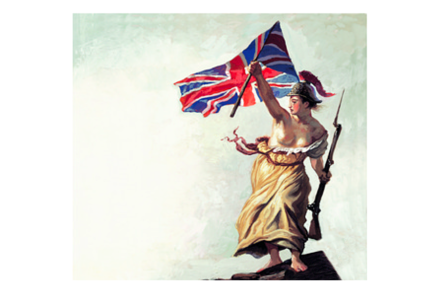
France has the most to lose from Britain’s turn away from Europe

From our UK edition

It was Napoleon who declared that ‘a state has the politics of its geography’. We do well to remember that in taking stock of European international relations as we speculate on a new year and beyond. By Europe is meant the European continent, ‘from the Atlantic to the Urals’, in de Gaulle’s words. Not the 27-member European Union, which Brussels linguistically and imperialistically conflates with the 44 sovereign states that the UN defines as Europe. Of those 44 states, four are still the European great powers, as they have been since at least 1870: Britain, Germany, France, and Russia. They are still the continent’s most populous, wealthiest (except Russia), and militarily prepared (except Germany).

The remarkable rise of French sovereignism

From our UK edition

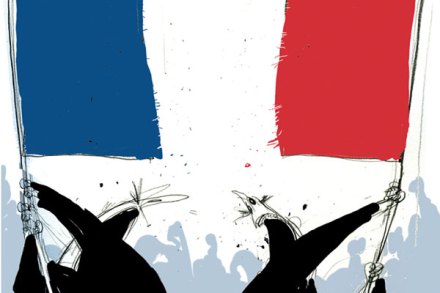
The French presidential campaign reveals French voters’ widespread urge to roll back EU powers. The top five candidates for the April 2022 elections (Emmanuel Macron excluded) have French national sovereignty, ‘taking back control’ and a concomitant reduction in EU powers as main planks of their manifestos. What the French refer to as ‘sovereignist’ policies clearly meet the expectations of French voters as opposed to the globalism and ever-more-Europe favoured by Emmanuel Macron. But it is the means of taking back control proposed by the five presidential candidates that is explosive. All opinion polls regularly show these ‘sovereignist’ candidates garnering some 65 per cent of French support.

Macron is following in the failed footsteps of the wrong Napoleon

From our UK edition

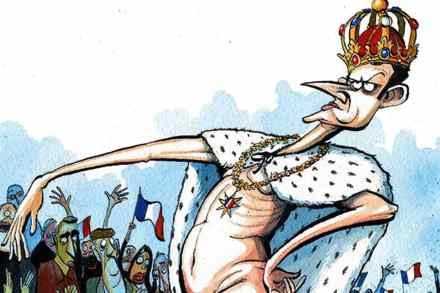
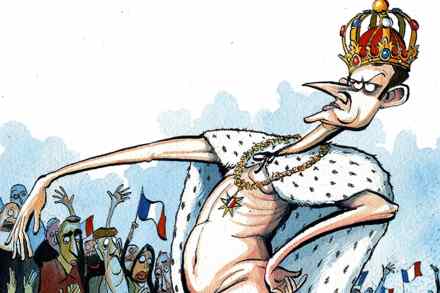
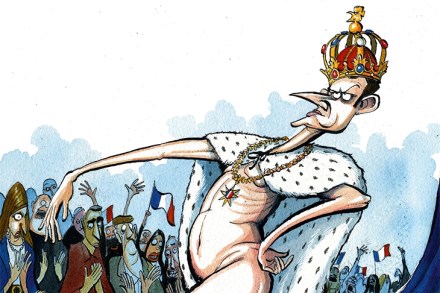
Is Emmanuel Macron turning into Emperor Napoleon III? Not the great Napoleon who conquered Europe and was eventually defeated by a British-led coalition at Waterloo and exiled to Saint Helena in the south Atlantic. But his lesser nephew, whose obsession with his uncle’s glory drove him to flatulent demagoguery at home, grandiose schemes abroad and humiliating defeat at the hands of the Prussians in 1870.  Under the last monarch of France, the country descended into the revolutionary Commune, was amputated of Alsace-Lorraine and prostrated before a united and all-powerful Germany. The lesser Napoleon was eventually deposed, vilified and outlawed to Chislehurst, outside London.

Emmanuel Macron and the art of tantrum diplomacy

From our UK edition

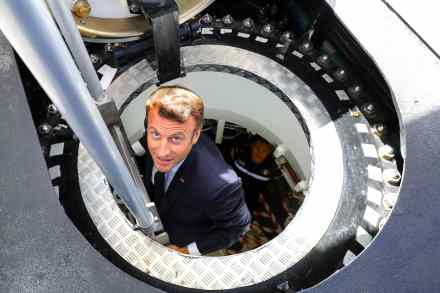
France’s fit of pique following Australia’s cancelled submarine contract – and the signing of the Aukus pact – is a sulk that keeps on giving. After recalling its ambassadors to Australia and the US, Paris cancelled last week’s scheduled bilateral Franco-British defence summit. France is also reported to be seeking to delay the EU-Australia trade deal whose twelfth meeting was organised for next month. The French are all the more bruised for the major powers in the Indo Pacific – Japan and India – welcoming the Pact while Paris has received only muted support from EU members. France is even extending her sulk retrospectively to others who recently declined French defence products.

The real reason France was excluded from Aukus

From our UK edition

The fallout from Australia’s cancellation of its submarine contract with France and the new trilateral Indo-Pacific security pact between Australia, the US and the UK continues. France has recalled its ambassadors from Canberra and Washington (though significantly not from London) for ‘immediate consultations’; the well-worn diplomatic gesture of discontent. This is the first occasion ever in over two centuries of Franco-American friendship.  Last night in another outburst of petulance, the French embassy in Washington cancelled the gala to celebrate Franco-American friendship. The festivities were to mark the 240th anniversary of the crucial Battle of the Capes when the French navy defeated its British counterpart in defence of American independence.

Macron’s ambitions have been torpedoed by Aukus

From our UK edition

Today France is outraged. First, explicitly because Australia has broken a large contract to have a French company design their submarines and for that contract to be switched to a US-UK substitute. Secondly, sotto voce, because Emmanuel Macron’s Indo-Pacific strategy has been shaken by an Australian, American and British strategic agreement entitled Aukus, to which France has not been invited. What are the facts of the matter? In 2016 Australia signed a contract with France to buy 12 conventional French-designed diesel-electric submarines for the Australian navy. The contract worth €35 billion was badged by the French as ‘the contract of the century’. In reality, only €8 billion was to go to the 60 per cent state-owned French company Naval Group.

Is the EU trying to hamstring the French military?

From our UK edition

Much recent discussion has focussed on the collapse of Afghanistan and the decline of the West. The humiliating American-led Western retreat from Kabul is most poignant for the signal it sends to other ‘protected’ states, present-day and future. The Chinese Communist Party’s mouthpiece, Global Times, mockingly jibed in its editorial at the history of America abandoning its allies and warning how this might be an omen for Taiwan. But the Afghan smokescreen has obscured another aspect of Western decline: a European Court of Justice ruling of 15 July enforcing the same restrictions on ‘work time’ for member states’ military personnel as for any other worker, except on clearly specified military operations.

France’s democracy is in deep trouble

From our UK edition

Today is the 232nd anniversary of the great French revolution. Time to take the temperature of the nation. The regional elections of 20 and 27 June changed nothing of France’s regional complexion, but revealed much about the worrying state of the nation. The same regional presidents were re-elected to the 12 metropolitan regions: seven for the right, five for the left. The traditional parties cried victory. They have been fighting for their survival since 2017 when Macron’s LREM party burst onto the scene from nowhere.

Why is Macron feigning outrage at the Danish spying scandal?

From our UK edition

The feigned outrage in Berlin – but mostly in Paris – at the USA’s proxy use of Denmark’s intelligence services to intercept submarine cable traffic to spy on European leaders raises more than a wry smile. Allies have always spied on allies for legitimate reasons. Few have done so, and continue to do so, as much as the French.  As president of France and commander-in-chief of the French armed forces, Emmanuel Macron will be perfectly aware of this. The French foreign intelligence service, DGSE, runs an interception programme on submarine cables that listens in to potential enemies and friends in similar fashion to the US National Security Agency or Britain’s GCHQ.

France needs Britain more than ever

From our UK edition

‘What is grave about this situation, Messieurs, is that it is not serious’, was how General de Gaulle addressed his cabinet following the attempted putsch des généraux in April 1961. That could equally apply to recent Franco-British ructions over fishing rights in the Channel Islands. It is mere gesture politics, for all the French retaliatory threats to cut off the electricity supply to Jersey, the British dispatch of two Royal Navy vessels and the French countering with two patrol boats. Behind the facade France and Britain are serious military and diplomatic allies bound by important and wide-ranging security treaties that go beyond just Nato.

France’s military wages war on Macron’s values

From our UK edition

On 21 April 1961 France’s most senior generals staged a putsch in French Algiers, still an integral part of France. The military coup was in reaction to the policies of the president of the Republic, General de Gaulle, and his belated decision to abandon Algeria to independence. The generals felt this betrayed their honour and that of their fallen comrades after seven years of a bloody war against Algerian ‘terrorists’ to keep Algeria French. Fast forward sixty years to 21 April 2021. Twenty retired generals (some four-star), a hundred mostly retired senior officers and a thousand military personnel signed a chilling letter in the right-wing French weekly Valeurs actuelles addressed to the President of the Republic, the government and parliamentarians.

What a Le Pen win would mean for Brussels

From our UK edition

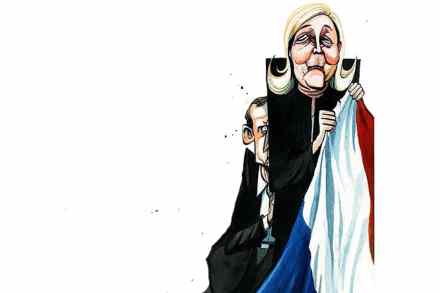
A Marine Le Pen victory in a year's time can no longer be ruled out. Other than opinion polls regularly pointing to her place in the second round as a certainty, a few, such as Harris Interactive on 7 March, put her on the cusp of winning the second round with 47 per cent to Macron’s 53 per cent — a dramatic improvement on her 2017 score of 34 to Macron’s 66.  The traditional republican front against the radical right is crumbling and the stigma of voting Le Pen is diminishing. More of the electorate are coming round to the Rassemblement National’s views on national sovereignty, immigration, crime and security, and — with Brussels’s shambolic management of the pandemic — on the EU itself.

Macron’s Napoleon complex

From our UK edition

May 5th this year will be the two hundredth anniversary of Napoleon’s death on Saint Helena, the tiny island in the south Atlantic where the British confined the Emperor to Longwood House after defeat at Waterloo in 1815. After much hesitation, Emmanuel Macron has decided that France will commemorate the Emperor’s place in French history. Though the most recognisable historical figure in all surveys of the French, almost no public spaces or institutions bear his name. Monarchy and Republic cancelled him. Bonaparte divides. He is at once the figure who tamed the Revolution, drastically reformed France and yet the dictator who overran Europe and reinstated slavery.

The EU’s decline is self-inflicted

From our UK edition

In 1991, at the height of the first Gulf War, the EU demonstrated to the world its divisions and helplessness, as Belgium infamously blocked the export of munitions to the UK, then at war in the Gulf. They quickly came to regret it. The Belgian Foreign Minister subsequently remarked tellingly: ‘Europe is an economic giant, a political dwarf and a military worm’. It seems these days that little has changed, save that even the EU’s claim to be an ‘economic giant’ is eroding with the loss of the world’s fifth largest economy, a dwindling share of world trade and a catatonic growth rate, even before the pandemic. Worse still, much of its relative economic decline is self-inflicted.

Barnier and France fear Brexit Britain’s next moves

From our UK edition

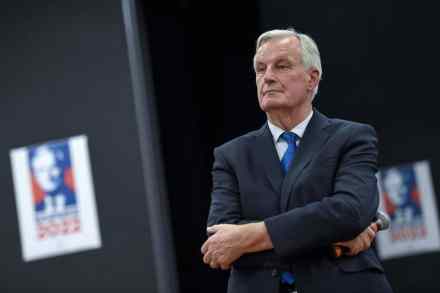
Michel Barnier – still officially the EU’s Brexit taskforce leader – gives few interviews. As a Savoyard and keen mountaineer, as he habitually reminds us, he is a cautious man who advances step by step with the long climb firmly in his sights. So it was something of a surprise to see him appear on 16 February before the French Senate Brexit follow-on committee (renamed ‘groupe de suivi de la nouvelle relation euro-britannique’). It is a sign of the importance of how Brexit will play out for the French that the Senate has formed a very senior 20-strong commission to monitor and react to Brexit implementation and next stage negotiations. Of course Barnier and France have an interest in Brexit being implemented as they see fit.

The EU is struggling to poach the City’s business

From our UK edition

The latest salvos have been fired in the EU’s battle to drain the City of London’s financial business. Brussels – with France at the helm – has long cherished imposing a continental blockade on Britain’s financial access to the EU. But, like Napoleon’s 1806 embargo on British trade to the continent, things are not that simple. The Cassandras have had to eat their words following their predictions that there would be tens of thousands of Brexit-induced job losses in the City after 2016.